Basu-Roy Upal, Han Eugenia, Rattanakorn Kirk, Gadi Abhilash, Verma Narendra, Maurizi Giulia, Gunaratne Preethi H, Coarfa Cristian, Kennedy Oran D, Garabedian Michael J, Basilico Claudio, Mansukhani Alka
Department of Microbiology, NYU School of Medicine, New York, NY, USA.
Perlmutter Cancer Center, Langone Medical Center, New York, NY, USA.
Oncotarget. 2016 Sep 20;7(38):60954-60970. doi: 10.18632/oncotarget.11273.
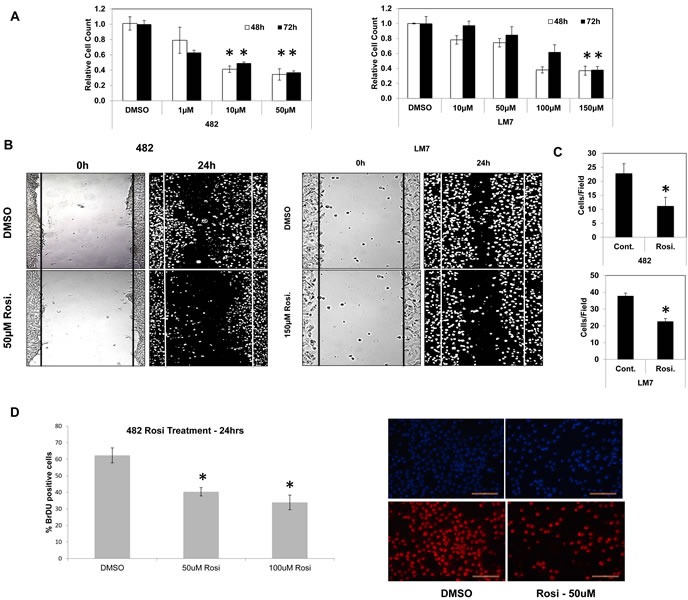
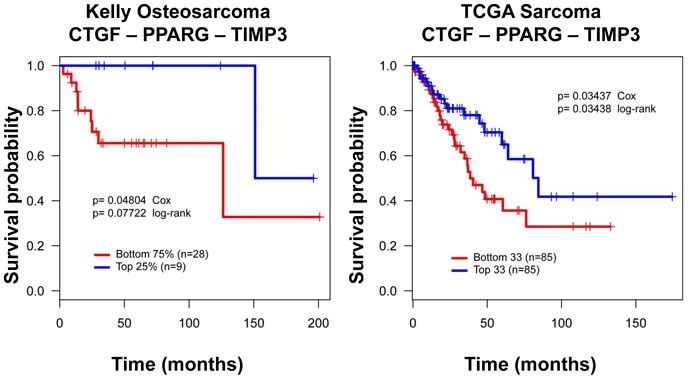
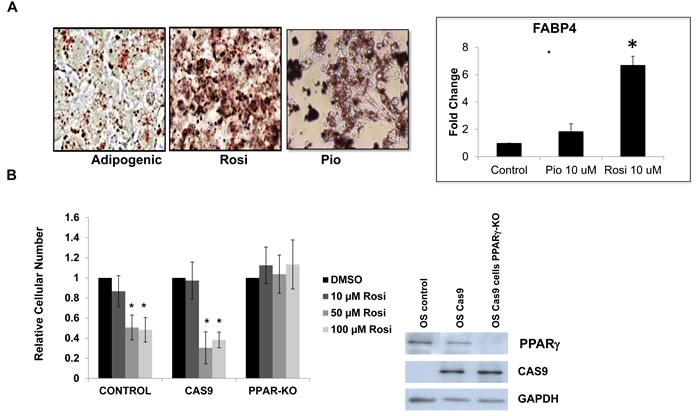
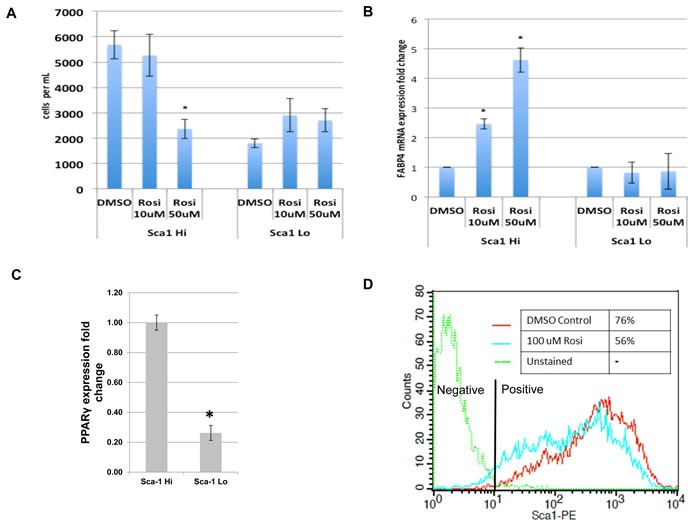
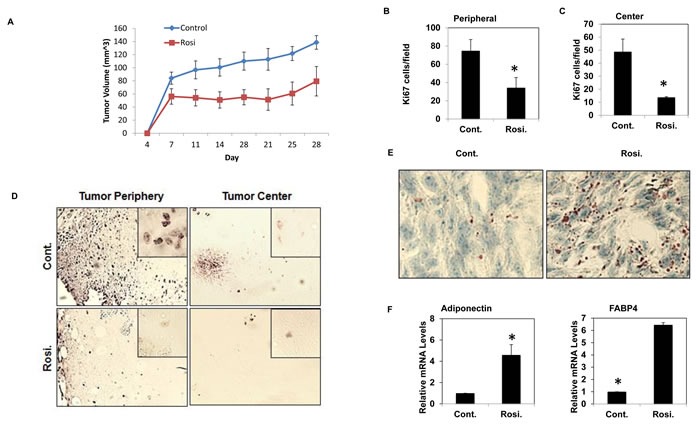
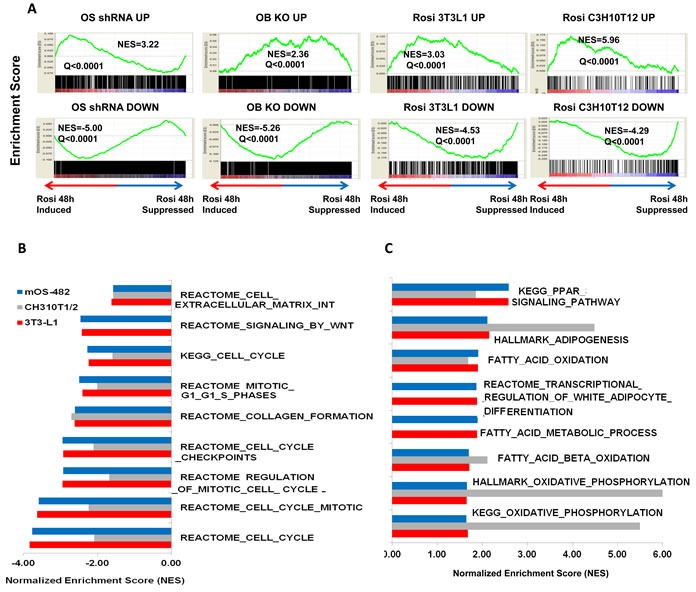
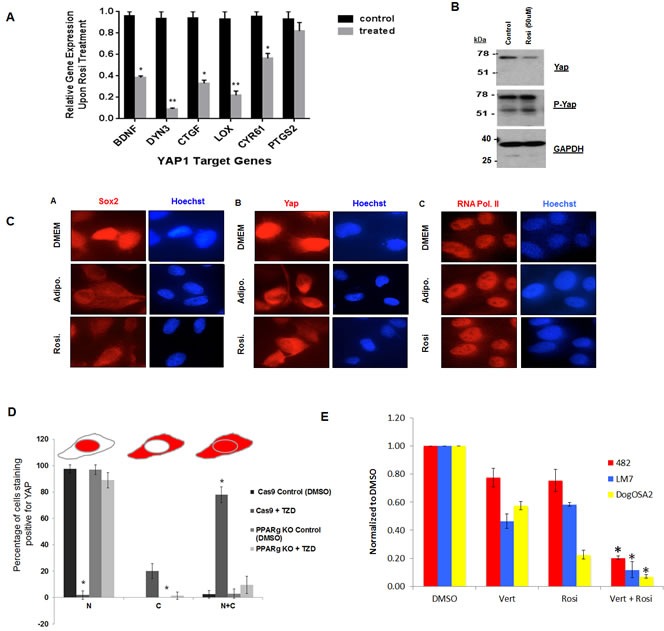
Osteosarcoma (OS) is a highly aggressive pediatric bone cancer in which most tumor cells remain immature and fail to differentiate into bone-forming osteoblasts. However, OS cells readily respond to adipogenic stimuli suggesting they retain mesenchymal stem cell-like properties. Here we demonstrate that nuclear receptor PPARγ agonists such as the anti-diabetic, thiazolidinedione (TZD) drugs induce growth arrest and cause adipogenic differentiation in human, mouse and canine OS cells as well as in tumors in mice. Gene expression analysis reveals that TZDs induce lipid metabolism pathways while suppressing targets of the Hippo-YAP pathway, Wnt signaling and cancer-related proliferation pathways. Significantly, TZD action appears to be restricted to the high Sox2 expressing cancer stem cell population and is dependent on PPARγ expression. TZDs also affect growth and cell fate by causing the cytoplasmic sequestration of the transcription factors SOX2 and YAP that are required for tumorigenicity. Finally, we identify a TZD-regulated gene signature based on Wnt/Hippo target genes and PPARγ that predicts patient outcomes. Together, this work highlights a novel connection between PPARγ agonist in inducing adipogenesis and mimicking the tumor suppressive hippo pathway. It also illustrates the potential of drug repurposing for TZD-based differentiation therapy for osteosarcoma.
骨肉瘤(OS)是一种侵袭性很强的儿童骨癌,其中大多数肿瘤细胞仍不成熟,无法分化为成骨的成骨细胞。然而,OS细胞很容易对脂肪生成刺激作出反应,这表明它们保留了间充质干细胞样特性。在这里,我们证明核受体PPARγ激动剂,如抗糖尿病药物噻唑烷二酮(TZD),可诱导人、小鼠和犬OS细胞以及小鼠肿瘤的生长停滞并导致脂肪生成分化。基因表达分析表明,TZD可诱导脂质代谢途径,同时抑制Hippo-YAP途径、Wnt信号传导和癌症相关增殖途径的靶点。值得注意的是,TZD的作用似乎仅限于高表达Sox2的癌症干细胞群体,并且依赖于PPARγ的表达。TZD还通过导致致癌性所需的转录因子SOX2和YAP的细胞质隔离来影响生长和细胞命运。最后,我们基于Wnt/Hippo靶基因和PPARγ确定了一个TZD调节的基因特征,该特征可预测患者的预后。总之,这项工作突出了PPARγ激动剂在诱导脂肪生成和模拟肿瘤抑制性Hippo途径之间的新联系。它还说明了基于TZD的骨肉瘤分化疗法药物重新利用的潜力。