Hirozane Toru, Masuda Mari, Sugano Teppei, Sekita Tetsuya, Goto Naoko, Aoyama Toru, Sakagami Takato, Uno Yuko, Moriyama Hideki, Sawa Masaaki, Asano Naofumi, Nakamura Masaya, Matsumoto Morio, Nakayama Robert, Kondo Tadashi, Kawai Akira, Kobayashi Eisuke, Yamada Tesshi
Division of Cellular Signaling, National Cancer Center Research Institute, Tokyo, Japan.
Department of Orthopedic Surgery, Keio University School of Medicine, Tokyo, Japan.
JCI Insight. 2021 Feb 8;6(3):137245. doi: 10.1172/jci.insight.137245.
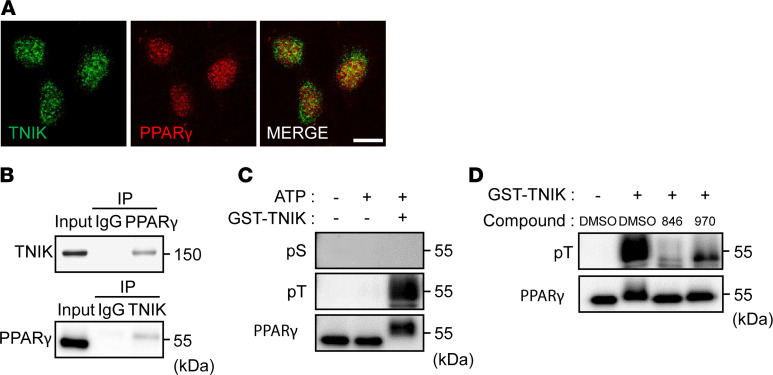
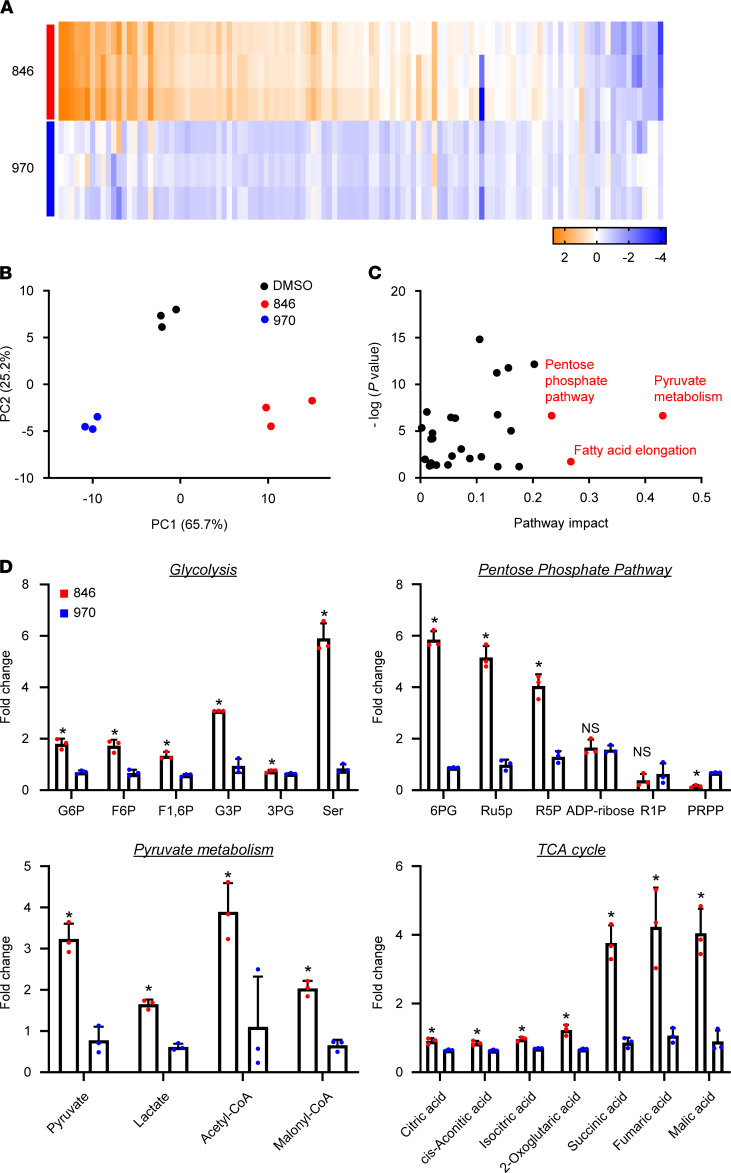
Osteosarcoma (OS) is an aggressive mesenchymal tumor for which no molecularly targeted therapies are available. We have previously identified TRAF2- and NCK-interacting protein kinase (TNIK) as an essential factor for the transactivation of Wnt signal target genes and shown that its inhibition leads to eradication of colorectal cancer stem cells. The involvement of Wnt signaling in the pathogenesis of OS has been implicated. The aim of the present study was to examine the potential of TNIK as a therapeutic target in OS. RNA interference or pharmacological inhibition of TNIK suppressed the proliferation of OS cells. Transcriptome analysis suggested that a small-molecule inhibitor of TNIK upregulated the expression of genes involved in OS cell metabolism and downregulated transcription factors essential for maintaining the stem cell phenotype. Metabolome analysis revealed that this TNIK inhibitor redirected the metabolic network from carbon flux toward lipid accumulation in OS cells. Using in vitro and in vivo OS models, we confirmed that TNIK inhibition abrogated the OS stem cell phenotype, simultaneously driving conversion of OS cells to adipocyte-like cells through induction of PPARγ. In relation to potential therapeutic targeting in clinical practice, TNIK was confirmed to be in an active state in OS cell lines and clinical specimens. From these findings, we conclude that TNIK is applicable as a potential target for treatment of OS, affecting cell fate determination.
骨肉瘤(OS)是一种侵袭性间充质肿瘤,目前尚无分子靶向治疗方法。我们之前已确定肿瘤坏死因子受体相关因子2和NCK相互作用蛋白激酶(TNIK)是Wnt信号靶基因反式激活的关键因子,并表明抑制该因子可根除结直肠癌干细胞。Wnt信号传导参与骨肉瘤发病机制这一点已得到证实。本研究的目的是探讨TNIK作为骨肉瘤治疗靶点的潜力。RNA干扰或对TNIK的药理学抑制可抑制骨肉瘤细胞的增殖。转录组分析表明,TNIK的小分子抑制剂上调了骨肉瘤细胞代谢相关基因的表达,并下调了维持干细胞表型所必需的转录因子。代谢组分析显示,这种TNIK抑制剂使骨肉瘤细胞的代谢网络从碳通量转向脂质积累。利用体外和体内骨肉瘤模型,我们证实抑制TNIK可消除骨肉瘤干细胞表型,同时通过诱导过氧化物酶体增殖物激活受体γ(PPARγ)促使骨肉瘤细胞转化为脂肪细胞样细胞。关于临床实践中的潜在治疗靶点,我们证实TNIK在骨肉瘤细胞系和临床标本中处于活性状态。基于这些发现,我们得出结论,TNIK可作为治疗骨肉瘤的潜在靶点,影响细胞命运决定。