Park Bong-Ju, Cho Hong-Man, Min Woong-Bae
Department of Orthopedic Surgery, Gwangju Veterans Hospital, Gwangju, Korea.
Hip Pelvis. 2015 Sep;27(3):164-72. doi: 10.5371/hp.2015.27.3.164. Epub 2015 Sep 30.
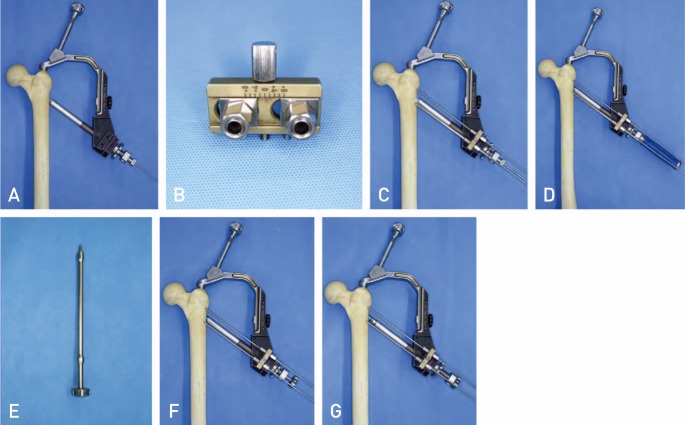
People with dementia have poor mobility and discharge outcomes following hip fractures. The purpose of this study was to evaluate the clinical and radiological results of internal fixation of undisplaced femur neck fractures (Garden types 1 and 2) by proximal femoral nail antirotation (PFNA) in dementia patients.
We studied retrospectively 19 patients with undisplaced femur neck fracture. All patients were over 70 years of age, walked independently with a cane or crutches and suffered moderate-to-severe dementia. Patients were treated with PFNA and followed-up for more than 2 years. Revision, loss of fixation, complications, and walking ability outcomes were measured.
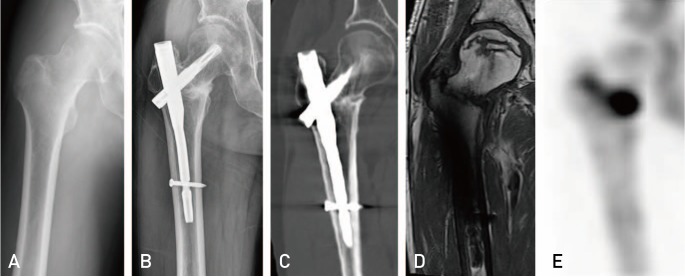
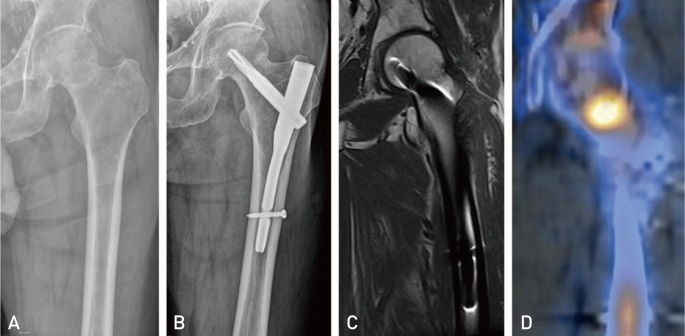
In walking-ability evaluation, patients showed an average decrease of just 0.2 points at the final follow-up. Walking ability was evaluated from before injury to 4 weeks after surgery and decreased by less than 0.5 points. Radiological bone union was achieved in 17 cases; the average time to bone union was 4.14 months (range, 2.5-7 months). Complications included non-union in two cases and femoral head avascular necrosis in one case of non-union.
We found that for patients with osteoporotic bone tissues in their femoral heads or patients (e.g., those suffering dementia) for whom cooperating with medical workers for postoperative walking control or rehabilitation exercises is difficult, implanting a mechanically stable spiral blade for fixation of femoral neck fractures could facilitate walking after surgery.
痴呆患者髋部骨折后行动能力较差且出院结局不佳。本研究的目的是评估采用股骨近端抗旋髓内钉(PFNA)治疗无移位股骨颈骨折(Garden 1型和2型)的痴呆患者的临床和影像学结果。
我们回顾性研究了19例无移位股骨颈骨折患者。所有患者年龄均超过70岁,借助手杖或拐杖独立行走,且患有中重度痴呆。患者接受PFNA治疗并随访超过2年。测量翻修情况、内固定失败情况、并发症及行走能力结局。
在行走能力评估中,患者在末次随访时平均仅下降0.2分。从受伤前至术后4周对行走能力进行评估,下降幅度小于0.5分。17例实现影像学骨愈合;平均骨愈合时间为4.14个月(范围2.5 - 7个月)。并发症包括2例骨不连,其中1例骨不连患者发生股骨头缺血性坏死。
我们发现,对于股骨头存在骨质疏松性骨组织的患者或难以与医护人员配合进行术后行走控制或康复锻炼的患者(如痴呆患者),植入机械稳定的螺旋刀片固定股骨颈骨折有助于术后行走。