Department of Molecular Biology, Nagoya University Graduate School of Medicine, 65 Tsurumai-cho, Showa-ku, Nagoya, 466-8550, Japan.
Division of Molecular Oncology, Aichi Cancer Center Research Institute, 1-1 Kanokoden, Chikusa-ku, Nagoya, 464-8681, Japan.
Sci Rep. 2016 Aug 19;6:31615. doi: 10.1038/srep31615.
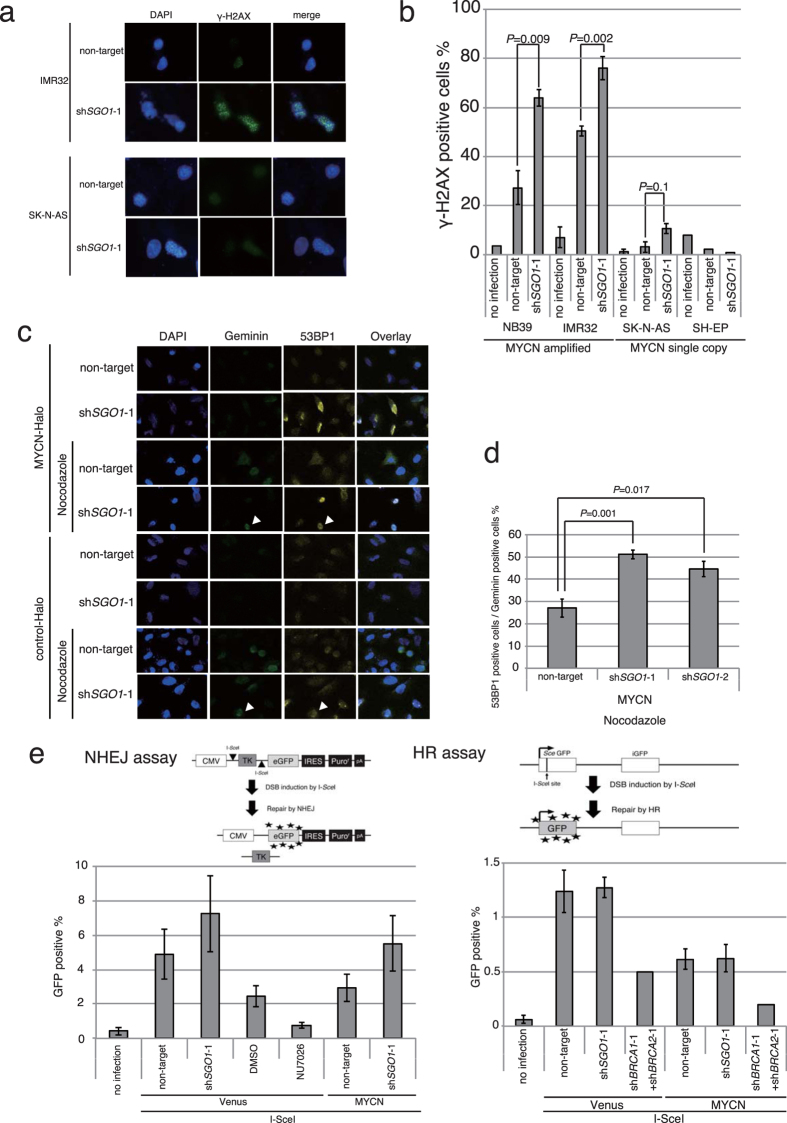
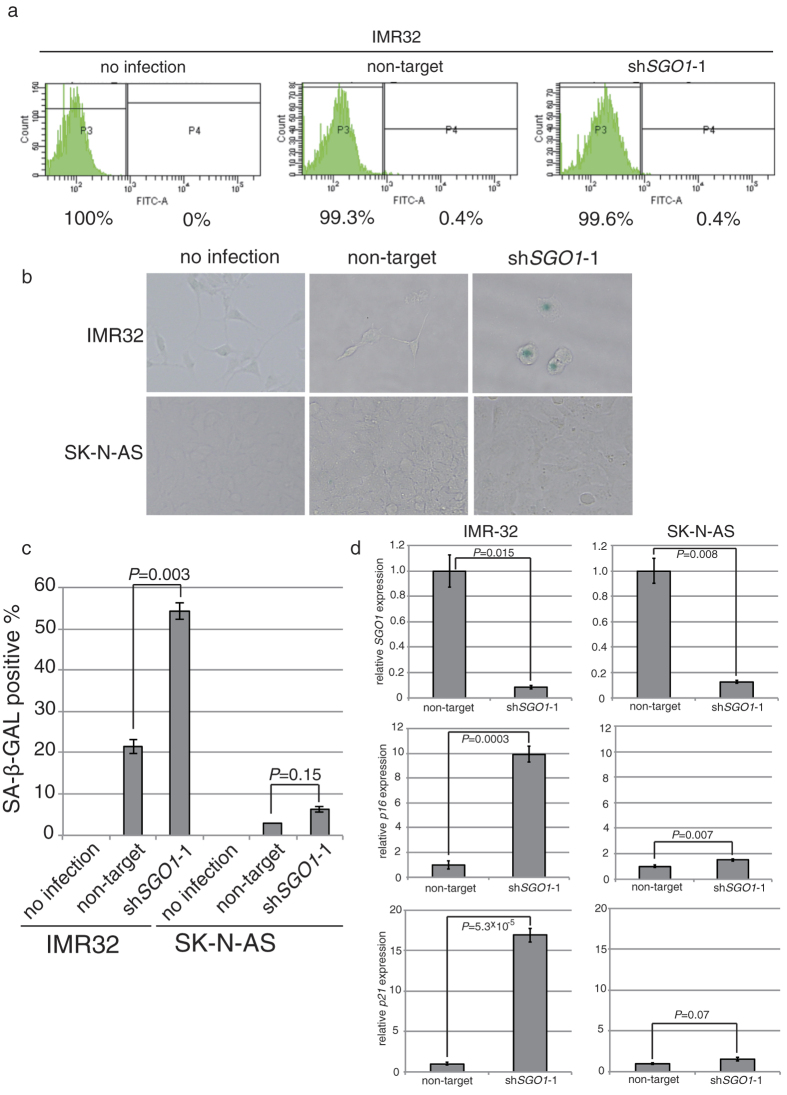
Shugoshin 1 (SGO1) is required for accurate chromosome segregation during mitosis and meiosis; however, its other functions, especially at interphase, are not clearly understood. Here, we found that downregulation of SGO1 caused a synergistic phenotype in cells overexpressing MYCN. Downregulation of SGO1 impaired proliferation and induced DNA damage followed by a senescence-like phenotype only in MYCN-overexpressing neuroblastoma cells. In these cells, SGO1 knockdown induced DNA damage, even during interphase, and this effect was independent of cohesin. Furthermore, MYCN-promoted SGO1 transcription and SGO1 expression tended to be higher in MYCN- or MYC-overexpressing cancers. Together, these findings indicate that SGO1 plays a role in the DNA damage response in interphase. Therefore, we propose that SGO1 represents a potential molecular target for treatment of MYCN-amplified neuroblastoma.
着丝粒蛋白 1(SGO1)在有丝分裂和减数分裂过程中对于染色体正确分离是必需的;然而,其在间期的其他功能,特别是其功能,尚不清楚。在这里,我们发现 SGO1 的下调会导致 MYCN 过表达的细胞出现协同表型。下调 SGO1 会损害增殖并诱导 DNA 损伤,随后在 MYCN 过表达的神经母细胞瘤细胞中出现类似于衰老的表型。在这些细胞中,SGO1 的敲低会诱导 DNA 损伤,甚至在间期也会发生,并且这种效应不依赖于黏合蛋白。此外,MYCN 促进 SGO1 的转录,并且 MYCN 或 MYC 过表达的癌症中 SGO1 的表达往往更高。综上所述,这些发现表明 SGO1 在间期的 DNA 损伤反应中发挥作用。因此,我们提出 SGO1 是治疗 MYCN 扩增型神经母细胞瘤的潜在分子靶标。