Guan Ming, Fang Qiaojun, He Zuhong, Li Yong, Qian Fuping, Qian Xiaoyun, Lu Ling, Zhang Xiaoli, Liu Dingding, Qi Jieyu, Zhang Shasha, Tang Mingliang, Gao Xia, Chai Renjie
Department of Otolaryngology, The Affiliated Hangzhou Hospital of Nanjing Medical University, Hangzhou 310006, China.
Department of Otolaryngology, Hangzhou First People's Hospital, Hangzhou 310006, China.
Oncotarget. 2016 Oct 11;7(41):66647-66659. doi: 10.18632/oncotarget.11336.
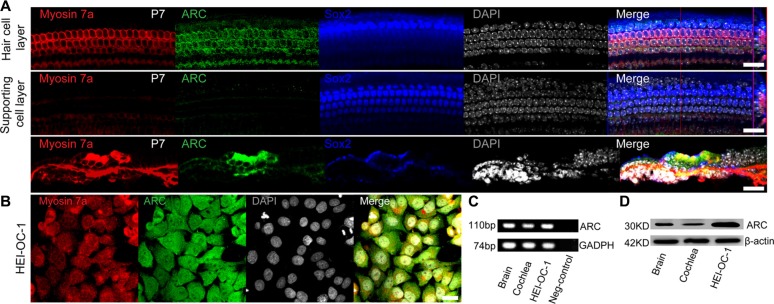
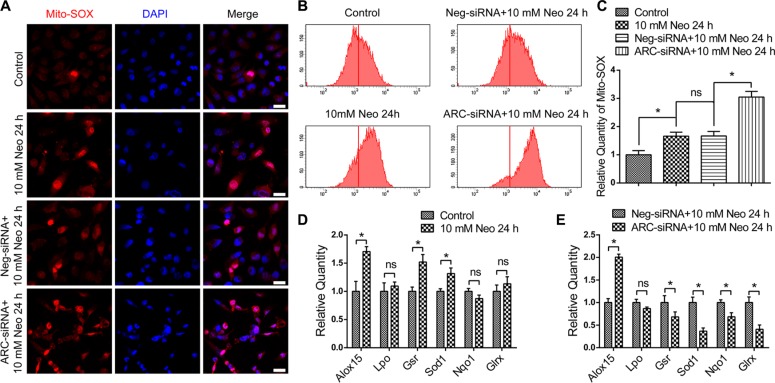
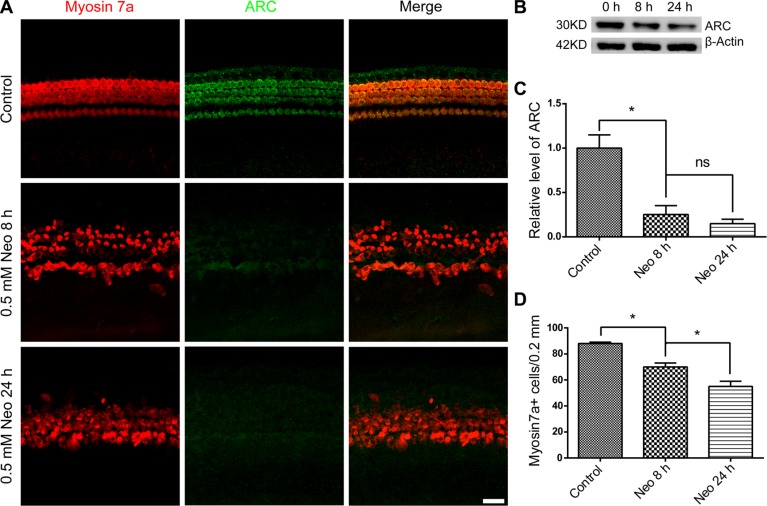
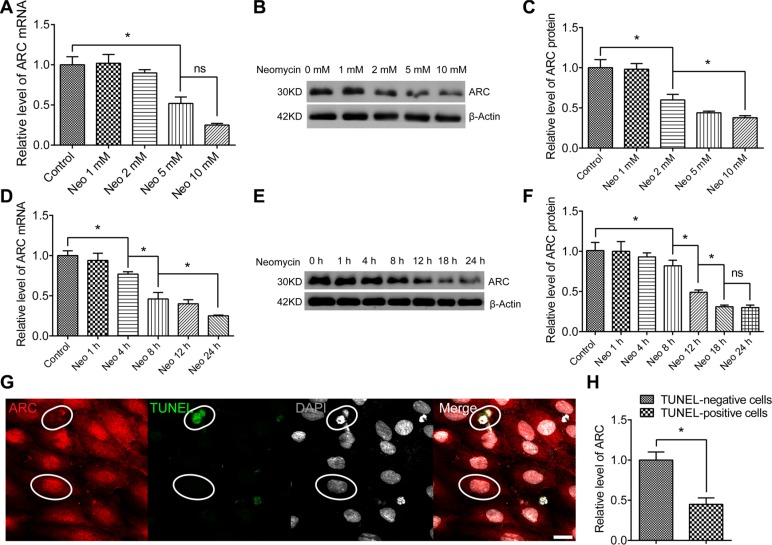
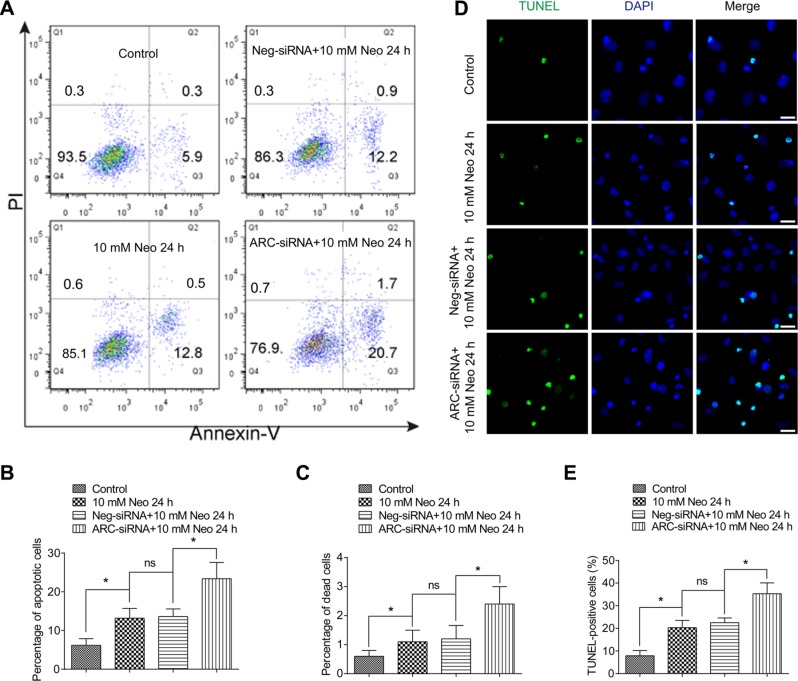
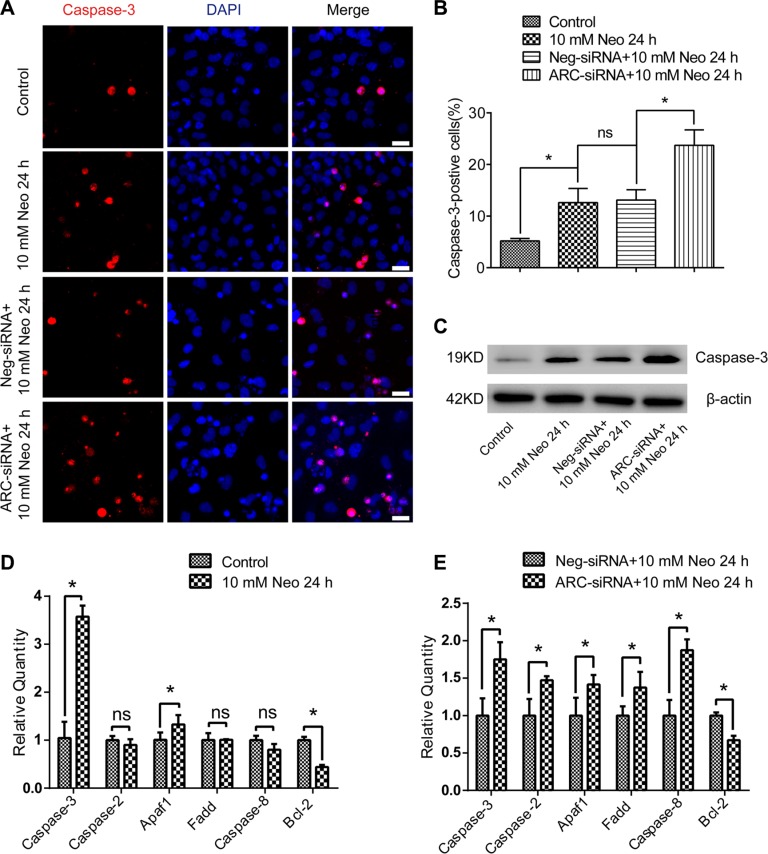
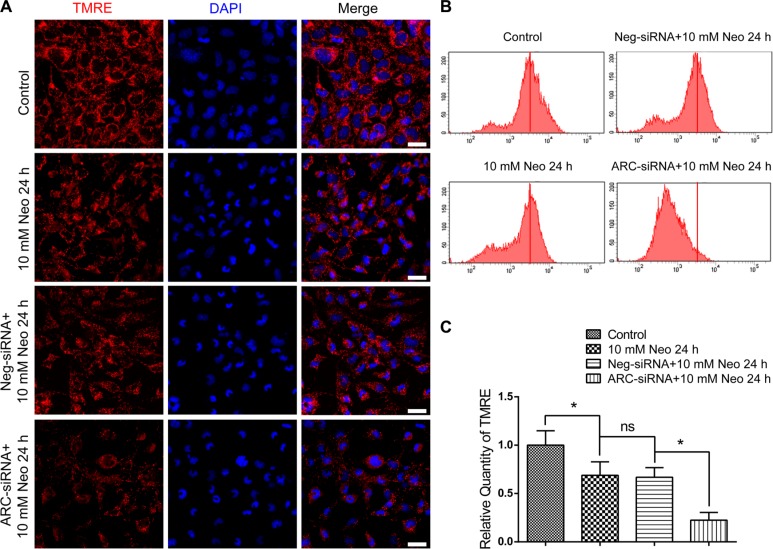
Hearing loss is a common sensory disorder mainly caused by the loss of hair cells (HCs). Noise, aging, and ototoxic drugs can all induce apoptosis in HCs. Apoptosis repressor with caspase recruitment domain(ARC) is a key factor in apoptosis that inhibits both intrinsic and extrinsic apoptosis pathways; however, there have been no reports on the role of ARC in HC loss in the inner ear. In this study, we used House Ear Institute Organ of Corti 1 (HEI-OC-1) cells, which is a cochlear hair-cell-like cell line, to investigate the role of ARC in aminoglycoside-induced HC loss. ARC was expressed in the cochlear HCs as well as in the HEI-OC-1 cells, but not in the supporting cells, and the expression level of ARC in HCs was decreased after neomycin injury in both cochlear HCs and HEI-OC-1 cells, suggesting that reduced levels of ARC might correlate with neomycin-induced HC loss. We inhibited ARC expression using siRNA and found that this significantly increased the sensitivity of HEI-OC-1 cells to neomycin toxicity. Finally, we found that ARC inhibition increased the expression of pro-apoptotic factors, decreased the mitochondrial membrane potential, and increased the level of reactive oxygen species (ROS) after neomycin injury, suggesting that ARC inhibits cell death and apoptosis in HEI-OC-1 cells by controlling mitochondrial function and ROS accumulation. Thus the endogenous anti-apoptotic factor ARC might be a new therapeutic target for the prevention of aminoglycoside-induced HC loss.
听力损失是一种常见的感觉障碍,主要由毛细胞(HCs)丧失引起。噪音、衰老和耳毒性药物均可诱导毛细胞凋亡。含半胱天冬酶募集结构域的凋亡抑制因子(ARC)是凋亡过程中的关键因子,可抑制内源性和外源性凋亡途径;然而,关于ARC在内耳毛细胞损失中的作用尚无报道。在本研究中,我们使用了一种耳蜗毛细胞样细胞系——豪斯耳科研究所柯蒂氏器1(HEI-OC-1)细胞,来研究ARC在氨基糖苷类药物诱导的毛细胞损失中的作用。ARC在耳蜗毛细胞以及HEI-OC-1细胞中表达,但在支持细胞中不表达,并且在耳蜗毛细胞和HEI-OC-1细胞中,新霉素损伤后毛细胞中ARC的表达水平均降低,这表明ARC水平降低可能与新霉素诱导的毛细胞损失相关。我们使用小干扰RNA抑制ARC表达,发现这显著增加了HEI-OC-1细胞对新霉素毒性的敏感性。最后,我们发现抑制ARC会增加新霉素损伤后促凋亡因子的表达,降低线粒体膜电位,并增加活性氧(ROS)水平,这表明ARC通过控制线粒体功能和ROS积累来抑制HEI-OC-1细胞的死亡和凋亡。因此,内源性抗凋亡因子ARC可能是预防氨基糖苷类药物诱导的毛细胞损失的新治疗靶点。