Ayres Pereira Marina, Mandel Clausen Thomas, Pehrson Caroline, Mao Yang, Resende Mafalda, Daugaard Mads, Riis Kristensen Anders, Spliid Charlotte, Mathiesen Line, E Knudsen Lisbeth, Damm Peter, G Theander Thor, R Hansson Stefan, A Nielsen Morten, Salanti Ali
Centre for Medical Parasitology, Department of Immunology and Microbiology, University of Copenhagen and Copenhagen University Hospital, Denmark.
Vancouver Prostate Centre, Vancouver, BC, Canada.
PLoS Pathog. 2016 Aug 24;12(8):e1005831. doi: 10.1371/journal.ppat.1005831. eCollection 2016 Aug.
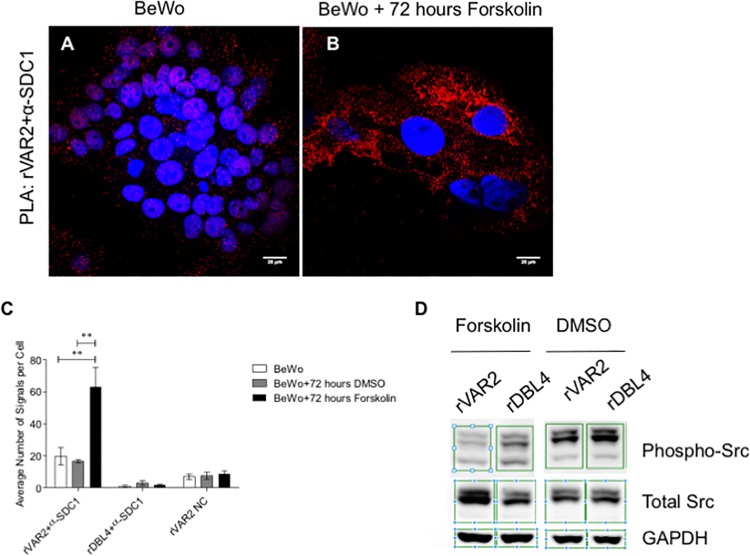
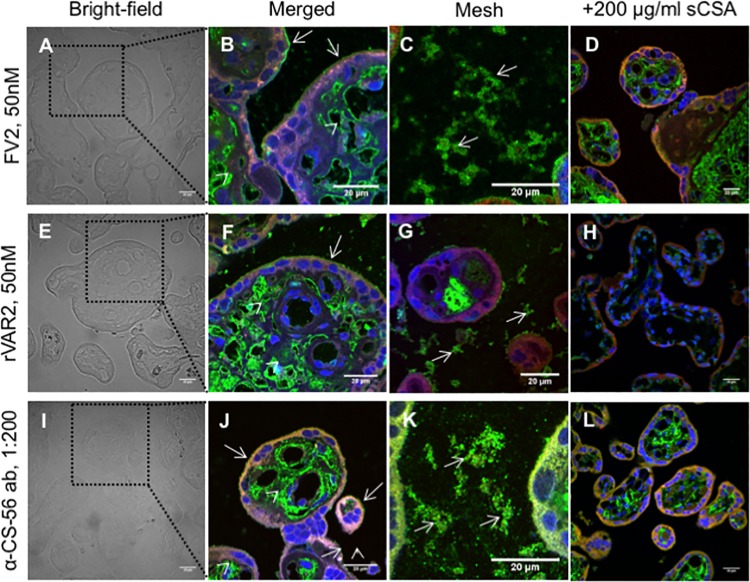
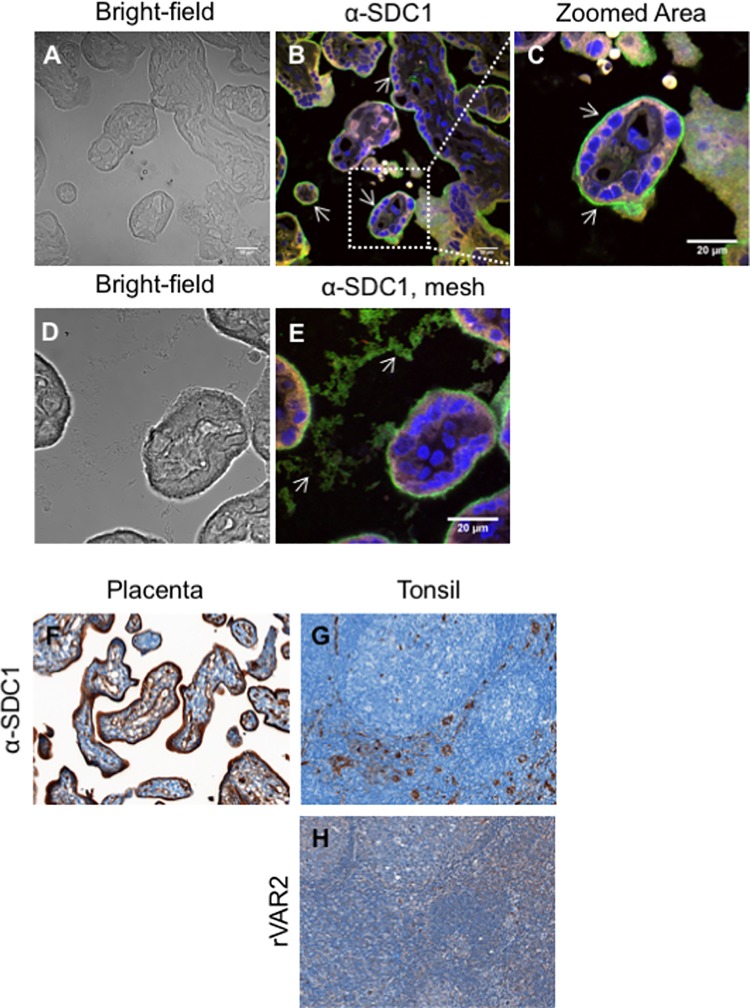
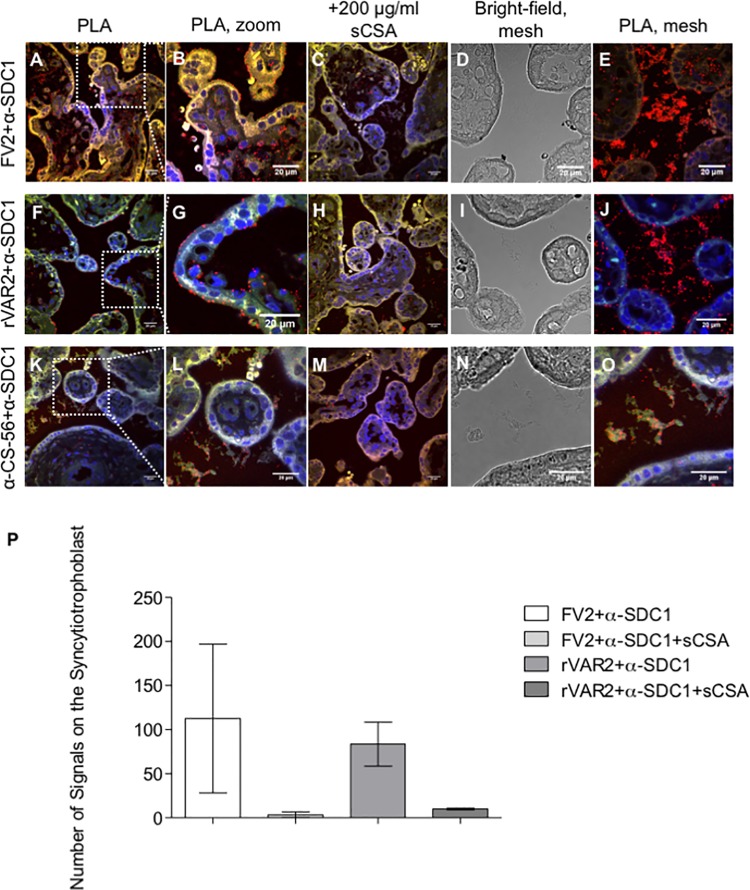
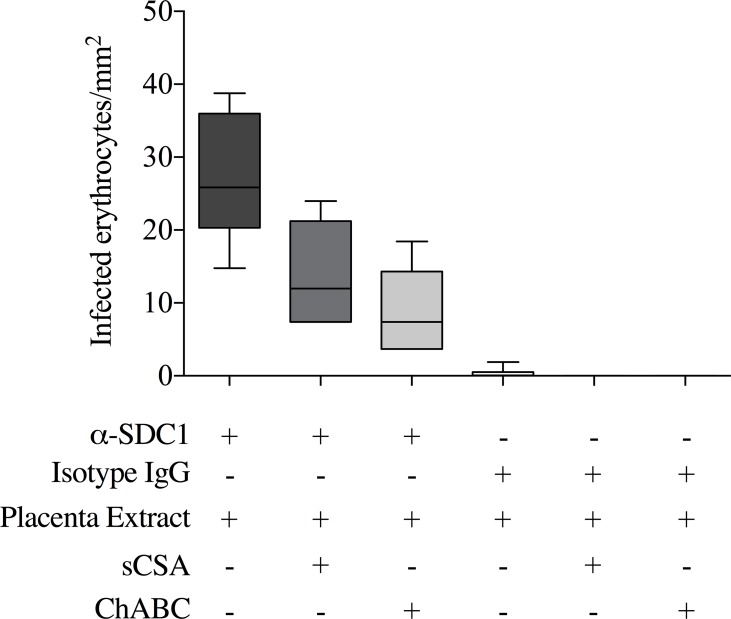
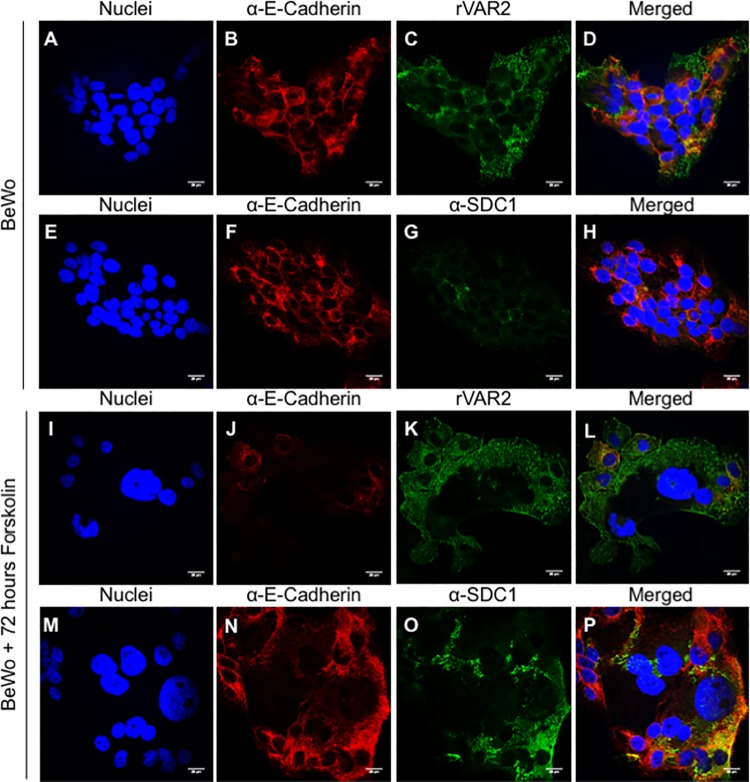
During placental malaria, Plasmodium falciparum infected erythrocytes sequester in the placenta, causing health problems for both the mother and fetus. The specific adherence is mediated by the VAR2CSA protein, which binds to placental chondroitin sulfate (CS) on chondroitin sulfate proteoglycans (CSPGs) in the placental syncytium. However, the identity of the CSPG core protein and the cellular impact of the interaction have remain elusive. In this study we identified the specific CSPG core protein to which the CS is attached, and characterized its exact placental location. VAR2CSA pull-down experiments using placental extracts from whole placenta or syncytiotrophoblast microvillous cell membranes showed three distinct CSPGs available for VAR2CSA adherence. Further examination of these three CSPGs by immunofluorescence and proximity ligation assays showed that syndecan-1 is the main receptor for VAR2CSA mediated placental adherence. We further show that the commonly used placental choriocarcinoma cell line, BeWo, express a different set of proteoglycans than those present on placental syncytiotrophoblast and may not be the most biologically relevant model to study placental malaria. Syncytial fusion of the BeWo cells, triggered by forskolin treatment, caused an increased expression of placental CS-modified syndecan-1. In line with this, we show that rVAR2 binding to placental CS impairs syndecan-1-related Src signaling in forskolin treated BeWo cells, but not in untreated cells.
在胎盘疟疾期间,恶性疟原虫感染的红细胞会在胎盘中滞留,给母亲和胎儿都带来健康问题。这种特异性黏附是由VAR2CSA蛋白介导的,该蛋白与胎盘合体滋养层中硫酸软骨素蛋白聚糖(CSPG)上的胎盘硫酸软骨素(CS)结合。然而,CSPG核心蛋白的身份以及这种相互作用对细胞的影响仍然不清楚。在本研究中,我们确定了与CS相连的特异性CSPG核心蛋白,并对其在胎盘中的确切位置进行了表征。使用来自整个胎盘或合体滋养层微绒毛细胞膜的胎盘提取物进行的VAR2CSA下拉实验显示,有三种不同的CSPG可用于VAR2CSA黏附。通过免疫荧光和邻近连接分析对这三种CSPG进行进一步检测表明,syndecan-1是VAR2CSA介导的胎盘黏附的主要受体。我们进一步表明,常用的胎盘绒毛膜癌细胞系BeWo表达的蛋白聚糖与胎盘合体滋养层上的不同,可能不是研究胎盘疟疾最具生物学相关性的模型。福司可林处理引发的BeWo细胞的合体融合导致胎盘CS修饰的syndecan-1表达增加。与此一致的是,我们表明rVAR2与胎盘CS的结合会损害福司可林处理的BeWo细胞中与syndecan-1相关的Src信号传导,但在未处理的细胞中则不会。