Centre for Translational Medicine and Parasitology, Department of Immunology and Microbiology, Faculty of Health and Medical Sciences, University of Copenhagen, Copenhagen University Hospital, Copenhagen, Denmark.
VAR2 Pharmaceuticals ApS, Copenhagen, Denmark.
Nat Commun. 2024 Aug 30;15(1):7553. doi: 10.1038/s41467-024-51781-0.
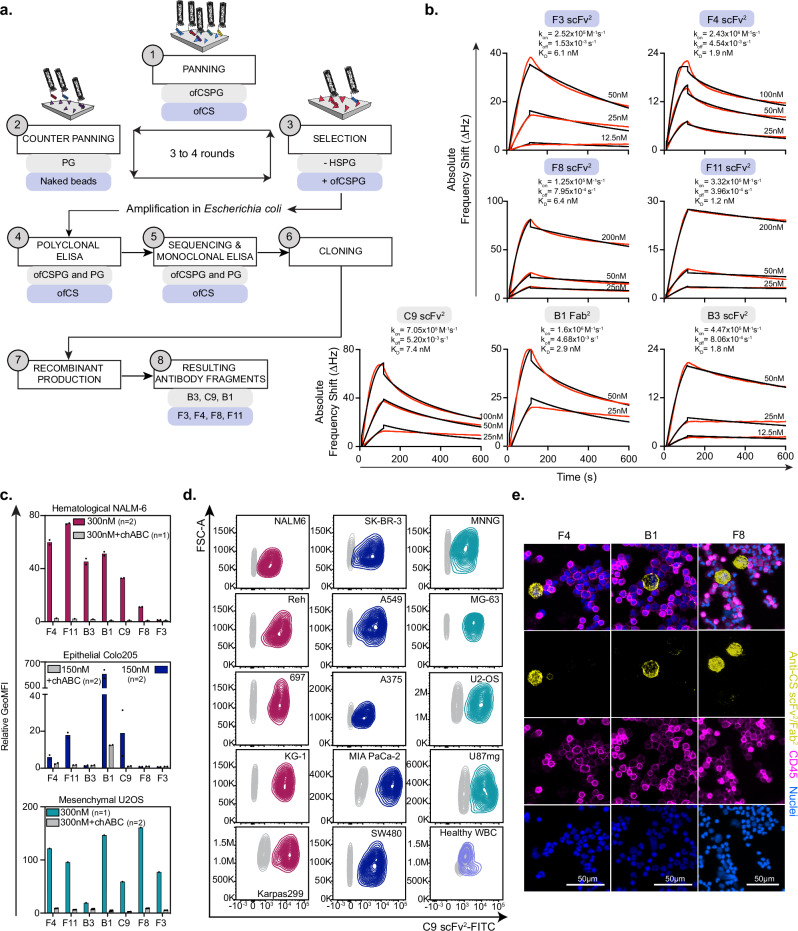
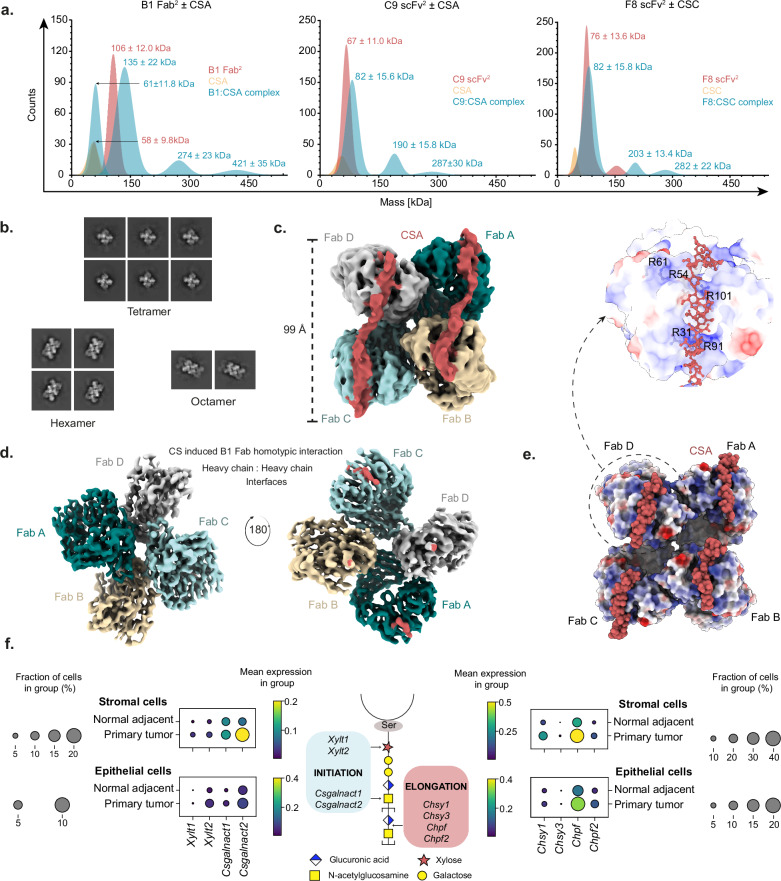
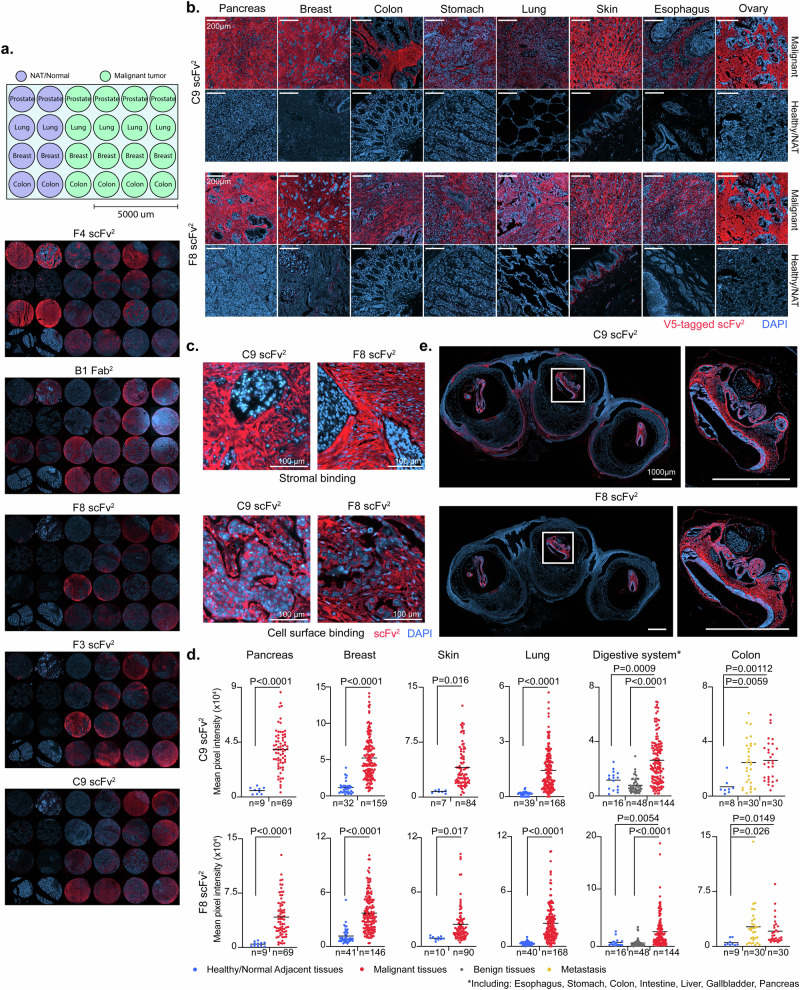
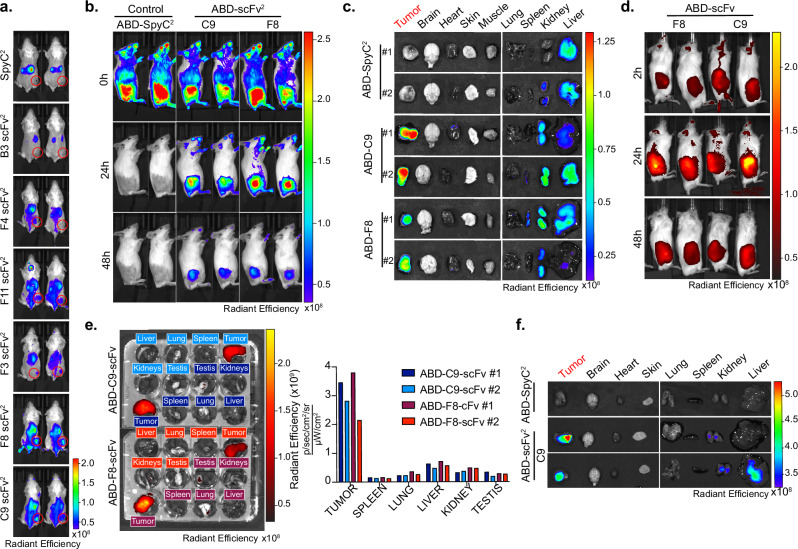
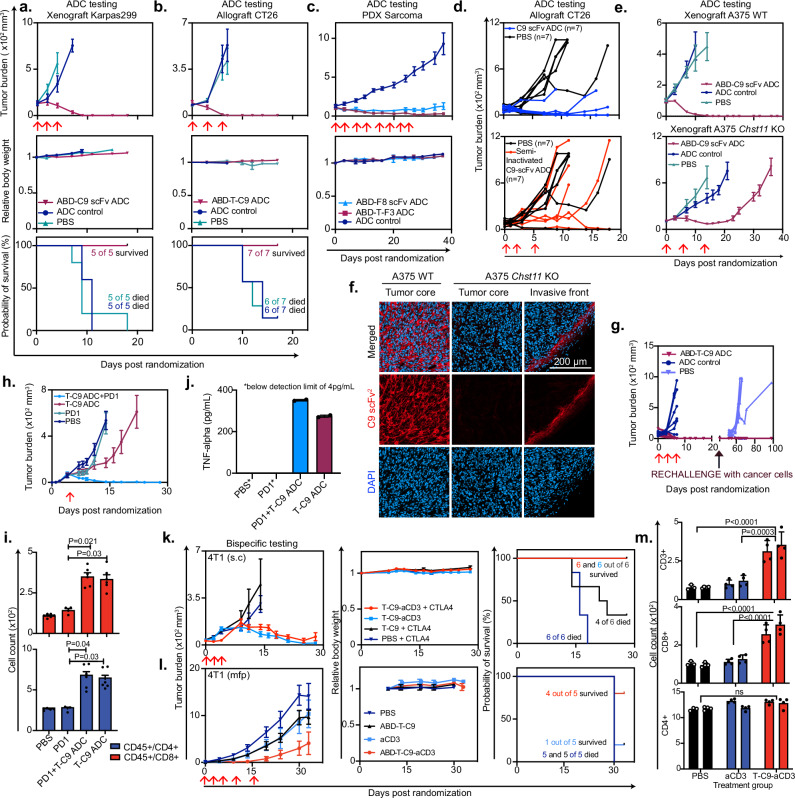
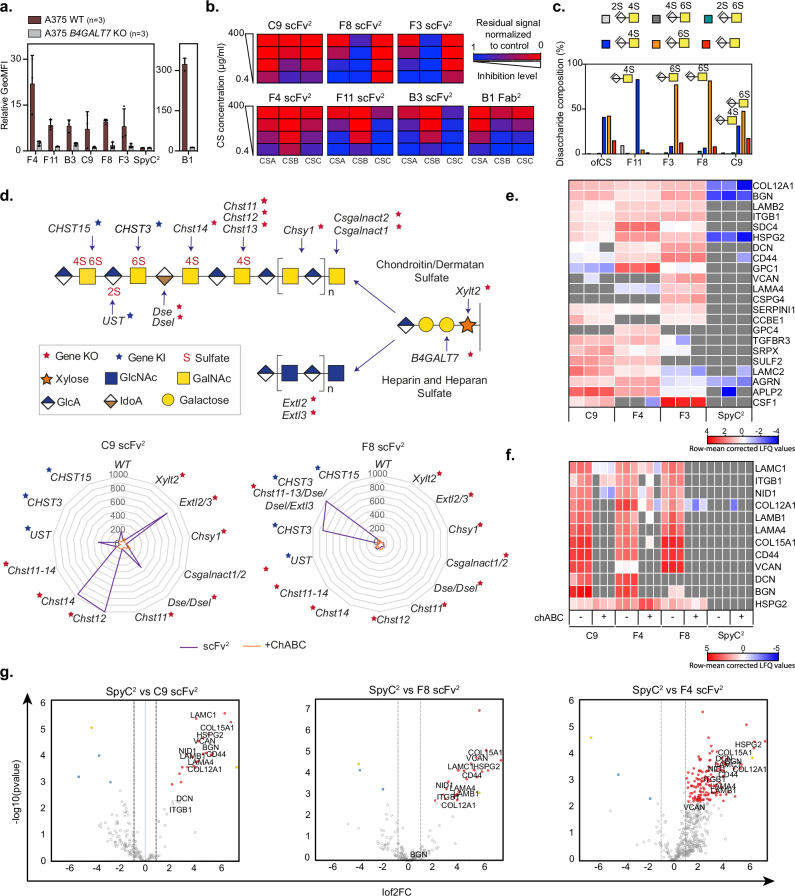
Molecular similarities between embryonic and malignant cells can be exploited to target tumors through specific signatures absent in healthy adult tissues. One such embryonic signature tumors express is oncofetal chondroitin sulfate (ofCS), which supports disease progression and dissemination in cancer. Here, we report the identification and characterization of phage display-derived antibody fragments recognizing two distinct ofCS epitopes. These antibody fragments show binding affinity to ofCS in the low nanomolar range across a broad selection of solid tumor types in vitro and in vivo with minimal binding to normal, inflamed, or benign tumor tissues. Anti-ofCS antibody drug conjugates and bispecific immune cell engagers based on these targeting moieties disrupt tumor progression in animal models of human and murine cancers. Thus, anti-ofCS antibody fragments hold promise for the development of broadly effective therapeutic and diagnostic applications targeting human malignancies.
胚胎细胞和恶性细胞之间的分子相似性可以被利用,通过在健康成年组织中缺失的特定特征来靶向肿瘤。肿瘤表达的一种这样的胚胎特征是癌胎性软骨素硫酸盐(ofCS),它支持癌症的疾病进展和扩散。在这里,我们报告了鉴定和表征的噬菌体展示衍生的抗体片段,其识别两个不同的 ofCS 表位。这些抗体片段在体外和体内显示出对低纳摩尔范围内广泛的固体肿瘤类型的 ofCS 的结合亲和力,与正常、炎症或良性肿瘤组织的结合最小。基于这些靶向部分的抗-ofCS 抗体药物偶联物和双特异性免疫细胞衔接子在人类和鼠类癌症的动物模型中破坏肿瘤进展。因此,抗-ofCS 抗体片段有望开发出针对人类恶性肿瘤的广泛有效的治疗和诊断应用。