Malta Ananda, Souza Aline Amenencia de, Ribeiro Tatiane Aparecida, Francisco Flávio Andrade, Pavanello Audrei, Prates Kelly Valério, Tófolo Laize Peron, Miranda Rosiane Aparecida, Oliveira Júlio Cezar de, Martins Isabela Peixoto, Previate Carina, Gomes Rodrigo Mello, Franco Claudinéia Conationi da Silva, Natali Maria Raquel Marçal, Palma-Rigo Kesia, Mathias Paulo Cezar de Freitas
Laboratory of Secretion Cell Biology, Department of Biotechnology, Genetics and Cell Biology, State University of Maringa, Maringá, PR, Brazil.
Health Sciences Institute, Federal University of Mato Grosso, Sinop, MT, Brazil.
Sci Rep. 2016 Aug 26;6:30745. doi: 10.1038/srep30745.
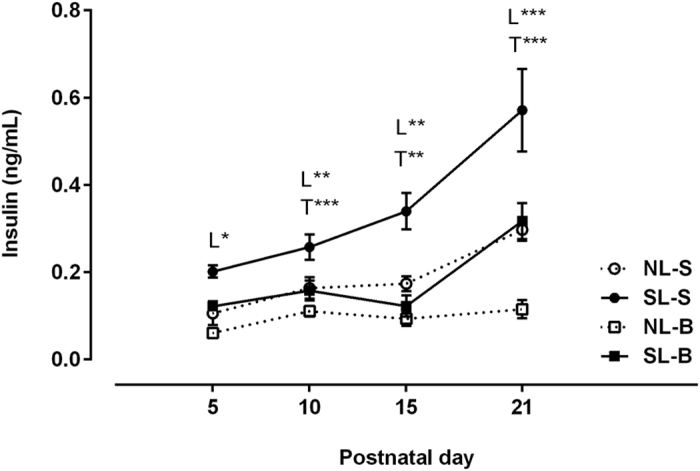
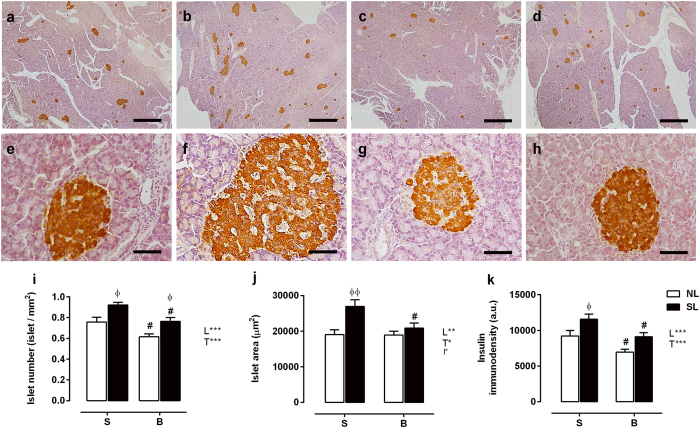
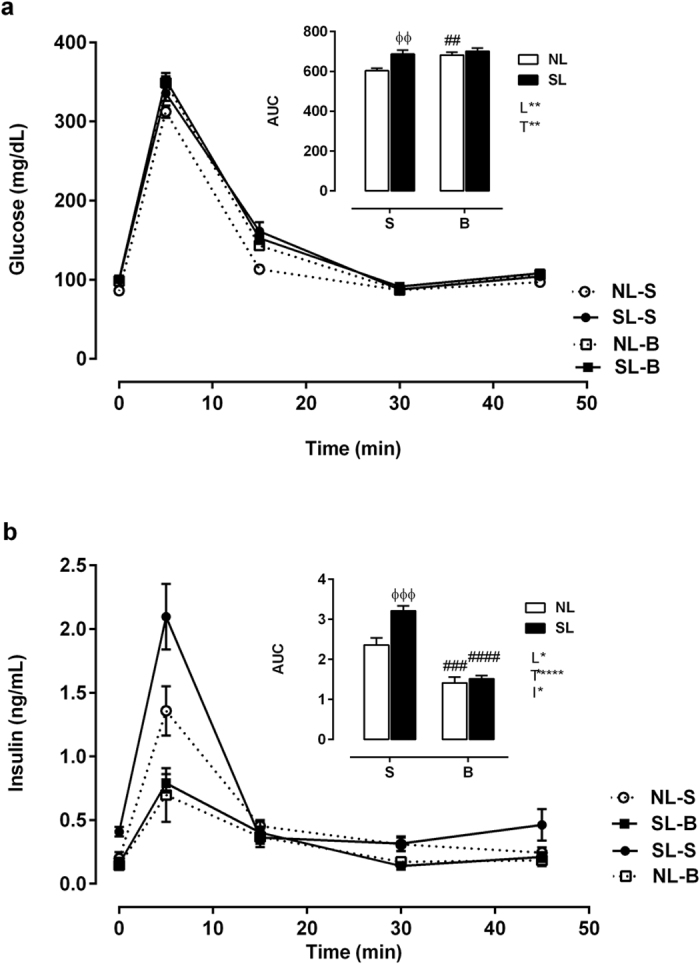
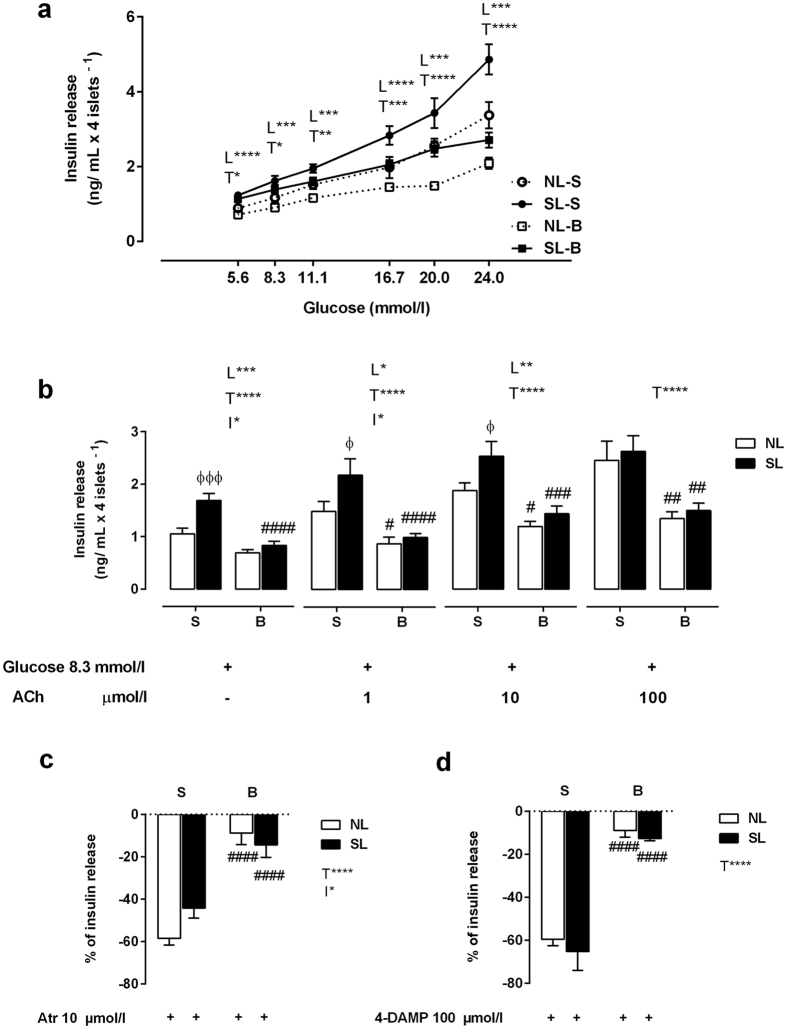
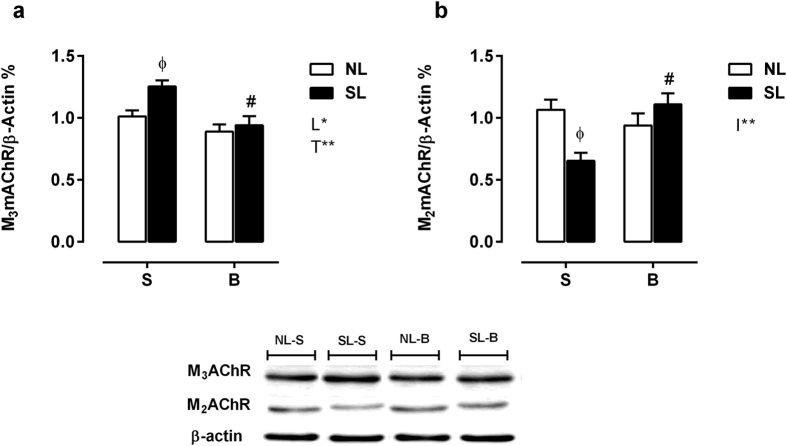
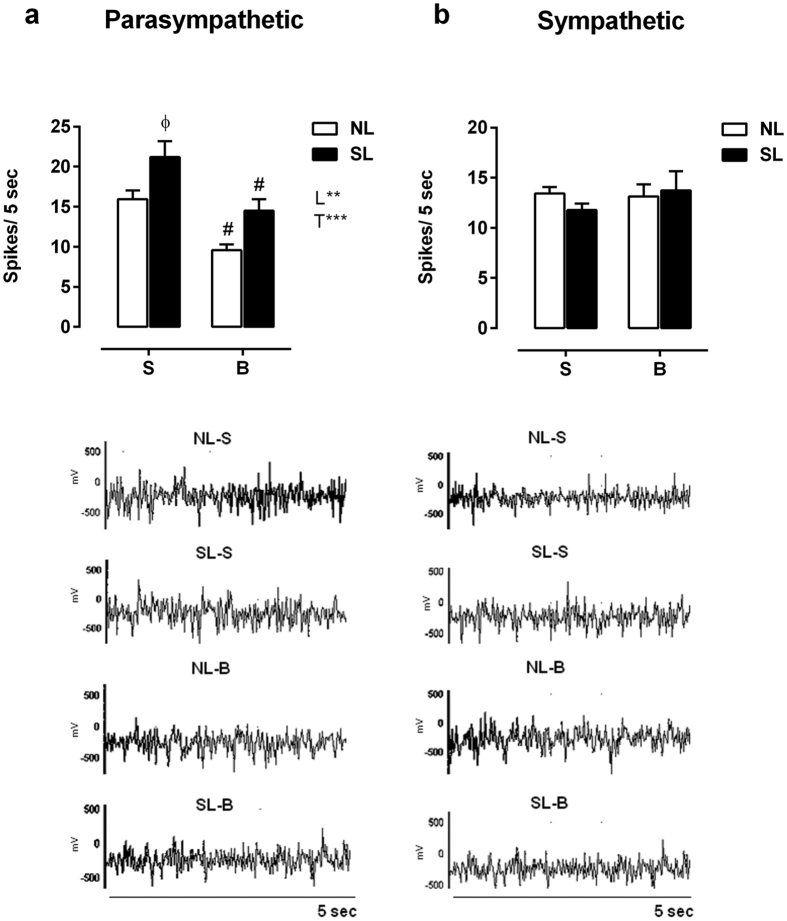
We tested whether treatment with a cholinergic antagonist could reduce insulin levels in early postnatal life and attenuate metabolic dysfunctions induced by early overfeeding in adult male rats. Wistar rats raised in small litters (SLs, 3 pups/dam) and normal litters (NLs, 9 pups/dam) were used in models of early overfeeding and normal feeding, respectively. During the first 12 days of lactation, animals in the SL and NL groups received scopolamine butylbromide (B), while the controls received saline (S) injections. The drug treatment decreased insulin levels in pups from both groups, and as adults, these animals showed improvements in glucose tolerance, insulin sensitivity, vagus nerve activity, fat tissue accretion, insulinemia, leptinemia, body weight gain and food intake. Low glucose and cholinergic insulinotropic effects were observed in pancreatic islets from both groups. Low protein expression was observed for the muscarinic M3 acetylcholine receptor subtype (M3mAChR), although M2mAChR subtype expression was increased in SL-B islets. In addition, beta-cell density was reduced in drug-treated rats. These results indicate that early postnatal scopolamine butylbromide treatment inhibits early overfeeding-induced metabolic dysfunctions in adult rats, which might be caused by insulin decreases during lactation, associated with reduced parasympathetic activity and expression of M3mAChR in pancreatic islets.
我们测试了使用胆碱能拮抗剂进行治疗是否能够降低出生后早期的胰岛素水平,并减轻成年雄性大鼠早期过度喂养所诱导的代谢功能障碍。分别将饲养在小窝(SL,每只母鼠3只幼崽)和正常窝(NL,每只母鼠9只幼崽)中的Wistar大鼠用于早期过度喂养和正常喂养模型。在哺乳期的前12天,SL组和NL组动物接受丁溴东莨菪碱(B)注射,而对照组接受生理盐水(S)注射。药物治疗降低了两组幼崽的胰岛素水平,并且成年后,这些动物在葡萄糖耐量、胰岛素敏感性、迷走神经活动、脂肪组织积聚、胰岛素血症、瘦素血症、体重增加和食物摄入量方面均有改善。在两组的胰岛中均观察到低葡萄糖和胆碱能促胰岛素效应。虽然在SL-B胰岛中M2mAChR亚型表达增加,但毒蕈碱M3型乙酰胆碱受体亚型(M3mAChR)的蛋白表达较低。此外,药物处理的大鼠中β细胞密度降低。这些结果表明,出生后早期使用丁溴东莨菪碱治疗可抑制成年大鼠早期过度喂养诱导的代谢功能障碍,这可能是由于哺乳期胰岛素水平降低,同时伴有副交感神经活动减少以及胰岛中M3mAChR表达降低所致。