Domercq Maria, Szczupak Boguslaw, Gejo Jon, Gómez-Vallejo Vanessa, Padro Daniel, Gona Kiran Babu, Dollé Frédéric, Higuchi Makoto, Matute Carlos, Llop Jordi, Martín Abraham
1. Department of Neurosciences, University of the Basque Country, Barrio Sarriena s/n, 48940 Leioa, Spain, Achucarro Basque Center for Neuroscience-UPV/EHU, 48170 Zamudio, Spain and Instituto de Salud Carlos III, Centro de Investigación Biomédica en Red de Enfermedades Neurodegenerativas (CIBERNED), 48940 Leioa, Spain.
2. Molecular Imaging Unit, CIC biomaGUNE, Pº Miramon 182, San Sebastian, Spain.
Theranostics. 2016 Jul 9;6(11):1753-67. doi: 10.7150/thno.15616. eCollection 2016.
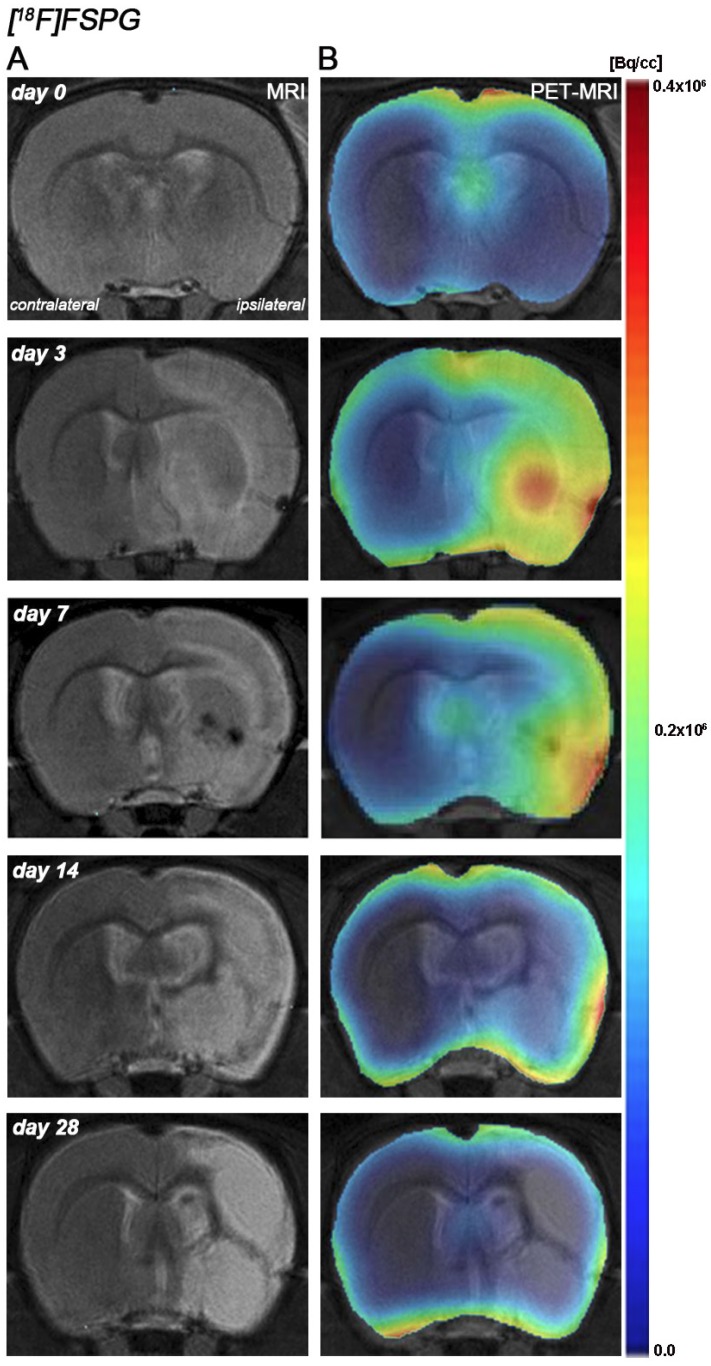
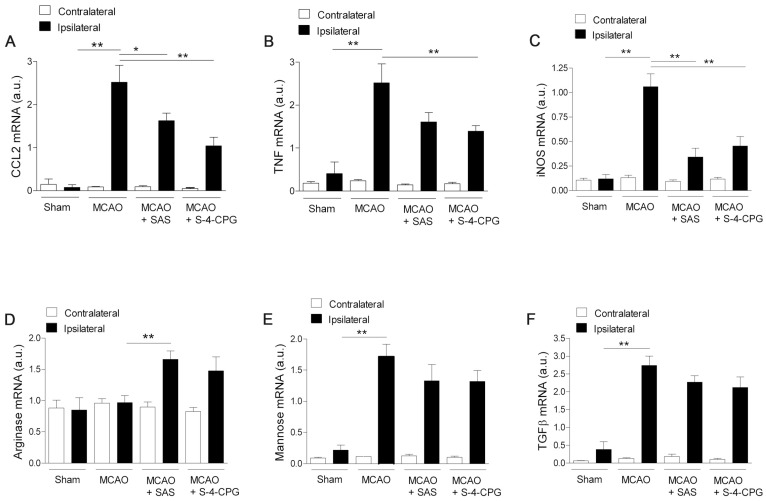
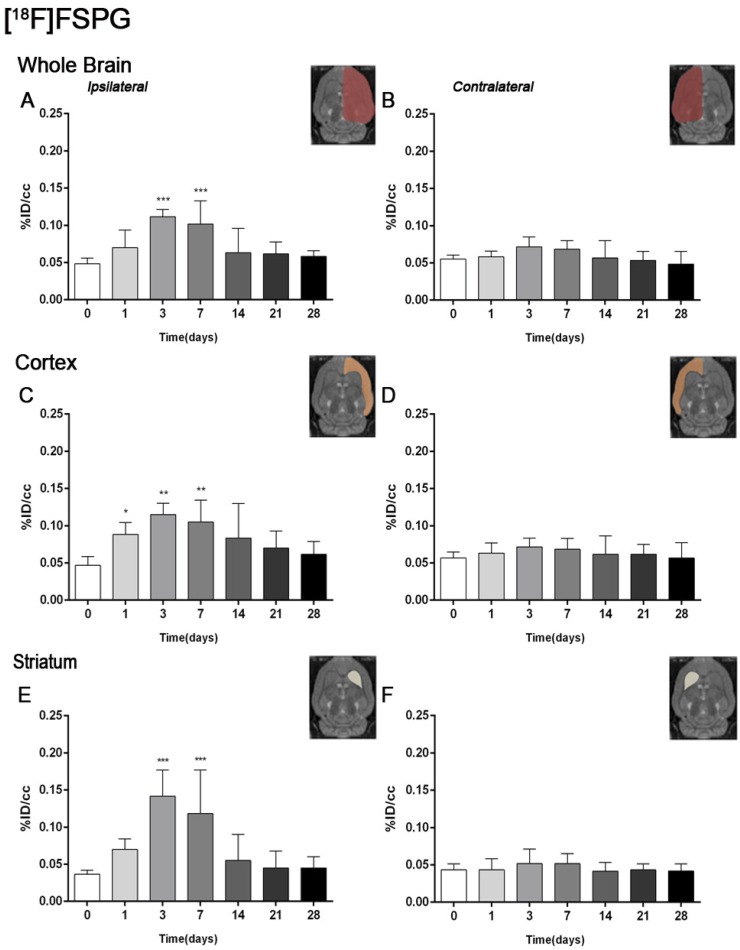
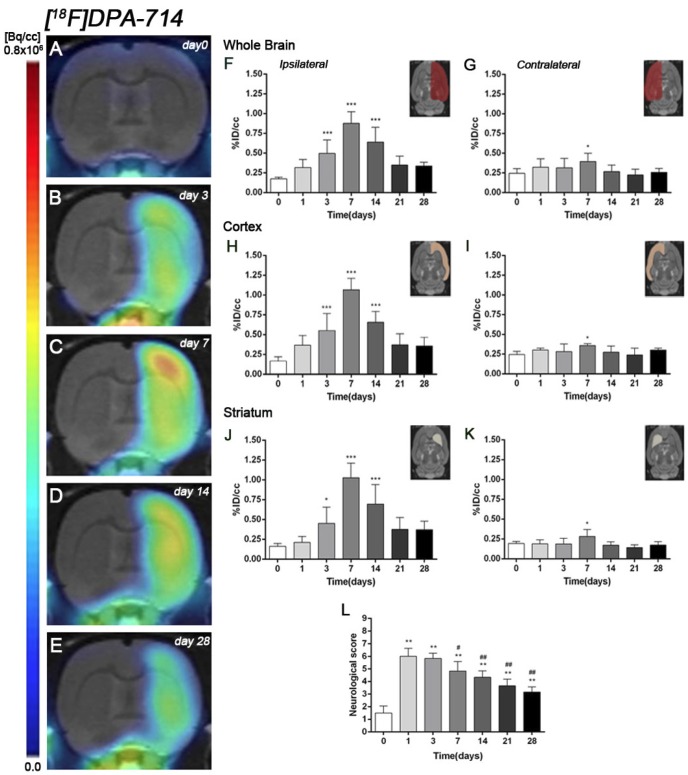
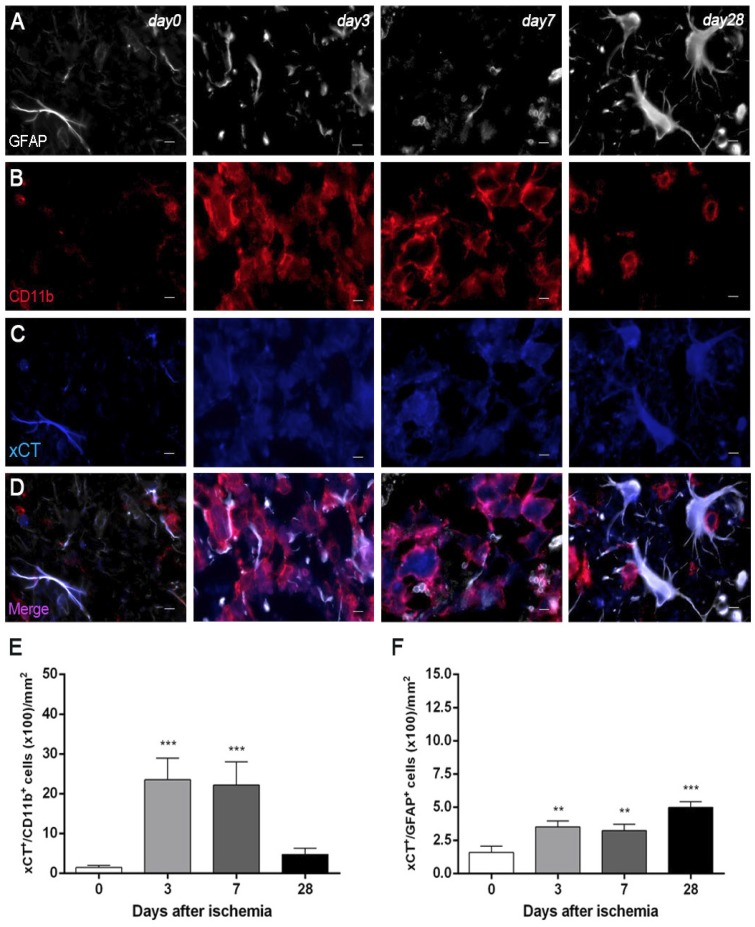
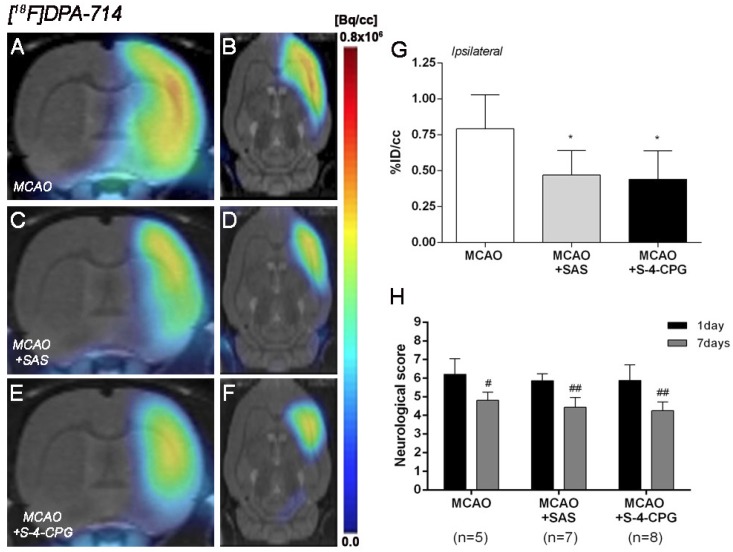
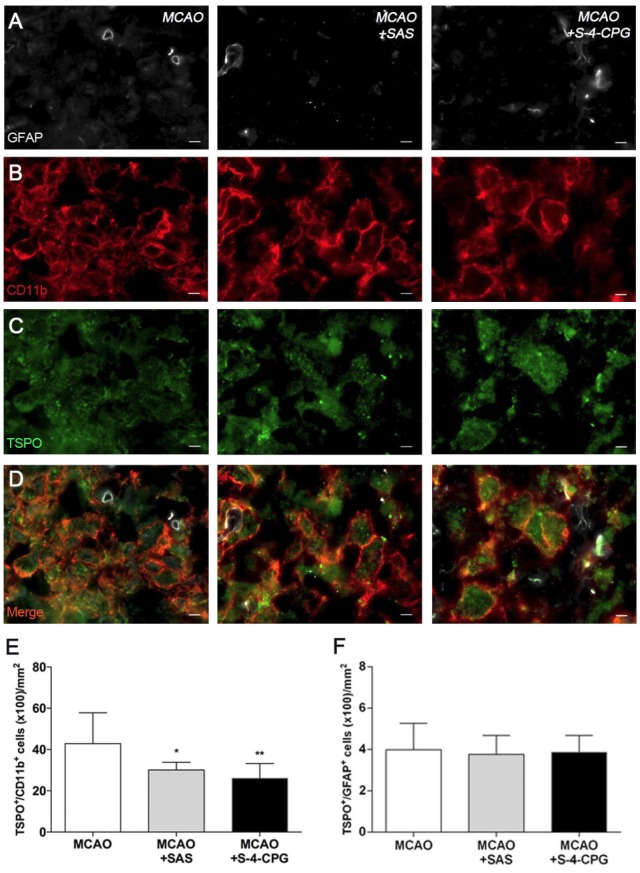
In vivo Positron Emission Tomography (PET) imaging of the cystine-glutamate antiporter (system xc(-)) activity with [(18)F]FSPG is meant to be an attractive tool for the diagnosis and therapy evaluation of brain diseases. However, the role of system xc(-) in cerebral ischemia and its involvement in inflammatory reaction has been scarcely explored. In this work, we report the longitudinal investigation of the neuroinflammatory process following transient middle cerebral artery occlusion (MCAO) in rats using PET with [(18)F]FSPG and the translocator protein (TSPO) ligand [(18)F]DPA-714. In the ischemic territory, [(18)F]FSPG showed a progressive binding increase that peaked at days 3 to 7 and was followed by a progressive decrease from days 14 to 28 after reperfusion. In contrast, [(18)F]DPA-714 evidenced maximum binding uptake values over day 7 after reperfusion. Ex vivo immnunohistochemistry confirmed the up-regulation of system xc(-) in microglial cells and marginally in astrocytes. Inhibition of system xc(-) with sulfasalazine and S-4-CPG resulted in increased arginase (anti-inflammatory M2 marker) expression at day 7 after ischemia, together with a decrease in TSPO and microglial M1 proinflammatory markers (CCL2, TNF and iNOS) expression. Taken together, these results suggest that system xc(-) plays a key role in the inflammatory reaction underlying experimental stroke.
利用[¹⁸F]FSPG对胱氨酸-谷氨酸反向转运体(系统xc⁻)活性进行体内正电子发射断层扫描(PET)成像,有望成为脑部疾病诊断和治疗评估的一种有吸引力的工具。然而,系统xc⁻在脑缺血中的作用及其与炎症反应的关系鲜有研究。在本研究中,我们报告了使用PET结合[¹⁸F]FSPG和转位蛋白(TSPO)配体[¹⁸F]DPA-714对大鼠短暂性大脑中动脉闭塞(MCAO)后神经炎症过程进行的纵向研究。在缺血区域,[¹⁸F]FSPG显示结合逐渐增加,在再灌注后3至7天达到峰值,随后从第14天至28天逐渐下降。相比之下,[¹⁸F]DPA-714在再灌注后第7天显示最大结合摄取值。离体免疫组织化学证实了小胶质细胞中系统xc⁻的上调,星形胶质细胞中上调程度较小。用柳氮磺胺吡啶和S-4-CPG抑制系统xc⁻导致缺血后第7天精氨酸酶(抗炎M2标志物)表达增加,同时TSPO和小胶质细胞M1促炎标志物(CCL2、TNF和iNOS)表达减少。综上所述,这些结果表明系统xc⁻在实验性中风潜在的炎症反应中起关键作用。