Warren Cody J, Van Doorslaer Koenraad, Pandey Ahwan, Espinosa Joaquin M, Pyeon Dohun
Department of Immunology and Microbiology, University of Colorado School of Medicine, Aurora, CO, USA.
DNA Tumor Virus Section, Laboratory of Viral Diseases, National Institute of Allergy and Infectious Diseases, National Institutes of Health, Bethesda, MD, USA.
Virus Evol. 2015 Jan;1(1). doi: 10.1093/ve/vev015. Epub 2015 Jan 1.
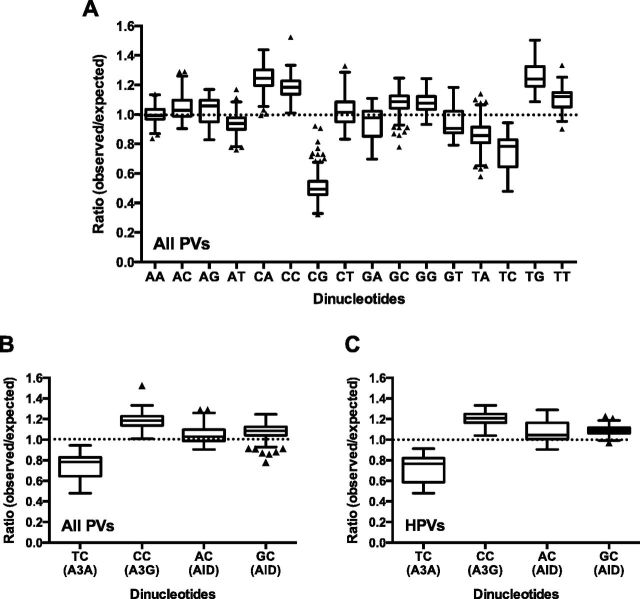
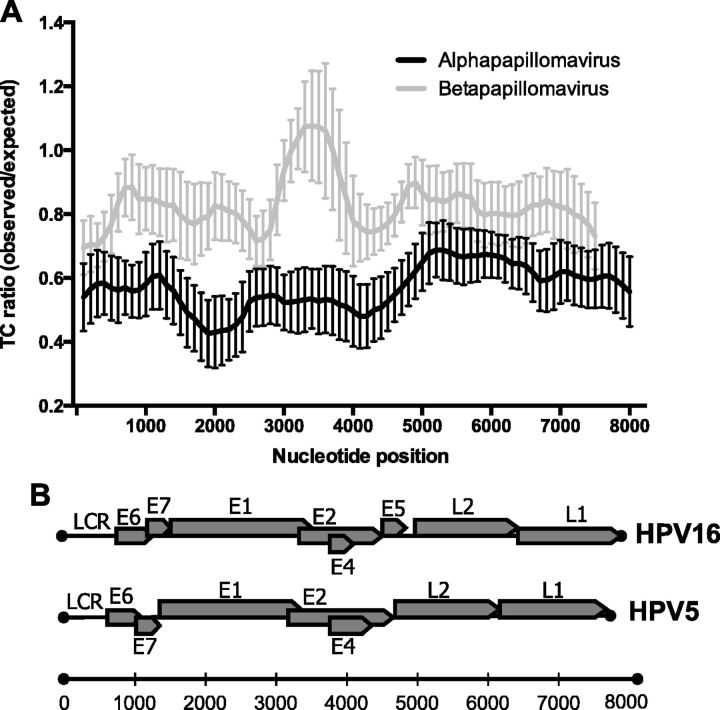
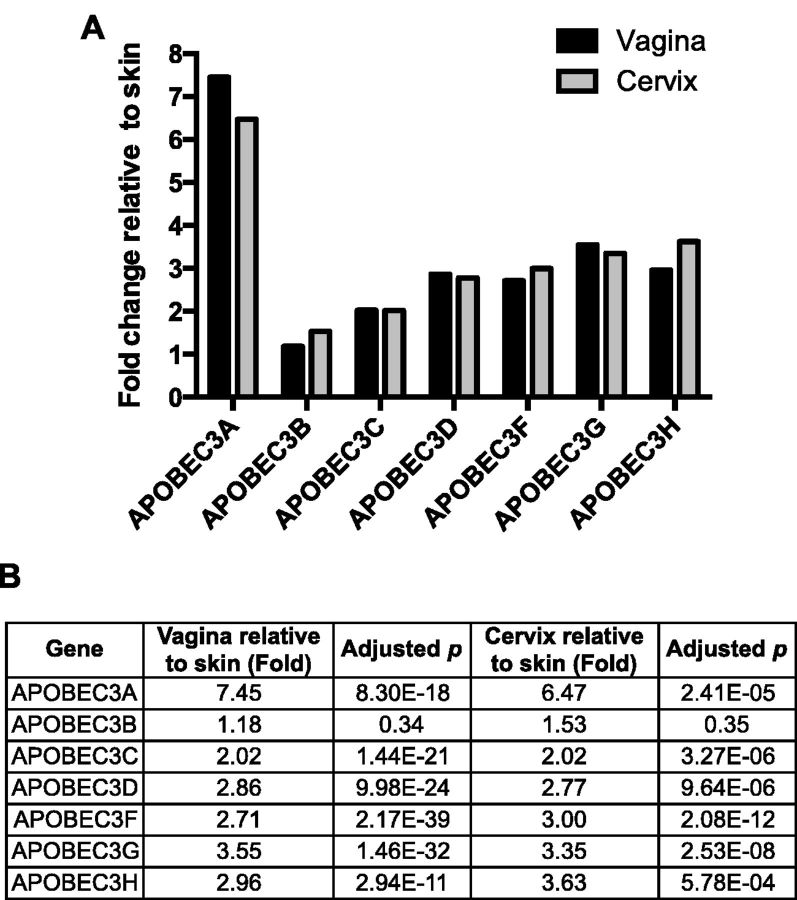
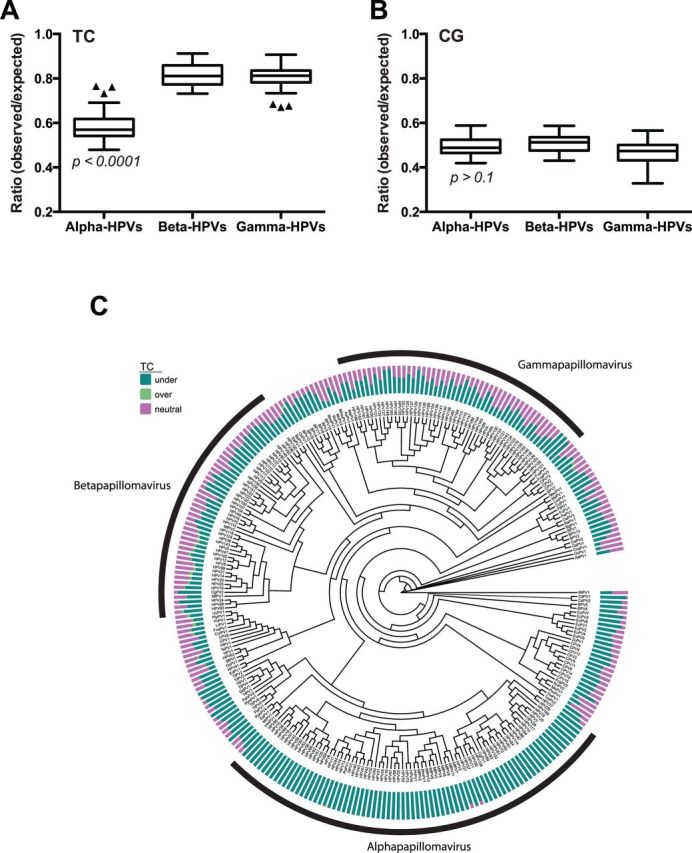
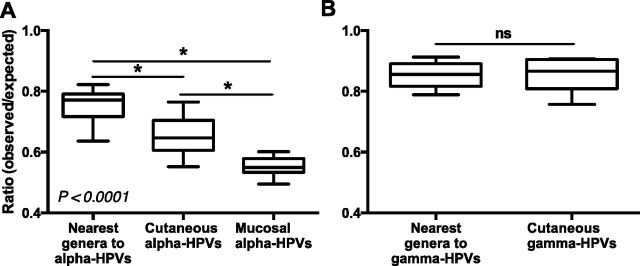
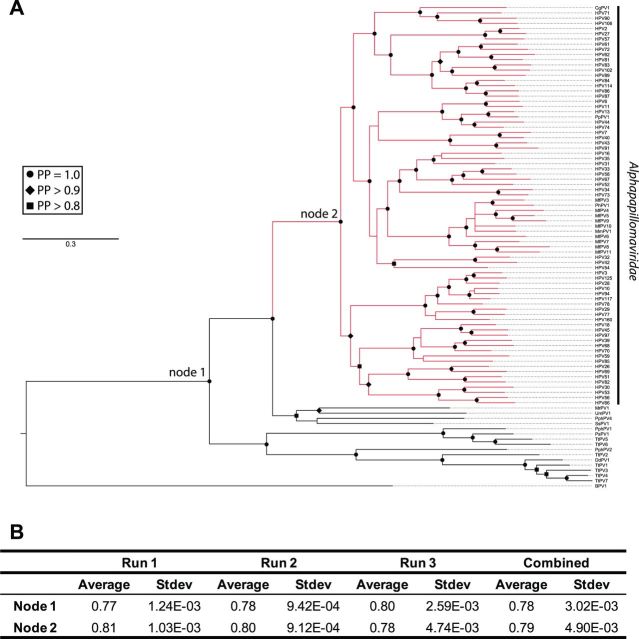
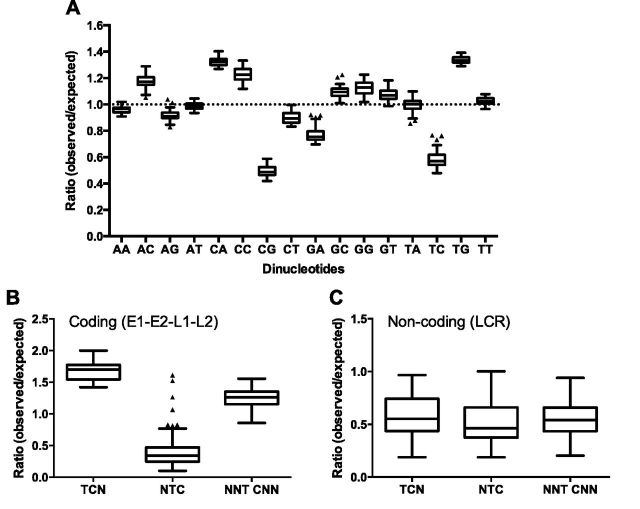
More than 270 different types of papillomaviruses have been discovered in a wide array of animal species. Despite the great diversity of papillomaviruses, little is known about the evolutionary processes that drive host tropism and the emergence of oncogenic genotypes. Although host defense mechanisms have evolved to interfere with various aspects of a virus life cycle, viruses have also coevolved copious strategies to avoid host antiviral restriction. Our and other studies have shown that the cytidine deaminase APOBEC3 family members edit HPV genomes and restrict virus infectivity. Thus, we hypothesized that host restriction by APOBEC3 served as selective pressure during papillomavirus evolution. To test this hypothesis, we analyzed the relative abundance of all dinucleotide sequences in full-length genomes of 274 papillomavirus types documented in the Papillomavirus Episteme database (PaVE). Here, we report that TC dinucleotides, the preferred target sequence of several human APOBEC3 proteins (hA3A, hA3B, hA3F, and hA3H), are highly depleted in papillomavirus genomes. Given that HPV infection is highly tissue-specific, the expression levels of APOBEC3 family members were analyzed. The basal expression levels of all APOBEC3 isoforms, excluding hA3B, are significantly higher in mucosal skin compared with cutaneous skin. Interestingly, we reveal that (alpha-PVs), a majority of which infects anogenital mucosa, display the most dramatic reduction in TC dinucleotide content. Computer modeling and reconstruction of ancestral alpha-PV genomes suggest that TC depletion occurred after the alpha-PVs diverged from their most recent common ancestor. In addition, we found that TC depletion in alpha-PVs is greatly affected by protein coding potential. Taken together, our results suggest that PVs replicating in tissues with high APOBEC3 levels may have evolved to evade restriction by selecting for variants that contain reduced APOBEC3 target sites in their genomes.
在各种各样的动物物种中已发现270多种不同类型的乳头瘤病毒。尽管乳头瘤病毒种类繁多,但对于驱动宿主嗜性和致癌基因型出现的进化过程却知之甚少。虽然宿主防御机制已经进化以干扰病毒生命周期的各个方面,但病毒也共同进化出了大量策略来避免宿主抗病毒限制。我们和其他研究表明,胞苷脱氨酶APOBEC3家族成员编辑HPV基因组并限制病毒感染性。因此,我们假设APOBEC3介导的宿主限制在乳头瘤病毒进化过程中充当了选择压力。为了验证这一假设,我们分析了乳头瘤病毒知识库(PaVE)中记录的274种乳头瘤病毒类型全长基因组中所有二核苷酸序列的相对丰度。在此,我们报告说,TC二核苷酸是几种人类APOBEC3蛋白(hA3A、hA3B、hA3F和hA3H)的首选靶序列,在乳头瘤病毒基因组中高度缺失。鉴于HPV感染具有高度的组织特异性,我们分析了APOBEC3家族成员的表达水平。与皮肤相比,除hA3B外,所有APOBEC3亚型在黏膜皮肤中的基础表达水平均显著更高。有趣的是,我们发现α乳头瘤病毒(α-PVs)大多感染肛门生殖器黏膜,其TC二核苷酸含量的减少最为显著。对祖先α-PV基因组的计算机建模和重建表明,TC缺失发生在α-PVs与其最近的共同祖先分化之后。此外,我们发现α-PVs中的TC缺失受蛋白质编码潜力的影响很大。综上所述,我们的结果表明,在APOBEC3水平较高的组织中复制的乳头瘤病毒可能已经进化出通过选择基因组中APOBEC3靶位点减少的变体来逃避限制。