Chen Xin, He Wan-Ting, Hu Lichen, Li Jingxian, Fang Yuan, Wang Xin, Xu Xiaozheng, Wang Zhuo, Huang Kai, Han Jiahuai
State Key Laboratory of Cellular Stress Biology, Innovation Center for Cell Signaling Network, School of Life Sciences, Xiamen University, Xiamen, Fujian 361005, China.
Cell Res. 2016 Sep;26(9):1007-20. doi: 10.1038/cr.2016.100. Epub 2016 Aug 30.
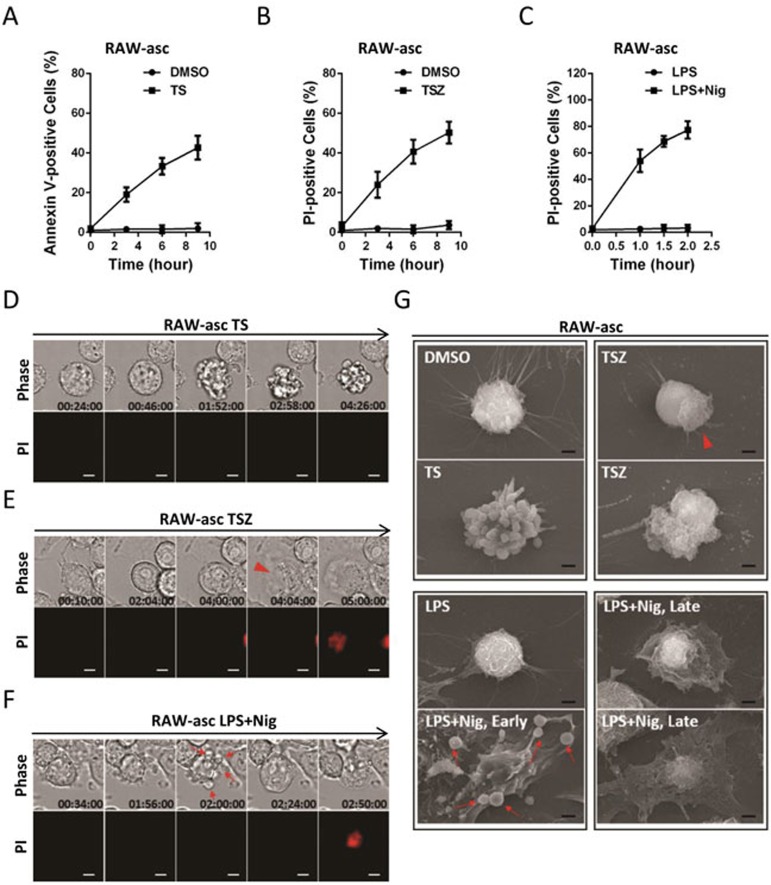
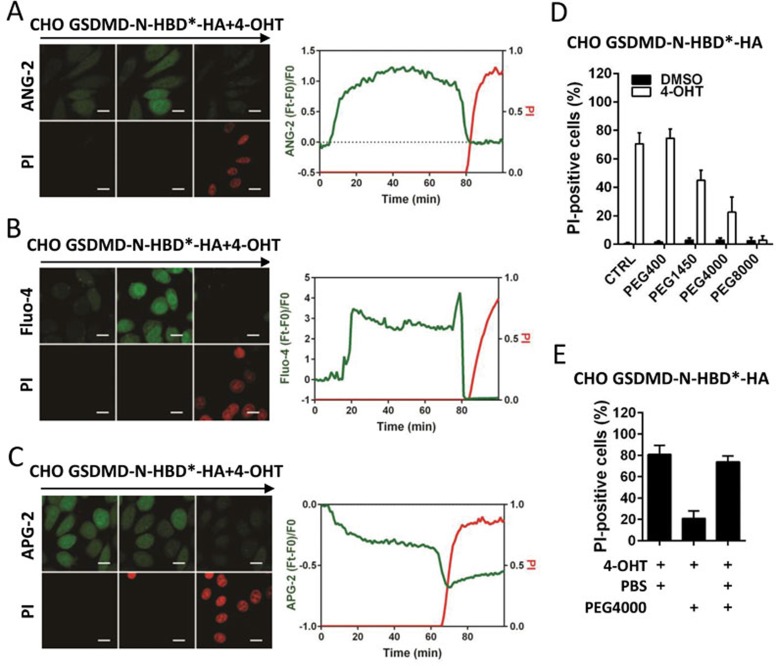
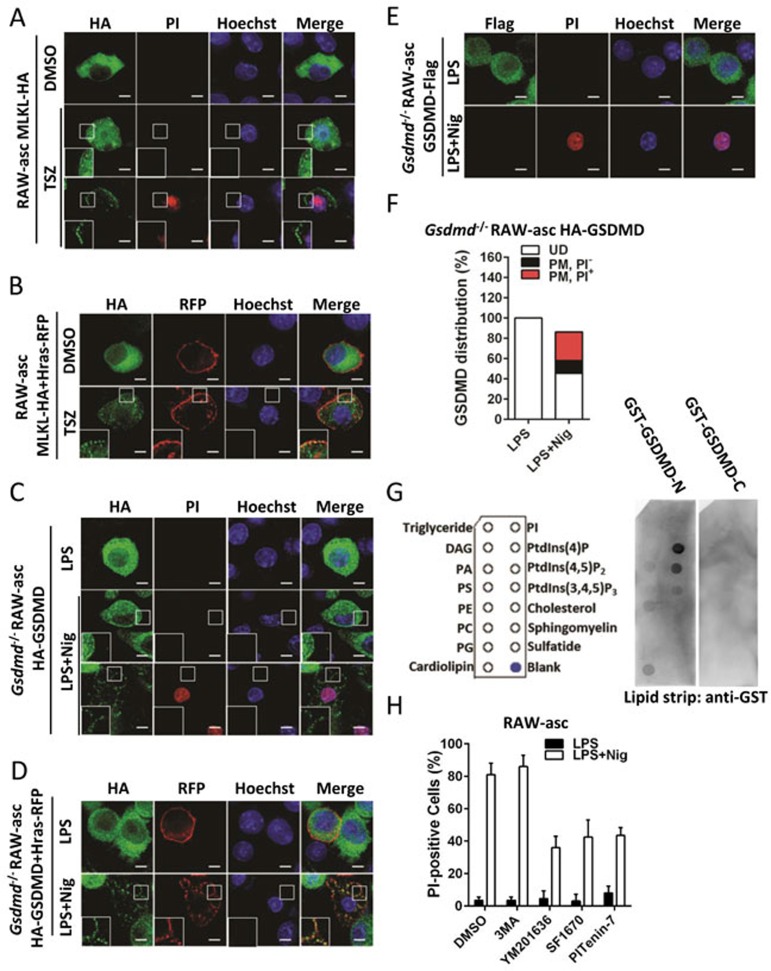
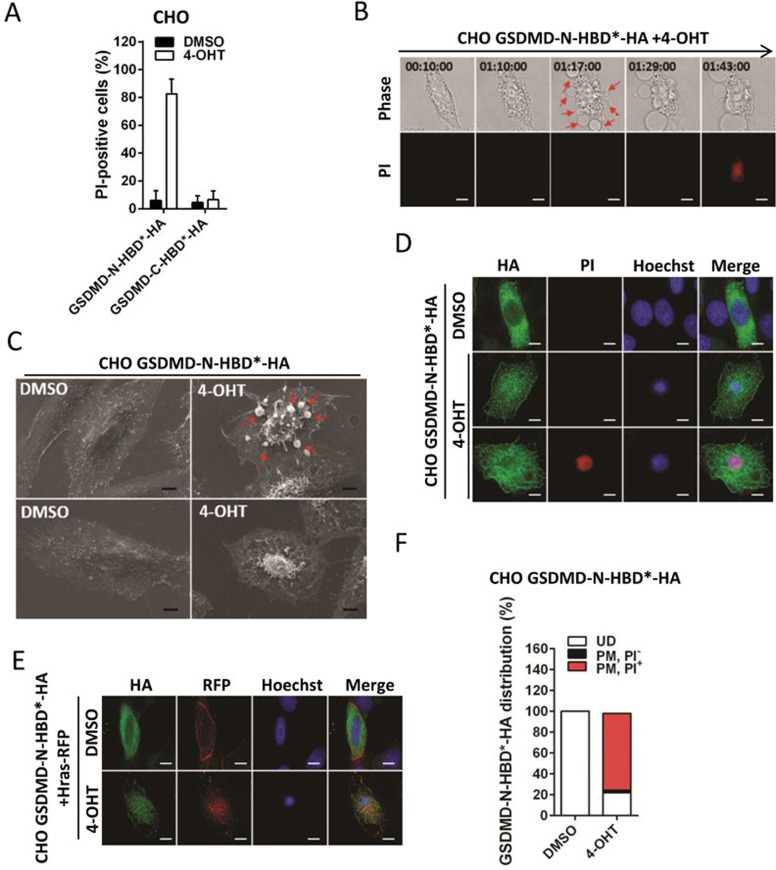
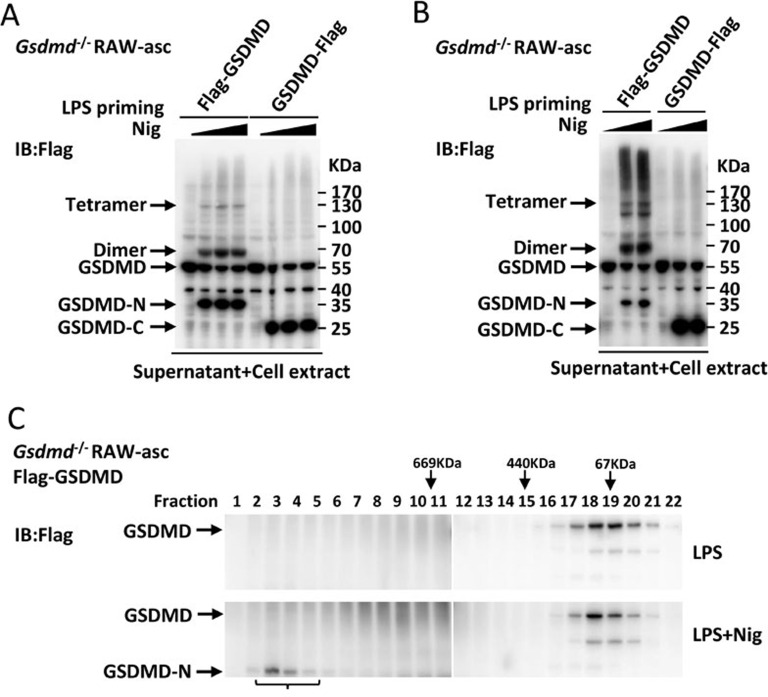
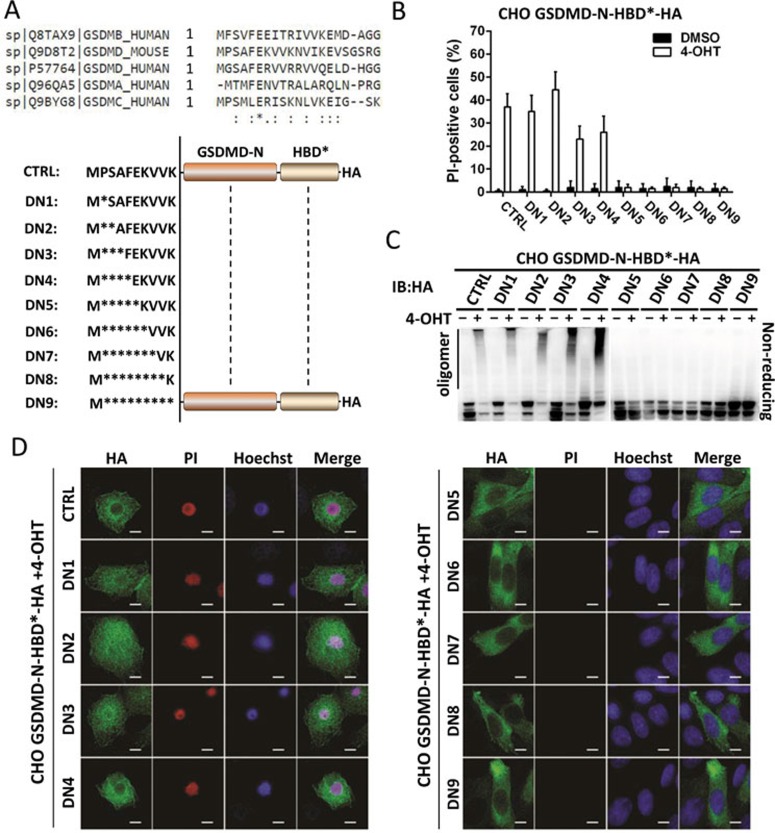
Necroptosis and pyroptosis are two forms of programmed cell death with a common feature of plasma membrane rupture. Here we studied the morphology and mechanism of pyroptosis in comparison with necroptosis. Different from necroptosis, pyroptosis undergoes membrane blebbing and produces apoptotic body-like cell protrusions (termed pyroptotic bodies) prior to plasma membrane rupture. The rupture in necroptosis is explosion-like, whereas in pyroptosis it leads to flattening of cells. It is known that the execution of necroptosis is mediated by mixed lineage kinase domain-like (MLKL) oligomers in the plasma membrane, whereas gasdermin-D (GSDMD) mediates pyroptosis after its cleavage by caspase-1 or caspase-11. We show that N-terminal fragment of GSDMD (GSDMD-N) generated by caspase cleavage also forms oligomer and migrates to the plasma membrane to kill cells. Both MLKL and GSDMD-N are lipophilic and the N-terminal sequences of both proteins are important for their oligomerization and plasma membrane translocation. Unlike MLKL which forms channels on the plasma membrane that induces influx of selected ions which osmotically swell the cells to burst, GSDMD-N forms non-selective pores and does not rely on increased osmolarity to disrupt cells. Our study reveals the pore-forming activity of GSDMD and channel-forming activity of MLKL determine different ways of plasma membrane rupture in pyroptosis and necroptosis.
坏死性凋亡和焦亡是程序性细胞死亡的两种形式,其共同特征是质膜破裂。在此,我们将焦亡的形态和机制与坏死性凋亡进行了比较研究。与坏死性凋亡不同,焦亡在质膜破裂之前会经历膜泡化,并产生凋亡小体样的细胞突起(称为焦亡小体)。坏死性凋亡中的破裂是类似爆炸的,而在焦亡中则导致细胞扁平化。已知坏死性凋亡的执行是由质膜中的混合谱系激酶结构域样(MLKL)寡聚体介导的,而gasdermin-D(GSDMD)在被caspase-1或caspase-11切割后介导焦亡。我们发现,caspase切割产生的GSDMD的N端片段(GSDMD-N)也会形成寡聚体并迁移到质膜以杀死细胞。MLKL和GSDMD-N都是亲脂性的,这两种蛋白质的N端序列对其寡聚化和质膜易位都很重要。与MLKL不同,MLKL在质膜上形成通道,诱导特定离子流入,使细胞因渗透作用膨胀而破裂,GSDMD-N形成非选择性孔道,不依赖于渗透压升高来破坏细胞。我们的研究揭示,GSDMD的成孔活性和MLKL的成通道活性决定了焦亡和坏死性凋亡中质膜破裂的不同方式。