Liu Ting, Li Rong, Zhao Hui, Deng Juan, Long Ying, Shuai Meng-Ting, Li Qian, Gu Huan, Chen Ya-Qi, Leng Ai-Min
Department of Gastroenterology, Xiangya Hospital of Central South University, Changsha, Hunan, China.
Department of Gastroenterology, Third Xiangya Hospital of Central South University, Changsha, Hunan, China.
Oncotarget. 2016 Oct 11;7(41):66851-66864. doi: 10.18632/oncotarget.11694.
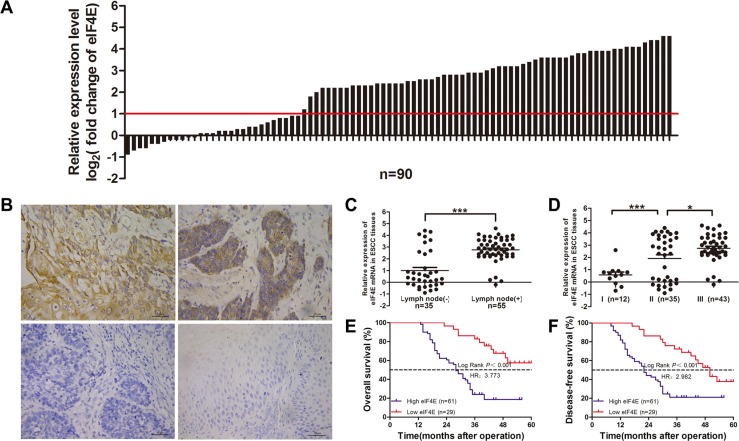
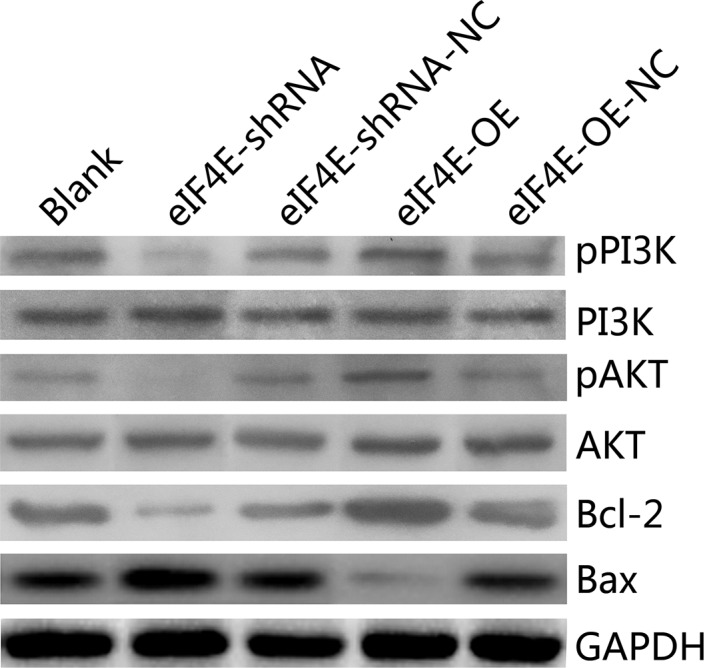
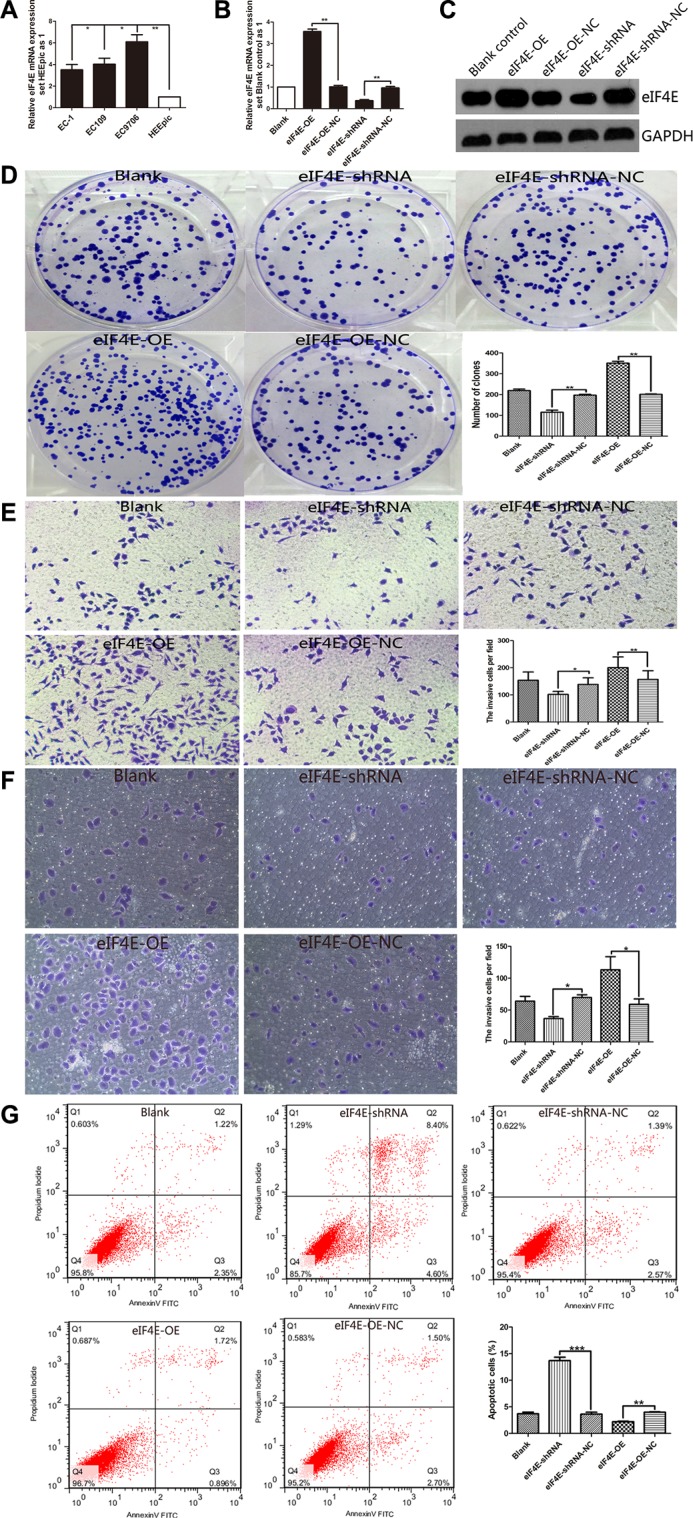
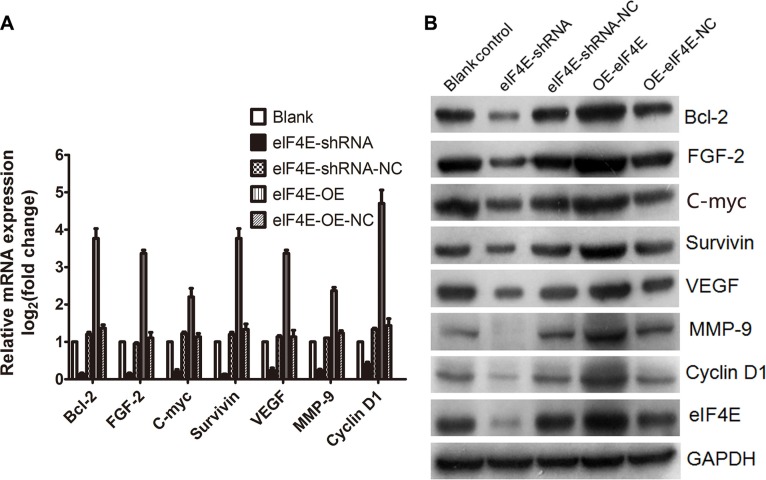
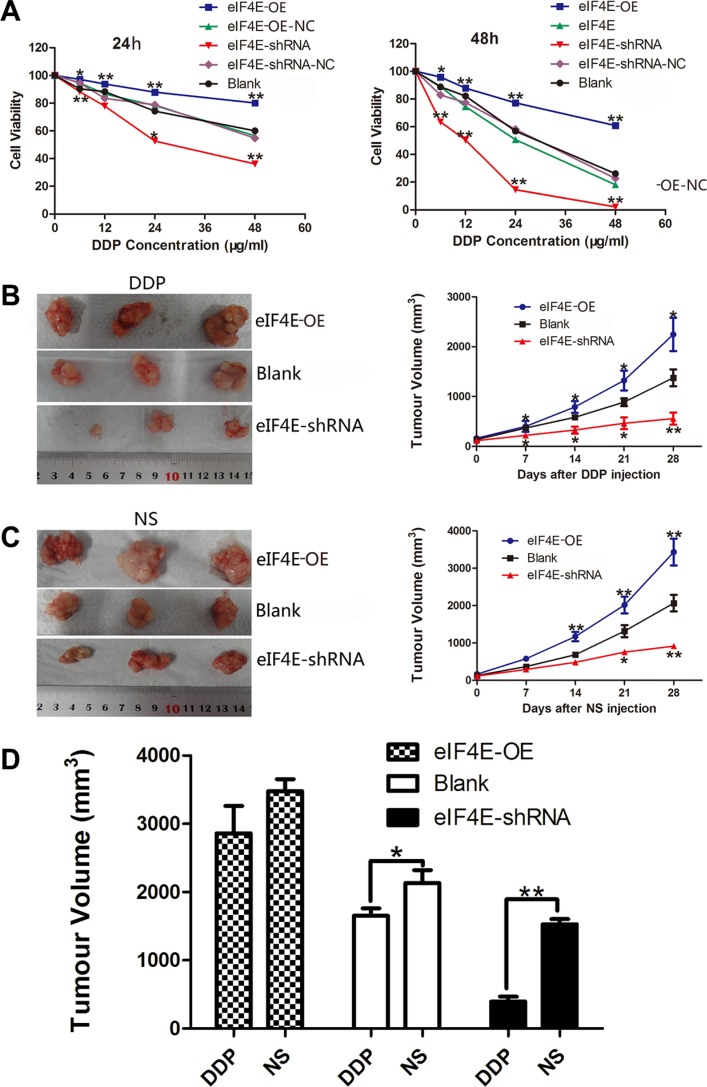
Patients with esophageal squamous cell cancer are often diagnosed with advanced diseases that respond poorly to chemotherapy. Overexpression of eIF4E leads to enhance the translation of key malignancy-related proteins and enabling tumor growth and chemoresistance in a variety of human malignancies, but whether it has a role in ESCC remains obscure. We hypothesized that eIF4E promoted ESCC tumorigenesis and facilitated the development of acquired resistance to the cisplatin-based chemotherapy. In this study, we showed that eIF4E expression was increased significantly in clinical ESCC tissues and and ESCC cell lines and its expression level was correlated with lymph node metastasis, TNM stage, as well as overall and disease-free survival of ESCC. We also showed here that knockdown of eIF4E in EC9706 would dramatically reduced cell proliferation, colony formation, migration and invasion, apoptosis in vitro as well as in vivo, and vice versa. Moreover, "weak mRNAs" were demonstrated to be regulated by eIF4E in ESCC, which might interpret the above function. Overexpression of eIF4E decreased the efficacy of cisplatin-induced cell growth inhibition in ESCC cell line and xenograft model (P < 0.05). eIF4E knockdown by shRNA increased cisplatin-induced cytotoxicity in ESCC cell lines, and enhanced chemosensitivity to cisplatin in xenograft tumor models. Furthermore, we found that the PI3K/AKT pathway and Bcl-2/Bax ratio might be responsible for the eIF4E-induced cisplatin resistance in ESCC. Our data collectively show association of eIF4E expression with chemotherapeutic response in ESCC, and suggest that therapeutically targeting eIF4E may be a viable means of improving chemotherapy response in ESCC.
食管鳞状细胞癌患者常被诊断为患有对化疗反应不佳的晚期疾病。真核生物翻译起始因子4E(eIF4E)的过表达导致关键恶性肿瘤相关蛋白的翻译增强,并在多种人类恶性肿瘤中促进肿瘤生长和化疗耐药性,但它在食管鳞状细胞癌(ESCC)中是否起作用仍不清楚。我们假设eIF4E促进了ESCC的肿瘤发生,并促进了对基于顺铂化疗的获得性耐药的发展。在本研究中,我们发现eIF4E在临床ESCC组织和ESCC细胞系中的表达显著增加,其表达水平与淋巴结转移、TNM分期以及ESCC的总生存期和无病生存期相关。我们还在此表明,在EC9706细胞中敲低eIF4E会显著降低细胞增殖、集落形成、迁移和侵袭能力,以及体内外的细胞凋亡,反之亦然。此外,在ESCC中,“弱mRNA”被证明受eIF4E调控,这可能解释了上述功能。eIF4E的过表达降低了顺铂诱导的ESCC细胞系和异种移植模型中细胞生长抑制的效果(P < 0.05)。通过短发夹RNA(shRNA)敲低eIF4E可增加顺铂诱导的ESCC细胞系的细胞毒性,并增强异种移植肿瘤模型对顺铂的化疗敏感性。此外,我们发现PI3K/AKT信号通路和Bcl-2/Bax比值可能是eIF4E诱导的ESCC顺铂耐药的原因。我们的数据共同表明eIF4E表达与ESCC化疗反应之间的关联,并表明靶向eIF4E进行治疗可能是提高ESCC化疗反应的可行方法。