Kurupati Raj, Kossenkov Andrew, Haut Larissa, Kannan Senthil, Xiang Zhiquan, Li Yan, Doyle Susan, Liu Qin, Schmader Kenneth, Showe Louise, Ertl Hildegund
The Wistar Institute, Philadelphia, PA, USA.
Biomedical Graduate Group, University of Pennsylvania, Philadelphia, PA, USA.
Oncotarget. 2016 Sep 27;7(39):62898-62911. doi: 10.18632/oncotarget.11704.
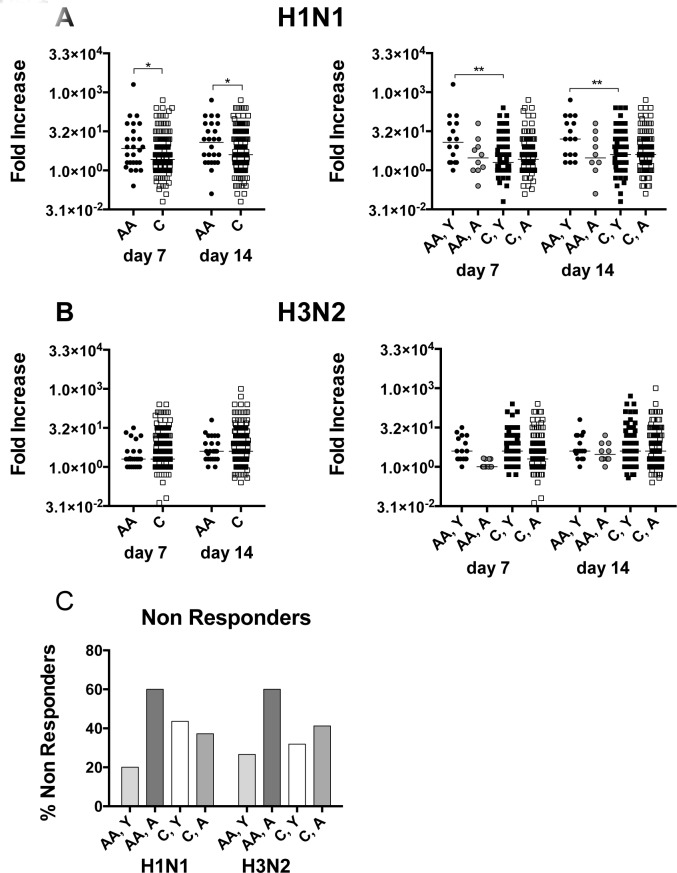
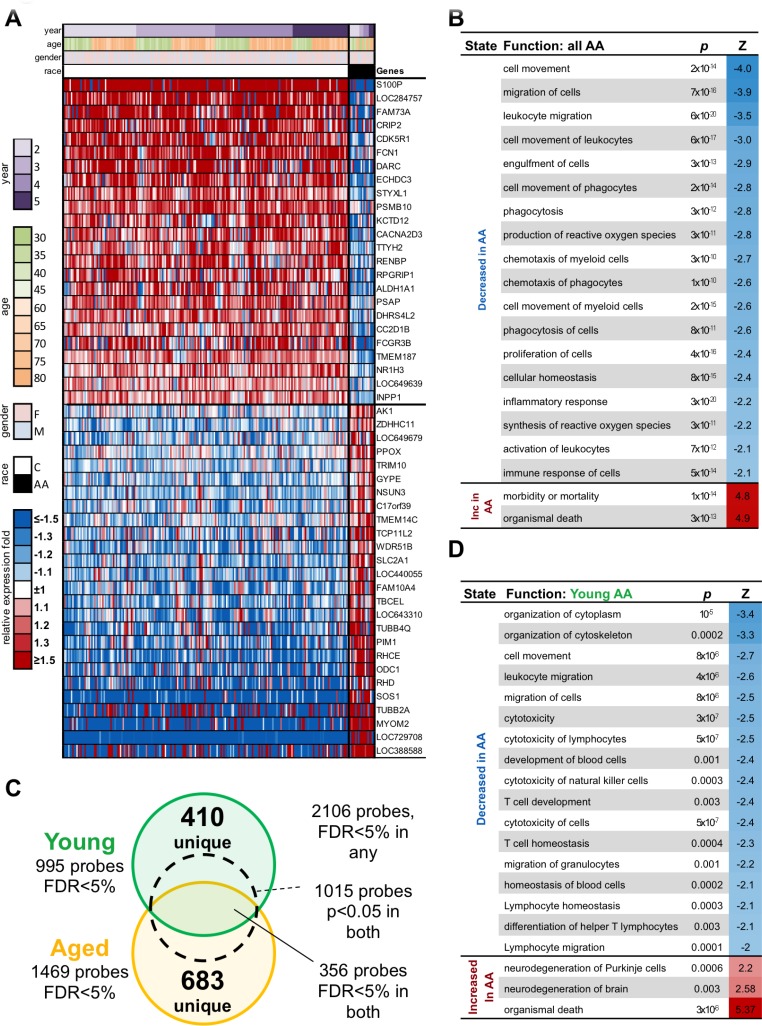
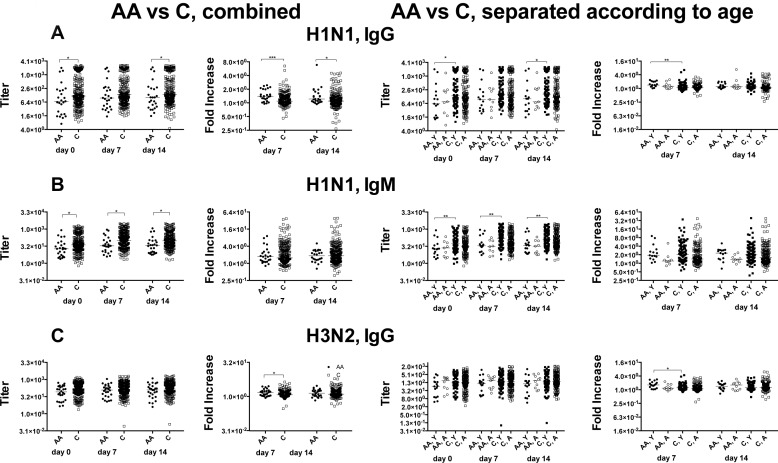
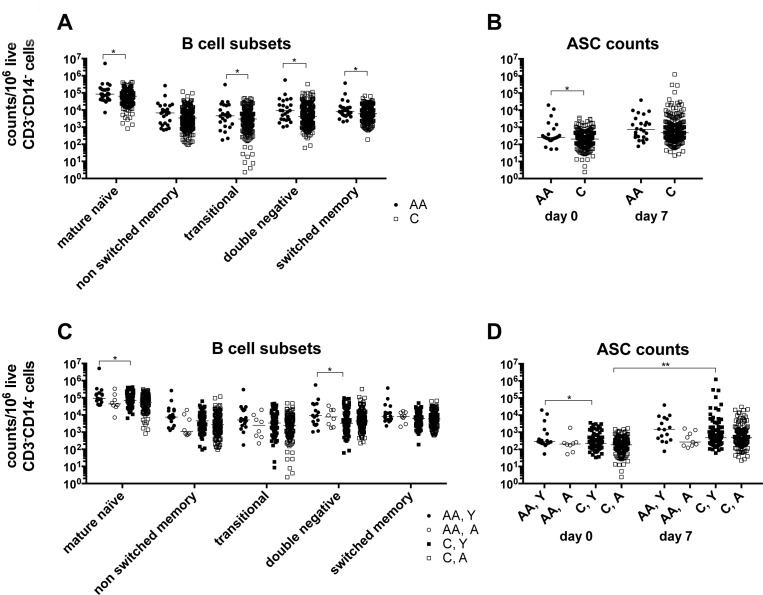
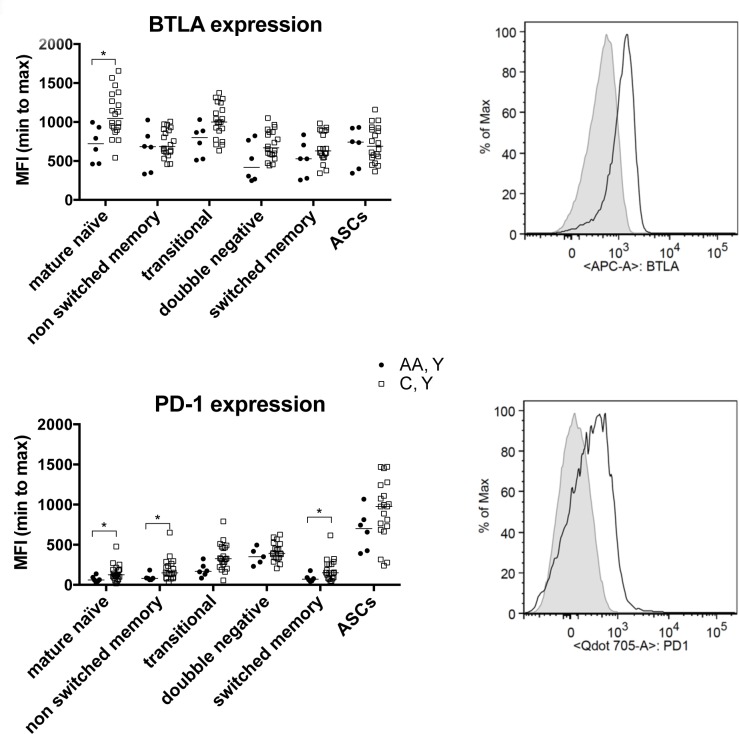
We conducted a 5-year study analyzing antibody and B cell responses to the influenza A virus components of the inactivated influenza vaccine, trivalent (IIV3) or quadrivalent (IIV4) in younger (aged 35-45) and aged (≥65 years of age) Caucasian and African American individuals. Antibody titers to the two influenza A virus strains, distribution of circulating B cell subsets and the blood transcriptome were tested at baseline and after vaccination while expression of immunoregulatory markers on B cells were analyzed at baseline. African Americans mounted higher virus neutralizing and IgG antibody responses to the H1N1 component of IIV3 or 4 compared to Caucasians. African Americans had higher levels of circulating B cell subsets compared to Caucasians. Expression of two co-regulators, i.e., programmed death (PD)-1 and the B and T cell attenuator (BTLA) were differentially expressed in the two cohorts. Race-related differences were caused by samples from younger African Americans, while results obtained with samples of aged African Americans were similar to those of aged Caucasians. Gene expression profiling by Illumina arrays revealed highly significant differences in 1368 probes at baseline between Caucasians and African Americans although samples from both cohorts showed comparable changes in transcriptome following vaccination. Genes differently expressed between samples from African Americans and Caucasians regardless of age were enriched for myeloid genes, while the transcripts that differed in expression between younger African Americans and younger Caucasians were enriched for those specific for B-cells.
我们开展了一项为期5年的研究,分析了年龄较轻(35 - 45岁)和年长(≥65岁)的白种人和非裔美国人对三价(IIV3)或四价(IIV4)灭活流感疫苗中甲型流感病毒成分的抗体和B细胞反应。在基线期和接种疫苗后检测了针对两种甲型流感病毒株的抗体滴度、循环B细胞亚群的分布以及血液转录组,同时在基线期分析了B细胞上免疫调节标志物的表达。与白种人相比,非裔美国人对IIV3或4的H1N1成分产生了更高的病毒中和抗体和IgG抗体反应。与白种人相比,非裔美国人的循环B细胞亚群水平更高。两种共调节因子,即程序性死亡(PD)-1和B细胞与T细胞衰减器(BTLA),在两个队列中的表达存在差异。种族相关差异是由年轻非裔美国人的样本导致的,而老年非裔美国人样本的结果与老年白种人的结果相似。Illumina阵列的基因表达谱分析显示,白种人和非裔美国人在基线期有1368个探针存在高度显著差异,尽管两个队列的样本在接种疫苗后转录组变化相当。无论年龄如何,非裔美国人和白种人样本之间差异表达的基因在髓系基因中富集,而年轻非裔美国人和年轻白种人之间表达不同的转录本在B细胞特异性基因中富集。