Beatson Richard, Tajadura-Ortega Virginia, Achkova Daniela, Picco Gianfranco, Tsourouktsoglou Theodora-Dorita, Klausing Sandra, Hillier Matthew, Maher John, Noll Thomas, Crocker Paul R, Taylor-Papadimitriou Joyce, Burchell Joy M
Breast Cancer Biology Group, Division of Cancer Studies, King's College London, Guy's Hospital, London, UK.
CAR Mechanics Group, Division of Cancer Studies, King's College London, Guy's Hospital, London, UK.
Nat Immunol. 2016 Nov;17(11):1273-1281. doi: 10.1038/ni.3552. Epub 2016 Sep 5.
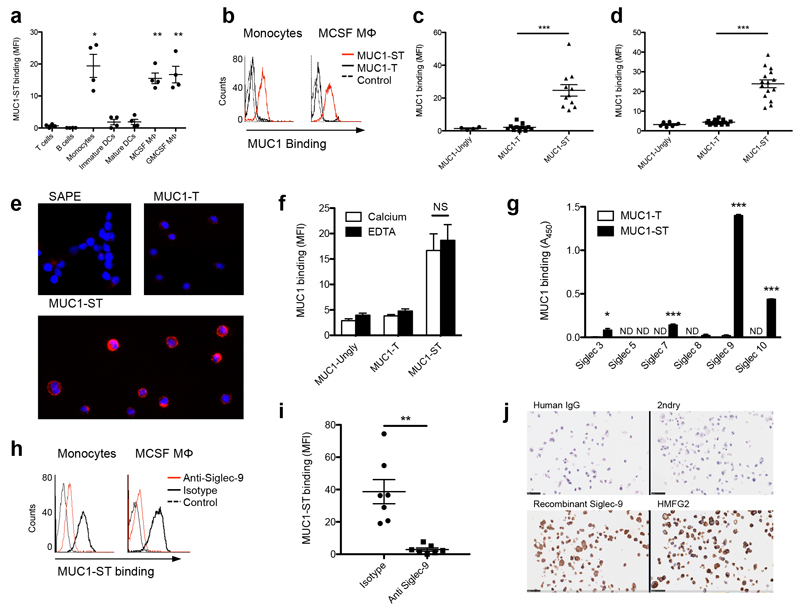
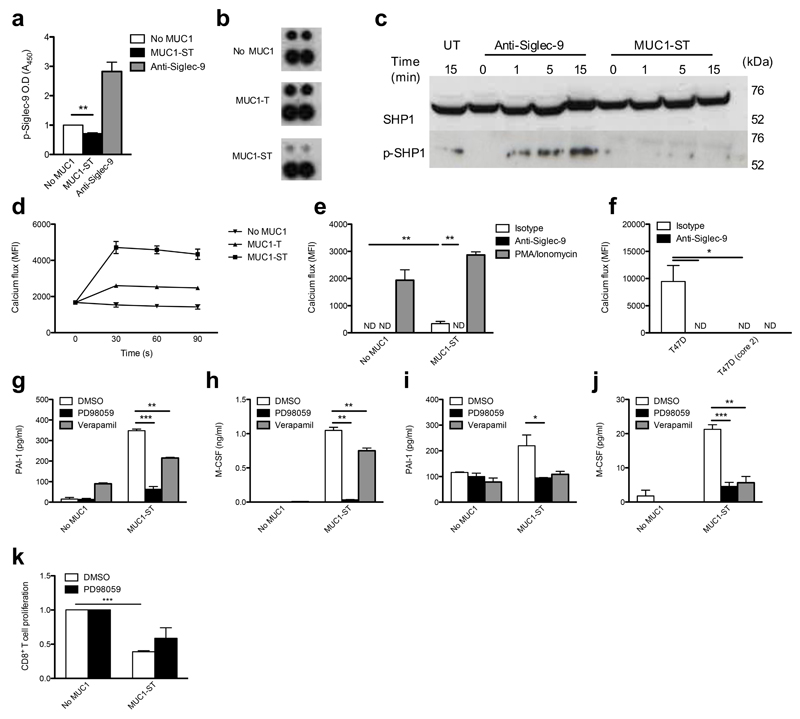
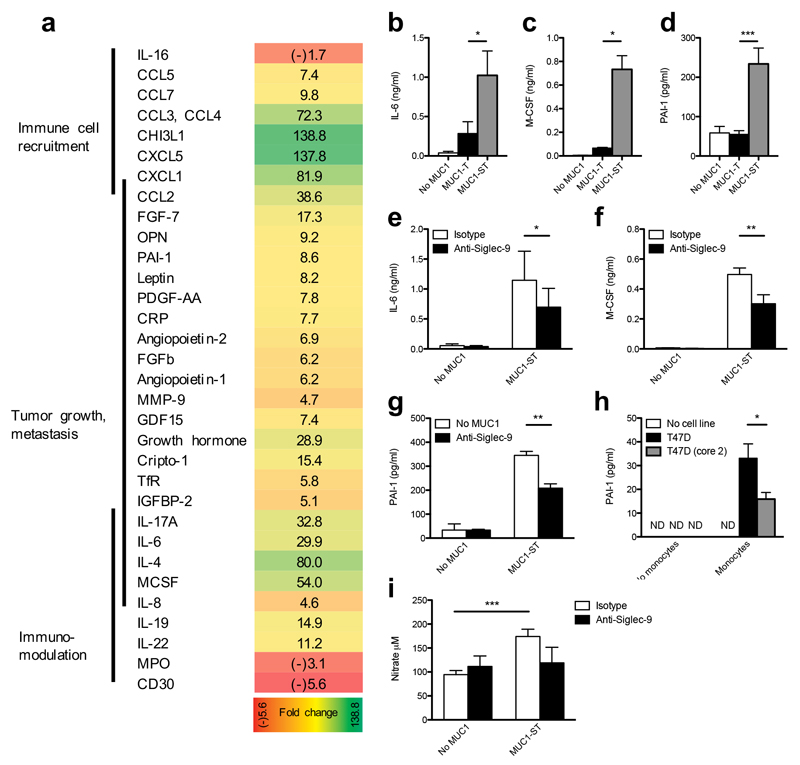
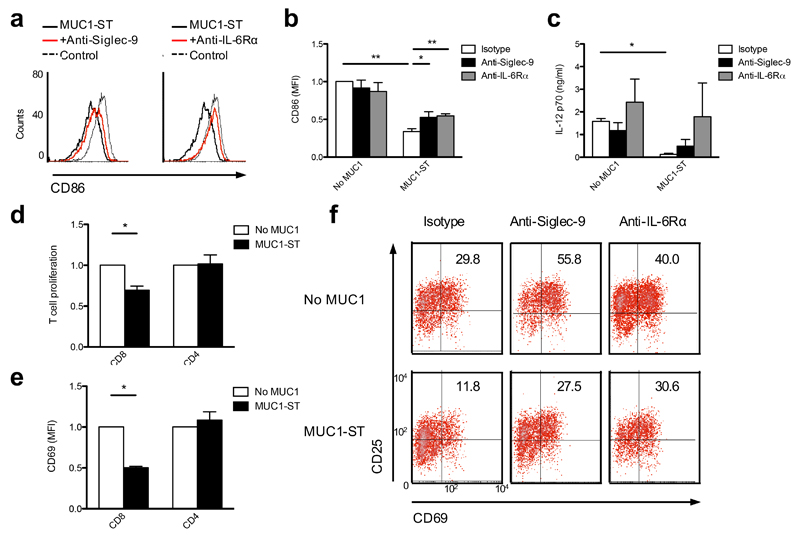
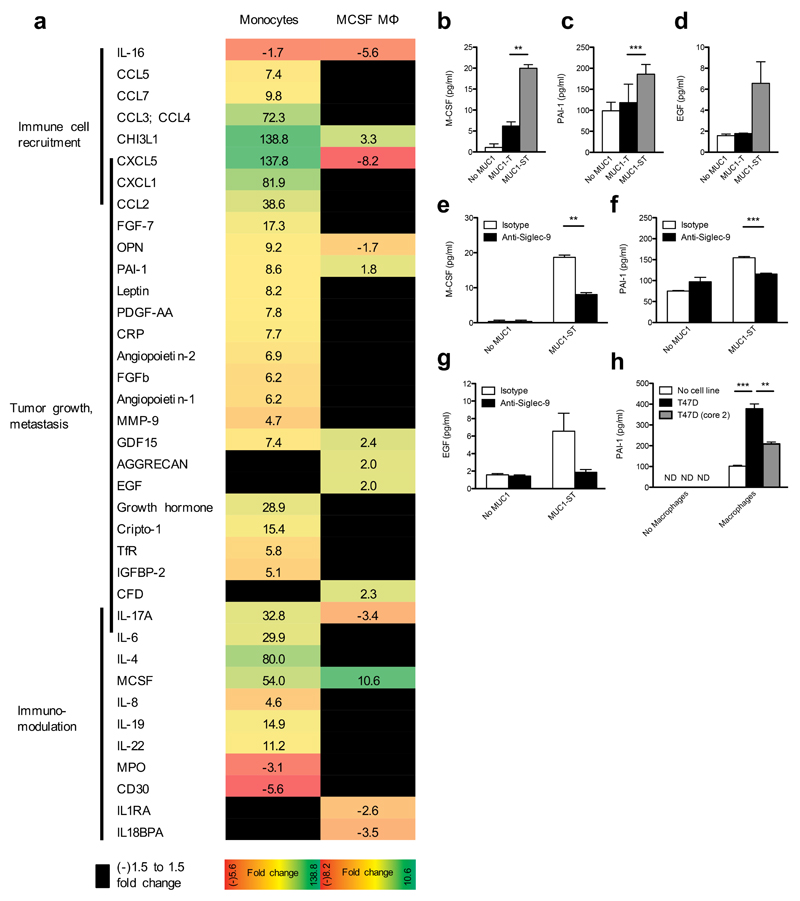
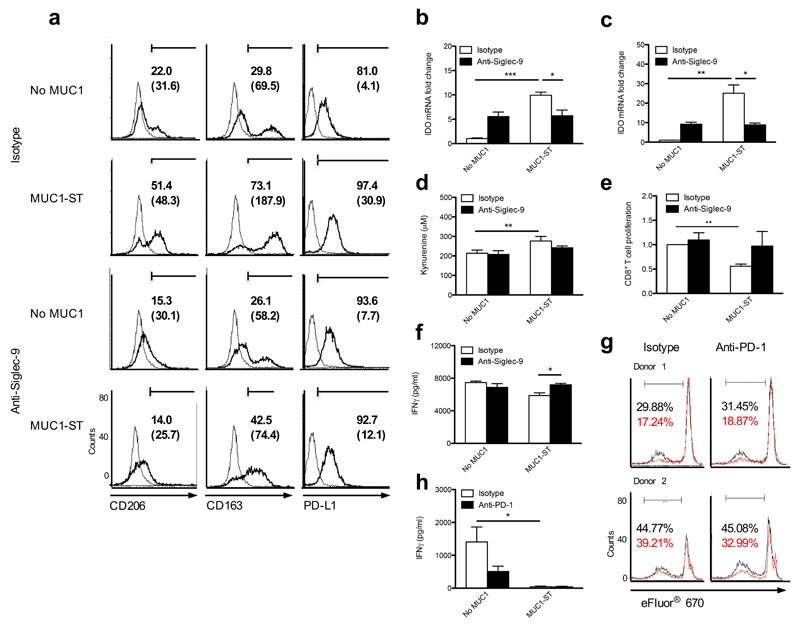
Siglec-9 is a sialic-acid-binding lectin expressed predominantly on myeloid cells. Aberrant glycosylation occurs in essentially all types of cancers and results in increased sialylation. Thus, when the mucin MUC1 is expressed on cancer cells, it is decorated by multiple short, sialylated O-linked glycans (MUC1-ST). Here we found that this cancer-specific MUC1 glycoform, through engagement of Siglec-9, 'educated' myeloid cells to release factors associated with determination of the tumor microenvironment and disease progression. Moreover, MUC1-ST induced macrophages to display a tumor-associated macrophage (TAM)-like phenotype, with increased expression of the checkpoint ligand PD-L1. Binding of MUC1-ST to Siglec-9 did not activate the phosphatases SHP-1 or SHP-2 but, unexpectedly, induced calcium flux that led to activation of the kinases MEK-ERK. This work defines a critical role for aberrantly glycosylated MUC1 and identifies an activating pathway that follows engagement of Siglec-9.
唾液酸结合免疫球蛋白样凝集素9(Siglec-9)是一种主要在髓系细胞上表达的唾液酸结合凝集素。异常糖基化几乎在所有类型的癌症中都会发生,并导致唾液酸化增加。因此,当黏蛋白MUC1在癌细胞上表达时,它会被多个短的、唾液酸化的O-连接聚糖修饰(MUC1-ST)。我们发现,这种癌症特异性的MUC1糖型通过与Siglec-9结合,“驯化”髓系细胞释放与肿瘤微环境和疾病进展相关的因子。此外,MUC1-ST诱导巨噬细胞呈现肿瘤相关巨噬细胞(TAM)样表型,检查点配体PD-L1的表达增加。MUC1-ST与Siglec-9的结合并未激活磷酸酶SHP-1或SHP-2,但出乎意料的是,它诱导了钙流,进而导致激酶MEK-ERK的激活。这项工作确定了异常糖基化的MUC1的关键作用,并确定了Siglec-9结合后的激活途径。