Tao Guorong, Luo Yan, Xue Qingsheng, Li Guohui, Tan Yongchang, Xiao Jinglei, Yu Buwei
Department of Anesthesiology, Ruijin Hospital, Shanghai Jiaotong University School of Medicine, Shanghai 200025, China.
Department of Anesthesiology, Xinhua Hospital, Shanghai Jiaotong University School of Medicine, Shanghai 200025, China.
Biomed Res Int. 2016;2016:4062579. doi: 10.1155/2016/4062579. Epub 2016 Aug 11.
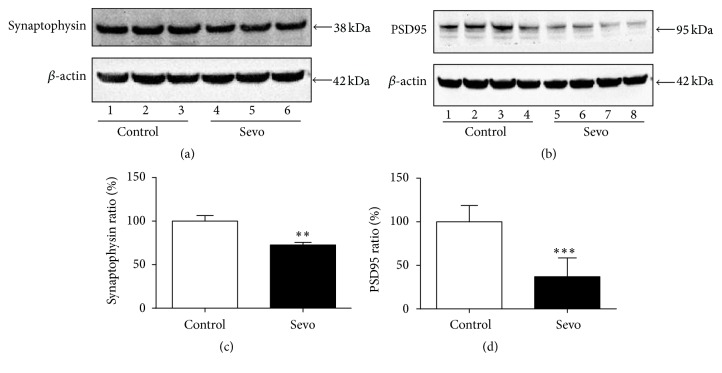
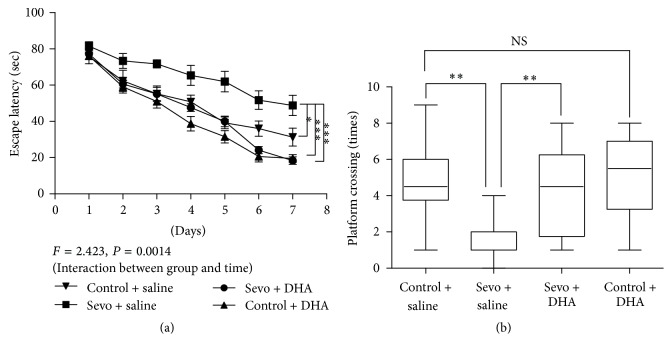
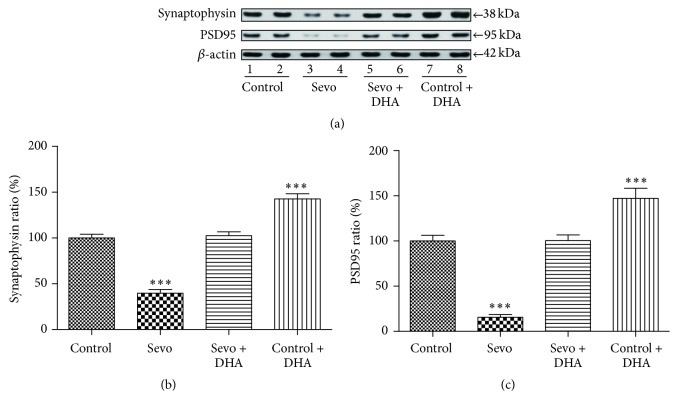
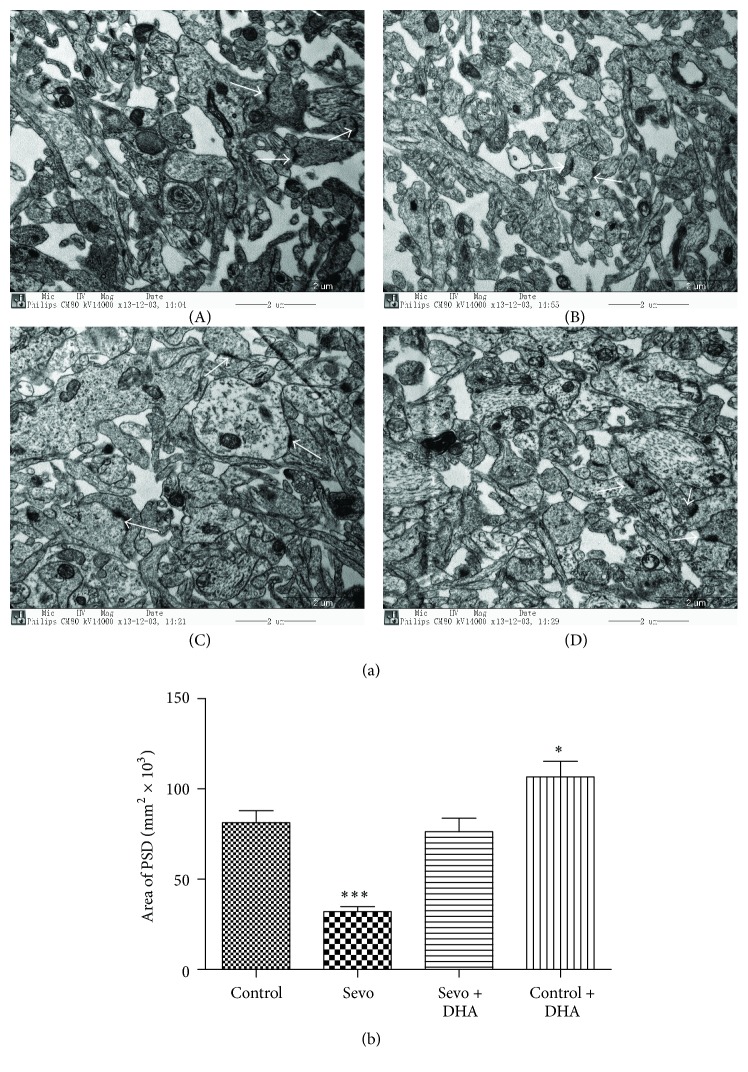
Sevoflurane exposures were demonstrated to induce neurotoxicity in the developing brain in both human and animal studies. However, there is no effective approach to reverse it. The present study aimed to evaluate the feasibility of utilizing docosahexaenoic acid (DHA) to prevent sevoflurane-induced neurotoxicity. P6 (postnatal 6 days) mice were administrated DHA after exposure to 3% sevoflurane for two hours daily in three consecutive days. Molecular expressions of synaptic makers (PSD95, synaptophysin) and synaptic morphological changes were investigated by Western blot analysis and transmission electron microscopy, respectively. Meanwhile, Morris water maze test was used to assess spatial memory of mice at P31 (postnatal 31 days). DHA restored sevoflurane-induced decreased level of PSD95 and synaptophysin expressions and increased PSD areas and also improved long-term spatial memory. These results suggest that DHA could rescue synaptogenesis impairment and long-term memory deficits in postnatal caused by multiple sevoflurane exposures.
在人体和动物研究中均证实,七氟醚暴露会在发育中的大脑中诱发神经毒性。然而,目前尚无有效的方法来逆转这一情况。本研究旨在评估利用二十二碳六烯酸(DHA)预防七氟醚诱导的神经毒性的可行性。对出生6天(P6)的小鼠连续三天每天暴露于3%七氟醚两小时后给予DHA。分别通过蛋白质免疫印迹分析和透射电子显微镜研究突触标志物(PSD95、突触素)的分子表达及突触形态变化。同时,采用莫里斯水迷宫试验评估出生31天(P31)小鼠的空间记忆。DHA恢复了七氟醚诱导的PSD95和突触素表达水平降低以及PSD面积增加的情况,并且还改善了长期空间记忆。这些结果表明,DHA可以挽救多次七氟醚暴露导致的出生后突触形成障碍和长期记忆缺陷。