Owen Sioned, Zhao Huishan, Dart Alwyn, Wang Yamei, Ruge Fiona, Gao Yong, Wei Cong, Wu Yiling, Jiang Wen G
Cardiff China Medical Research Collaborative, Cardiff University School of Medicine, Cardiff, UK.
Yiling Medical Research Institute, Shijiazhuang, Hebei, P.R. China.
Int J Oncol. 2016 Nov;49(5):1839-1847. doi: 10.3892/ijo.2016.3685. Epub 2016 Sep 6.
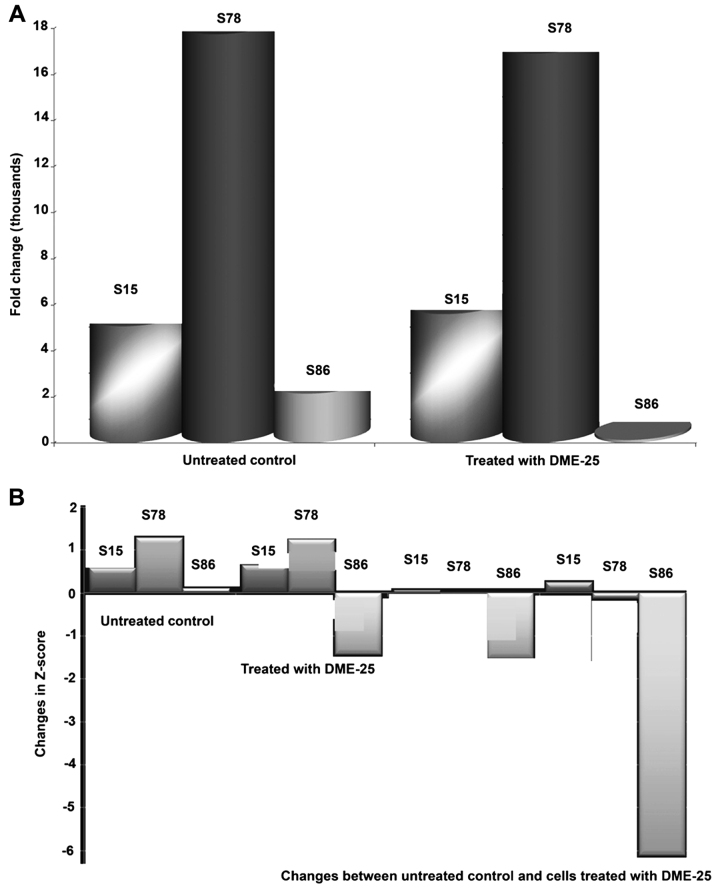
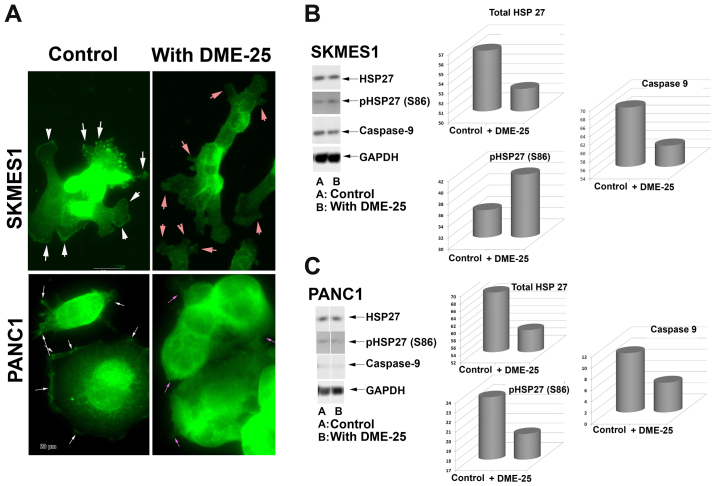
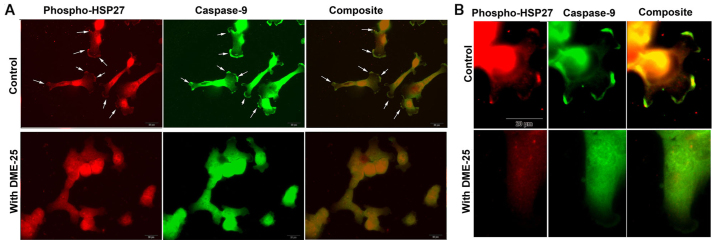
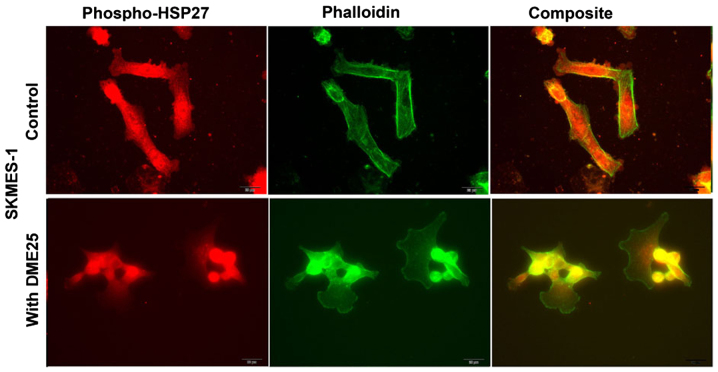
Heat shock protein 27 (HSP27) is a member of the heat shock protein family which has been linked to tumour progression and, most interestingly, to chemotherapy resistance in cancer patients. The present study examined the potential interplay between HSP27 and YangZheng XiaoJi, a traditional Chinese medicine used in cancer treatment. A range of cell lines from different tumour types including pancreatic, lung, gastric, colorectal, breast, prostate and ovarian cancer (both wild-type and resistant) were used. Levels and activation of HSP27 and its potential associated signalling pathways were evaluated by protein array and western blotting. Knockdown of HSP27 in cancer cells was achieved using siRNA. Localisation and co-localisation of HSP27 and other proteins were carried out by immunofluorescence. Cell growth and migration were evaluated in their response to a range of chemotherapeutic agents. The present study first identified, by way of protein array, that YangZheng XiaoJi was able to inhibit the phosphorylation of HSP27 protein in cancer cells. We further demonstrated that HSP27, which is co-localised with caspase-9, can be blocked from localising in focal adhesions and co-localising with caspase-9 by YangZheng XiaoJi. The study also demonstrated that YangZheng XiaoJi was able to sensitise cancer cells including those cells that were resistant to chemotherapy, to chemotherapeutic agents. Finally, knocking down HSP27 markedly reduced the migration of cancer cells and increased the sensitivity of cancer cells to the inhibitory effect on cellular migration by YangZheng XiaoJi. YangZheng XiaoJi can act as an agent in first sensitising cancer cells to chemotherapy and secondly to overcome, to some degree, chemoresistance when used in an appropriate fashion in patients who have active HSP27.
热休克蛋白27(HSP27)是热休克蛋白家族的一员,它与肿瘤进展有关,最有意思的是,还与癌症患者的化疗耐药性有关。本研究检测了HSP27与癌症治疗中使用的中药养正消积之间的潜在相互作用。使用了一系列来自不同肿瘤类型的细胞系,包括胰腺癌、肺癌、胃癌、结直肠癌、乳腺癌、前列腺癌和卵巢癌(野生型和耐药型)。通过蛋白质芯片和蛋白质印迹法评估HSP27的水平、激活情况及其潜在的相关信号通路。使用小干扰RNA(siRNA)实现癌细胞中HSP27的敲低。通过免疫荧光法对HSP27和其他蛋白质进行定位和共定位。评估细胞生长和迁移对一系列化疗药物的反应。本研究首先通过蛋白质芯片鉴定出,养正消积能够抑制癌细胞中HSP27蛋白的磷酸化。我们进一步证明,与半胱天冬酶9共定位的HSP27可被养正消积阻止定位于粘着斑并与半胱天冬酶9共定位。该研究还表明,养正消积能够使癌细胞(包括那些对化疗耐药的细胞)对化疗药物敏感。最后,敲低HSP27显著降低了癌细胞的迁移,并增加了癌细胞对养正消积对细胞迁移抑制作用的敏感性。养正消积可以作为一种药物,首先使癌细胞对化疗敏感,其次在具有活性HSP27的患者中以适当方式使用时,在一定程度上克服化疗耐药性。