Dickens Jennifer A, Ordóñez Adriana, Chambers Joseph E, Beckett Alison J, Patel Vruti, Malzer Elke, Dominicus Caia S, Bradley Jayson, Peden Andrew A, Prior Ian A, Lomas David A, Marciniak Stefan J
Cambridge Institute for Medical Research, Cambridge, United Kingdom.
Department of Medicine, University of Cambridge, Cambridge, United Kingdom.
FASEB J. 2016 Dec;30(12):4083-4097. doi: 10.1096/fj.201600430R. Epub 2016 Sep 6.
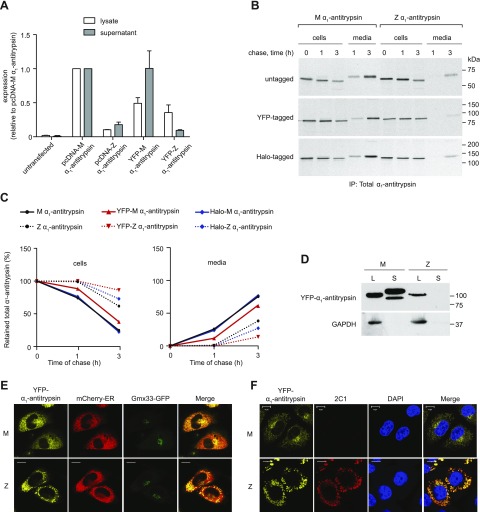
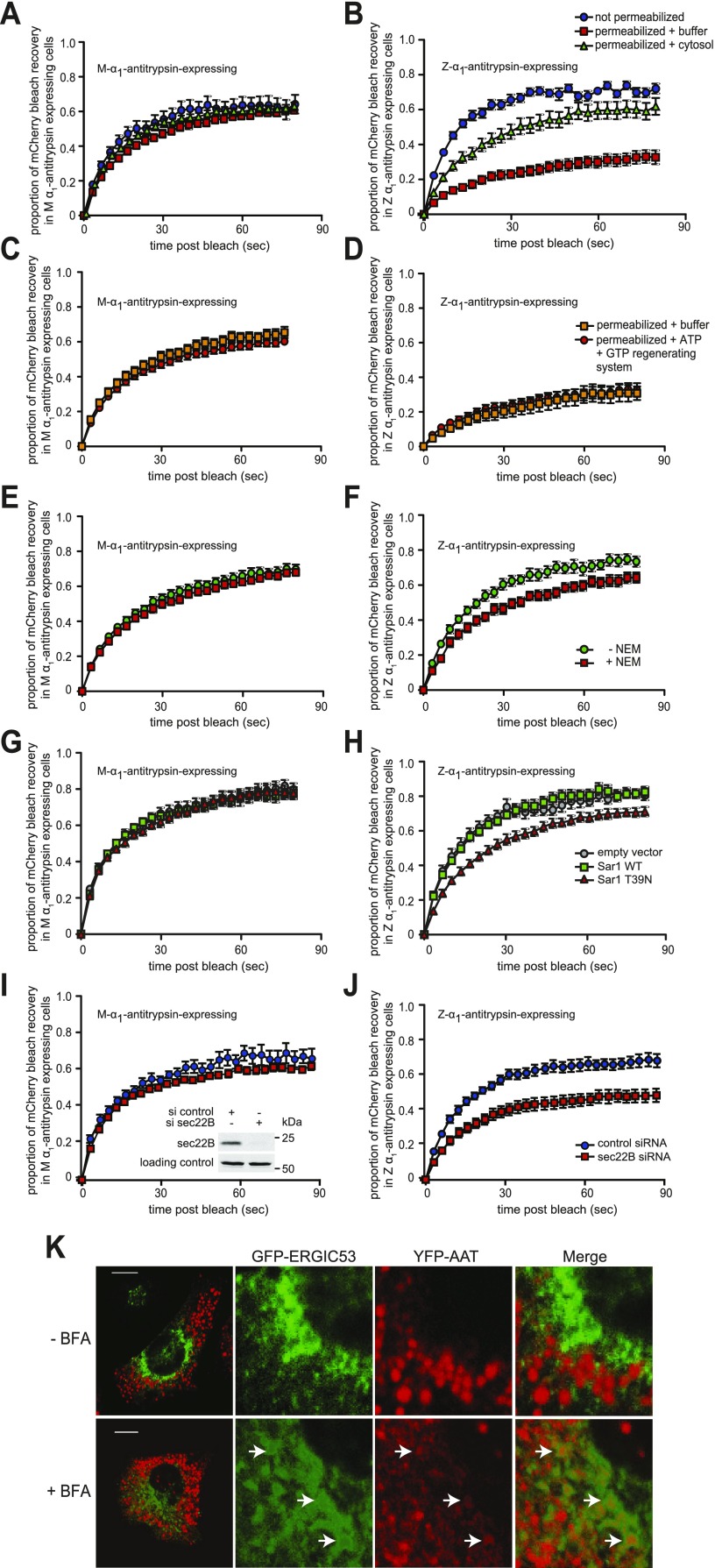
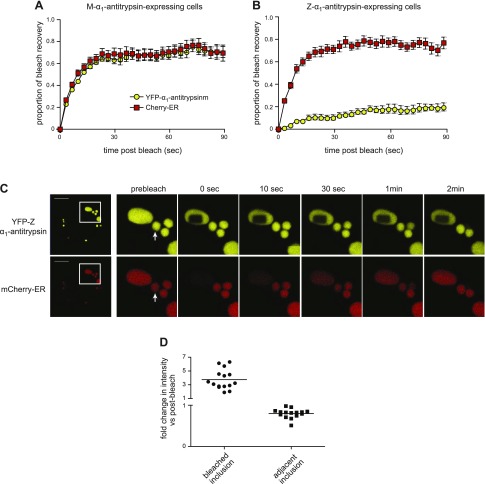
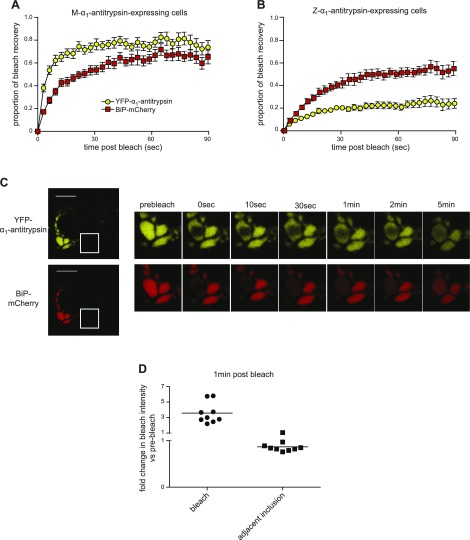
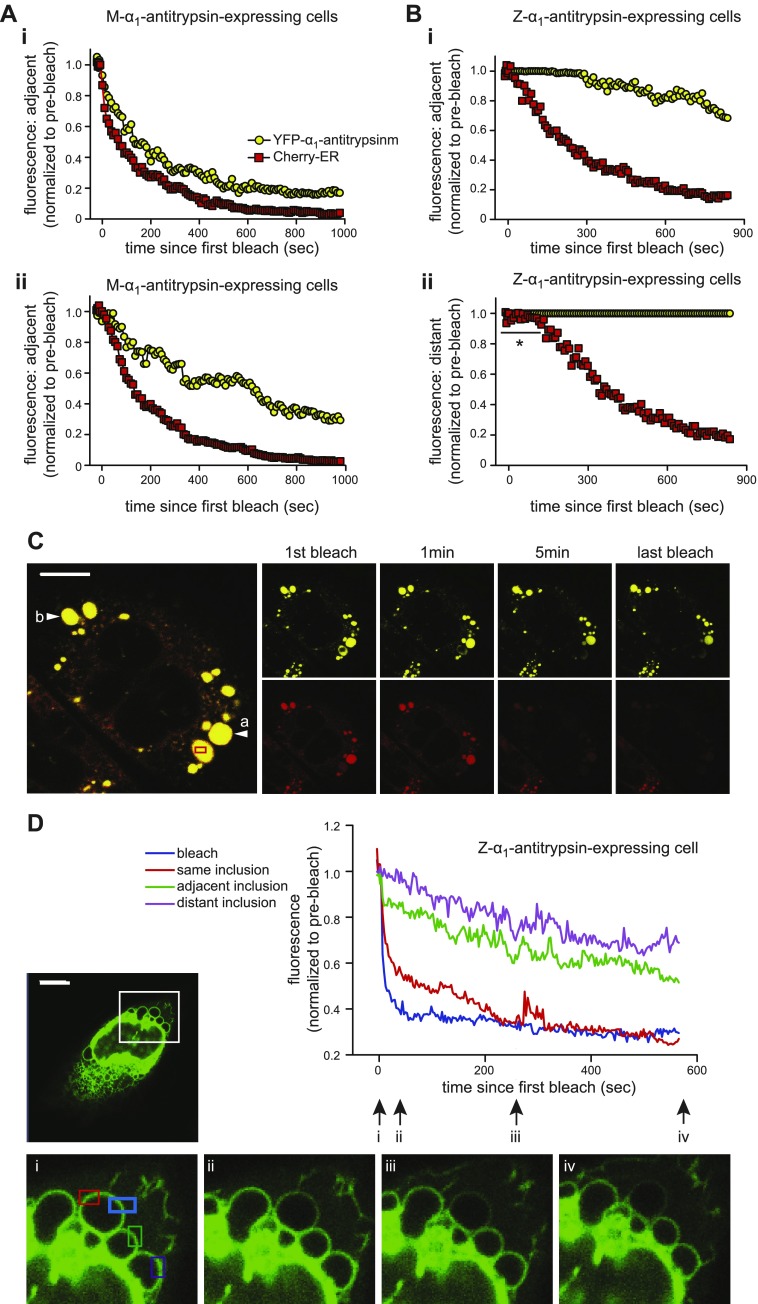
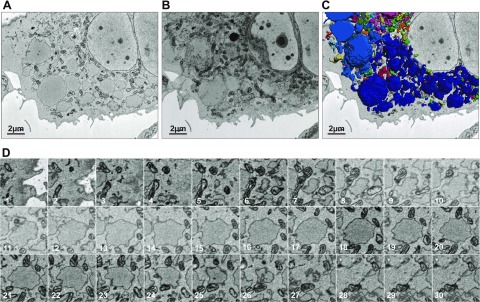
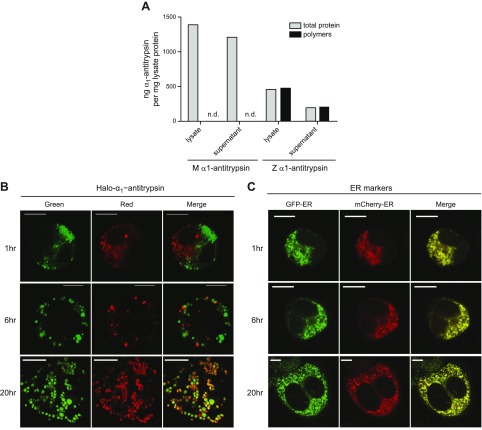
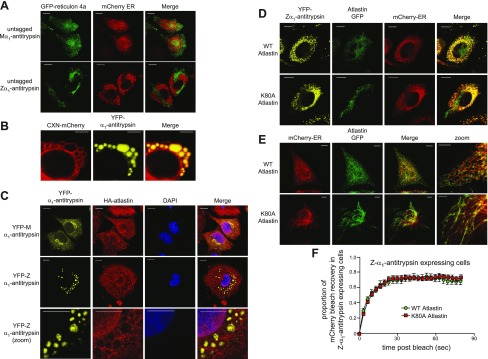
α-Antitrypsin is a serine protease inhibitor produced in the liver that is responsible for the regulation of pulmonary inflammation. The commonest pathogenic gene mutation yields Z-α-antitrypsin, which has a propensity to self-associate forming polymers that become trapped in inclusions of endoplasmic reticulum (ER). It is unclear whether these inclusions are connected to the main ER network in Z-α-antitrypsin-expressing cells. Using live cell imaging, we found that despite inclusions containing an immobile matrix of polymeric α-antitrypsin, small ER resident proteins can diffuse freely within them. Inclusions have many features to suggest they represent fragmented ER, and some are physically separated from the tubular ER network, yet we observed cargo to be transported between them in a cytosol-dependent fashion that is sensitive to N-ethylmaleimide and dependent on Sar1 and sec22B. We conclude that protein recycling occurs between ER inclusions despite their physical separation.-Dickens, J. A., Ordóñez, A., Chambers, J. E., Beckett, A. J., Patel, V., Malzer, E., Dominicus, C. S., Bradley, J., Peden, A. A., Prior, I. A., Lomas, D. A., Marciniak, S. J. The endoplasmic reticulum remains functionally connected by vesicular transport after its fragmentation in cells expressing Z-α-antitrypsin.
α-抗胰蛋白酶是一种在肝脏中产生的丝氨酸蛋白酶抑制剂,负责调节肺部炎症。最常见的致病基因突变会产生Z-α-抗胰蛋白酶,它倾向于自我缔合形成聚合物,这些聚合物会被困在内质网(ER)的包涵体中。目前尚不清楚这些包涵体是否与表达Z-α-抗胰蛋白酶的细胞中的主要内质网网络相连。通过活细胞成像,我们发现尽管包涵体含有固定的聚合α-抗胰蛋白酶基质,但小的内质网驻留蛋白仍能在其中自由扩散。包涵体有许多特征表明它们代表破碎的内质网,有些与管状内质网网络物理分离,但我们观察到货物以依赖于细胞溶质的方式在它们之间运输,这种方式对N-乙基马来酰亚胺敏感且依赖于Sar1和sec22B。我们得出结论,尽管内质网包涵体在物理上是分离的,但蛋白质回收仍在它们之间发生。——狄更斯,J.A.,奥尔多涅斯,A.,钱伯斯,J.E.,贝克特,A.J.,帕特尔,V.,马尔泽,E.,多米尼库斯,C.S.,布拉德利,J.,佩登,A.A.,普赖尔,I.A.,洛马斯,D.A.,马尔西尼亚克,S.J.在表达Z-α-抗胰蛋白酶的细胞中内质网碎片化后,内质网通过囊泡运输在功能上保持连接。