Morisaki J Hiroshi, Smith Peter A, Date Shailesh V, Kajihara Kimberly K, Truong Chau Linda, Modrusan Zora, Yan Donghong, Kang Jing, Xu Min, Shah Ishita M, Mintzer Robert, Kofoed Eric M, Cheung Tommy K, Arnott David, Koehler Michael F T, Heise Christopher E, Brown Eric J, Tan Man-Wah, Hazenbos Wouter L W
Department of Infectious Diseases, Genentech, Inc., South San Francisco, California, USA.
Department of Molecular Biology, Genentech, Inc., South San Francisco, California, USA.
mBio. 2016 Sep 6;7(5):e00412-16. doi: 10.1128/mBio.00412-16.
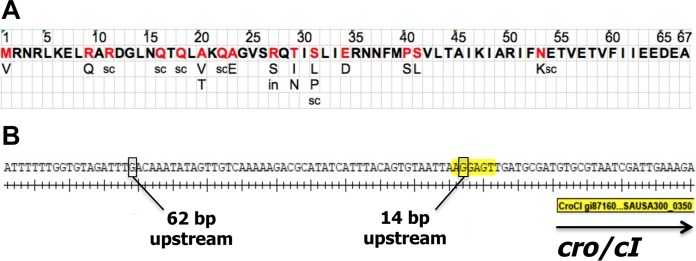
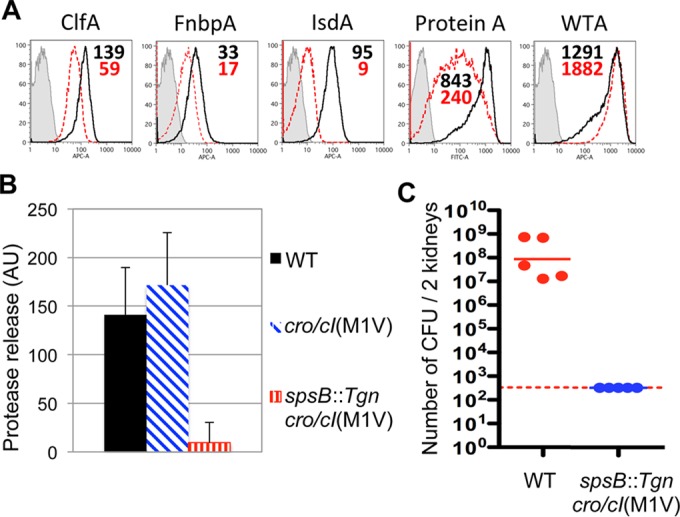
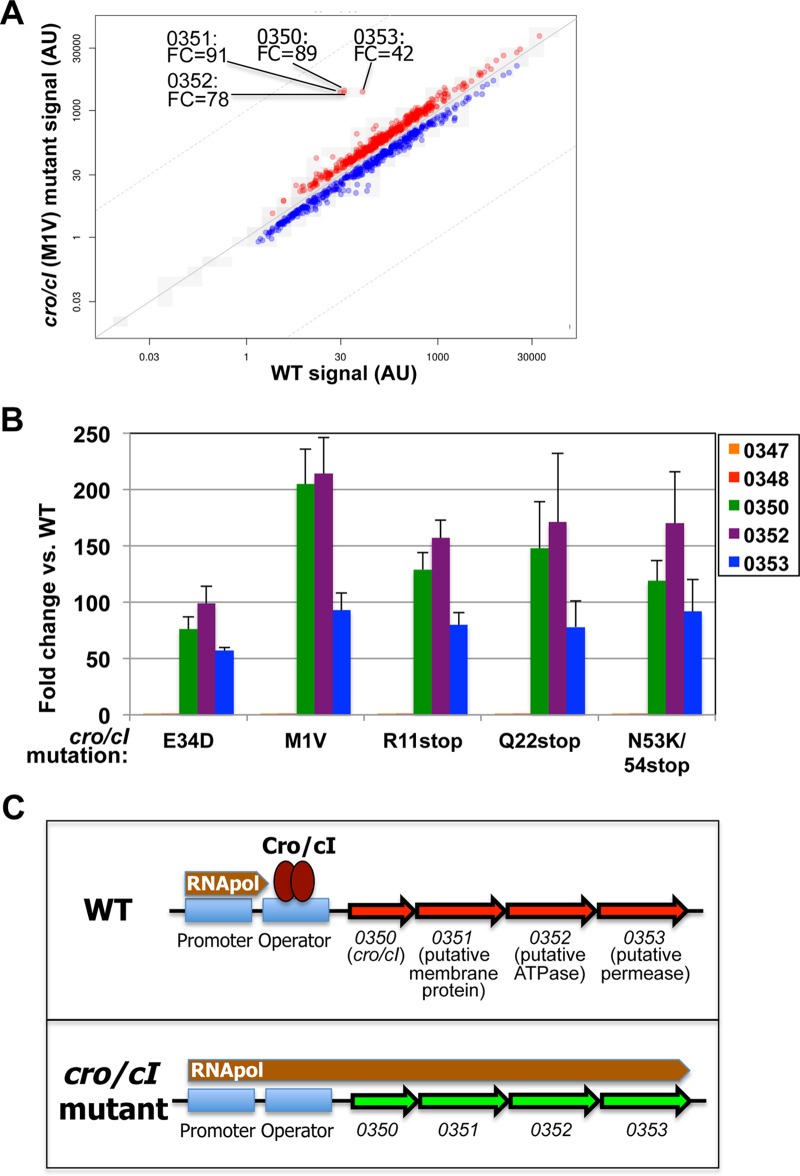
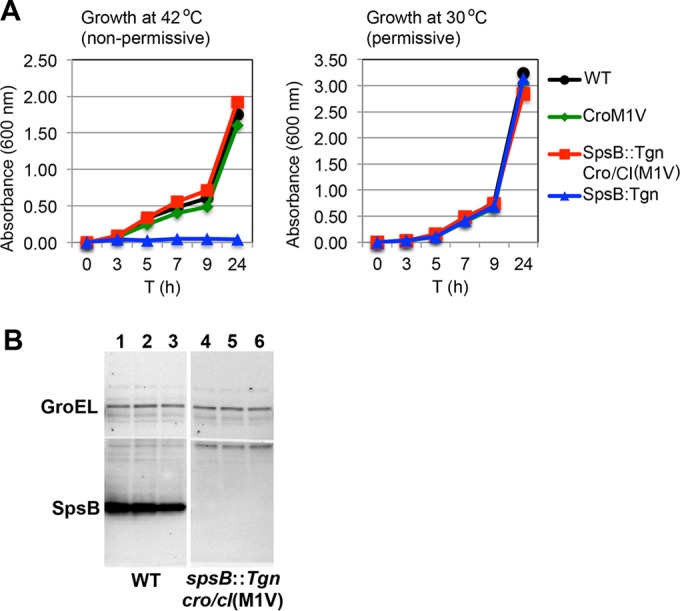
The type I signal peptidase of Staphylococcus aureus, SpsB, is an attractive antibacterial target because it is essential for viability and extracellularly accessible. We synthesized compound 103, a novel arylomycin-derived inhibitor of SpsB with significant potency against various clinical S. aureus strains (MIC of ~1 µg/ml). The predominant clinical strain USA300 developed spontaneous resistance to compound 103 with high frequency, resulting from single point mutations inside or immediately upstream of cro/cI, a homolog of the lambda phage transcriptional repressor cro These cro/cI mutations led to marked (>50-fold) overexpression of three genes encoding a putative ABC transporter. Overexpression of this ABC transporter was both necessary and sufficient for resistance and, notably, circumvented the essentiality of SpsB during in vitro culture. Mutation of its predicted ATPase gene abolished resistance, suggesting a possible role for active transport; in these bacteria, resistance to compound 103 occurred with low frequency and through mutations in spsB Bacteria overexpressing the ABC transporter and lacking SpsB were capable of secreting a subset of proteins that are normally cleaved by SpsB and instead were cleaved at a site distinct from the canonical signal peptide. These bacteria secreted reduced levels of virulence-associated proteins and were unable to establish infection in mice. This study reveals the mechanism of resistance to a novel arylomycin derivative and demonstrates that the nominal essentiality of the S. aureus signal peptidase can be circumvented by the upregulation of a putative ABC transporter in vitro but not in vivo
The type I signal peptidase of Staphylococcus aureus (SpsB) enables the secretion of numerous proteins by cleavage of the signal peptide. We synthesized an SpsB inhibitor with potent activity against various clinical S. aureus strains. The predominant S. aureus strain USA300 develops resistance to this inhibitor by mutations in a novel transcriptional repressor (cro/cI), causing overexpression of a putative ABC transporter. This mechanism promotes the cleavage and secretion of various proteins independently of SpsB and compensates for the requirement of SpsB for viability in vitro However, bacteria overexpressing the ABC transporter and lacking SpsB secrete reduced levels of virulence-associated proteins and are unable to infect mice. This study describes a bacterial resistance mechanism that provides novel insights into the biology of bacterial secretion.
金黄色葡萄球菌的I型信号肽酶SpsB是一个有吸引力的抗菌靶点,因为它对细菌存活至关重要且可在细胞外接触到。我们合成了化合物103,一种新型的源自芳基霉素的SpsB抑制剂,对多种临床金黄色葡萄球菌菌株具有显著活性(MIC约为1 μg/ml)。主要的临床菌株USA300对化合物103高频产生自发抗性,这是由cro/cI(λ噬菌体转录阻遏物cro的同源物)内部或紧邻其上游的单点突变导致的。这些cro/cI突变导致三个编码假定ABC转运蛋白的基因显著(>50倍)过表达。这种ABC转运蛋白的过表达对于抗性既是必要的也是充分的,并且值得注意的是,在体外培养过程中规避了SpsB的必要性。其预测的ATP酶基因突变消除了抗性,表明主动运输可能发挥作用;在这些细菌中,对化合物103的抗性低频出现且是通过spsB中的突变产生的。过表达ABC转运蛋白且缺乏SpsB的细菌能够分泌一部分通常由SpsB切割的蛋白质,而是在与经典信号肽不同的位点被切割。这些细菌分泌的毒力相关蛋白水平降低,并且无法在小鼠中建立感染。本研究揭示了对一种新型芳基霉素衍生物的抗性机制,并证明在体外但非体内,金黄色葡萄球菌信号肽酶的名义必要性可通过上调一种假定的ABC转运蛋白来规避。
金黄色葡萄球菌的I型信号肽酶(SpsB)通过切割信号肽使多种蛋白质得以分泌。我们合成了一种对多种临床金黄色葡萄球菌菌株具有强大活性的SpsB抑制剂。主要的金黄色葡萄球菌菌株USA300通过一种新型转录阻遏物(cro/cI)中的突变对该抑制剂产生抗性,导致一种假定的ABC转运蛋白过表达。这种机制促进了各种蛋白质独立于SpsB的切割和分泌,并在体外补偿了SpsB对细菌存活的需求。然而,过表达ABC转运蛋白且缺乏SpsB的细菌分泌的毒力相关蛋白水平降低,并且无法感染小鼠。本研究描述了一种细菌抗性机制,为细菌分泌生物学提供了新的见解。