Hayabuchi Yasunobu, Ono Akemi, Homma Yukako, Kagami Shoji
Department of Pediatrics, Tokushima University, Kuramoto-cho-3, Tokushima, 770-8305, Japan.
Cardiovasc Ultrasound. 2016 Sep 7;14(1):38. doi: 10.1186/s12947-016-0081-4.
We hypothesized that longitudinal pulmonary arterial deformation during the cardiac cycle reflects pulmonary arterial capacitance. To examine this hypothesis, we assessed whether tissue Doppler-derived pulmonary annular motion could serve as a novel way to evaluate pulmonary arterial capacitance in pediatric patients with ventricular septal defect (VSD).
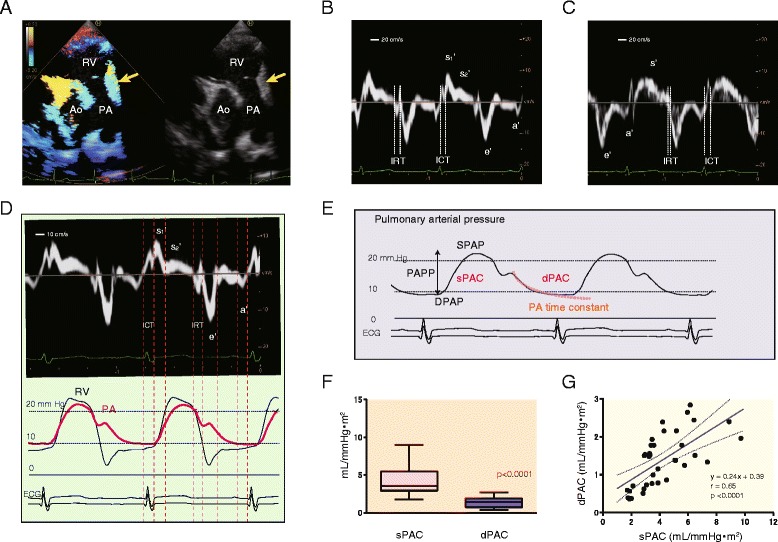
In this prospective study, pulmonary annular velocity was measured in children (age, 6 months-5 years) with a preoperative VSD (VSD group, n = 35) and age-matched healthy children (Control group, n = 23). Pulmonary artery capacitance was calculated by two methods. Systolic pulmonary arterial capacitance (sPAC) was expressed as the stroke volume/pulmonary arterial pulse pressure. Diastolic pulmonary arterial capacitance (dPAC) was determined according to a two-element windkessel model of the pulmonary arterial diastolic pressure profile.
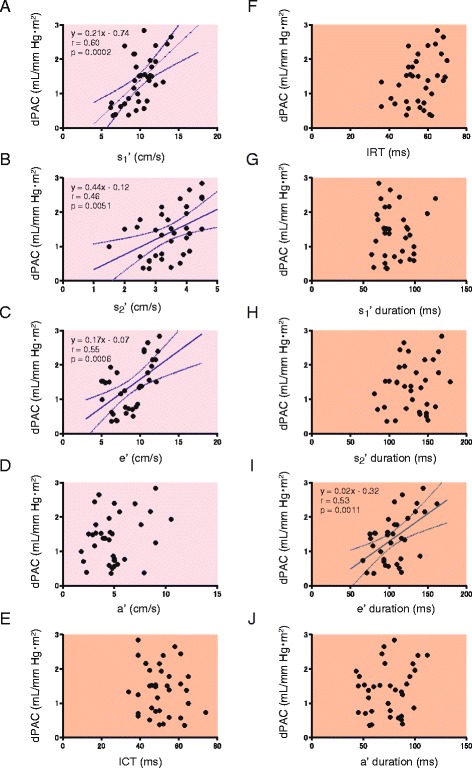
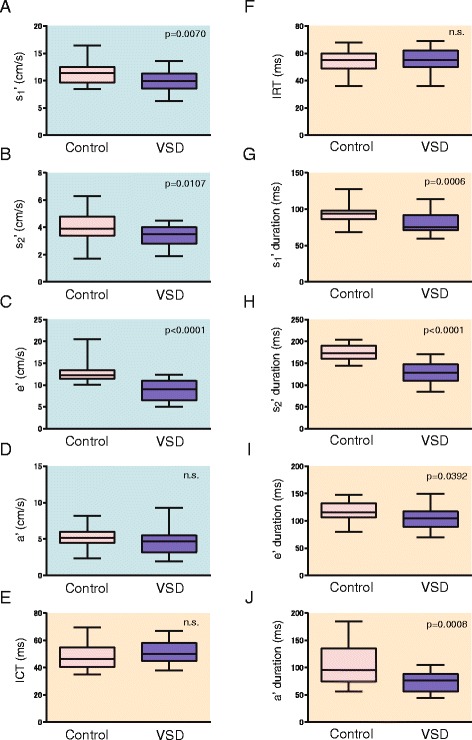
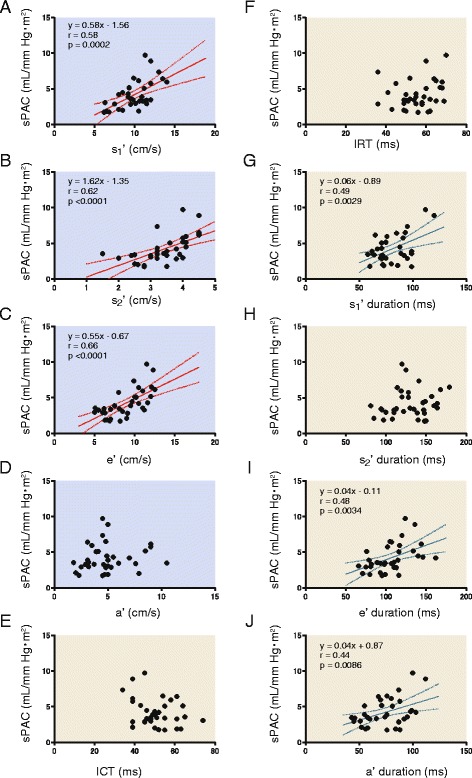
Pulmonary annular velocity waveforms comprised systolic bimodal (s1' and s2') and diastolic e' and a' waves in all participants. The peak velocities of s1', s2', and e' were significantly lower in the VSD group than in the Control group. On multiple regression analysis, sPAC was an independent variable affecting the peak velocities of the s1', s2', and e' waves (β = 0.41, 0.62, and 0.35, respectively). The dPAC affected the s1' wave peak velocity (β = 0.34). The time durations of the s1' and e' waves were independently determined by the sPAC (β = 0.49 and 0.27).
Pulmonary annular motion velocity evaluated using tissue Doppler is a promising method of assessing pulmonary arterial capacitance in children with VSD.
我们假设心动周期中肺动脉的纵向变形反映了肺动脉的容量。为验证这一假设,我们评估了组织多普勒得出的肺动脉环运动是否可作为评估室间隔缺损(VSD)患儿肺动脉容量的新方法。
在这项前瞻性研究中,测量了术前患有VSD的儿童(年龄6个月至5岁,VSD组,n = 35)和年龄匹配的健康儿童(对照组,n = 23)的肺动脉环速度。通过两种方法计算肺动脉容量。收缩期肺动脉容量(sPAC)表示为每搏量/肺动脉脉压。舒张期肺动脉容量(dPAC)根据肺动脉舒张压曲线的二元风箱模型确定。
所有参与者的肺动脉环速度波形均包括收缩期双峰(s1'和s2')以及舒张期e'波和a'波。VSD组中s1'、s2'和e'的峰值速度显著低于对照组。在多元回归分析中,sPAC是影响s1'、s2'和e'波峰值速度的独立变量(β分别为0.41、0.62和0.35)。dPAC影响s1'波的峰值速度(β = 0.34)。s1'和e'波的持续时间由sPAC独立决定(β分别为0.49和0.27)。
使用组织多普勒评估的肺动脉环运动速度是评估VSD患儿肺动脉容量的一种有前景的方法。