Naraballobh Watcharapong, Trakooljul Nares, Murani Eduard, Brunner Ronald, Krischek Carsten, Janisch Sabine, Wicke Michael, Ponsuksili Siriluck, Wimmers Klaus
Leibniz Institute for Farm Animal Biology (FBN), Institute for Genome Biology, 18196, Dummerstorf, Germany.
Institute of Food Quality and Food Safety, Foundation University of Veterinary Medicine, Hannover, 30173, Hannover, Germany.
PLoS One. 2016 Sep 9;11(9):e0162485. doi: 10.1371/journal.pone.0162485. eCollection 2016.
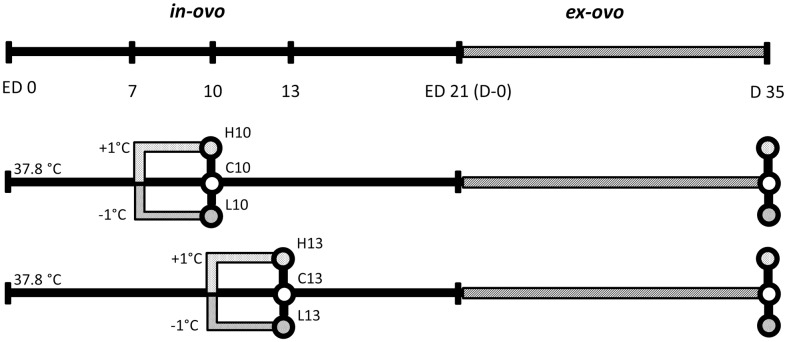
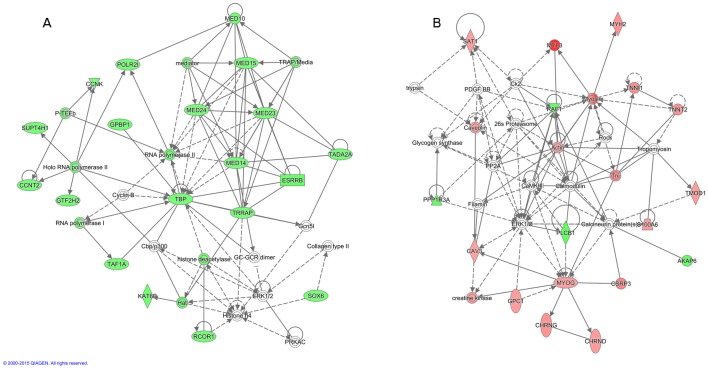
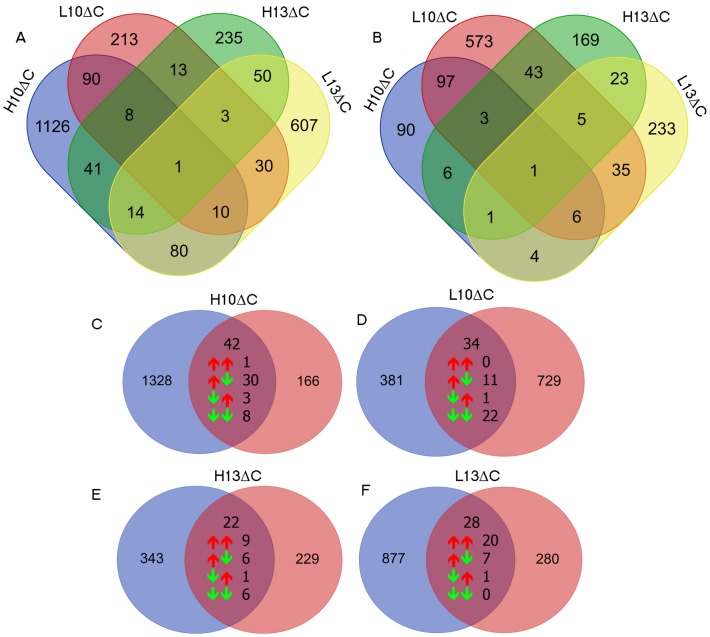
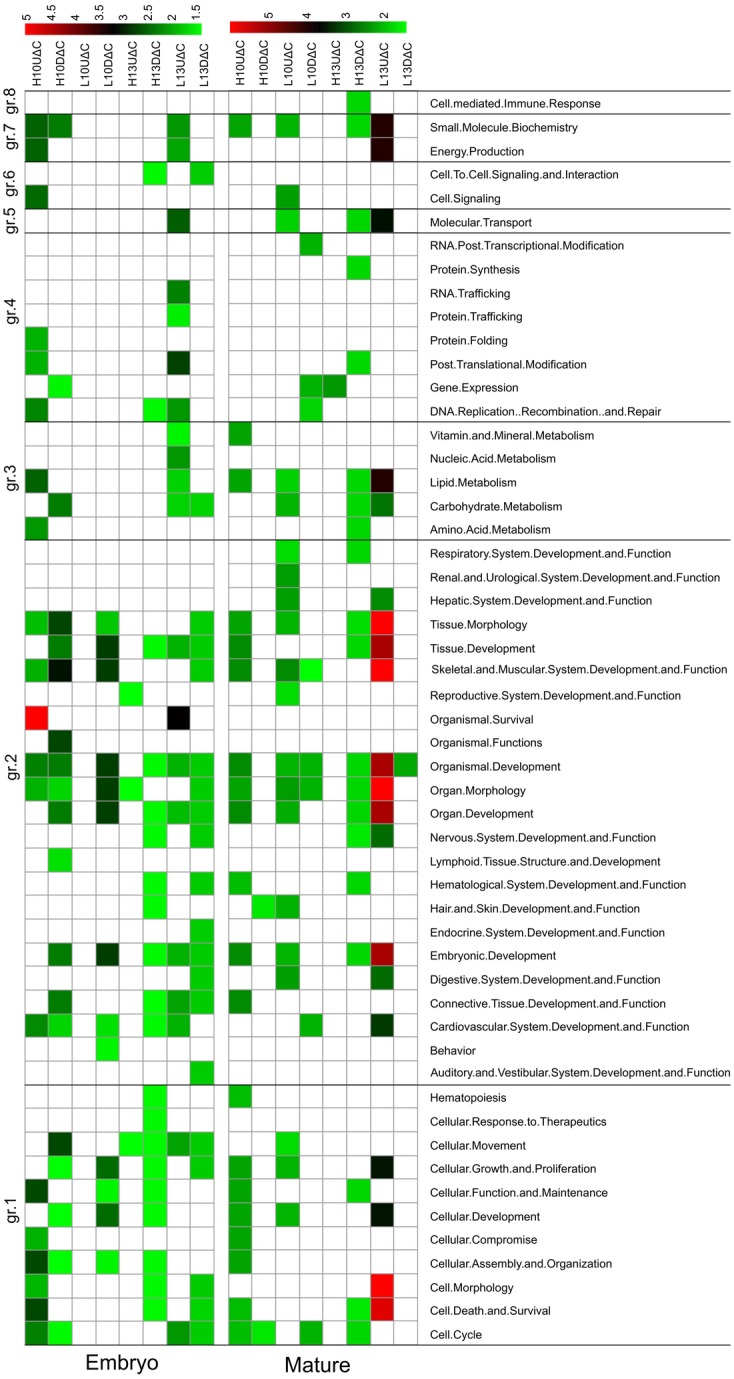
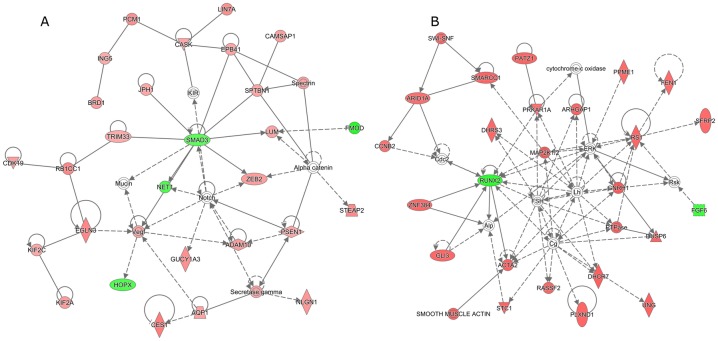
Variations in egg incubation temperatures can have acute or long-term effects on gene transcription in avian species. Altered gene expression may, in turn, affect muscle traits in poultry and indirectly influence commercial production. To determine how changes in eggshell temperature affect gene expression, incubation temperatures were varied [36.8°C (low), 37.8°C (control), 38.8°C (high)] at specific time periods reflecting two stages of myogenesis [embryonic days (ED) 7-10 and 10-13]. Gene expression was compared between interventions and matching controls by microarrays in broiler breast muscle at ED10 or ED13 and post-hatch at day 35. Early (ED7-10) high incubation temperature (H10ΔC) resulted in 1370 differentially expressed genes (DEGs) in embryos. Ingenuity pathway analysis revealed temporary activation of cell maintenance, organismal development, and survival ability genes, but these effects were not maintained in adults. Late high incubation temperature (ED10-13) (H13ΔC) had slightly negative impacts on development of cellular components in embryos, but a cumulative effect was observed in adults, in which tissue development and nutrition metabolism were affected. Early low incubation temperature (L10ΔC) produced 368 DEGs, most of which were down-regulated and involved in differentiation and formation of muscle cells. In adults, this treatment down-regulated pathways of transcriptional processes, but up-regulated cell proliferation. Late low temperature incubation (L13ΔC) produced 795 DEGs in embryos, and activated organismal survival and post-transcriptional regulation pathways. In adults this treatment activated cellular and organ development, nutrition and small molecule activity, and survival rate, but deactivated size of body and muscle cells. Thermal interventions during incubation initiate immediate and delayed transcriptional responses that are specific for timing and direction of treatment. Interestingly, the transcriptional response to transiently decreased incubation temperature, which did not affect the phenotypes, prompts compensatory effects reflecting resilience. In contrast, higher incubation temperature triggers gene expression and has long-term effects on the phenotype. These mechanisms of considerable phenotypic plasticity contribute to the biodiversity and broaden the basis for managing poultry populations.
禽蛋孵化温度的变化会对鸟类物种的基因转录产生急性或长期影响。基因表达的改变反过来可能会影响家禽的肌肉性状,并间接影响商业生产。为了确定蛋壳温度的变化如何影响基因表达,在反映成肌两个阶段的特定时间段(胚胎期第7 - 10天和第10 - 13天)改变孵化温度[36.8°C(低温)、37.8°C(对照)、38.8°C(高温)]。通过微阵列比较了在胚胎期第10天或第13天以及孵化后第35天肉鸡胸肌中干预组和匹配对照组之间的基因表达。早期(胚胎期第7 - 10天)高温孵化(H10ΔC)导致胚胎中有1370个差异表达基因(DEG)。 Ingenuity通路分析显示细胞维持、机体发育和生存能力基因的暂时激活,但这些影响在成年期并未持续。晚期高温孵化(胚胎期第10 - 13天)(H13ΔC)对胚胎中细胞成分的发育有轻微负面影响,但在成年期观察到累积效应,其中组织发育和营养代谢受到影响。早期低温孵化(L10ΔC)产生368个DEG,其中大多数被下调,并且涉及肌肉细胞的分化和形成。在成年期,这种处理下调了转录过程的通路,但上调了细胞增殖。晚期低温孵化(L13ΔC)在胚胎中产生795个DEG,并激活了机体生存和转录后调控通路。在成年期,这种处理激活了细胞和器官发育、营养和小分子活性以及存活率,但使身体和肌肉细胞的大小失活。孵化期间的热干预引发了即时和延迟的转录反应,这些反应对于处理的时间和方向是特定的。有趣的是,对短暂降低的孵化温度的转录反应(这并未影响表型)引发了反映恢复力的补偿效应。相比之下,较高的孵化温度会触发基因表达并对表型产生长期影响。这些具有相当大表型可塑性的机制有助于生物多样性,并拓宽了管理家禽种群的基础。