Lutgen Victoria, Narasipura Srinivas D, Sharma Amit, Min Stephanie, Al-Harthi Lena
Department of Immunology and Microbiology, Rush University Medical Center, 1735 W Harrison Street, 614 Cohn, Chicago, IL, 60612, USA.
J Neuroinflammation. 2016 Sep 10;13(1):242. doi: 10.1186/s12974-016-0691-7.
Neurological disorders have been linked to abnormal excitatory neurotransmission. Perturbations in glutamate cycling can have profound impacts on normal activity, lead to excitotoxicity and neuroinflammation, and induce and/or exacerbate impairments in these diseases. Astrocytes play a key role in excitatory signaling as they both clear glutamate from the synaptic cleft and house enzymes responsible for glutamate conversion to glutamine. However, mechanisms responsible for the regulation of glutamate cycling, including the main astrocytic glutamate transporter excitatory amino acid transporter 2 (EAAT2 or GLT-1 in rodents) and glutamine synthetase (GS) which catalyzes the ATP-dependent reaction of glutamate and ammonia into glutamine, remain largely undefined.
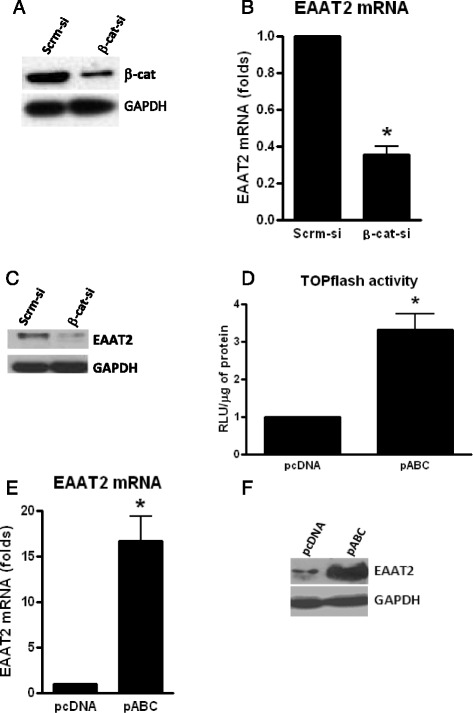
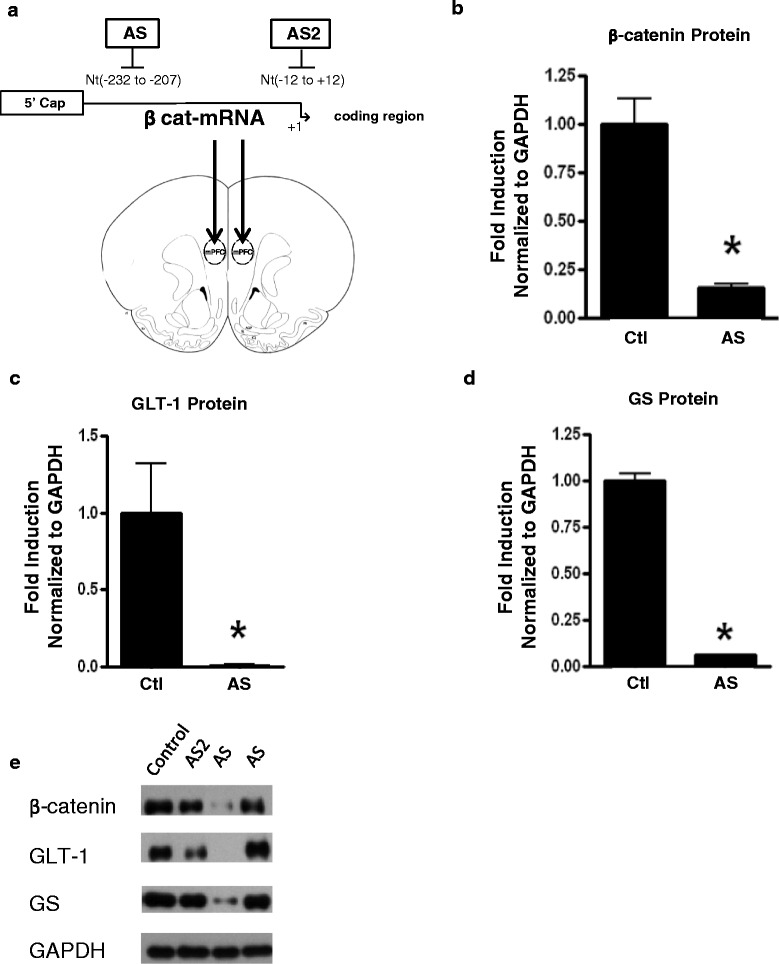
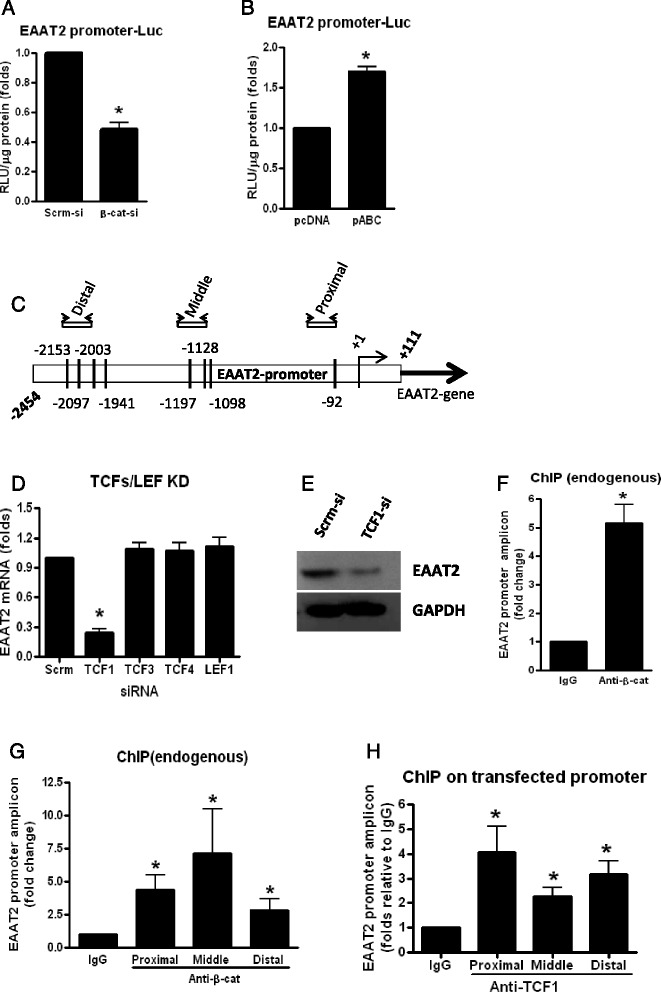
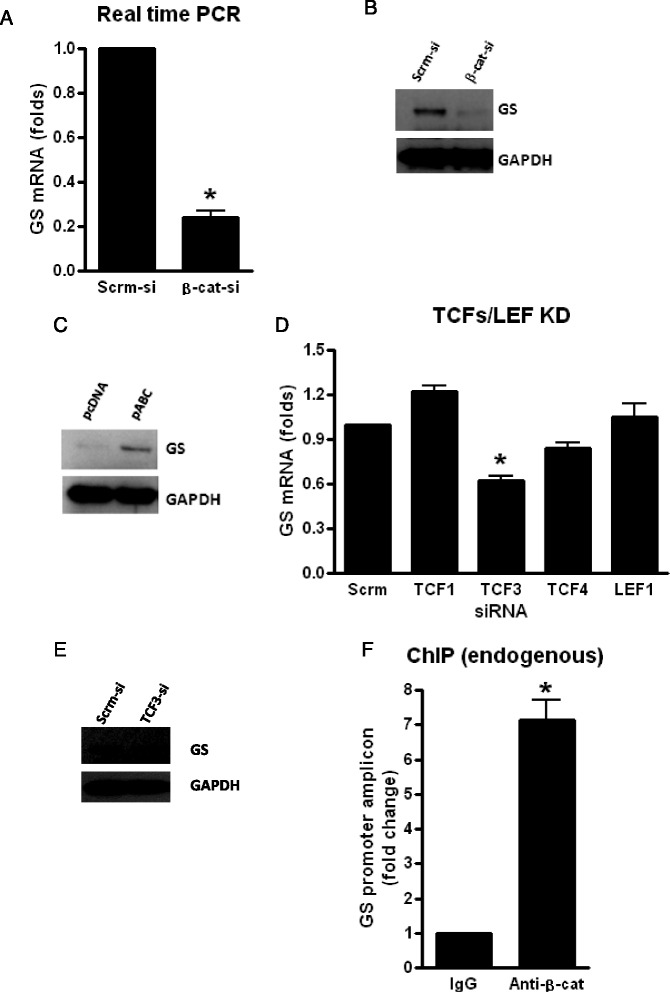
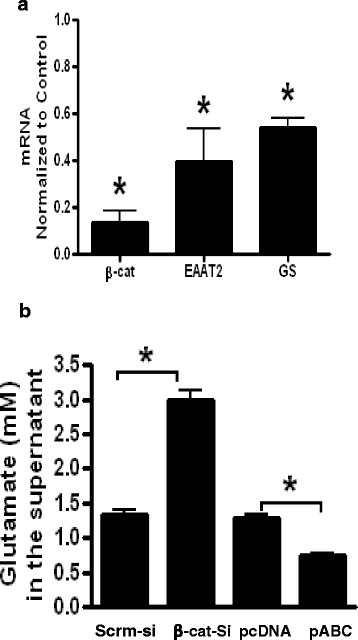
Gain and loss of function for β-catenin in human progenitor-derived astrocyte (PDAs) was used to assess EAAT2 and GS levels by PCR, western blot, luciferase reporter assays, and chromatin immunoprecipitation (ChIP). Further, morpholinos were stereotaxically injected into C57BL/6 mice and western blots measured the protein levels of β-catenin, GLT-1, and GS.
β-Catenin, a transcriptional co-activator and the central mediator of Wnt/β-catenin signaling pathway, positively regulates EAAT2 and GS at the transcriptional level in PDAs by partnering with T cell factor 1 (TCF-1) and TCF-3, respectively. This pathway is conserved in vivo as the knockdown of β-catenin in the prefrontal cortex results in reduced GLT-1 and GS expression.
These studies confirm that β-catenin regulates key proteins responsible for excitatory glutamate neurotransmission in vitro and in vivo and reveal the therapeutic potential of β-catenin modulation in treating diseases with abnormal glutamatergic neurotransmission and excitotoxicity.
神经疾病与异常的兴奋性神经传递有关。谷氨酸循环的紊乱可对正常活动产生深远影响,导致兴奋性毒性和神经炎症,并在这些疾病中诱发和/或加剧损伤。星形胶质细胞在兴奋性信号传导中起关键作用,因为它们既能从突触间隙清除谷氨酸,又能容纳负责将谷氨酸转化为谷氨酰胺的酶。然而,负责调节谷氨酸循环的机制,包括主要的星形胶质细胞谷氨酸转运体兴奋性氨基酸转运体2(在啮齿动物中为EAAT2或GLT-1)和催化谷氨酸与氨生成谷氨酰胺的ATP依赖性反应的谷氨酰胺合成酶(GS),在很大程度上仍不明确。
利用人祖细胞来源的星形胶质细胞(PDA)中β-连环蛋白的功能获得和丧失,通过聚合酶链反应(PCR)、蛋白质印迹、荧光素酶报告基因检测和染色质免疫沉淀(ChIP)来评估EAAT2和GS水平。此外,将吗啉代寡核苷酸立体定向注射到C57BL/6小鼠体内,蛋白质印迹法检测β-连环蛋白、GLT-1和GS的蛋白质水平。
β-连环蛋白是一种转录共激活因子,也是Wnt/β-连环蛋白信号通路的中心介质,它分别与T细胞因子1(TCF-1)和TCF-3合作,在转录水平上正向调节PDA中的EAAT2和GS。该途径在体内是保守的,因为前额叶皮质中β-连环蛋白的敲低会导致GLT-1和GS表达降低。
这些研究证实β-连环蛋白在体外和体内调节负责兴奋性谷氨酸神经传递的关键蛋白,并揭示了β-连环蛋白调节在治疗谷氨酸能神经传递异常和兴奋性毒性疾病中的治疗潜力。