Cañete Ana, Comaills Valentine, Prados Isabel, Castro Ana María, Hammad Seddik, Ybot-Gonzalez Patricia, Bockamp Ernesto, Hengstler Jan G, Gottgens Bertie, Sánchez María José
Centro Andaluz de Biología del Desarrollo (CABD), Consejo Superior de Investigaciones Científicas (CSIC), Junta de Andalucía (JA), Universidad Pablo de Olavide (UPO), Sevilla, Spain.
Faculty of Veterinary Medicine, Department of Forensic Medicine and Veterinary Toxicology, South Valley University, Qena, Egypt.
Stem Cells. 2017 Feb;35(2):507-521. doi: 10.1002/stem.2494. Epub 2016 Sep 28.
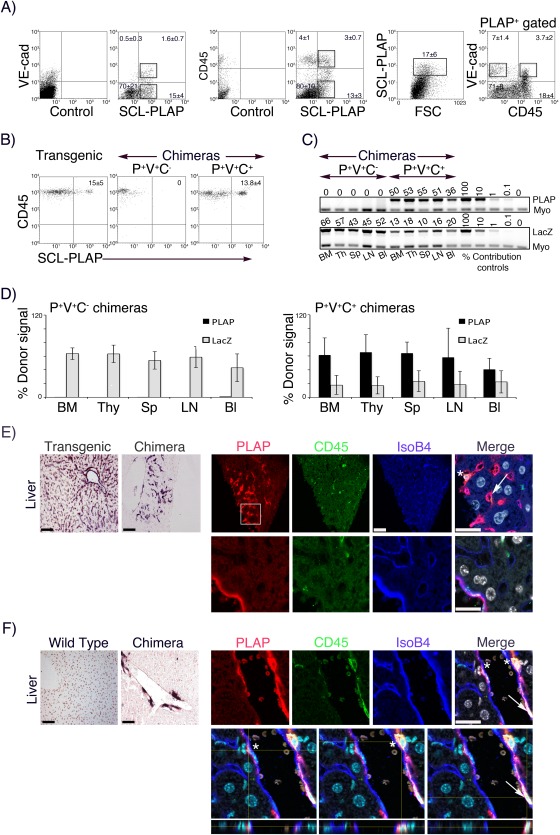
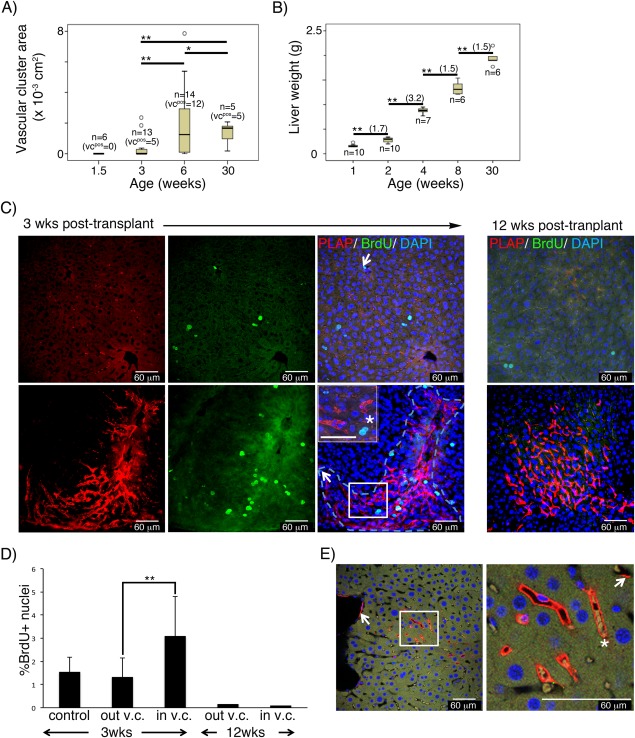
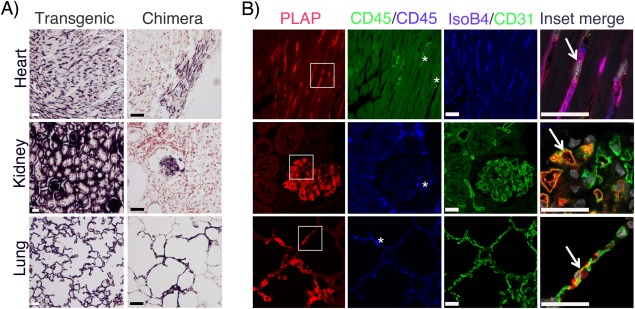
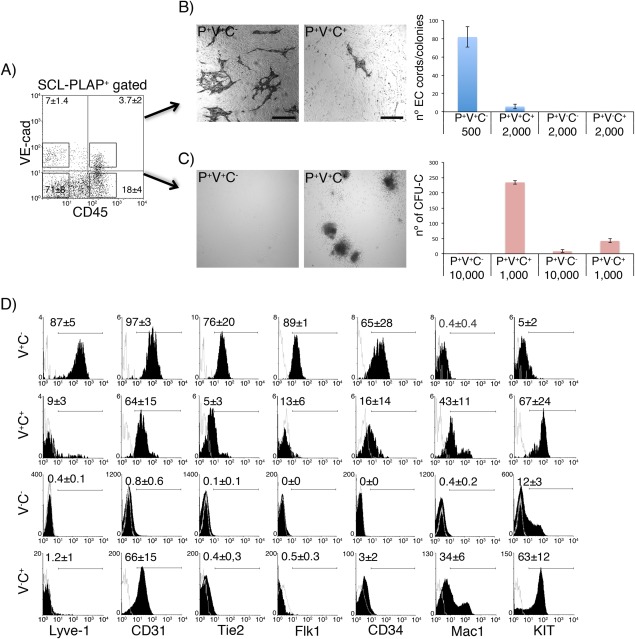
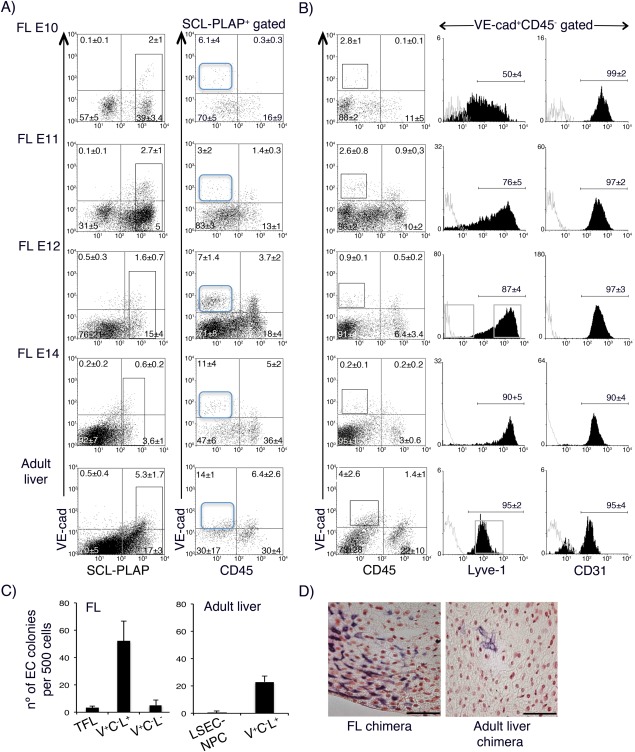
Stable reconstitution of vascular endothelial beds upon transplantation of progenitor cells represents an important challenge due to the paucity and generally limited integration/expansion potential of most identified vascular related cell subsets. We previously showed that mouse fetal liver (FL) hemato/vascular cells from day 12 of gestation (E12), expressing the Stem Cell Leukaemia (SCL) gene enhancer transgene (SCL-PLAP cells), had robust endothelial engraftment potential when transferred to the blood stream of newborns or adult conditioned recipients, compared to the scarce vascular contribution of adult bone marrow cells. However, the specific SCL-PLAP hematopoietic or endothelial cell subset responsible for the long-term reconstituting endothelial cell (LTR-EC) activity and its confinement to FL developmental stages remained unknown. Using a busulfan-treated newborn transplantation model, we show that LTR-EC activity is restricted to the SCL-PLAP VE-cadherin CD45 cell population, devoid of hematopoietic reconstitution activity and largely composed by Lyve1 endothelial-committed cells. SCL-PLAP Ve-cadherin CD45 cells contributed to the liver sinusoidal endothelium and also to the heart, kidney and lung microvasculature. LTR-EC activity was detected at different stages of FL development, yet marginal activity was identified in the adult liver, revealing unknown functional differences between fetal and adult liver endothelial/endothelial progenitors. Importantly, the observations that expanding donor-derived vascular grafts colocalize with proliferating hepatocyte-like cells and participate in the systemic circulation, support their functional integration into young livers. These findings offer new insights into the engraftment, phonotypical, and developmental characterization of a novel endothelial/endothelial progenitor cell subtype with multiorgan LTR-EC activity, potentially instrumental for the treatment/genetic correction of vascular diseases. Stem Cells 2017;35:507-521.
由于大多数已鉴定的血管相关细胞亚群数量稀少且整合/扩增潜力普遍有限,祖细胞移植后血管内皮床的稳定重建是一项重大挑战。我们之前发现,妊娠第12天(E12)的小鼠胎肝(FL)造血/血管细胞,表达干细胞白血病(SCL)基因增强子转基因(SCL-PLAP细胞),与成年骨髓细胞对血管的微弱贡献相比,当转移到新生或成年条件受体的血流中时,具有强大的内皮植入潜力。然而,负责长期重建内皮细胞(LTR-EC)活性的特定SCL-PLAP造血或内皮细胞亚群及其局限于FL发育阶段的情况仍不清楚。使用白消安处理的新生移植模型,我们发现LTR-EC活性仅限于SCL-PLAP血管内皮钙黏蛋白CD45细胞群体,该群体缺乏造血重建活性,主要由Lyve1内皮定向细胞组成。SCL-PLAP血管内皮钙黏蛋白CD45细胞对肝窦内皮以及心脏、肾脏和肺微血管均有贡献。在FL发育的不同阶段均检测到LTR-EC活性,但在成年肝脏中仅发现微弱活性,这揭示了胎儿和成年肝脏内皮/内皮祖细胞之间未知的功能差异。重要的是,扩展的供体来源血管移植物与增殖的肝细胞样细胞共定位并参与体循环的观察结果,支持它们在幼龄肝脏中的功能整合。这些发现为具有多器官LTR-EC活性的新型内皮/内皮祖细胞亚型的植入、表型和发育特征提供了新见解,可能有助于血管疾病的治疗/基因校正。《干细胞》2017年;35卷:507 - 521页