Dadsetan Sherry, Balzano Tiziano, Forteza Jerónimo, Agusti Ana, Cabrera-Pastor Andrea, Taoro-Gonzalez Lucas, Hernandez-Rabaza Vicente, Gomez-Gimenez Belen, ElMlili Nisrin, Llansola Marta, Felipo Vicente
Laboratorio de Neurobiología, Centro Investigación Príncipe Felipe de Valencia, Eduardo Primo Yufera, 3, 46012, Valencia, Spain.
Instituto Valenciano de Patología, Unidad Mixta de Patología Molecular, Centro de Investigación Príncipe Felipe/Universidad Católica de Valencia, Valencia, Spain.
J Neuroinflammation. 2016 Sep 13;13(1):245. doi: 10.1186/s12974-016-0710-8.
Peripheral inflammation contributes to the neurological alterations in hepatic encephalopathy (HE). Neuroinflammation and altered GABAergic neurotransmission mediate cognitive and motor alterations in rats with HE. It remains unclear (a) if neuroinflammation and neurological impairment in HE are a consequence of peripheral inflammation and (b) how neuroinflammation impairs GABAergic neurotransmission. The aims were to assess in rats with HE whether reducing peripheral inflammation with anti-TNF-α (1) prevents cognitive impairment and motor in-coordination, (2) normalizes neuroinflammation and extracellular GABA in the cerebellum and also (3) advances the understanding of mechanisms linking neuroinflammation and increased extracellular GABA.
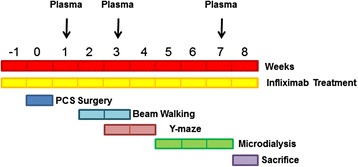
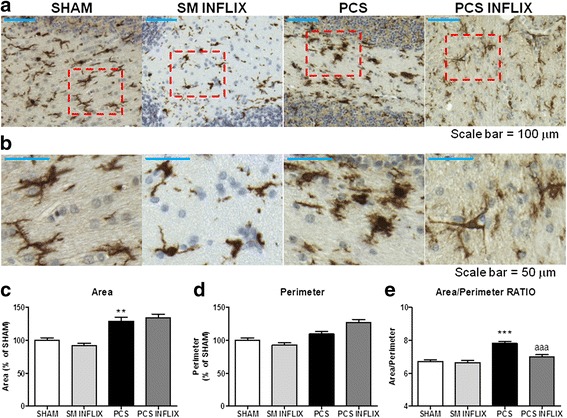
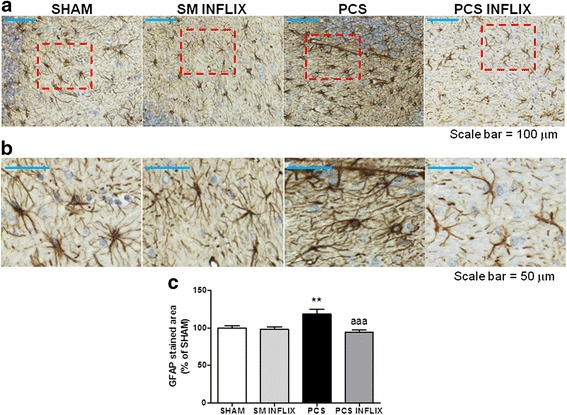
Rats with HE due to portacaval shunt (PCS) were treated with infliximab. Astrocytes and microglia activation and TNF-α and IL-1β were analyzed by immunohistochemistry. Membrane expression of the GABA transporters GAT-3 and GAT-1 was analyzed by cross-linking with BS3. Extracellular GABA was analyzed by microdialysis. Motor coordination was tested using the beam walking and learning ability using the Y maze task.
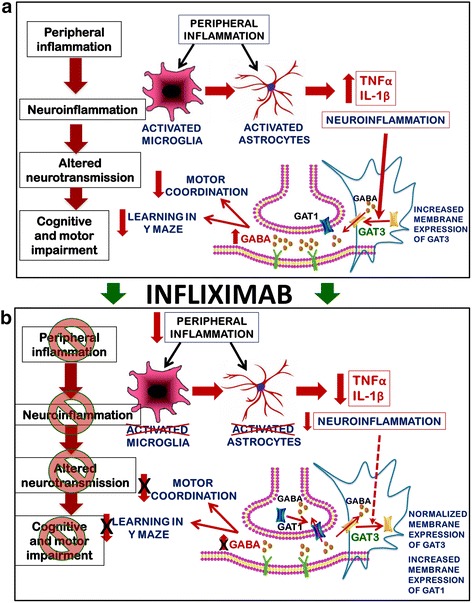
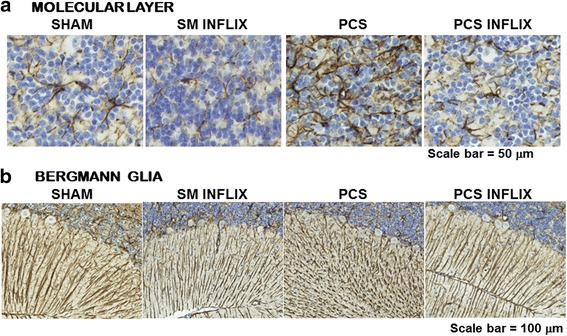
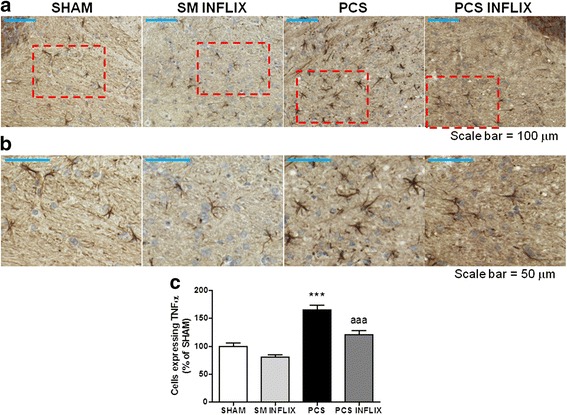
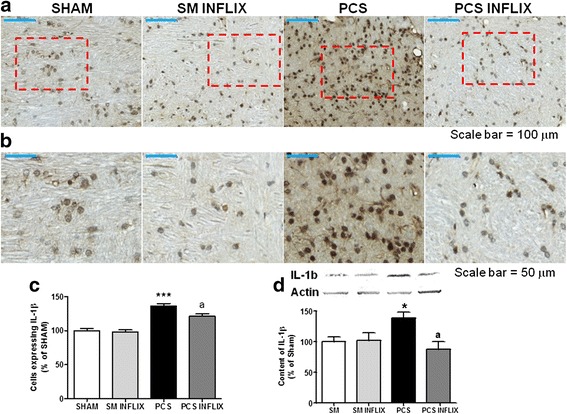
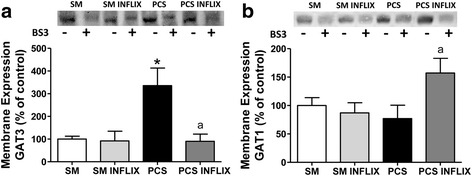
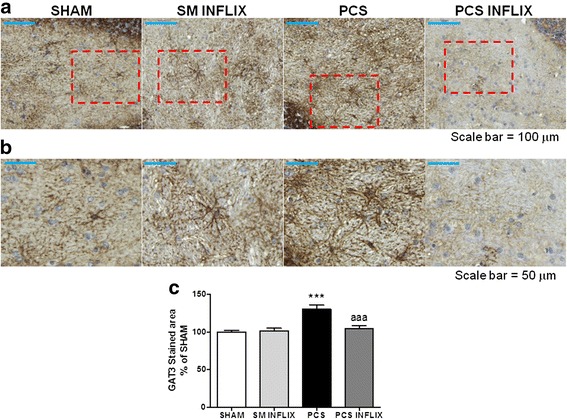
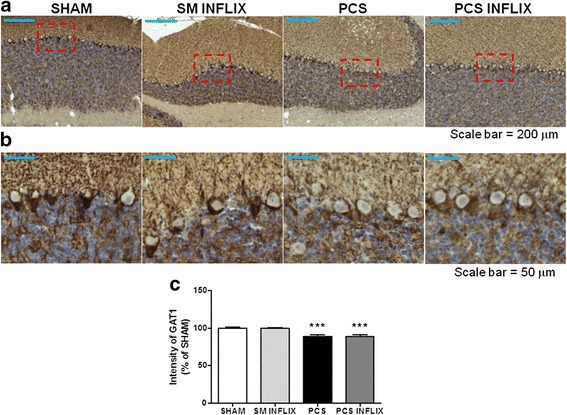
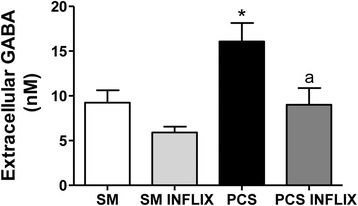
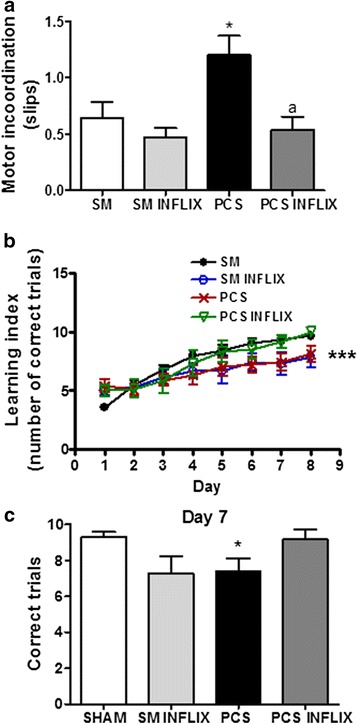
PCS rats show peripheral inflammation, activated astrocytes, and microglia and increased levels of TNF-α and IL-1β. Membrane expression of GAT-3 and extracellular GABA are increased, leading to impaired motor coordination and learning ability. Infliximab reduces peripheral inflammation, microglia, and astrocyte activation and neuroinflammation and normalizes GABAergic neurotransmission, motor coordination, and learning ability.
Neuroinflammation is associated with altered GABAergic neurotransmission and increased GAT-3 membrane expression and extracellular GABA (a); peripheral inflammation is a main contributor to the impairment of motor coordination and of the ability to learn the Y maze task in PCS rats (b); and reducing peripheral inflammation using safe procedures could be a new therapeutic approach to improve cognitive and motor function in patients with HE
外周炎症导致肝性脑病(HE)的神经功能改变。神经炎症和γ-氨基丁酸(GABA)能神经传递改变介导了HE大鼠的认知和运动改变。目前尚不清楚:(a)HE中的神经炎症和神经功能损害是否是外周炎症的结果;(b)神经炎症如何损害GABA能神经传递。本研究旨在评估在HE大鼠中,使用抗肿瘤坏死因子-α(TNF-α)减轻外周炎症是否(1)预防认知障碍和运动不协调;(2)使小脑神经炎症和细胞外GABA正常化;(并)(3)增进对神经炎症与细胞外GABA增加之间联系机制的理解。
对因门腔分流术(PCS)导致HE的大鼠使用英夫利昔单抗进行治疗。通过免疫组织化学分析星形胶质细胞和小胶质细胞的活化以及TNF-α和白细胞介素-1β(IL-1β)。通过与双琥珀酰亚胺辛二酸酯(BS3)交联分析GABA转运体GAT-3和GAT-1的膜表达。通过微透析分析细胞外GABA。使用横梁行走测试运动协调性,使用Y迷宫任务测试学习能力。
PCS大鼠表现出外周炎症、星形胶质细胞和小胶质细胞活化以及TNF-α和IL-1β水平升高。GAT-3的膜表达和细胞外GABA增加,导致运动协调性和学习能力受损。英夫利昔单抗减轻外周炎症、小胶质细胞和星形胶质细胞活化以及神经炎症,并使GABA能神经传递、运动协调性和学习能力正常化。
神经炎症与GABA能神经传递改变、GAT-3膜表达增加和细胞外GABA增加有关(a);外周炎症是PCS大鼠运动协调性和Y迷宫任务学习能力受损的主要原因(b);采用安全的方法减轻外周炎症可能是改善HE患者认知和运动功能的一种新的治疗方法。