Große-Kreul Jan, Busch Maike, Winter Claudia, Pikos Stefanie, Stephan Harald, Dünker Nicole
University of Duisburg-Essen, Medical Faculty, Institute of Anatomy II, Department of Neuroanatomy, Essen, Germany.
Division of Haematology and Oncology, Children's Hospital, University of Duisburg-Essen, Essen, Germany.
PLoS One. 2016 Sep 14;11(9):e0163025. doi: 10.1371/journal.pone.0163025. eCollection 2016.
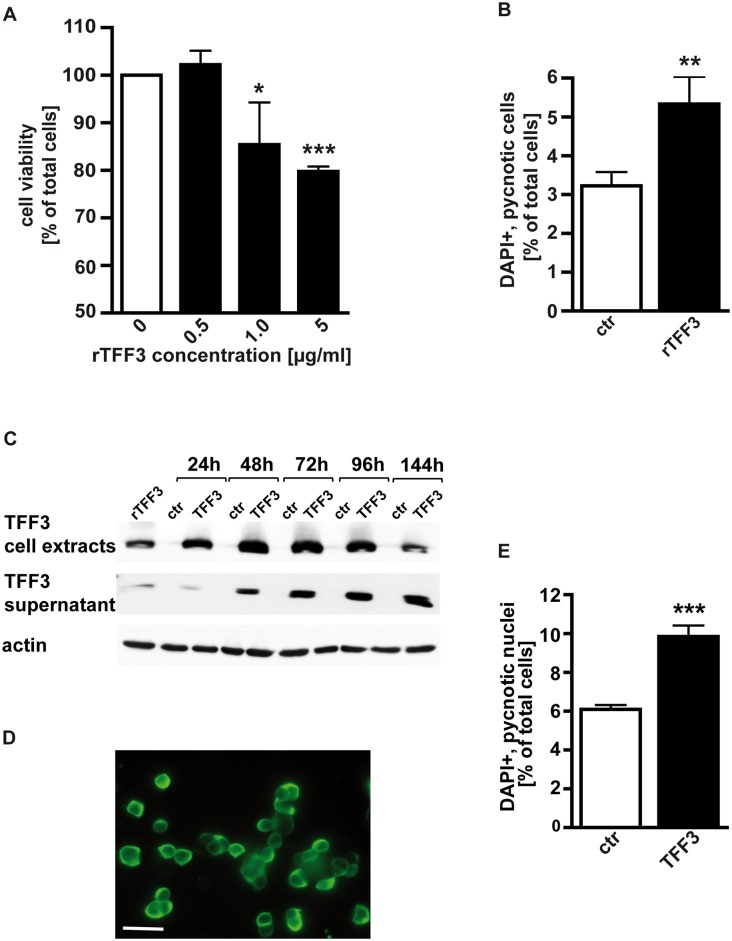
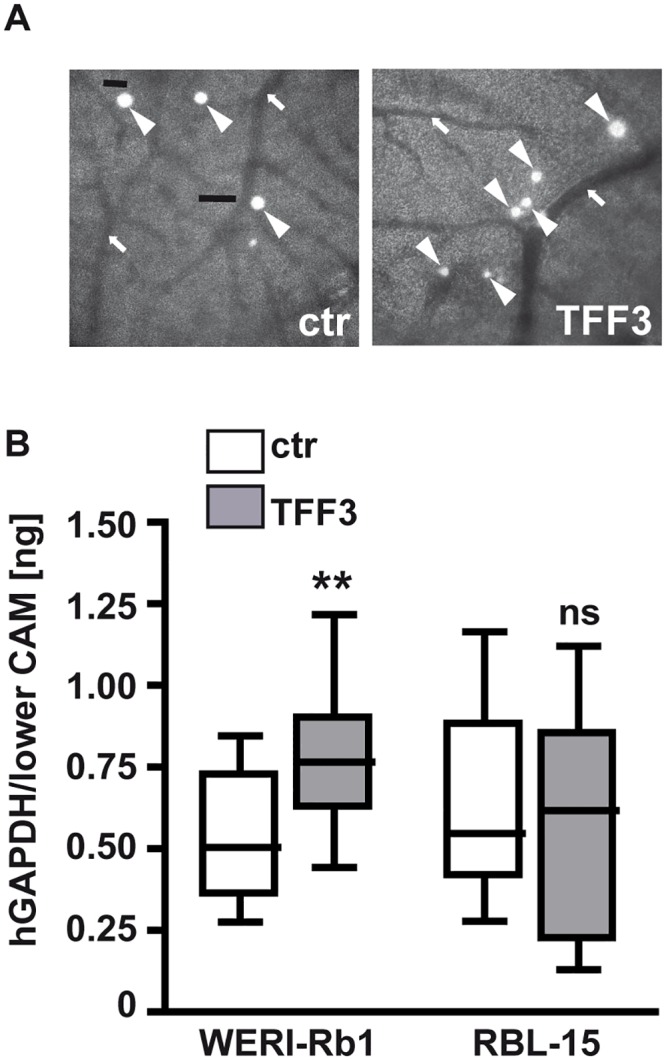
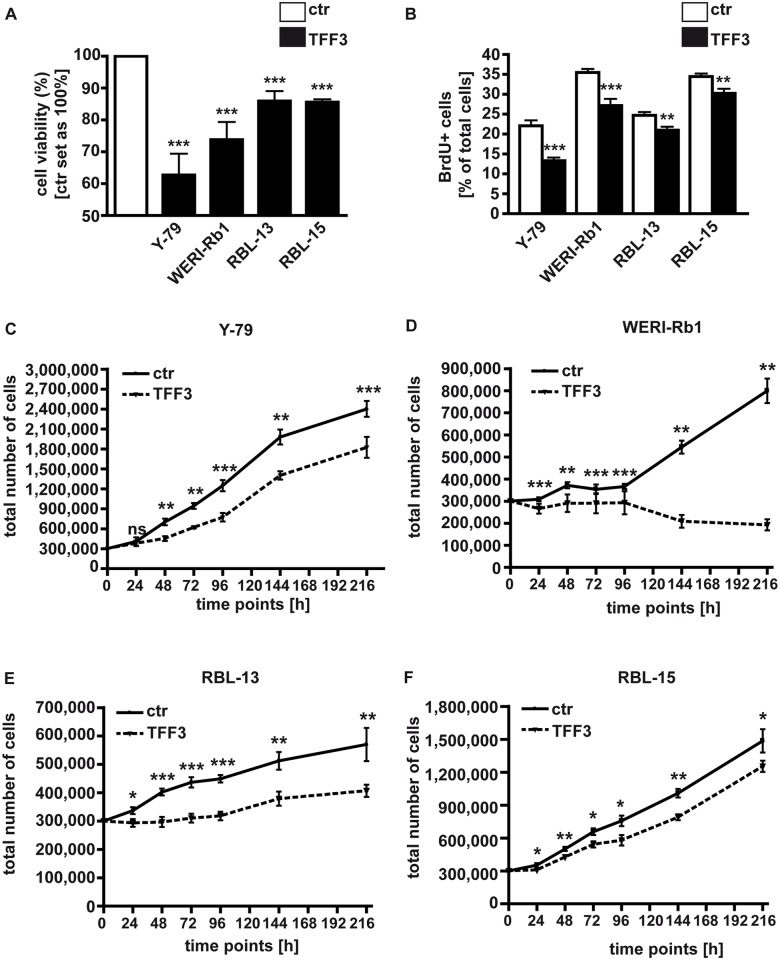
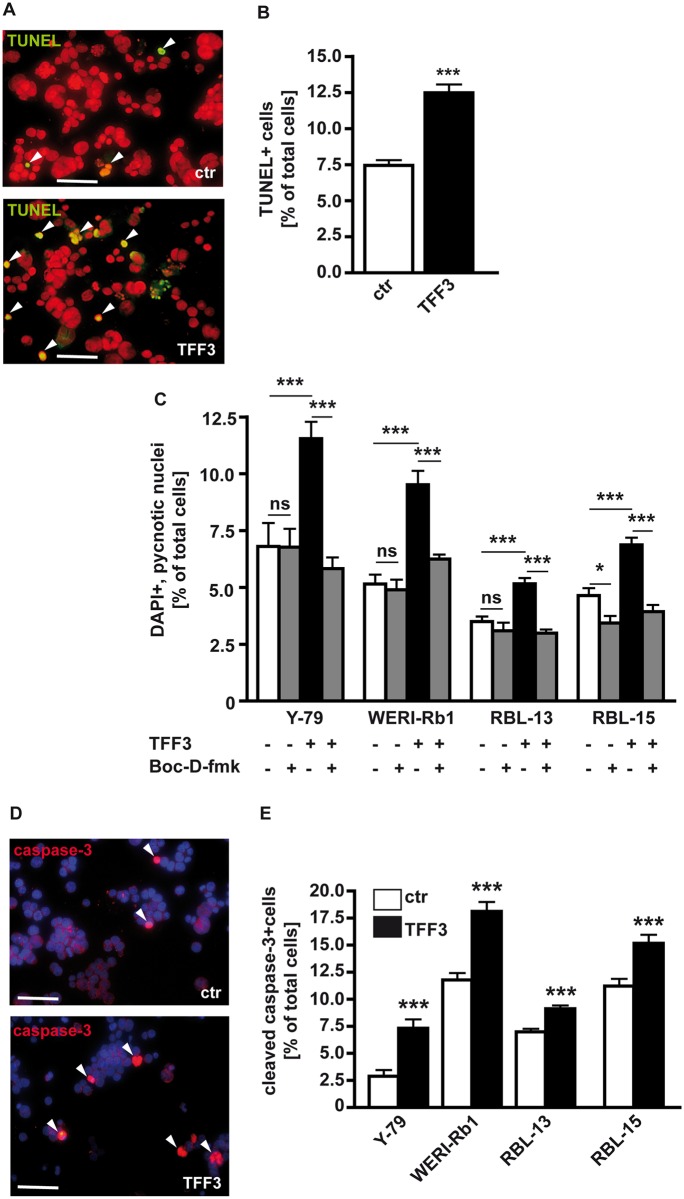
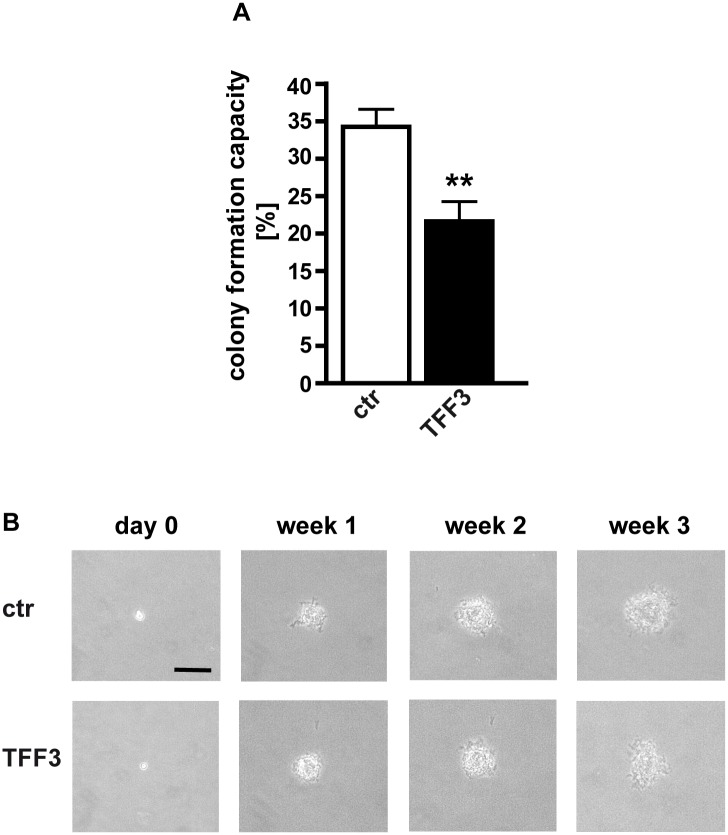
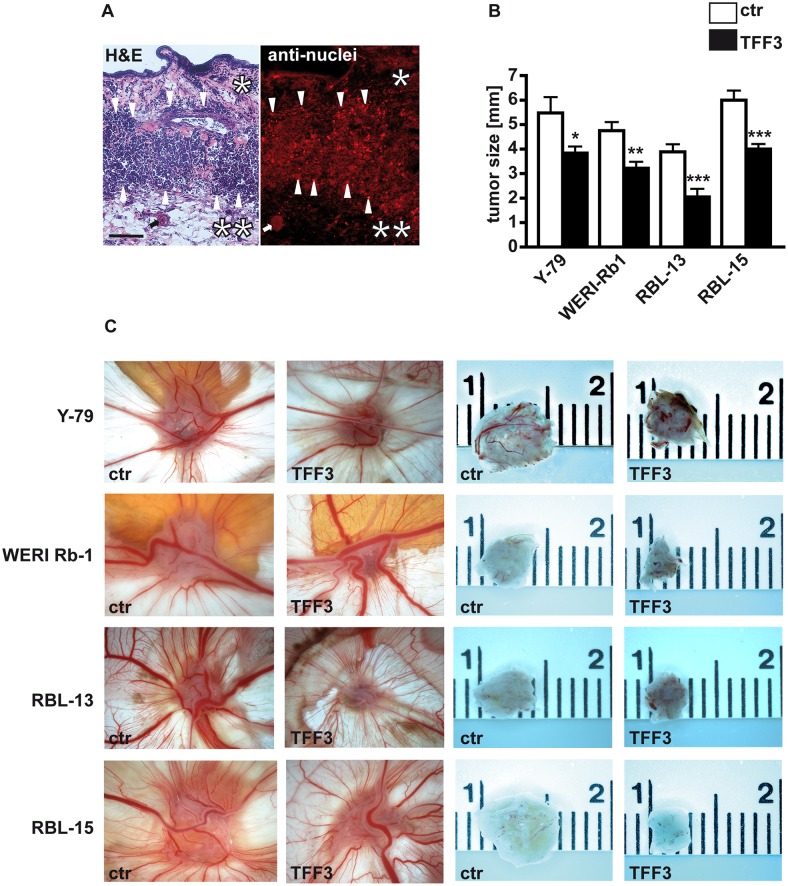
Trefoil factor family (TFF) peptides have been shown to effect cell proliferation, apoptosis, migration and invasion of normal cells and various cancer cell lines. In the literature TFF peptides are controversially discussed as tumor suppressors and potential tumor progression factors. In the study presented, we investigated the effect of TFF3 overexpression on growth, viability, migration and tumorigenicity of the human retinoblastoma cell lines Y-79, WERI-Rb1, RBL-13 and RBL-15. As revealed by WST-1 and TUNEL assays as well as DAPI and BrdU cell counts, recombinant human TFF3 significantly lowers retinoblastoma cell viability and increases apoptosis levels. Transient TFF3 overexpression likewise significantly increases RB cell apoptosis. Stable, lentiviral TFF3 overexpression lowers retinoblastoma cell viability, proliferation and growth and significantly increases cell death in retinoblastoma cells. Blockage experiments using a broad-spectrum caspase inhibitor and capase-3 immunocytochemistry revealed the involvement of caspases in general and of caspase-3 in particular in TFF3 induced apoptosis in retinoblastoma cell lines. Soft agarose and in ovo chicken chorioallantoic membrane (CAM) assays revealed that TFF3 overexpression influences anchorage independent growth and significantly decreases the size of tumors forming from retinoblastoma cells. Our study demonstrates that forced TFF3 expression exerts a significant pro-apoptotic, anti-proliferative, and tumor suppressive effect in retinoblastoma cells, setting a starting point for new additive chemotherapeutic approaches in the treatment of retinoblastoma.
三叶因子家族(TFF)肽已被证明可影响正常细胞和各种癌细胞系的细胞增殖、凋亡、迁移和侵袭。在文献中,TFF肽作为肿瘤抑制因子和潜在的肿瘤进展因子存在争议。在本研究中,我们研究了TFF3过表达对人视网膜母细胞瘤细胞系Y-79、WERI-Rb1、RBL-13和RBL-15的生长、活力、迁移和致瘤性的影响。通过WST-1和TUNEL分析以及DAPI和BrdU细胞计数显示,重组人TFF3显著降低视网膜母细胞瘤细胞活力并增加凋亡水平。瞬时TFF3过表达同样显著增加RB细胞凋亡。稳定的慢病毒TFF3过表达降低视网膜母细胞瘤细胞活力、增殖和生长,并显著增加视网膜母细胞瘤细胞的死亡。使用广谱半胱天冬酶抑制剂和半胱天冬酶-3免疫细胞化学的阻断实验表明,半胱天冬酶总体上参与其中,特别是半胱天冬酶-3参与TFF3诱导的视网膜母细胞瘤细胞系凋亡。软琼脂糖和鸡胚绒毛尿囊膜(CAM)试验表明,TFF3过表达影响非锚定依赖性生长,并显著减小由视网膜母细胞瘤细胞形成的肿瘤大小。我们的研究表明,强制表达TFF3在视网膜母细胞瘤细胞中发挥显著的促凋亡、抗增殖和肿瘤抑制作用,为视网膜母细胞瘤治疗中新的辅助化疗方法奠定了基础。