Ho Yen-Chun, Wu Meng-Ling, Gung Pei-Yu, Chen Chung-Huang, Kuo Cheng-Chin, Yet Shaw-Fang
Institute of Cellular and System Medicine, National Health Research Institutes, Zhunan, Taiwan.
Graduate Institute of Life Sciences, National Defense Medical Center, Taipei, Taiwan.
Oncotarget. 2016 Oct 18;7(42):67760-67776. doi: 10.18632/oncotarget.11917.
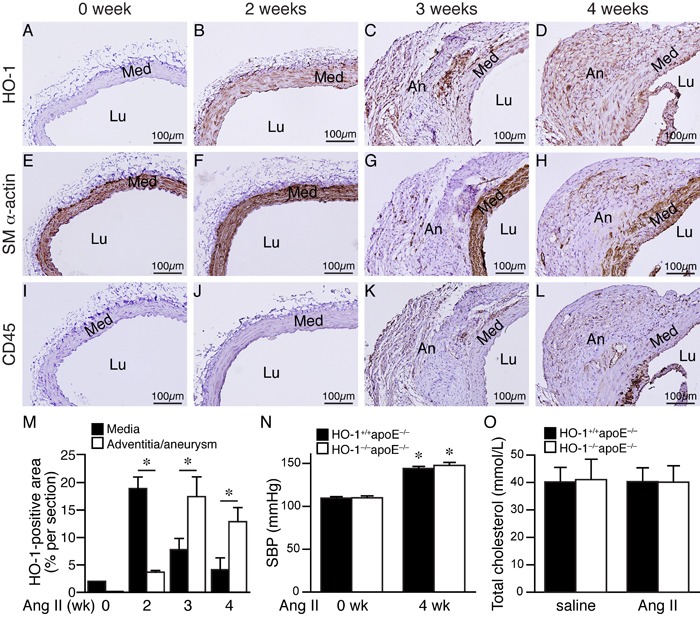
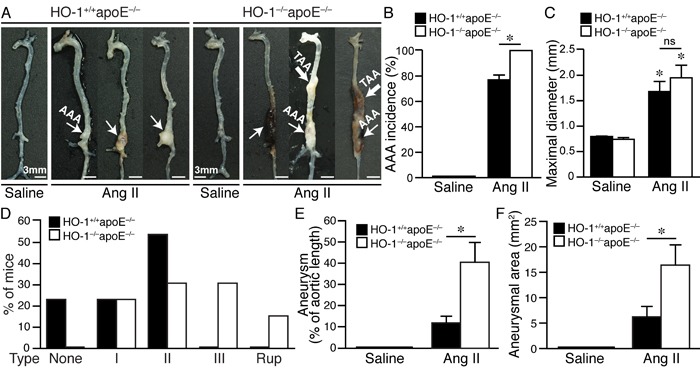
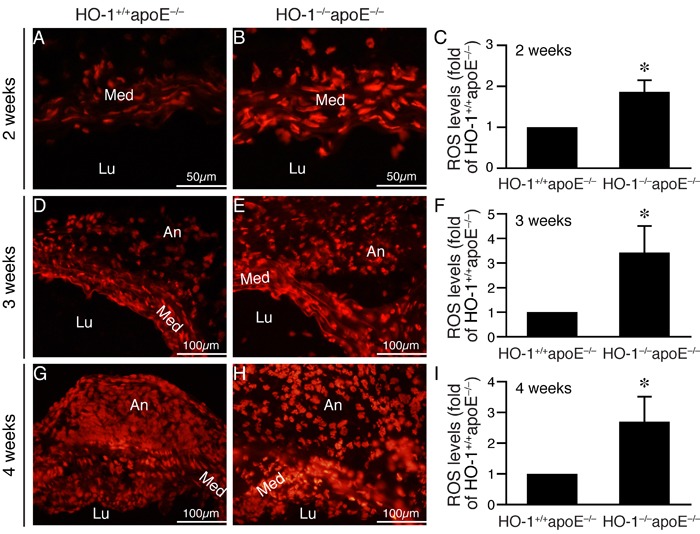
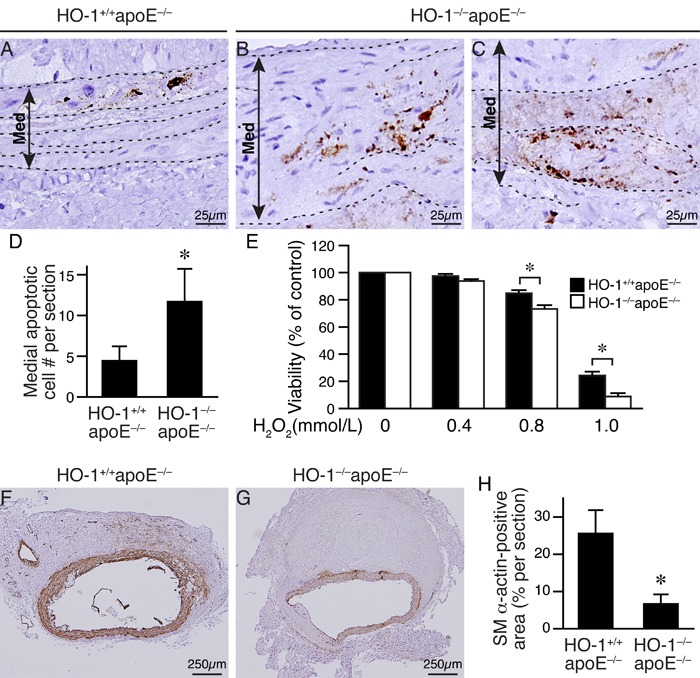
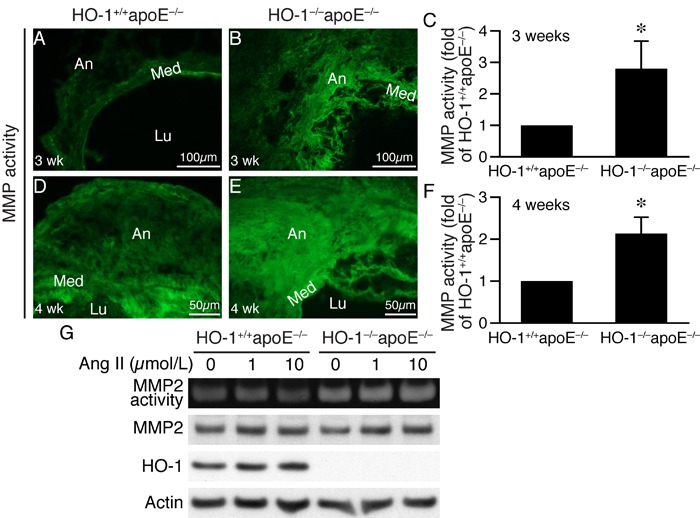
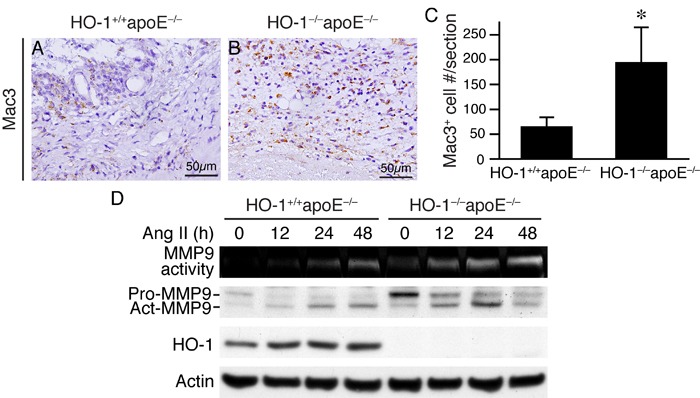
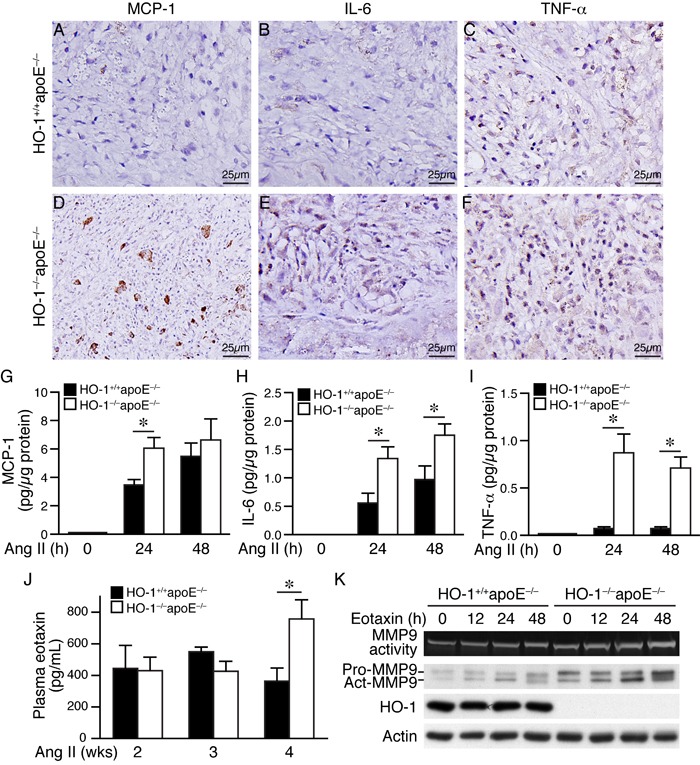
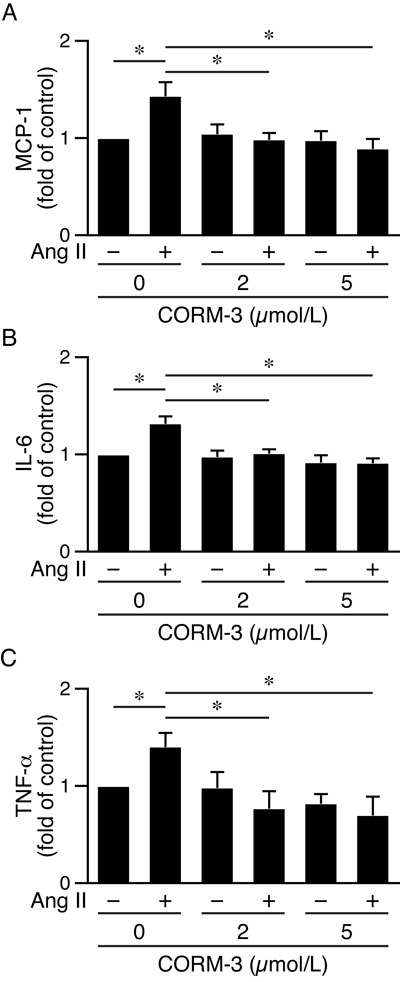
Abdominal aortic aneurysm (AAA) is a chronic but often fatal disease in elderly population. Heme oxygenase-1 (HO-1) is a stress response protein with antioxidative and anti-inflammatory properties. HO-1 has been shown to protect against atherogenesis and arterial intimal thickening. Emerging evidences suggest that AAA and arterial occlusive disease have distinct pathogenic mechanisms. Thus, in this study we investigated the role of HO-1 in angiotensin II-induced AAA formation in HO-1+/+apoE-/- and HO-1-/-apoE-/- mice. We found that complete loss of HO-1 increased AAA incidence and rupture rate, and drastically increased aneurysmal area and severity, accompanied with severe elastin degradation and medial degeneration. Interestingly, we often observed not only AAA but also thoracic aortic aneurysm in HO-1-/-apoE-/- mice. Furthermore, reactive oxygen species levels, vascular smooth muscle cell (VSMC) loss, macrophage infiltration, matrix metalloproteinase (MMP) activity were markedly enhanced in the aneurysmal aortic wall in HO-1-/-apoE-/- mice. In addition, HO-1-/-apoE-/- VSMCs were more susceptible to oxidant-induced cell death and macrophages from HO-1-/-apoE-/- mice had aggravated responses to angiotensin II with substantial increases in inflammatory cytokine productions and MMP9 activity. Taken together, our results demonstrate the essential roles of HO-1 in suppressing the pathogenesis of AAA. Targeting HO-1 might be a promising therapeutic strategy for AAA.
腹主动脉瘤(AAA)是老年人群中一种慢性但往往致命的疾病。血红素加氧酶-1(HO-1)是一种具有抗氧化和抗炎特性的应激反应蛋白。HO-1已被证明可预防动脉粥样硬化和动脉内膜增厚。新出现的证据表明,AAA和动脉闭塞性疾病有不同的致病机制。因此,在本研究中,我们研究了HO-1在HO-1+/+apoE-/-和HO-1-/-apoE-/-小鼠中血管紧张素II诱导的AAA形成中的作用。我们发现,HO-1的完全缺失增加了AAA的发病率和破裂率,并显著增加了动脉瘤面积和严重程度,同时伴有严重的弹性蛋白降解和中膜变性。有趣的是,我们经常在HO-1-/-apoE-/-小鼠中不仅观察到AAA,还观察到胸主动脉瘤。此外,HO-1-/-apoE-/-小鼠动脉瘤主动脉壁中的活性氧水平、血管平滑肌细胞(VSMC)损失、巨噬细胞浸润、基质金属蛋白酶(MMP)活性均显著增强。此外,HO-1-/-apoE-/- VSMC对氧化剂诱导的细胞死亡更敏感,HO-1-/-apoE-/-小鼠的巨噬细胞对血管紧张素II的反应加剧,炎症细胞因子产生和MMP9活性大幅增加。综上所述,我们的结果证明了HO-1在抑制AAA发病机制中的重要作用。靶向HO-1可能是一种有前景的AAA治疗策略。