Center for Functional and Comparative Insect Genomics, Department of Biology, University of Copenhagen, DK-2100 Copenhagen, Denmark.
Sci Rep. 2016 Sep 15;6:32789. doi: 10.1038/srep32789.
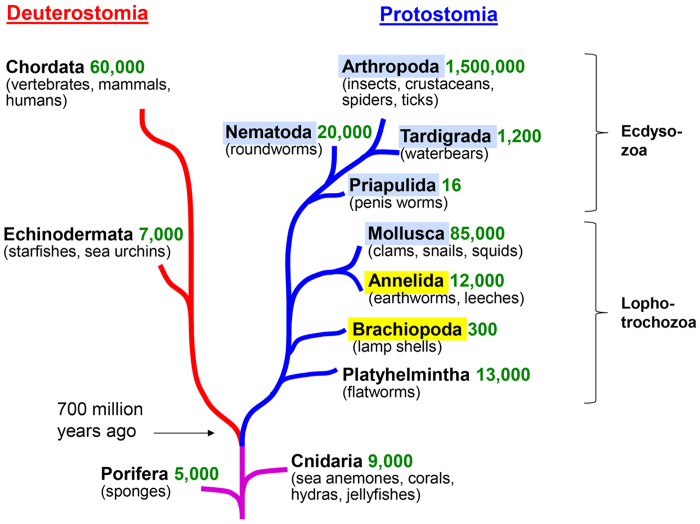
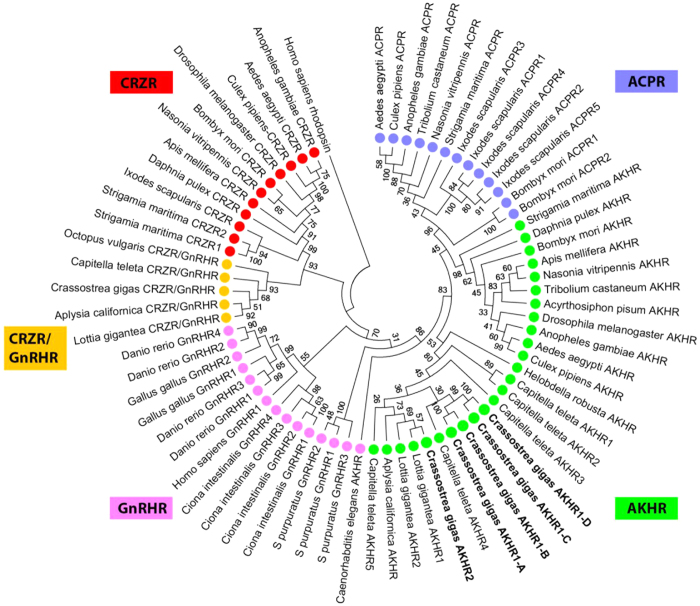
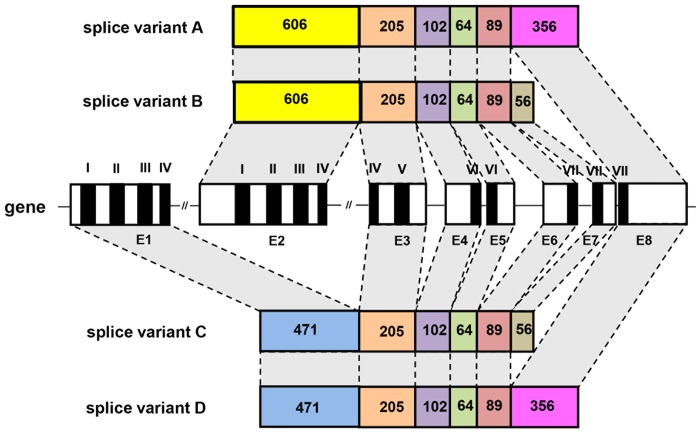
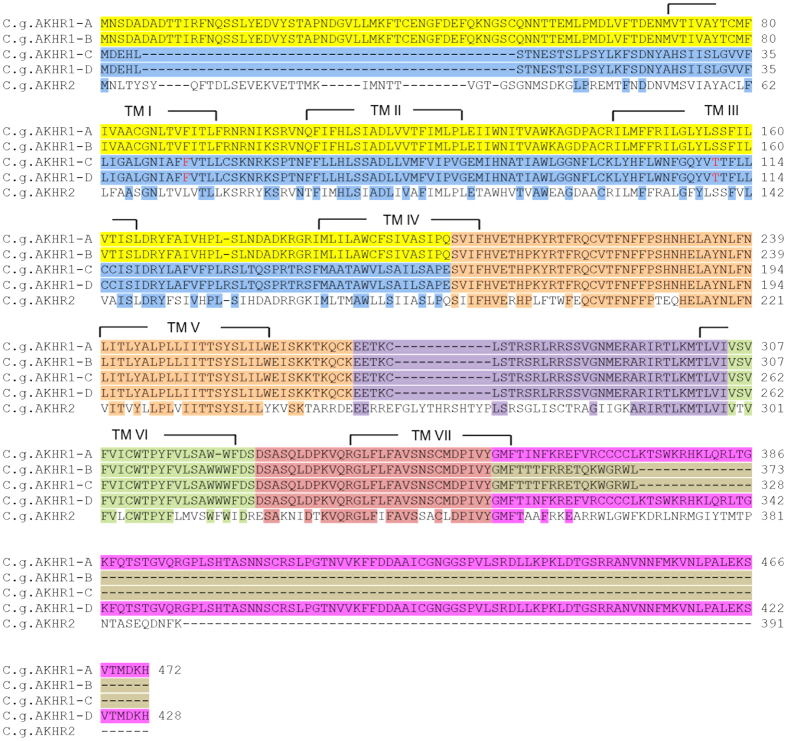
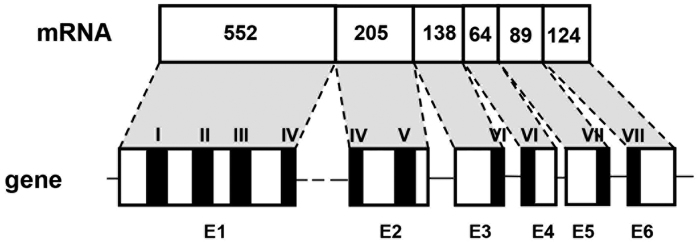
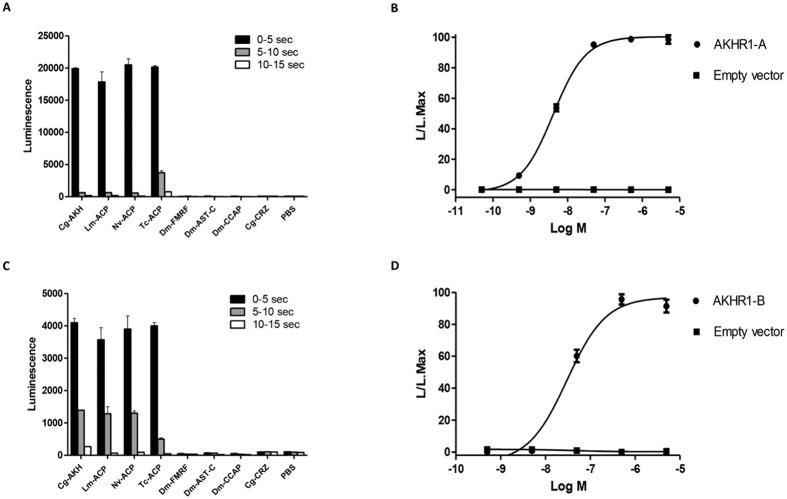
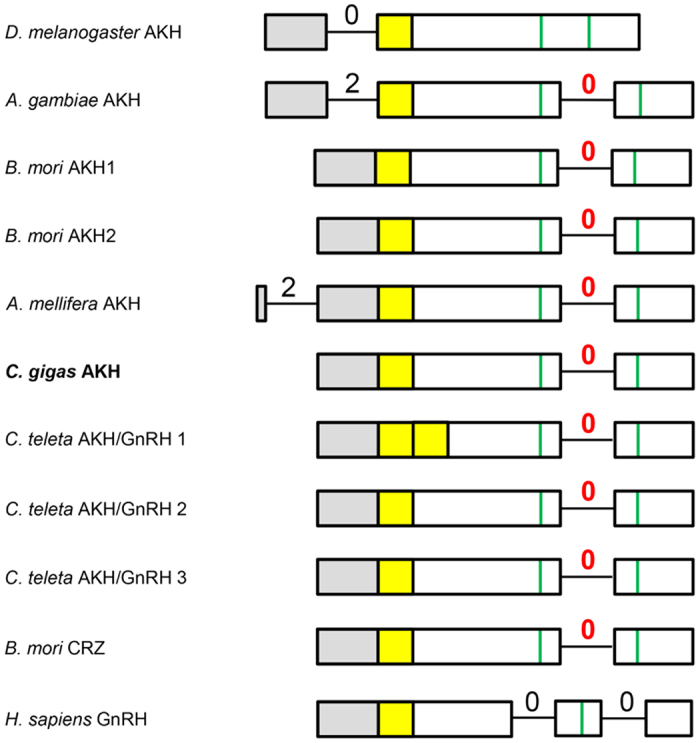
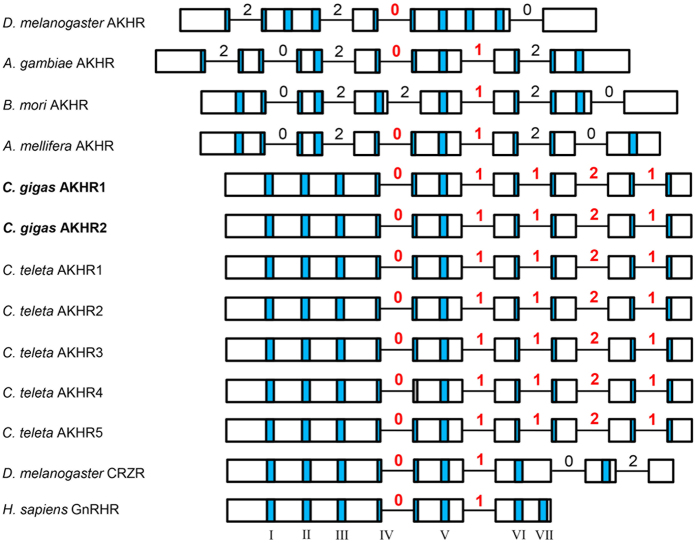
Most multicellular animals belong to two evolutionary lineages, the Proto- and Deuterostomia, which diverged 640-760 million years (MYR) ago. Neuropeptide signaling is abundant in animals belonging to both lineages, but it is often unclear whether there exist evolutionary relationships between the neuropeptide systems used by proto- or deuterostomes. An exception, however, are members of the gonadotropin-releasing hormone (GnRH) receptor superfamily, which occur in both evolutionary lineages, where GnRHs are the ligands in Deuterostomia and GnRH-like peptides, adipokinetic hormone (AKH), corazonin, and AKH/corazonin-related peptide (ACP) are the ligands in Protostomia. AKH is a well-studied insect neuropeptide that mobilizes lipids and carbohydrates from the insect fat body during flight. In our present paper, we show that AKH is not only widespread in insects, but also in other Ecdysozoa and in Lophotrochozoa. Furthermore, we have cloned and deorphanized two G protein-coupled receptors (GPCRs) from the oyster Crassostrea gigas (Mollusca) that are activated by low nanomolar concentrations of oyster AKH (pQVSFSTNWGSamide). Our discovery of functional AKH receptors in molluscs is especially significant, because it traces the emergence of AKH signaling back to about 550 MYR ago and brings us closer to a more complete understanding of the evolutionary origins of the GnRH receptor superfamily.
大多数多细胞动物属于两个进化谱系,原口动物和后口动物,它们在 6.4-7.6 亿年前分化。神经肽信号在属于这两个谱系的动物中都很丰富,但通常不清楚原口动物或后口动物使用的神经肽系统之间是否存在进化关系。然而,促性腺激素释放激素 (GnRH) 受体超家族的成员是一个例外,它们存在于两个进化谱系中,在后口动物中 GnRH 是配体,而在原口动物中 GnRH 样肽、促前胸腺激素 (AKH)、心侧体素 (corazonin) 和 AKH/心侧体素相关肽 (ACP) 是配体。AKH 是一种研究得很好的昆虫神经肽,它在飞行过程中动员昆虫脂肪体中的脂质和碳水化合物。在我们目前的论文中,我们表明 AKH 不仅广泛存在于昆虫中,还存在于其他节肢动物和环节动物中。此外,我们从牡蛎(软体动物)克隆并去孤儿化了两个 G 蛋白偶联受体 (GPCR),它们可以被低纳摩尔浓度的牡蛎 AKH(pQVSFSTNWGSamide)激活。我们在软体动物中发现功能性 AKH 受体的发现尤其重要,因为它将 AKH 信号的出现追溯到大约 5.5 亿年前,使我们更接近更完整地了解 GnRH 受体超家族的进化起源。