Melo Enirtes Caetano Prates, de Oliveira Evangelina Xavier Gouveia, Chor Dóra, Carvalho Marilia Sá, Pinheiro Rejane Sobrino
Department of Epidemiology, National School of Public Health, Oswaldo Cruz Foundation -DEMQS/ENSP, Rua Leopoldo Bulhões, 1480, room 806. Manguinhos, Rio de Janeiro, RJ, 21041-210, Brazil.
Health Information and Networks Research Group, Oswaldo Cruz Foundation, Rio de Janeiro, RJ, Brazil.
Int J Equity Health. 2016 Sep 15;15(1):144. doi: 10.1186/s12939-016-0435-4.
Access to mammograms, in common with other diagnostic procedures, is strongly conditioned by socioeconomic disparities. Which aspects of inequality affect the odds of undergoing a mammogram, and whether they are the same in different localities, are relevant issues related to the success of health policies.
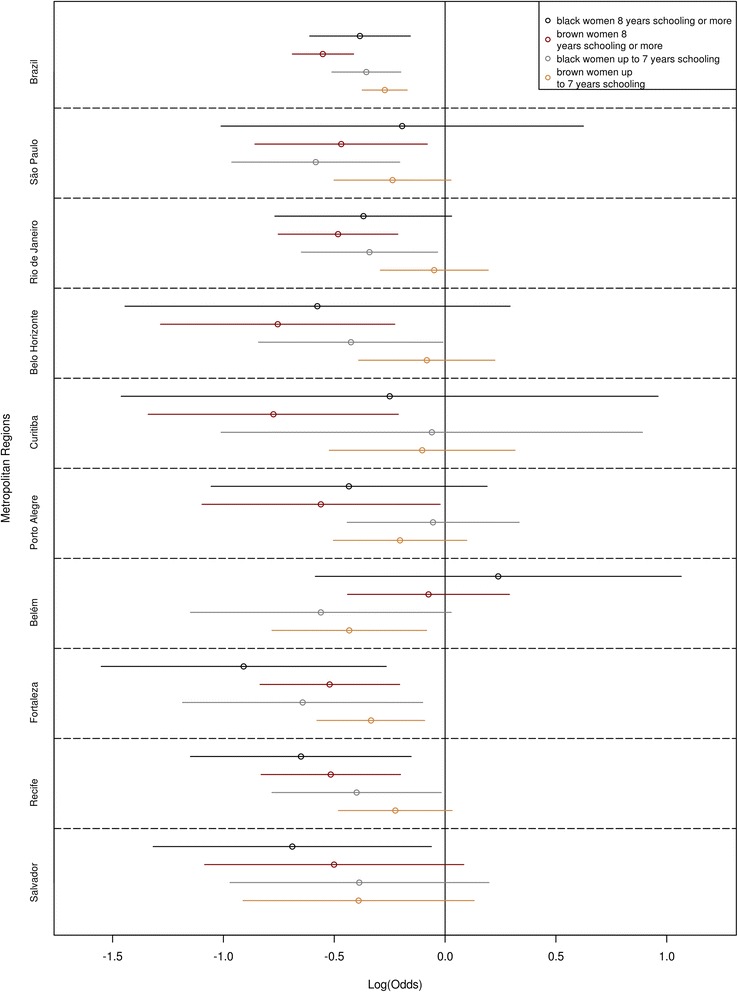
This study analyzed data from the 2008 PNAD - Brazilian National Household Sample Survey (11.607 million women 40 years of age or older), on having had at least one mammogram over life for women 40 years of age or older in each of Brazil's nine Metropolitan Regions (MR), according to socioeconomic position. The effects of income, schooling, health insurance and race in the different regions were investigated using multivariate logistical regression for each region individually, and for all MRs combined. The age-adjusted odds of a woman having had a mammogram according to race and stratified by two income strata (and two schooling strata) were also analyzed.
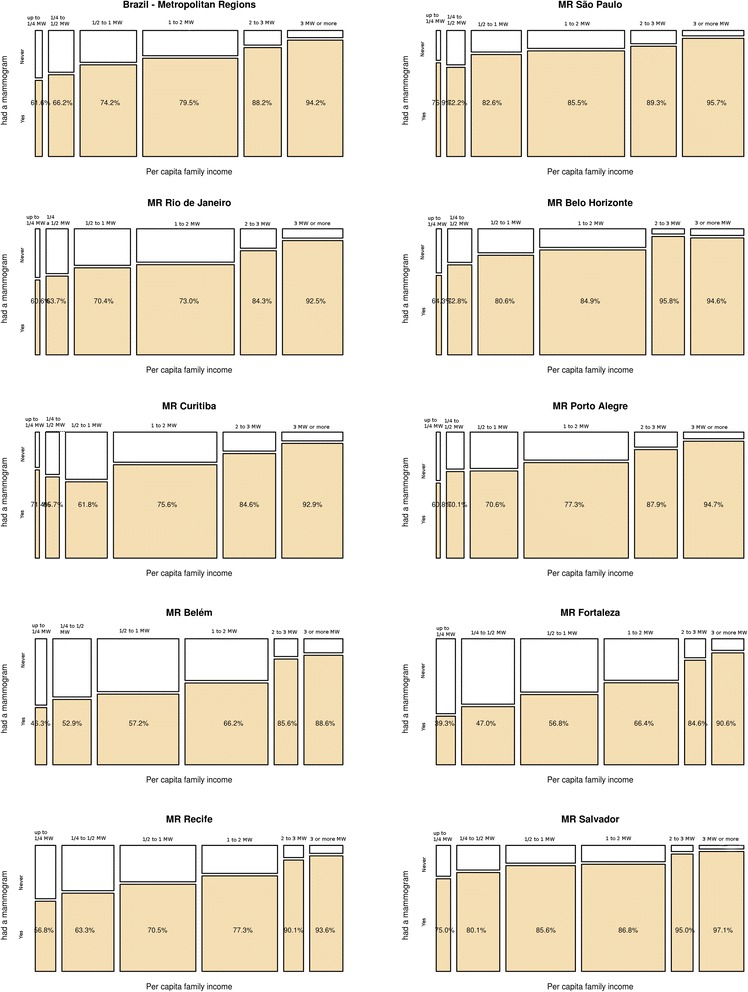
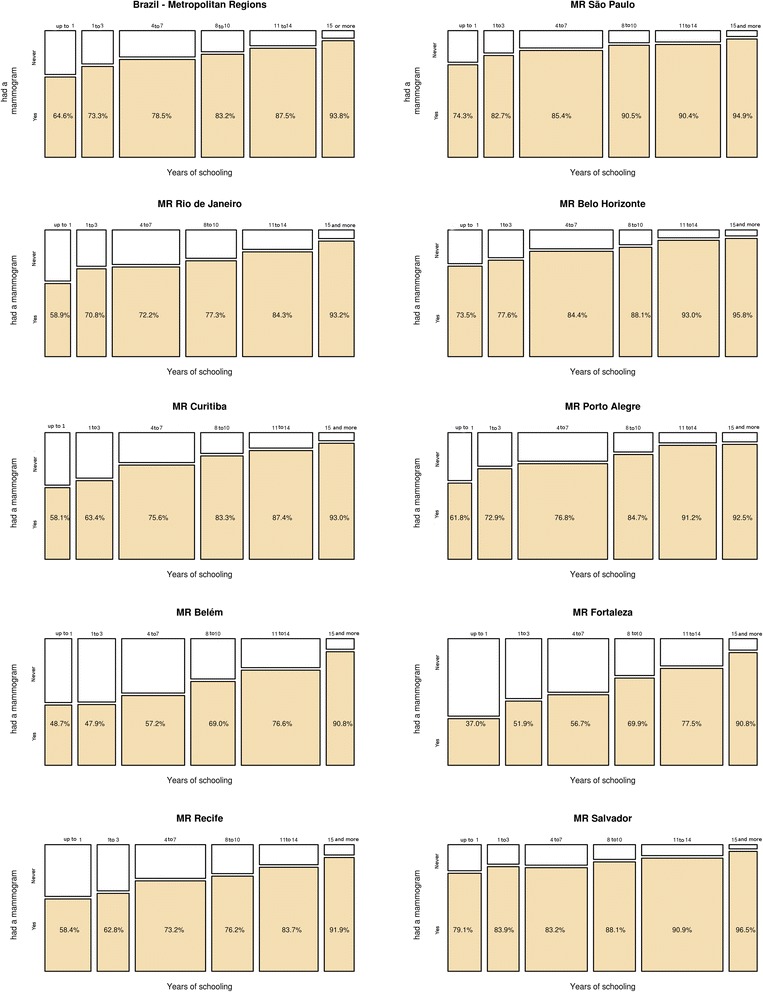
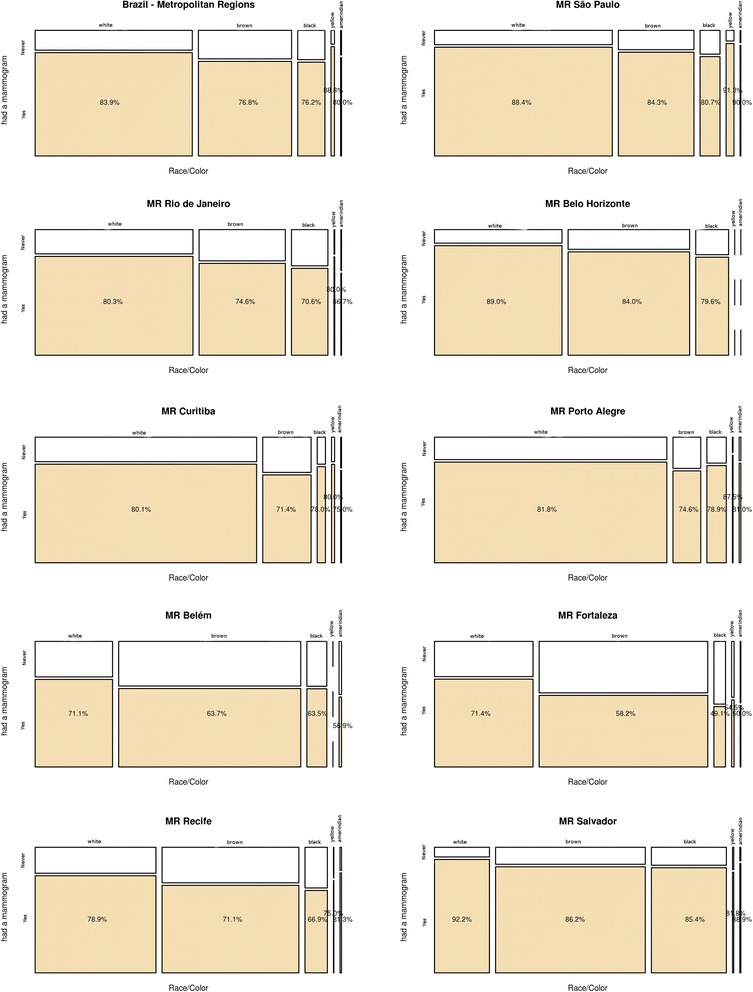
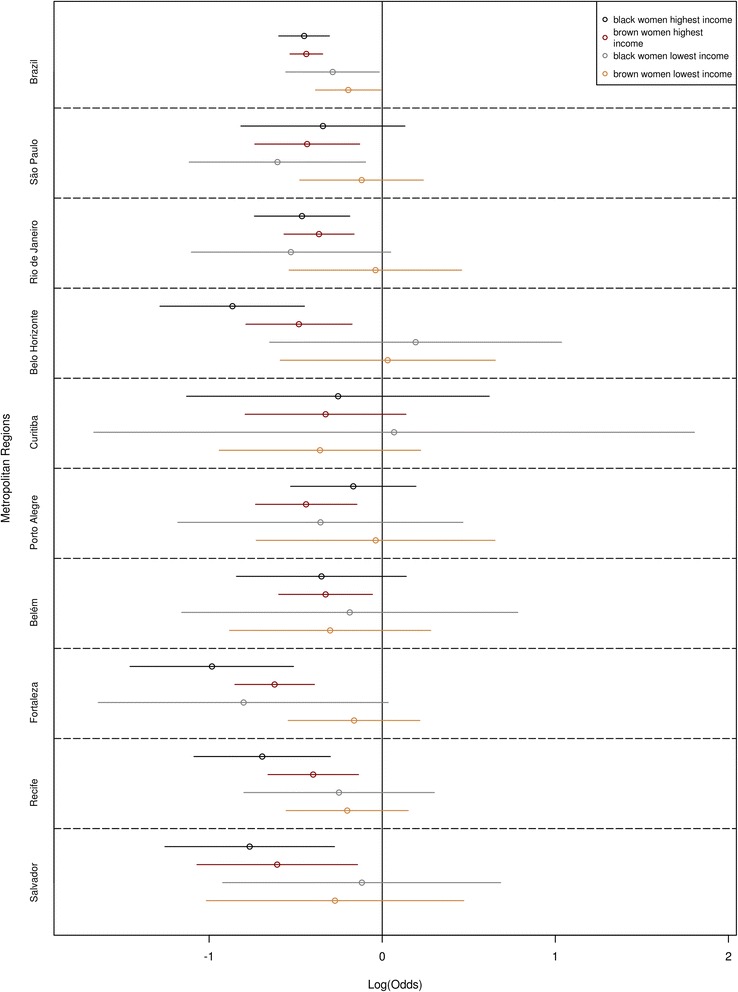
Having a higher income increases four to seven times a woman's odds of having had at least one mammogram in all MRs except Curitiba. For schooling, the gradient, though less steep, is favorable to women with more years of study. Having health insurance increases two to three times the odds in all MRs. Multivariate analysis did not show differences due to race (except for the Fortaleza MR), but the stratified analysis by income and schooling shows effects of race in most MRs, with greater differences for women with higher socioeconomic status.
This study confirms that income and schooling, as well as having health insurance, are still important determinants of inequality in health service use in Brazil. Additionally, race also contributes to the odds of having had a mammogram. The point is not to isolate the effect of each factor, but to evaluate how their interrelations may exacerbate differences, generating patterns of cumulative adversity, a theme that is still little explored in Brazil. This is much more important when we consider that race has only recently started be included in analyses of health outcomes in Brazil.
与其他诊断程序一样,乳房X光检查的可及性受到社会经济差异的强烈影响。不平等的哪些方面会影响接受乳房X光检查的几率,以及这些方面在不同地区是否相同,是与卫生政策成功相关的重要问题。
本研究分析了2008年巴西全国住户抽样调查(PNAD)的数据(1160.7万40岁及以上女性),这些数据涉及巴西九个大都市地区(MR)中40岁及以上女性一生中至少进行过一次乳房X光检查的情况,并根据社会经济地位进行分析。分别对每个地区以及所有大都市地区进行综合分析,使用多变量逻辑回归研究不同地区收入、教育程度、医疗保险和种族的影响。还分析了按种族和两个收入阶层(以及两个教育程度阶层)分层的40岁及以上女性进行乳房X光检查的年龄调整几率。
除库里蒂巴外,在所有大都市地区,收入较高会使女性至少进行过一次乳房X光检查的几率增加四至七倍。对于教育程度,虽梯度较平缓,但对受教育年限较长的女性有利。拥有医疗保险会使所有大都市地区的几率增加两至三倍。多变量分析未显示出种族差异(福塔莱萨大都市地区除外),但按收入和教育程度进行的分层分析显示,在大多数大都市地区种族有影响,社会经济地位较高的女性差异更大。
本研究证实,收入、教育程度以及拥有医疗保险仍然是巴西卫生服务利用不平等的重要决定因素。此外,种族也会影响进行乳房X光检查的几率。关键不是孤立每个因素的影响,而是评估它们之间的相互关系如何加剧差异,产生累积逆境模式,这一主题在巴西仍很少被探讨。当我们考虑到种族最近才开始被纳入巴西健康结果分析时,这一点就更为重要。