Jeganathan Niranjan, Predescu Dan, Zhang Jin, Sha Fei, Bardita Cristina, Patel Monal, Wood Stephen, Borgia Jeffrey A, Balk Robert A, Predescu Sanda
Division of Pulmonary and Critical Care Medicine, Rush University Medical Center and Rush Medical College, 1750 W. Harrison Street, 299 Jelke South Center, Chicago, IL, 60612, USA.
Department of Pharmacology and Division of Pulmonary and Critical Care Medicine, Rush University, 1750 W. Harrison Street, 1415 Jelke, Chicago, IL, 60612, USA.
Mol Cancer. 2016 Sep 14;15(1):59. doi: 10.1186/s12943-016-0543-1.
The mechanisms involved in lung cancer (LC) progression are poorly understood making discovery of successful therapies difficult. Adaptor proteins play a crucial role in cancer as they link cell surface receptors to specific intracellular pathways. Intersectin-1s (ITSN-1s) is an important multidomain adaptor protein implicated in the pathophysiology of numerous pulmonary diseases. To date, the role of ITSN-1s in LC has not been studied.
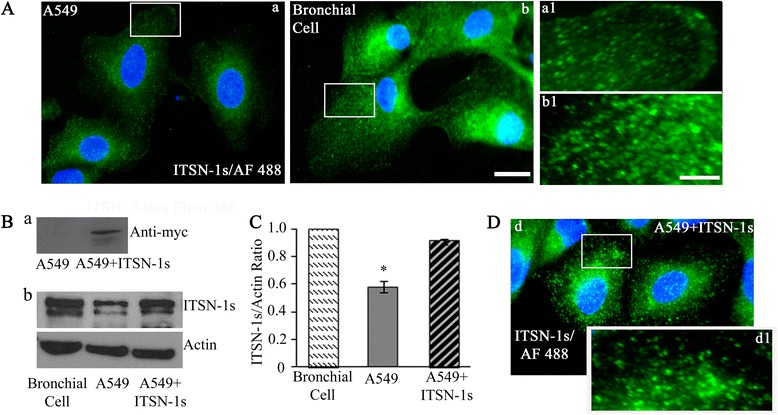
Human LC cells, human LC tissue and A549 LC cells stable transfected with myc-ITSN-1s construct (A549 + ITSN-1s) were used in correlation with biochemical, molecular biology and morphological studies. In addition scratch assay with time lapse microscopy and in vivo xenograft tumor and mouse metastasis assays were performed.
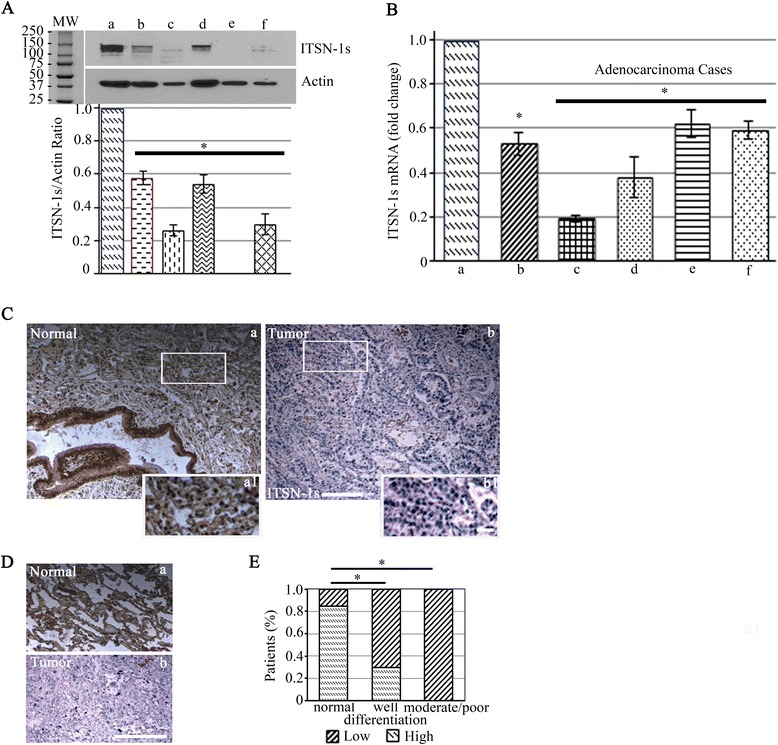
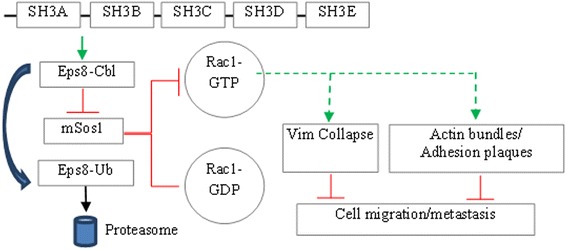
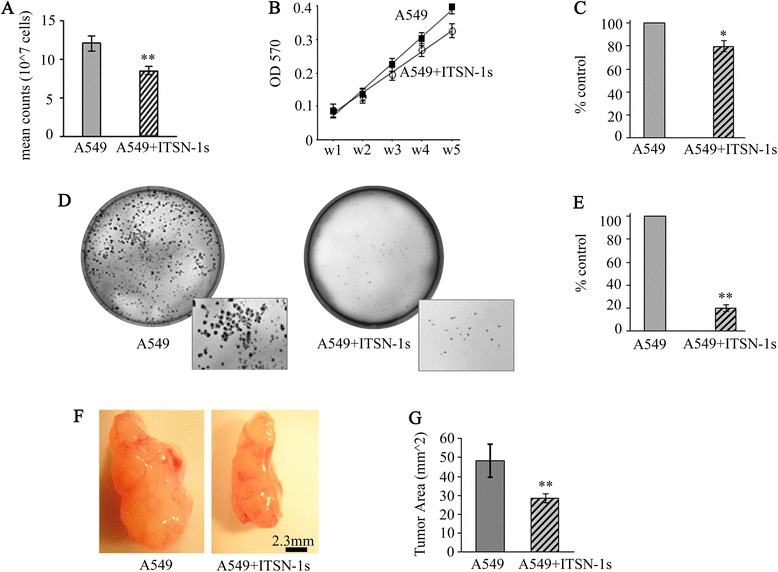
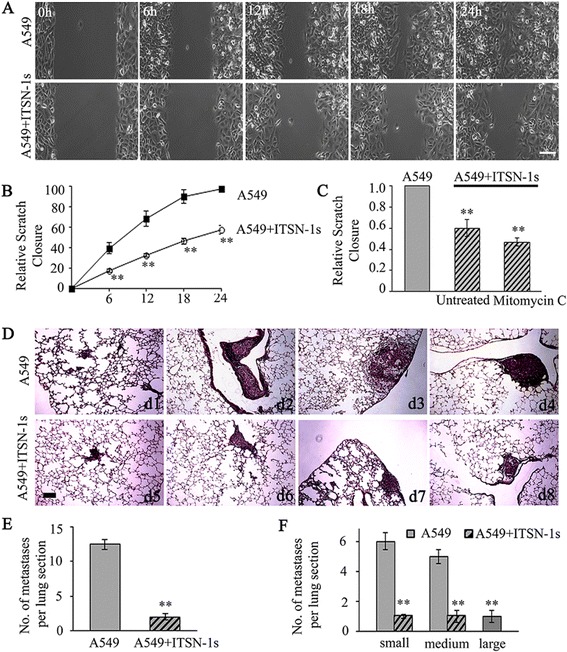
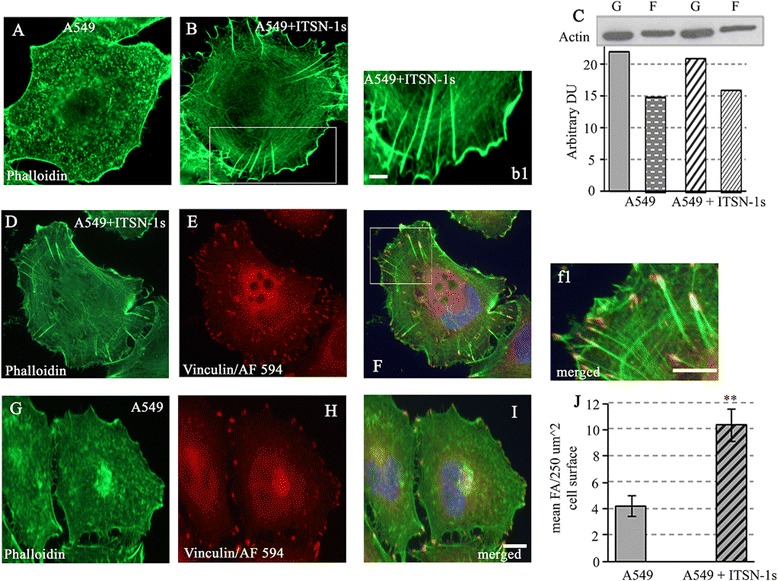
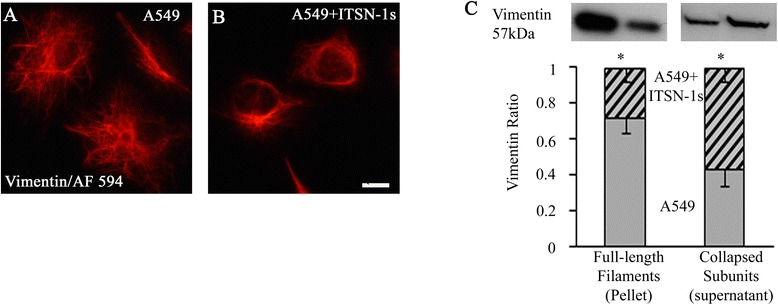
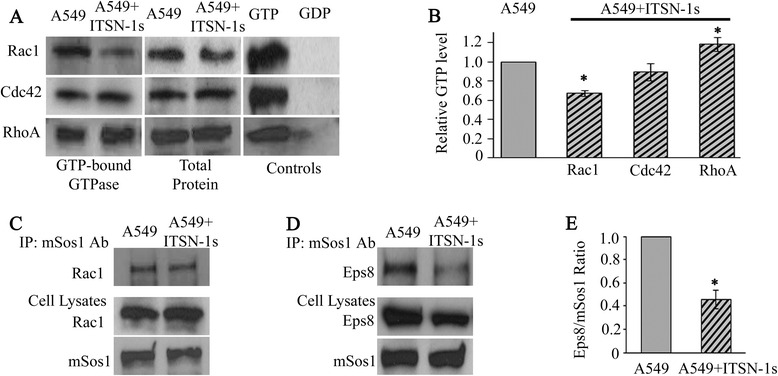
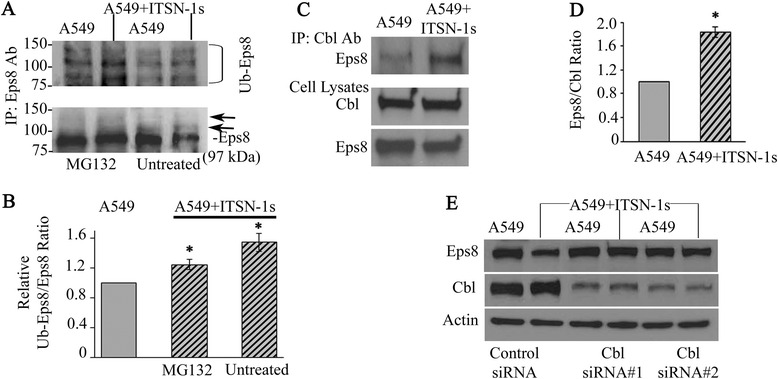
ITSN-1s, a prevalent protein of lung tissue, is significantly downregulated in human LC cells and LC tissue. Restoring ITSN-1s protein level decreases LC cell proliferation and clonogenic potential. In vivo studies indicate that immunodeficient mice injected with A549 + ITSN-1s cells develop less and smaller metastatic tumors compared to mice injected with A549 cells. Our studies also show that restoring ITSN-1s protein level increases the interaction between Cbl E3 ubiquitin ligase and Eps8 resulting in enhanced ubiquitination of the Eps8 oncoprotein. Subsequently, downstream unproductive assembly of the Eps8-mSos1 complex leads to impaired activation of the small GTPase Rac1. Impaired Rac1 activation mediated by ITSN-1s reorganizes the cytoskeleton (increased thick actin bundles and focal adhesion (FA) complexes as well as collapse of the vimentin filament network) in favor of decreased LC cell migration and metastasis.
ITSN-1s induced Eps8 ubiquitination and impaired Eps8-mSos1 complex formation, leading to impaired activation of Rac1, is a novel signaling mechanism crucial for abolishing the progression and metastatic potential of LC cells.
肺癌(LC)进展所涉及的机制尚不清楚,这使得成功疗法的发现变得困难。衔接蛋白在癌症中起着关键作用,因为它们将细胞表面受体与特定的细胞内途径联系起来。交叉蛋白-1s(ITSN-1s)是一种重要的多结构域衔接蛋白,与多种肺部疾病的病理生理学有关。迄今为止,ITSN-1s在肺癌中的作用尚未得到研究。
将人肺癌细胞、人肺癌组织以及稳定转染了myc-ITSN-1s构建体的A549肺癌细胞(A549 + ITSN-1s)用于相关的生化、分子生物学和形态学研究。此外,还进行了带有延时显微镜的划痕试验以及体内异种移植肿瘤和小鼠转移试验。
ITSN-1s是肺组织中的一种普遍存在的蛋白质,在人肺癌细胞和肺癌组织中显著下调。恢复ITSN-1s蛋白水平可降低肺癌细胞的增殖和克隆形成潜力。体内研究表明,与注射A549细胞的小鼠相比,注射A549 + ITSN-1s细胞的免疫缺陷小鼠发生的转移瘤更少且更小。我们的研究还表明,恢复ITSN-1s蛋白水平会增加Cbl E3泛素连接酶与Eps8之间的相互作用,从而导致Eps8癌蛋白的泛素化增强。随后,Eps8-mSos1复合物的下游非生产性组装导致小GTP酶Rac1的激活受损。由ITSN-1s介导的Rac1激活受损会重组细胞骨架(增加粗肌动蛋白束和粘着斑(FA)复合物以及波形蛋白丝网络的塌陷),从而有利于降低肺癌细胞的迁移和转移。
ITSN-1s诱导Eps8泛素化并损害Eps8-mSos1复合物形成,导致Rac1激活受损,这是一种对于消除肺癌细胞的进展和转移潜力至关重要的新型信号传导机制。