Methawasin Mei, Strom Joshua G, Slater Rebecca E, Fernandez Vanessa, Saripalli Chandra, Granzier Henk
From Department of Cellular and Molecular Medicine and Sarver Molecular Cardiovascular Research Program, University of Arizona, Tucson.
Circulation. 2016 Oct 11;134(15):1085-1099. doi: 10.1161/CIRCULATIONAHA.116.023003. Epub 2016 Sep 14.
Left ventricular (LV) stiffening contributes to heart failure with preserved ejection fraction (HFpEF), a syndrome with no effective treatment options. Increasing the compliance of titin in the heart has become possible recently through inhibition of the splicing factor RNA binding motif-20. Here, we investigated the effects of increasing the compliance of titin in mice with diastolic dysfunction.
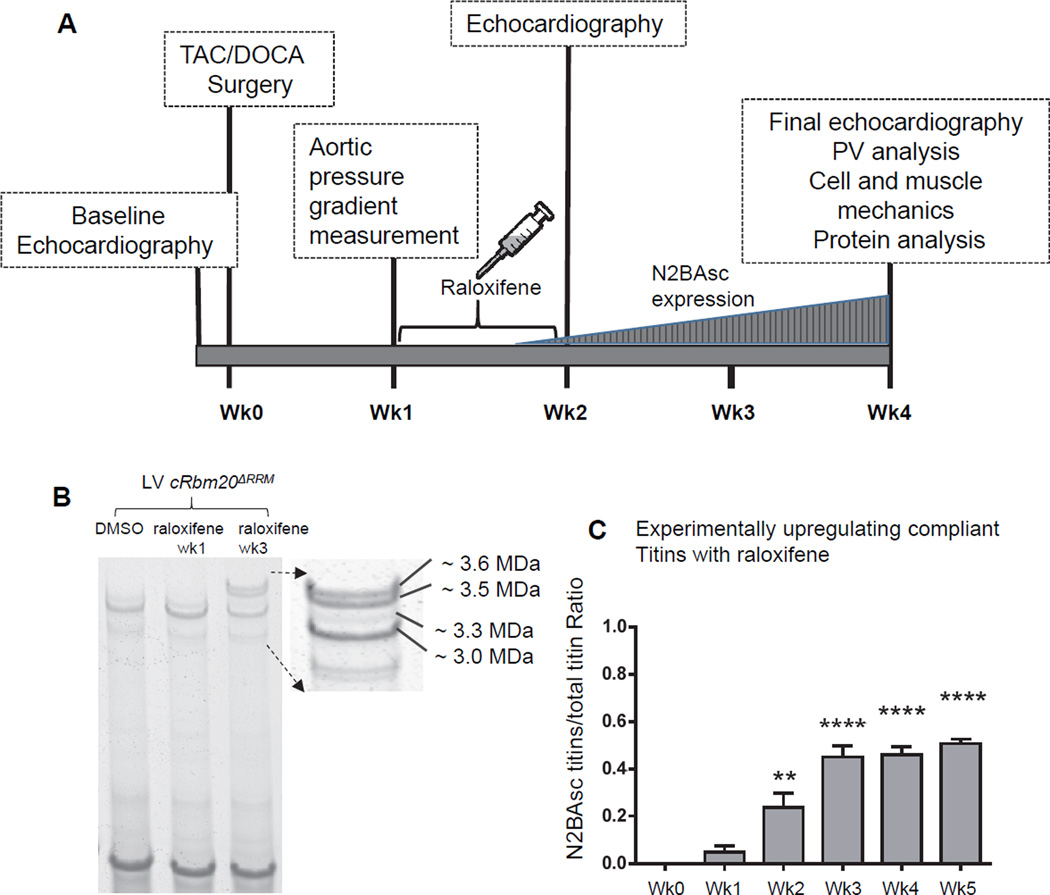
Mice in which the RNA recognition motif (RRM) of one of the RNA binding motif-20 alleles was floxed and that expressed the MerCreMer transgene under control of the αMHC promoter (referred to as cRbm20 mice) were used. Mice underwent transverse aortic constriction (TAC) surgery and deoxycorticosterone acetate (DOCA) pellet implantation. RRM deletion in adult mice was triggered by injecting raloxifene (cRbm20-raloxifene), with dimethyl sulfoxide (DMSO)-injected mice (cRbm20-DMSO) as the control. Diastolic function was investigated with echocardiography and pressure-volume analysis; passive stiffness was studied in LV muscle strips and isolated cardiac myocytes before and after elimination of titin-based stiffness. Treadmill exercise performance was also studied. Titin isoform expression was evaluated with agarose gels.
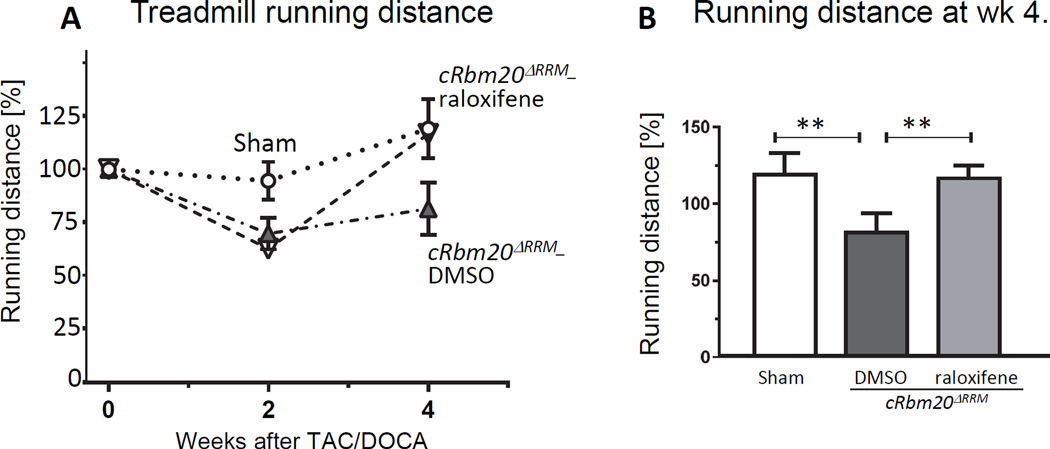
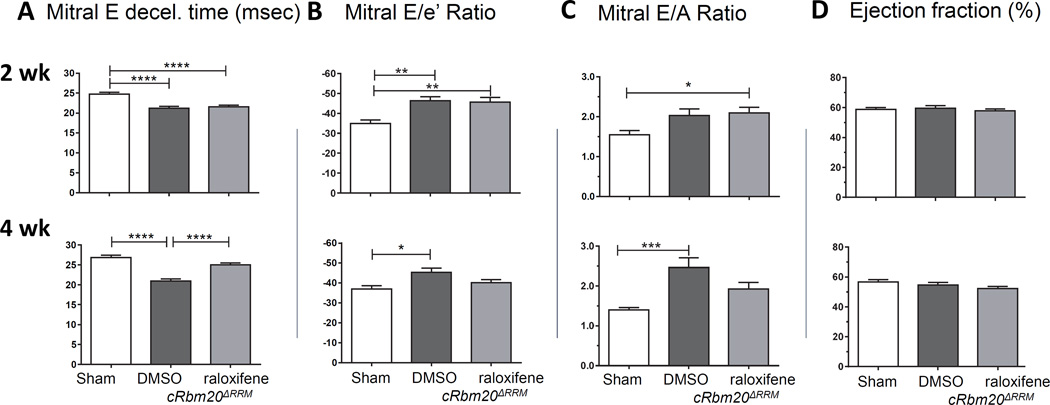
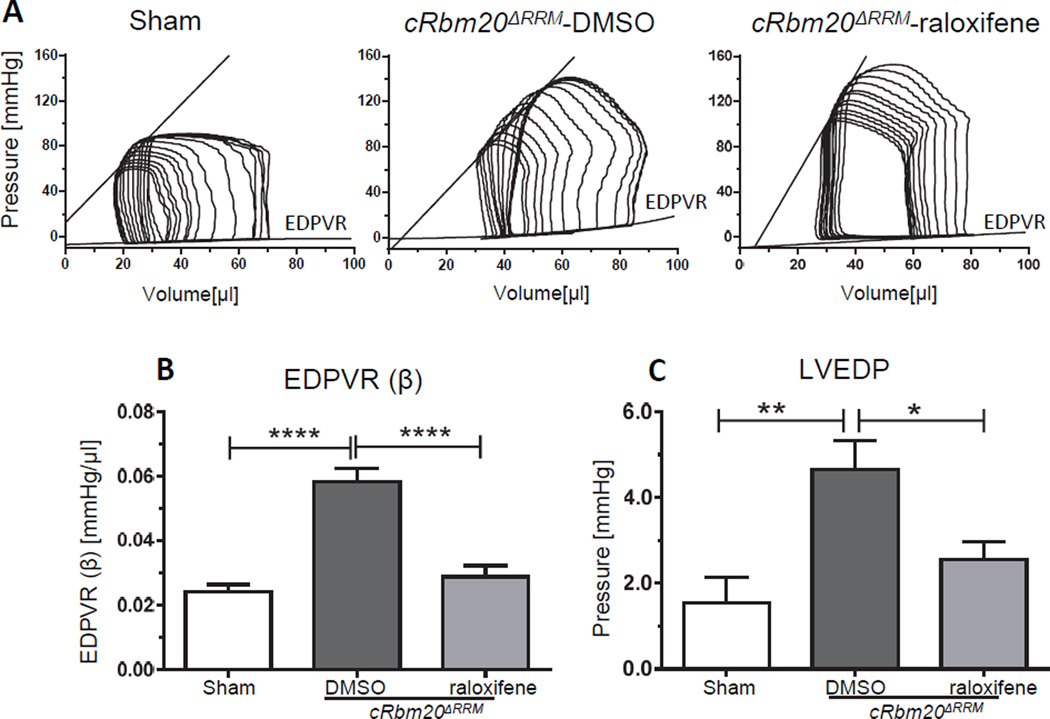
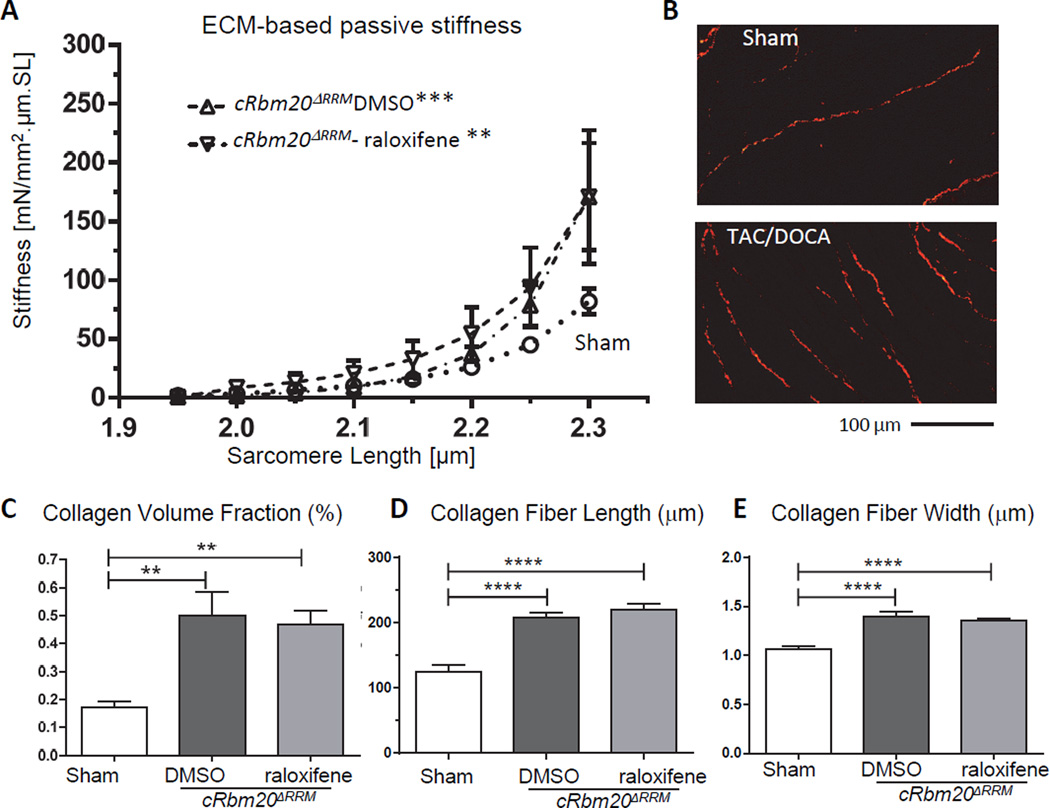
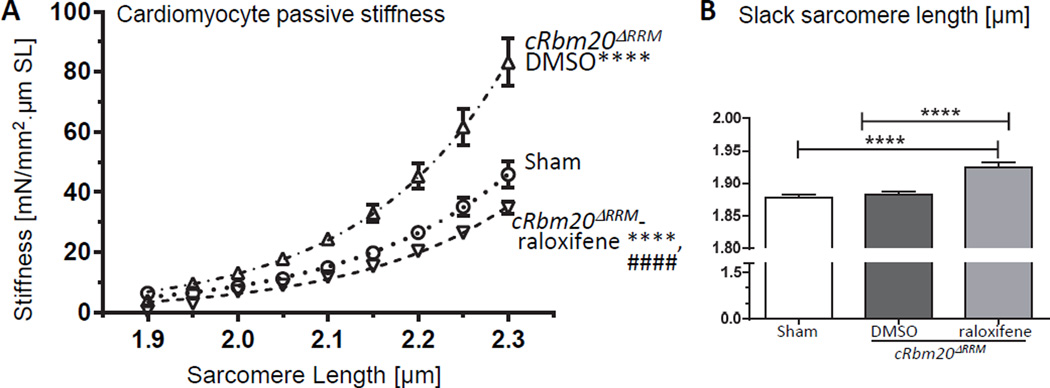
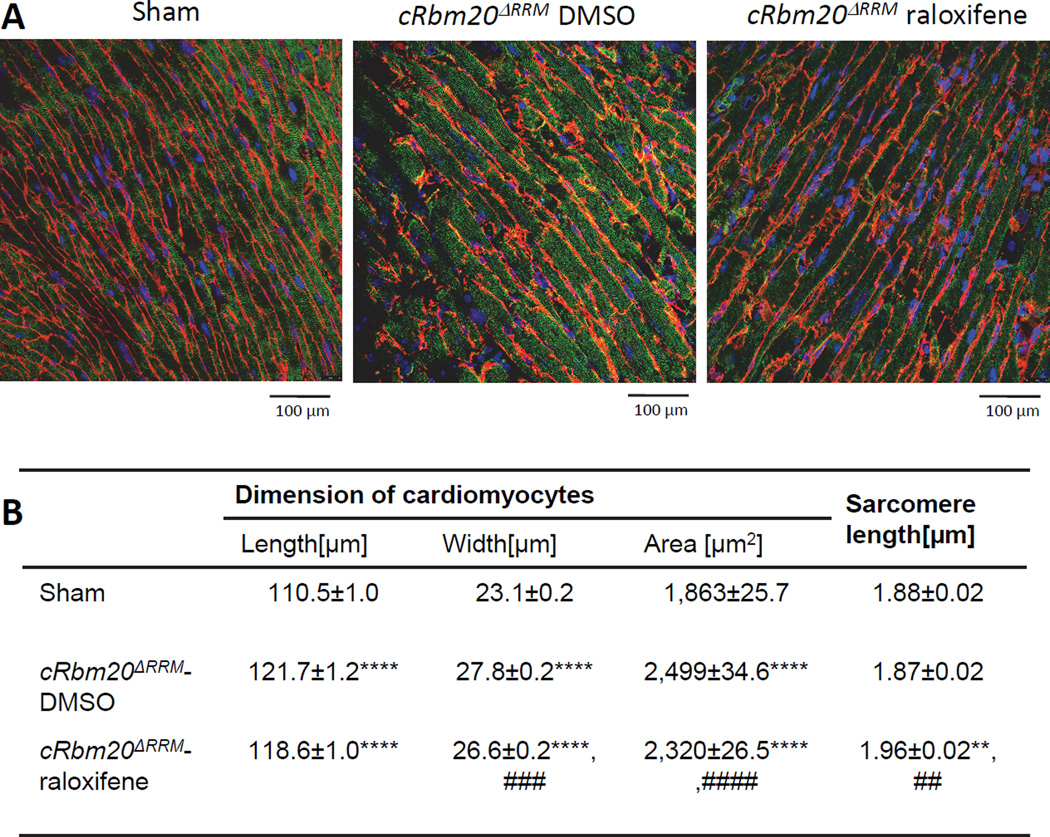
cRbm20-raloxifene mice expressed large titins in the hearts, called supercompliant titin (N2BAsc), which, within 3 weeks after raloxifene injection, made up ≈45% of total titin. TAC/DOCA cRbm20-DMSO mice developed LV hypertrophy and a marked increase in LV chamber stiffness as shown by both pressure-volume analysis and echocardiography. LV chamber stiffness was normalized in TAC/DOCA cRbm20-raloxifene mice that expressed N2BAsc. Passive stiffness measurements on muscle strips isolated from the LV free wall revealed that extracellular matrix stiffness was equally increased in both groups of TAC/DOCA mice (cRbm20-DMSO and cRbm20-raloxifene). However, titin-based muscle stiffness was reduced in the mice that expressed N2BAsc (TAC/DOCAcRbm20-raloxifene). Exercise testing demonstrated significant improvement in exercise tolerance in TAC/DOCA mice that expressed N2BAsc.
Inhibition of the RNA binding motif-20-based titin splicing system upregulates compliant titins, which improves diastolic function and exercise tolerance in the TAC/DOCA model. Titin holds promise as a therapeutic target for heart failure with preserved ejection fraction.
左心室(LV)僵硬度增加会导致射血分数保留的心力衰竭(HFpEF),这是一种尚无有效治疗方案的综合征。最近,通过抑制剪接因子RNA结合基序20,增加心脏中肌联蛋白的顺应性已成为可能。在此,我们研究了增加肌联蛋白顺应性对舒张功能障碍小鼠的影响。
使用RNA结合基序20等位基因之一的RNA识别基序(RRM)被floxed且在αMHC启动子控制下表达MerCreMer转基因的小鼠(称为cRbm20小鼠)。小鼠接受横向主动脉缩窄(TAC)手术和醋酸脱氧皮质酮(DOCA)微丸植入。通过注射雷洛昔芬(cRbm20-雷洛昔芬)触发成年小鼠的RRM缺失,以注射二甲基亚砜(DMSO)的小鼠(cRbm20-DMSO)作为对照。通过超声心动图和压力-容积分析研究舒张功能;在消除基于肌联蛋白的僵硬度之前和之后,在LV肌条和分离的心肌细胞中研究被动僵硬度。还研究了跑步机运动性能。用琼脂糖凝胶评估肌联蛋白异构体表达。
cRbm20-雷洛昔芬小鼠心脏中表达大的肌联蛋白,称为超顺应性肌联蛋白(N2BAsc),在注射雷洛昔芬后3周内,其占总肌联蛋白的约45%。如压力-容积分析和超声心动图所示,TAC/DOCA cRbm20-DMSO小鼠出现LV肥大和LV腔僵硬度显著增加。表达N2BAsc的TAC/DOCA cRbm20-雷洛昔芬小鼠的LV腔僵硬度恢复正常。对从LV游离壁分离的肌条进行的被动僵硬度测量显示,两组TAC/DOCA小鼠(cRbm20-DMSO和cRbm20-雷洛昔芬)的细胞外基质僵硬度均同样增加。然而,表达N2BAsc的小鼠(TAC/DOCAcRbm20-雷洛昔芬)中基于肌联蛋白的肌肉僵硬度降低。运动测试表明,表达N2BAsc的TAC/DOCA小鼠的运动耐力有显著改善。
抑制基于RNA结合基序20的肌联蛋白剪接系统可上调顺应性肌联蛋白,从而改善TAC/DOCA模型中的舒张功能和运动耐力。肌联蛋白有望成为射血分数保留的心力衰竭的治疗靶点。