Ayatollahi Hossein, Sadeghian Mohammad Hadi, Keramati Mohammad Reza, Ayatollahi Ali, Shajiei Arezoo, Sheikhi Maryam, Bakhshi Samane
Department of Hematopathology and Blood Banking, Cancer Molecular Pathology Research Center, Faculty of Medicine, Ghaem Hospital, Mashhad University of Medical Sciences, Mashhad, Iran.
Department of Internal Medicine, Faculty of Medicine, Mashhad University of Medical Sciences, Mashhad, Iran.
Niger Med J. 2016 Jul-Aug;57(4):199-203. doi: 10.4103/0300-1652.188321.
Nowadays, definitive diagnosis of numerous diseases is based on the genetic and molecular findings. Therefore, preparation of fundamental materials for these evaluations is necessary. Deoxyribonucleic acid (DNA) is the first material for the molecular pathology and genetic analysis, and better results need more pure DNA. Furthermore, higher concentration of achieved DNA causes better results and higher amplifying ability for subsequent steps. We aim to evaluate five DNA extraction methods to compare DNA intimacy including purity, concentration, and amplifying ability with each other.
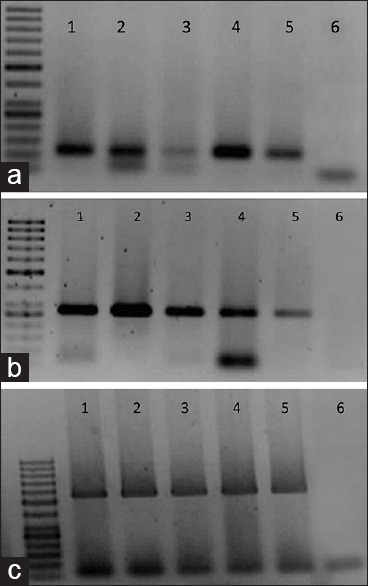
The lymphoid tissue DNA was extracted from formalin-fixed, paraffin embedded (FFPE) tissue through five different methods including phenol-chloroform as the reference method, DNA isolation kit (QIAamp DNA FFPE Tissue Kit, Qiagen, Germany), proteinase K and xylol extraction and heat alkaline plus mineral oil extraction as authorship innovative method. Finally, polymerase chain reaction (PCR) and real-time PCR method were assessed to compare each following method consider to DNA purity and its concentration.
Among five different applied methods, the highest mean of DNA purity was related to heat alkaline method. Moreover, the highest mean of DNA concentration was related to heat alkaline plus mineral oil. Furthermore, the best result in quantitative PCR was in proteinase K method that had the lowest cycle threshold averages among the other extraction methods.
We concluded that our innovative method for DNA extraction (heat alkaline plus mineral oil) achieved high DNA purity and concentration.
如今,许多疾病的明确诊断基于基因和分子检测结果。因此,有必要准备用于这些评估的基础材料。脱氧核糖核酸(DNA)是分子病理学和基因分析的首要材料,更纯的DNA能带来更好的结果。此外,获得的DNA浓度越高,后续步骤的结果越好,扩增能力也越强。我们旨在评估五种DNA提取方法,以比较DNA的纯度、浓度和扩增能力等特性。
从福尔马林固定、石蜡包埋(FFPE)组织中提取淋巴组织DNA,采用五种不同方法,包括作为参考方法的酚-氯仿法、DNA分离试剂盒(德国Qiagen公司的QIAamp DNA FFPE Tissue Kit)、蛋白酶K和二甲苯提取法以及作者创新的热碱加矿物油提取法。最后,通过聚合酶链反应(PCR)和实时PCR方法评估每种方法提取的DNA纯度及其浓度。
在五种不同应用方法中,DNA纯度平均值最高的是热碱法。此外,DNA浓度平均值最高的是热碱加矿物油法。此外,定量PCR中最佳结果是蛋白酶K法,其循环阈值平均值在其他提取方法中最低。
我们得出结论,我们创新的DNA提取方法(热碱加矿物油)可实现高DNA纯度和浓度。