Fang Zhi-Zhen, Zhou Dan-Rong, Ye Xin-Fu, Jiang Cui-Cui, Pan Shao-Lin
Fruit Research Institute, Fujian Academy of Agricultural Sciences Fuzhou, China.
Front Plant Sci. 2016 Aug 31;7:1338. doi: 10.3389/fpls.2016.01338. eCollection 2016.
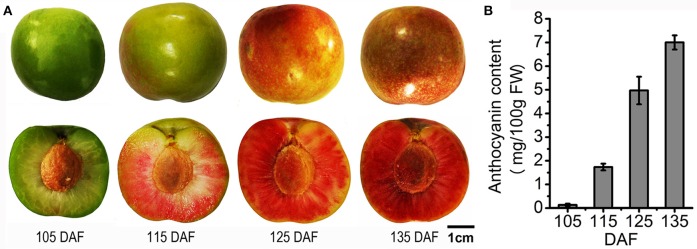
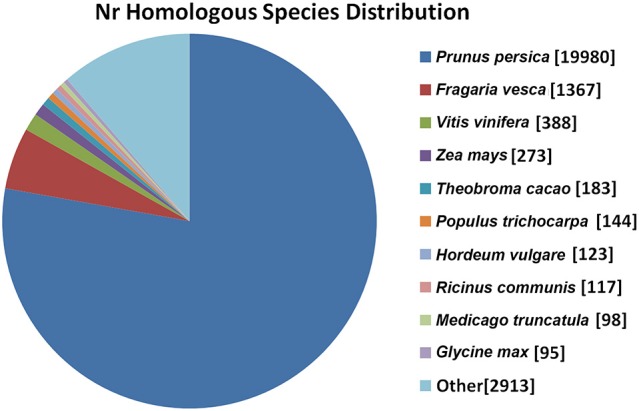
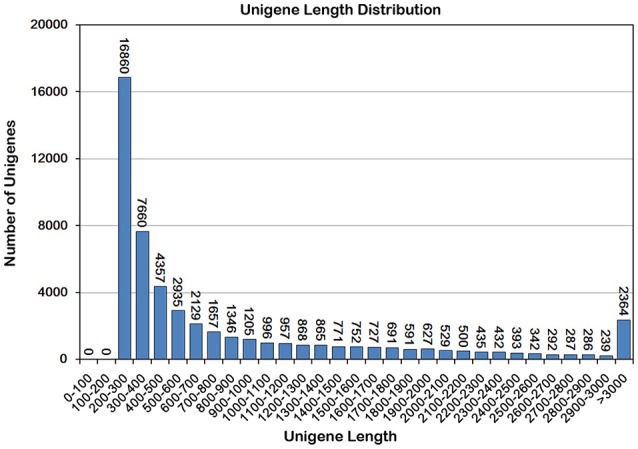
Anthocyanins are important pigments and are responsible for red coloration in plums. However, little is known about the molecular mechanisms underlying anthocyanin accumulation in plum fruits. In this study, the RNA-seq technique was used to analyze the transcriptomic changes during fruit ripening in the red-fleshed plum (Prunus salicina Lindl.) cultivar 'Furongli'. Over 161 million high-quality reads were assembled into 52,093 unigenes and 49.4% of these were annotated using public databases. Of these, 25,681 unigenes had significant hits to the sequences in the NCBI Nr database, 17,203 unigenes showed significant similarity to known proteins in the Swiss-Prot database and 5816 and 8585 unigenes had significant similarity to existing sequences in the Kyoto Encyclopedia of Genes and Genomes and the Cluster of Orthologous Groups databases, respectively. A total of 3548 unigenes were differentially expressed during fruit ripening and 119 of these were annotated as involved in "biosynthesis of other secondary metabolites." Biological pathway analysis and gene ontology term enrichment analysis revealed that 13 differentially expressed genes are involved in anthocyanin biosynthesis. Furthermore, transcription factors such as MYB and bHLH, which may control anthocyanin biosynthesis, were identified through coexpression analysis of transcription factors, and structural genes. Real-time qPCR analysis of candidate genes showed good correlation with the transcriptome data. These results contribute to our understanding of the molecular mechanisms underlying anthocyanin biosynthesis in plum flesh. The transcriptomic data generated in this study provide a basis for further studies of fruit ripening in plum.
花青素是重要的色素,负责李子的红色着色。然而,关于李子果实中花青素积累的分子机制知之甚少。在本研究中,利用RNA测序技术分析了红肉李(Prunus salicina Lindl.)品种‘芙蓉李’果实成熟过程中的转录组变化。超过1.61亿条高质量 reads 被组装成52093个单基因,其中49.4% 使用公共数据库进行了注释。其中,25681个单基因在NCBI Nr数据库中的序列有显著匹配,17203个单基因与Swiss-Prot数据库中的已知蛋白质有显著相似性,5816个和8585个单基因分别与京都基因与基因组百科全书和直系同源基因簇数据库中的现有序列有显著相似性。共有3548个单基因在果实成熟过程中差异表达,其中119个被注释为参与“其他次生代谢物的生物合成”。生物途径分析和基因本体术语富集分析表明,13个差异表达基因参与花青素生物合成。此外,通过转录因子与结构基因的共表达分析,鉴定出了可能控制花青素生物合成的MYB和bHLH等转录因子。候选基因的实时定量PCR分析与转录组数据显示出良好的相关性。这些结果有助于我们理解李子果肉中花青素生物合成的分子机制。本研究产生的转录组数据为进一步研究李子果实成熟提供了基础。