Yang In Jun, Lee Dong-Ung, Shin Heung Mook
Department of Physiology, College of Korean Medicine Dongguk University, Gyeongju 780-714, Republic of Korea.
Division of Bioscience, Dongguk University, Gyeongju 780-714, Republic of Korea.
Evid Based Complement Alternat Med. 2016;2016:9370893. doi: 10.1155/2016/9370893. Epub 2016 Aug 18.
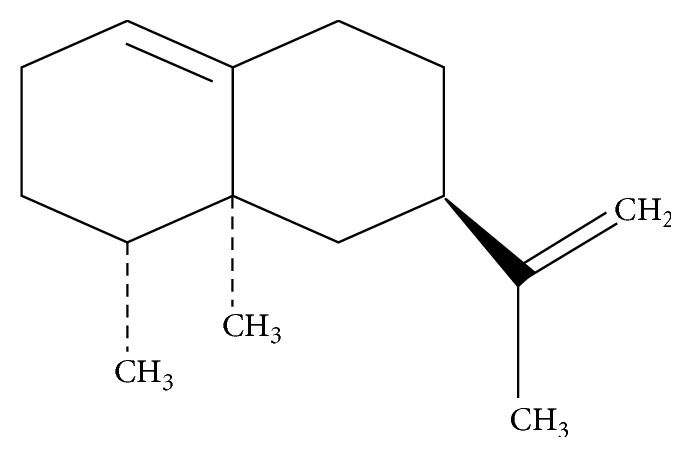
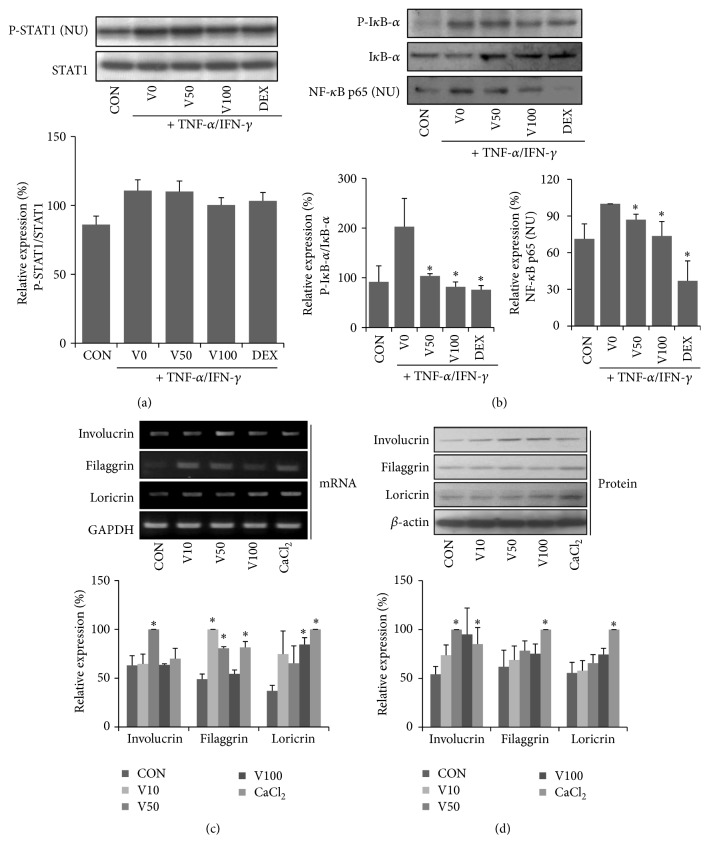
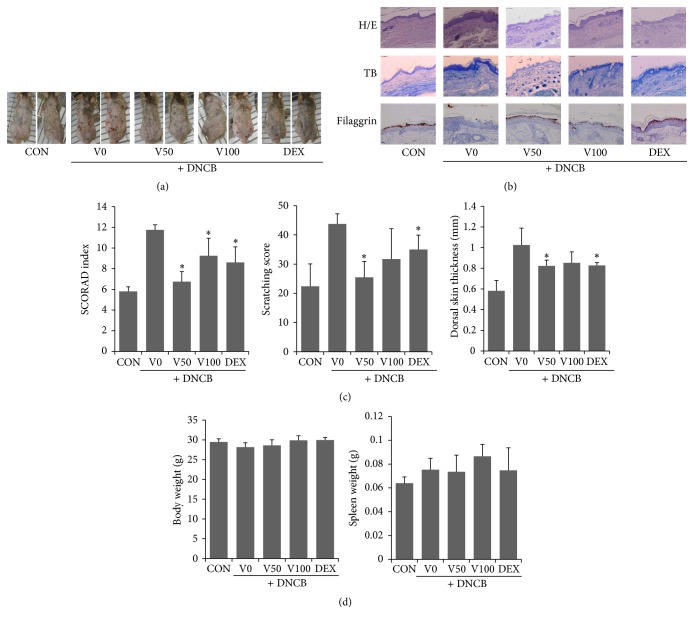
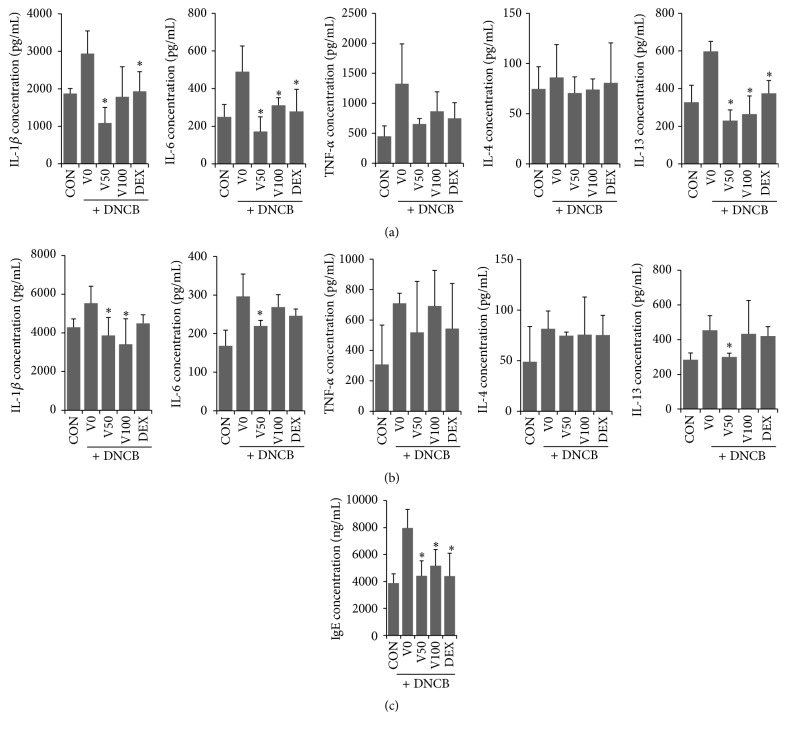
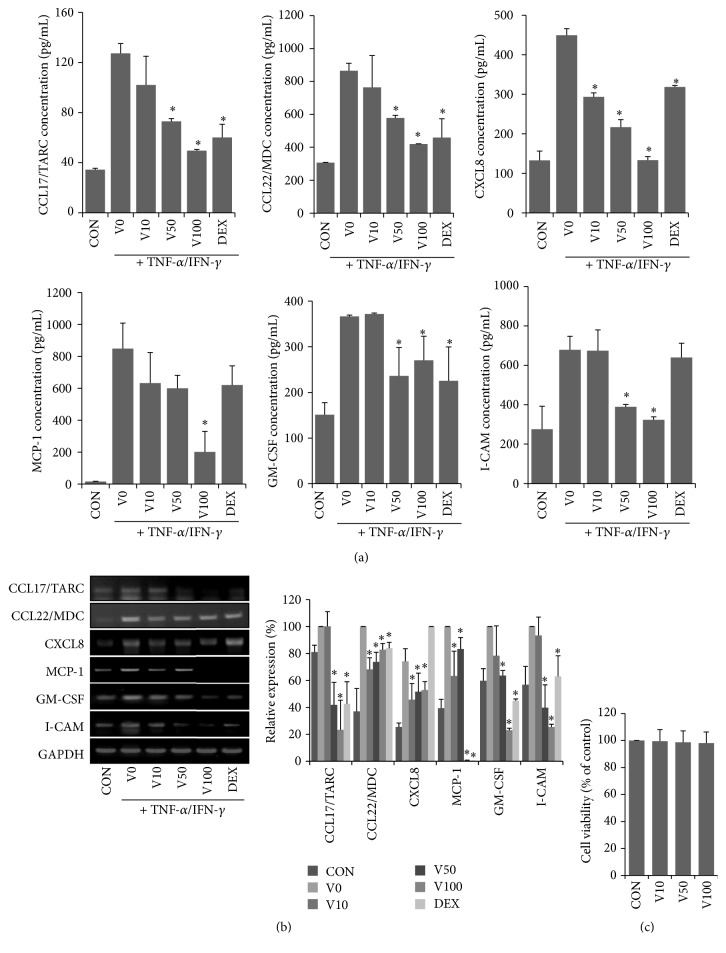
Valencene (VAL) isolated from Cyperus rotundus possesses various biological effects such as antiallergic and antimelanogenesis activity. We investigated the effect of VAL on atopic dermatitis (AD) skin lesions and their molecular mechanisms. We topically applied VAL to 1-chloro-2,4-dinitrobenzene (DNCB) sensitized NC/Nga mice. Modified scoring atopic dermatitis index, scratching behavior, and histological/immunohistochemical staining were used to monitor disease severity. RT-PCR, western blotting, and enzyme-linked immunosorbent assay were used to determine the level of IgE, proinflammatory cytokines/chemokines production, and skin barrier proteins expression. Topical application of VAL significantly reduced AD-like symptoms and recovered decreased expression of filaggrin in DNCB-sensitized NC/Nga mice. The levels of serum IgE, IL-1β, IL-6, and IL-13 in skin/splenic tissue were reduced. In vitro studies using TNF-α and IFN-γ treated HaCaT cells revealed that VAL inhibited the exaggerated expression of Th2 chemokines including TARC/CCL17, MDC/CCL22, and proinflammatory chemokines such as CXCL8, GM-CSF, and I-CAM through blockade of the NF-κB pathway. In addition, expression of the skin barrier protein, involucrin, was also increased by VAL treatment. VAL inhibited the production and expression of proinflammatory cytokines IL-1β and IL-6 in LPS-stimulated RAW 264.7 cells. These results suggest that VAL may serve as a potential therapeutic option for AD.
从香附分离得到的瓦伦烯具有多种生物学效应,如抗过敏和抗黑色素生成活性。我们研究了瓦伦烯对特应性皮炎(AD)皮肤损伤及其分子机制的影响。我们将瓦伦烯局部应用于1-氯-2,4-二硝基苯(DNCB)致敏的NC/Nga小鼠。采用改良的特应性皮炎评分指数、搔抓行为以及组织学/免疫组织化学染色来监测疾病严重程度。采用逆转录聚合酶链反应(RT-PCR)、蛋白质免疫印迹法和酶联免疫吸附测定法来测定免疫球蛋白E(IgE)水平、促炎细胞因子/趋化因子的产生以及皮肤屏障蛋白的表达。局部应用瓦伦烯可显著减轻AD样症状,并恢复DNCB致敏的NC/Nga小鼠中聚角蛋白微丝蛋白表达的降低。皮肤/脾脏组织中血清IgE、白细胞介素-1β(IL-1β)、白细胞介素-6(IL-6)和白细胞介素-13的水平降低。使用肿瘤坏死因子-α(TNF-α)和干扰素-γ(IFN-γ)处理的人角质形成细胞(HaCaT细胞)进行的体外研究表明,瓦伦烯通过阻断核因子-κB(NF-κB)途径抑制了包括胸腺和活化调节趋化因子(TARC/CCL17)、巨噬细胞来源的趋化因子(MDC/CCL22)等Th2趋化因子以及促炎趋化因子如CXC趋化因子配体8(CXCL8)、粒细胞-巨噬细胞集落刺激因子(GM-CSF)和细胞间黏附分子(I-CAM)的过度表达。此外,瓦伦烯处理还增加了皮肤屏障蛋白内披蛋白的表达。瓦伦烯抑制了脂多糖(LPS)刺激的RAW 264.7细胞中促炎细胞因子IL-1β和IL-6的产生和表达。这些结果表明,瓦伦烯可能是AD的一种潜在治疗选择。