Wang Guoxing, Zhang Qian, Yuan Wei, Wu Junyuan, Li Chunsheng
Department of Emergency Medicine, Beijing Friendship Hospital, Capital Medical University, Beijing 100050, P.R. China.
Department of Emergency Medicine, Beijing Chao-Yang Hospital, Capital Medical University, Beijing Key Laboratory of Cardiopulmonary Cerebral Resuscitation (NO.BZ0370), Beijing 100020, P.R. China.
Int J Mol Med. 2016 Nov;38(5):1463-1473. doi: 10.3892/ijmm.2016.2737. Epub 2016 Sep 15.
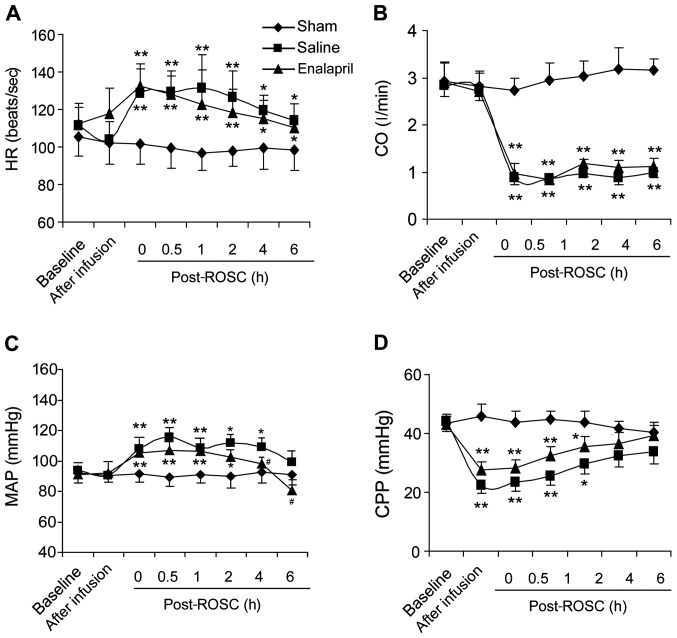
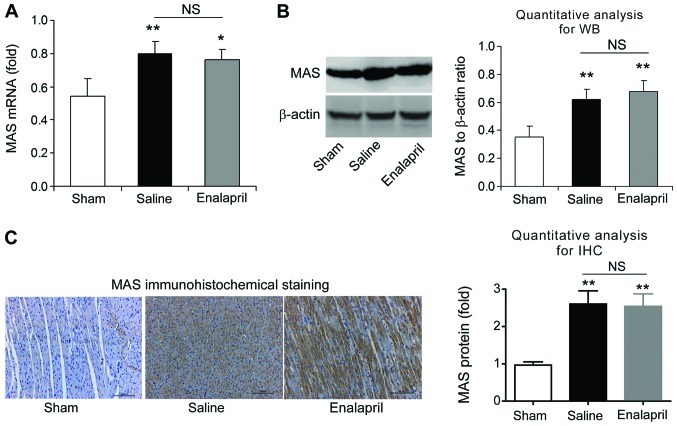
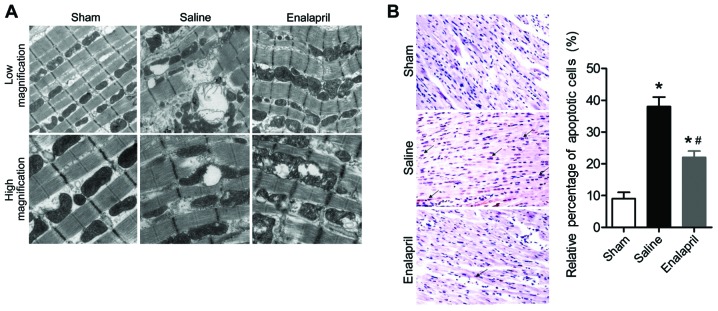
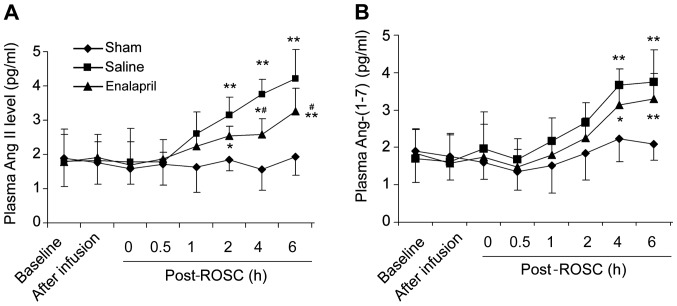
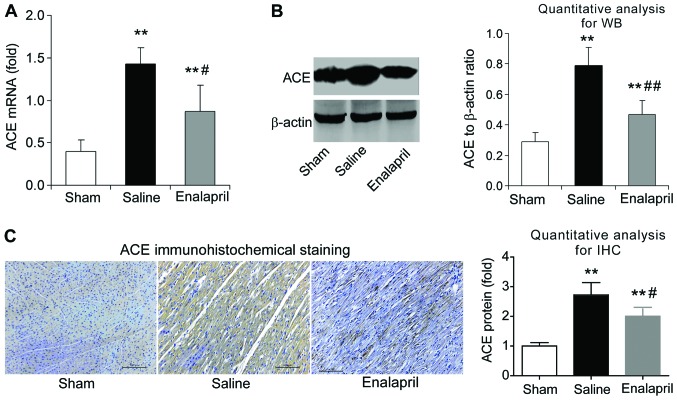
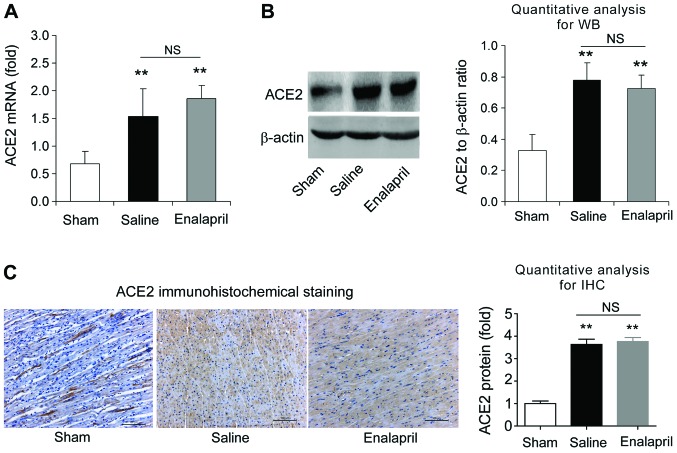
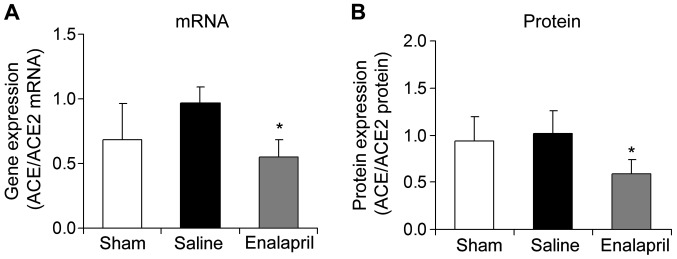
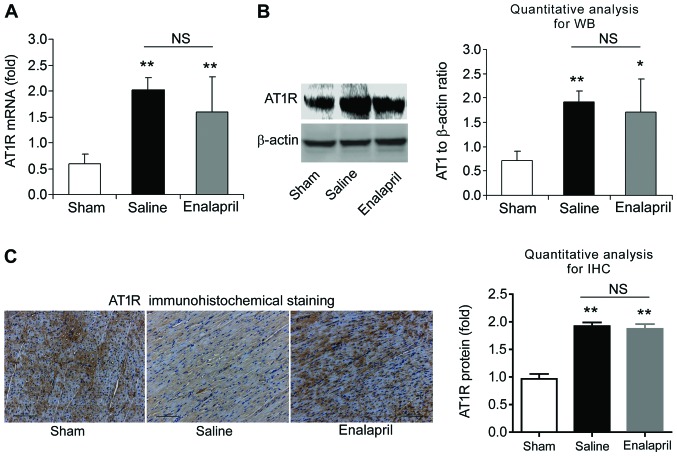
There is strong evidence to suggest that angiotensin-converting enzyme inhibitors (ACEIs) protect against local myocardial ischemia/reperfusion (I/R) injury. This study was designed to explore whether ACEIs exert cardioprotective effects in a swine model of cardiac arrest (CA) and resuscitation. Male pigs were randomly assigned to three groups: sham‑operated group, saline treatment group and enalapril treatment group. Thirty minutes after drug infusion, the animals in the saline and enalapril groups were subjected to ventricular fibrillation (8 min) followed by cardiopulmonary resuscitation (up to 30 min). Cardiac function was monitored, and myocardial tissue and blood were collected for analysis. Enalapril pre‑treatment did not improve cardiac function or the 6-h survival rate after CA and resuscitation; however, this intervention ameliorated myocardial ultrastructural damage, reduced the level of plasma cardiac troponin I and decreased myocardial apoptosis. Plasma angiotensin (Ang) II and Ang‑(1‑7) levels were enhanced in the model of CA and resuscitation. Enalapril reduced the plasma Ang II level at 4 and 6 h after the return of spontaneous circulation whereas enalapril did not affect the plasma Ang‑(1‑7) level. Enalapril pre-treatment decreased the myocardial mRNA and protein expression of angiotensin-converting enzyme (ACE). Enalapril treatment also reduced the myocardial ACE/ACE2 ratio, both at the mRNA and the protein level. Enalapril pre‑treatment did not affect the upregulation of ACE2, Ang II type 1 receptor (AT1R) and MAS after CA and resuscitation. Taken together, these findings suggest that enalapril protects against ischemic injury through the attenuation of the ACE/Ang II/AT1R axis after CA and resuscitation in pigs. These results suggest the potential therapeutic value of ACEIs in patients with CA.
有强有力的证据表明,血管紧张素转换酶抑制剂(ACEIs)可预防局部心肌缺血/再灌注(I/R)损伤。本研究旨在探讨ACEIs在猪心脏骤停(CA)及复苏模型中是否发挥心脏保护作用。雄性猪被随机分为三组:假手术组、生理盐水治疗组和依那普利治疗组。药物输注30分钟后,生理盐水组和依那普利组的动物发生室颤(8分钟),随后进行心肺复苏(长达30分钟)。监测心功能,并采集心肌组织和血液进行分析。依那普利预处理并未改善CA及复苏后的心脏功能或6小时生存率;然而,该干预减轻了心肌超微结构损伤,降低了血浆心肌肌钙蛋白I水平,并减少了心肌细胞凋亡。CA及复苏模型中血浆血管紧张素(Ang)II和Ang-(1-7)水平升高。依那普利在自主循环恢复后4小时和6小时降低了血浆Ang II水平,而依那普利不影响血浆Ang-(1-7)水平。依那普利预处理降低了血管紧张素转换酶(ACE)的心肌mRNA和蛋白表达。依那普利治疗在mRNA和蛋白水平上也降低了心肌ACE/ACE2比值。依那普利预处理不影响CA及复苏后ACE2、血管紧张素II 1型受体(AT1R)和MAS的上调。综上所述,这些发现表明,依那普利通过在猪CA及复苏后减弱ACE/Ang II/AT1R轴来预防缺血性损伤。这些结果提示了ACEIs在CA患者中的潜在治疗价值。