Centre de Recherche du CHUM, QC H2X 0A9, Canada; Department of Microbiology, Infectiology and Immunology, Université de Montréal, Montreal, QC H2X 0A9, Canada.
Centre de Recherche du CHUM, QC H2X 0A9, Canada.
EBioMedicine. 2016 Oct;12:208-218. doi: 10.1016/j.ebiom.2016.09.004. Epub 2016 Sep 9.
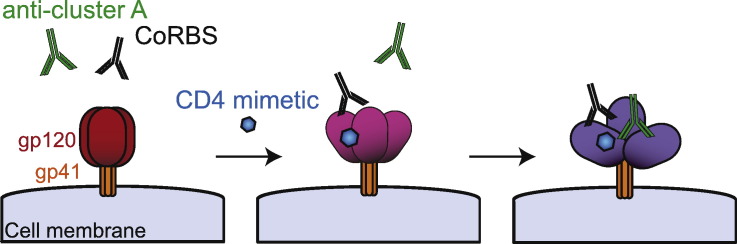
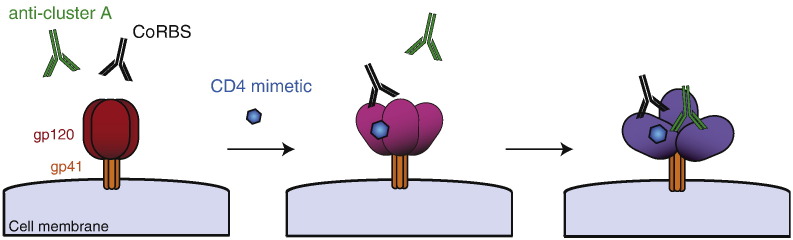
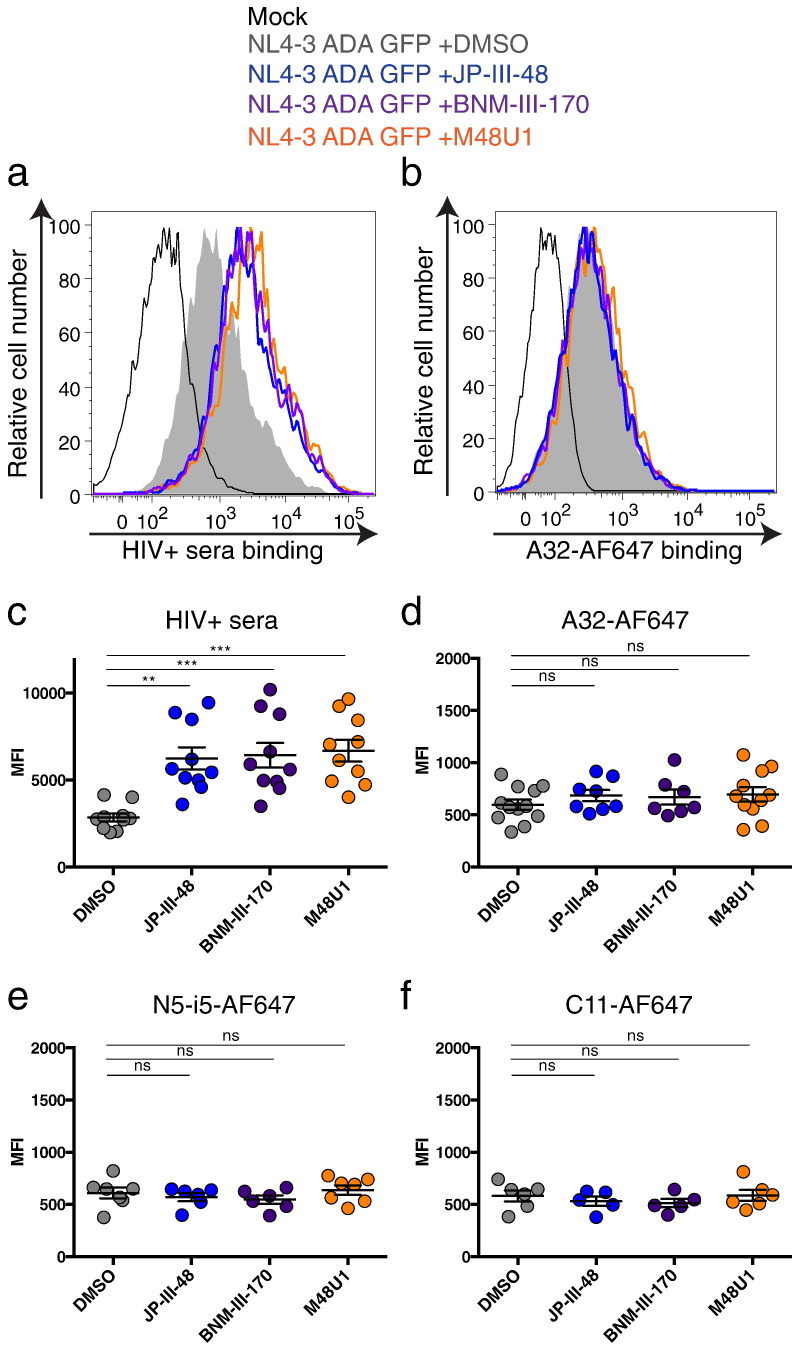
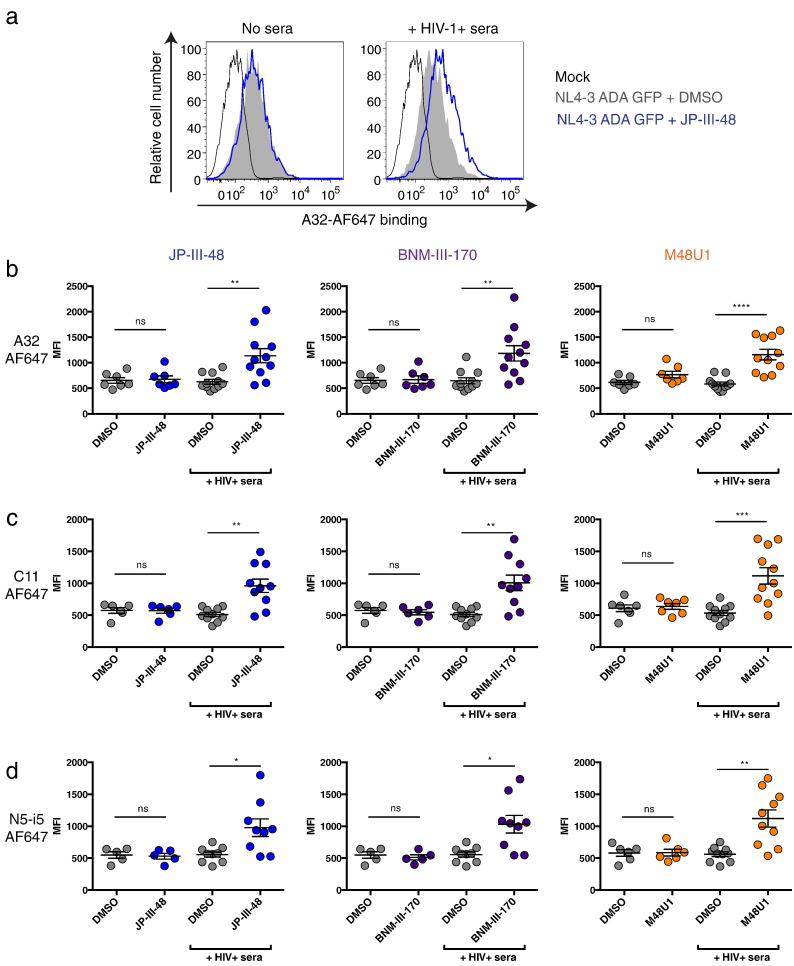
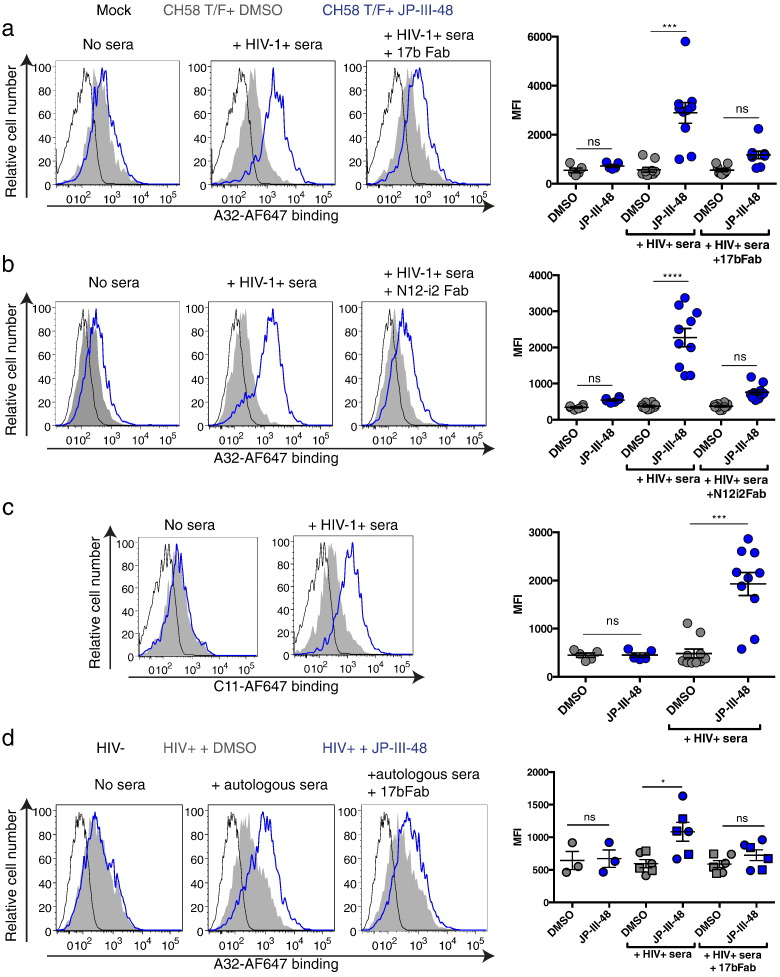
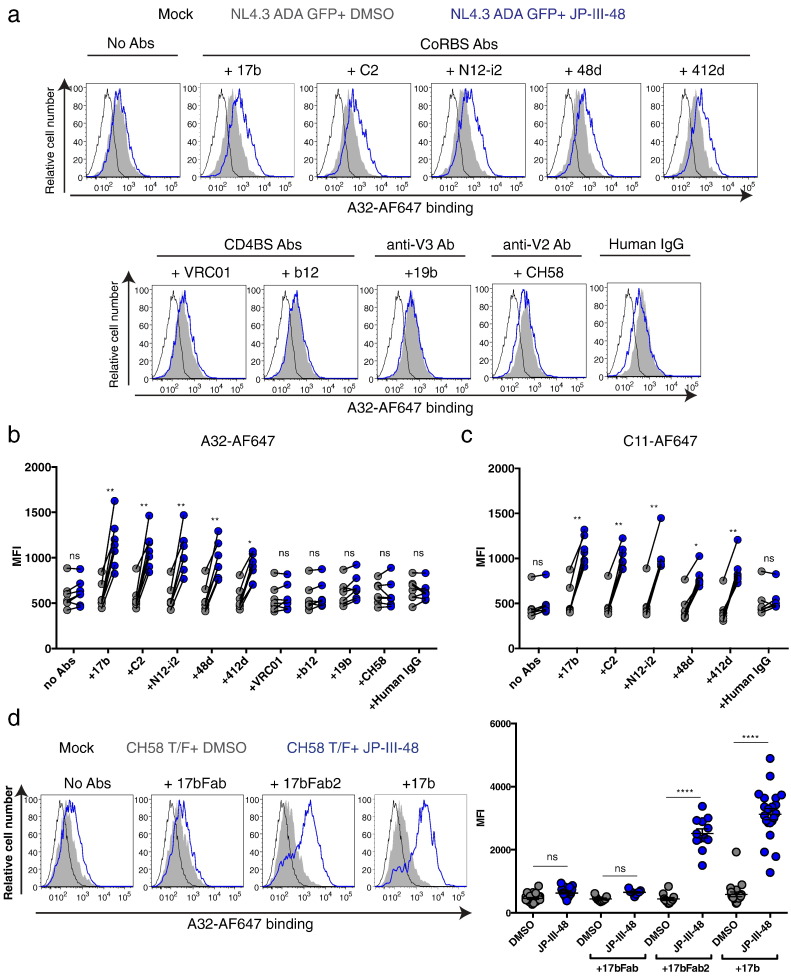
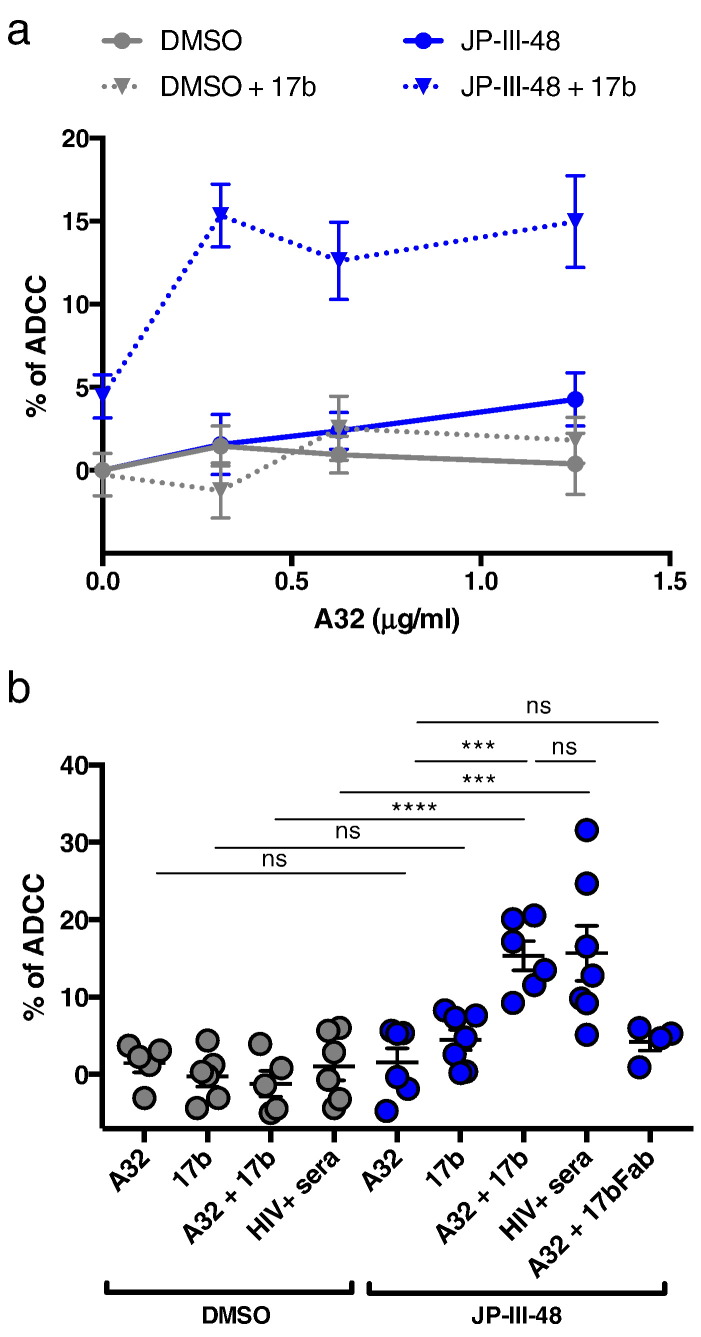
Human immunodeficiency virus type 1 (HIV-1) has evolved a sophisticated strategy to conceal conserved epitopes of its envelope glycoproteins (Env) recognized by antibody-dependent cellular cytotoxicity (ADCC)-mediating antibodies. These antibodies, which are present in the sera of most HIV-1-infected individuals, preferentially recognize Env in its CD4-bound conformation. Accordingly, recent studies showed that small CD4-mimetics (CD4mc) able to "push" Env into this conformation sensitize HIV-1-infected cells to ADCC mediated by HIV+ sera. Here we test whether CD4mc also expose epitopes recognized by anti-cluster A monoclonal antibodies such as A32, thought to be responsible for the majority of ADCC activity present in HIV+ sera and linked to decreased HIV-1 transmission in the RV144 trial. We made the surprising observation that CD4mc are unable to enhance recognition of HIV-1-infected cells by this family of antibodies in the absence of antibodies such as 17b, which binds a highly conserved CD4-induced epitope overlapping the co-receptor binding site (CoRBS). Our results indicate that CD4mc initially open the trimeric Env enough to allow the binding of CoRBS antibodies but not anti-cluster A antibodies. CoRBS antibody binding further opens the trimeric Env, allowing anti-cluster A antibody interaction and sensitization of infected cells to ADCC. Therefore, ADCC responses mediated by cluster A antibodies in HIV-positive sera involve a sequential opening of the Env trimer on the surface of HIV-1-infected cells. The understanding of the conformational changes required to expose these vulnerable Env epitopes might be important in the design of new strategies aimed at fighting HIV-1.
人类免疫缺陷病毒 1 型(HIV-1)已经进化出一种复杂的策略,来隐藏其包膜糖蛋白(Env)中被抗体依赖的细胞毒性(ADCC)介导的抗体识别的保守表位。这些抗体存在于大多数 HIV-1 感染个体的血清中,优先识别 Env 与其 CD4 结合的构象。因此,最近的研究表明,能够“推动”Env 进入这种构象的小 CD4 模拟物(CD4mc)使 HIV-1 感染细胞对由 HIV+血清介导的 ADCC 敏感。在这里,我们测试 CD4mc 是否还能暴露被抗簇 A 单克隆抗体识别的表位,如 A32,据认为这些抗体负责大多数存在于 HIV+血清中的 ADCC 活性,并与 RV144 试验中 HIV-1 传播的减少有关。我们惊讶地发现,在没有像 17b 这样的抗体的情况下,CD4mc 无法增强该家族抗体对 HIV-1 感染细胞的识别,17b 结合一个高度保守的 CD4 诱导表位,重叠共受体结合位点(CoRBS)。我们的结果表明,CD4mc 最初使三聚体 Env 张开得足够大,以允许 CoRBS 抗体结合,但不允许抗簇 A 抗体结合。CoRBS 抗体结合进一步打开三聚体 Env,允许抗簇 A 抗体相互作用,并使感染细胞对 ADCC 敏感。因此,HIV 阳性血清中簇 A 抗体介导的 ADCC 反应涉及 HIV-1 感染细胞表面上 Env 三聚体的顺序开放。了解暴露这些脆弱的 Env 表位所需的构象变化可能对设计旨在对抗 HIV-1 的新策略很重要。