Ardiel Evan L, Giles Andrew C, Yu Alex J, Lindsay Theodore H, Lockery Shawn R, Rankin Catharine H
DM Centre for Brain Health, University of British Columbia, Vancouver V6T 2B5, Canada.
Institute of Neuroscience, University of Oregon, Eugene, Oregon 97403, USA.
Learn Mem. 2016 Sep 15;23(10):495-503. doi: 10.1101/lm.041830.116. Print 2016 Oct.
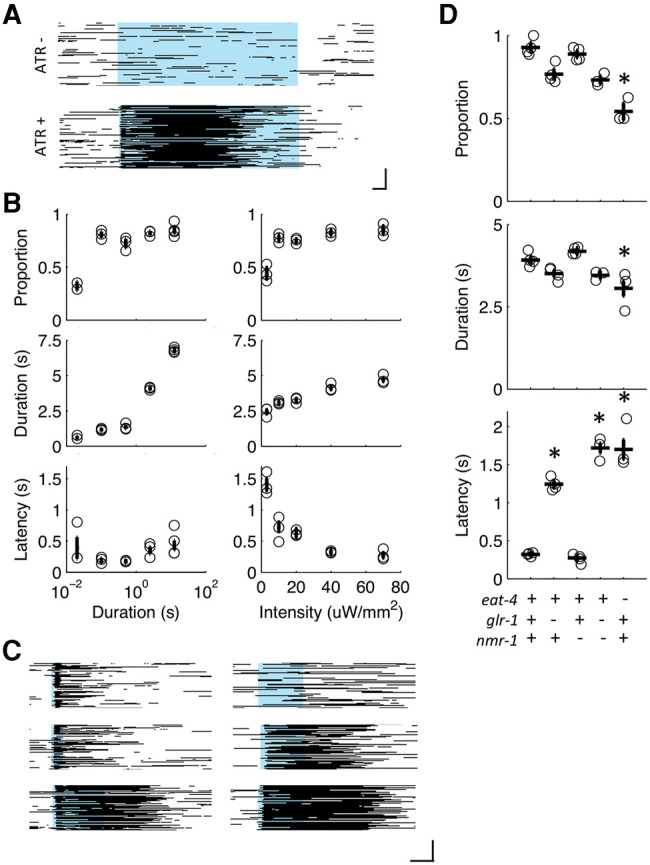
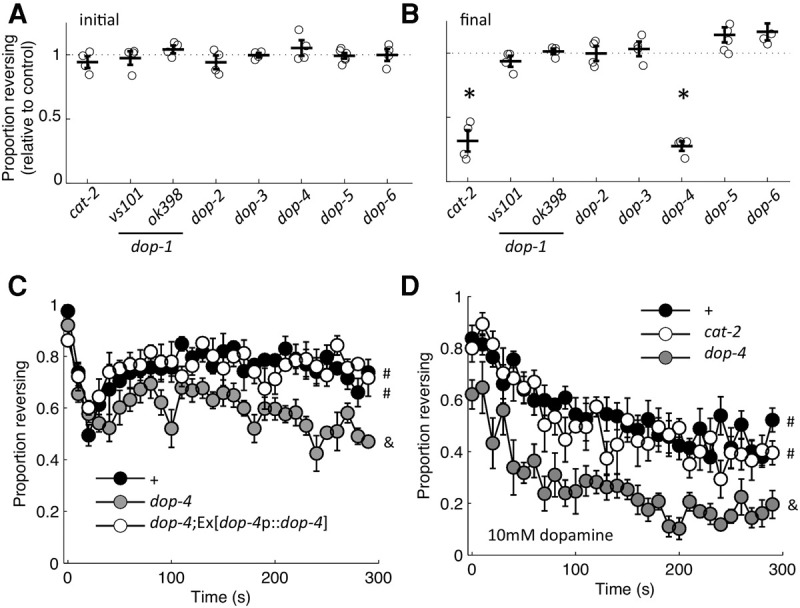
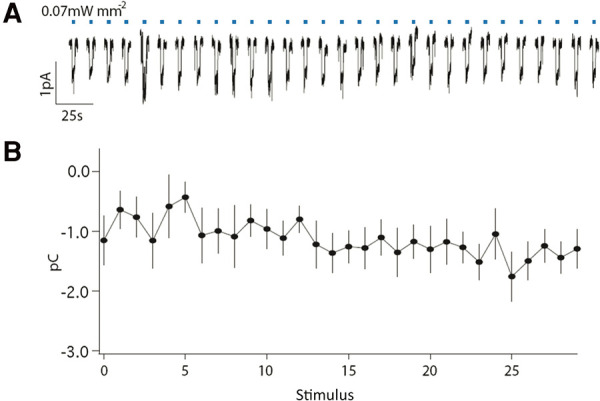
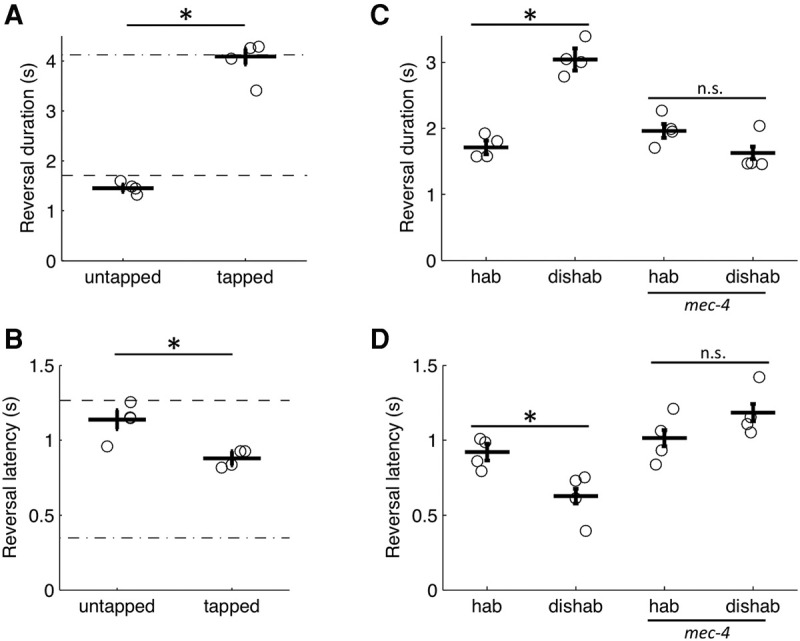
Habituation is a highly conserved phenomenon that remains poorly understood at the molecular level. Invertebrate model systems, like Caenorhabditis elegans, can be a powerful tool for investigating this fundamental process. Here we established a high-throughput learning assay that used real-time computer vision software for behavioral tracking and optogenetics for stimulation of the C. elegans polymodal nociceptor, ASH. Photoactivation of ASH with ChR2 elicited backward locomotion and repetitive stimulation altered aspects of the response in a manner consistent with habituation. Recording photocurrents in ASH, we observed no evidence for light adaptation of ChR2. Furthermore, we ruled out fatigue by demonstrating that sensory input from the touch cells could dishabituate the ASH avoidance circuit. Food and dopamine signaling slowed habituation downstream from ASH excitation via D1-like dopamine receptor, DOP-4. This assay allows for large-scale genetic and drug screens investigating mechanisms of nociception modulation.
习惯化是一种高度保守的现象,在分子水平上仍未得到充分理解。无脊椎动物模型系统,如秀丽隐杆线虫,可成为研究这一基本过程的有力工具。在此,我们建立了一种高通量学习测定法,该方法使用实时计算机视觉软件进行行为跟踪,并利用光遗传学刺激秀丽隐杆线虫的多模式伤害感受器ASH。用ChR2对ASH进行光激活会引发向后运动,重复刺激会以与习惯化一致的方式改变反应的各个方面。在ASH中记录光电流时,我们没有观察到ChR2发生光适应的证据。此外,我们通过证明来自触觉细胞的感觉输入可使ASH回避回路去习惯化,排除了疲劳因素。食物和多巴胺信号通过D1样多巴胺受体DOP-4减缓了ASH兴奋下游的习惯化过程。该测定法允许进行大规模的遗传和药物筛选,以研究伤害感受调节机制。