Chen Wan-Nan U, Hsiao Ya-Ju, Mayfield Anderson B, Young Ryan, Hsu Ling-Lan, Peng Shao-En
Department of Biological Science and Technology, I-Shou University , Kaohsiung , Taiwan.
National Museum of Marine Biology and Aquarium , Checheng, Pingtung , Taiwan.
PeerJ. 2016 Aug 24;4:e2358. doi: 10.7717/peerj.2358. eCollection 2016.
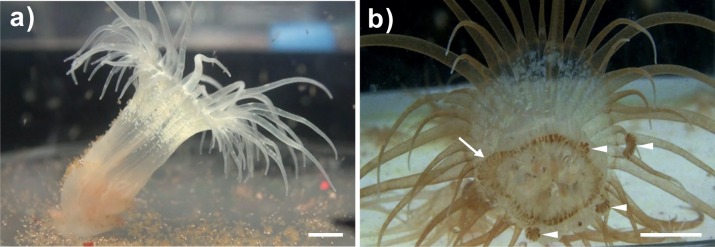
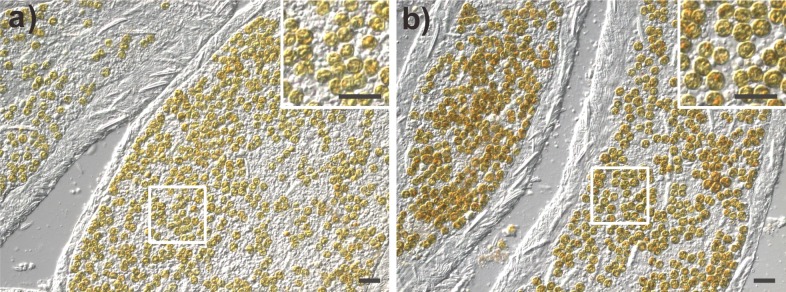
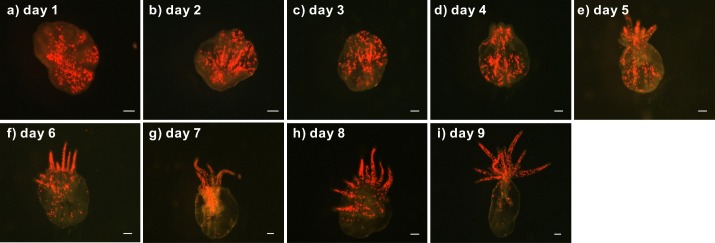
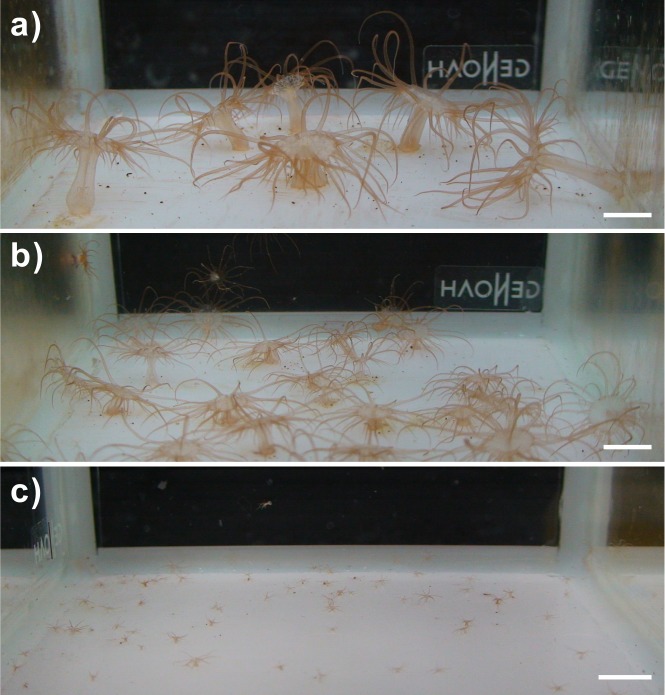
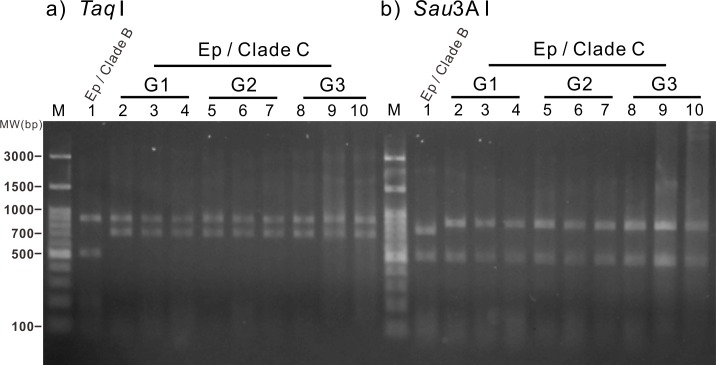
Anemones of genus Exaiptasia are used as model organisms for the study of cnidarian-dinoflagellate (genus Symbiodinium) endosymbiosis. However, while most reef-building corals harbor Symbiodinium of clade C, Exaiptasia spp. anemones mainly harbor clade B Symbiodinium (ITS2 type B1) populations. In this study, we reveal for the first time that bleached Exaiptasia pallida anemones can establish a symbiotic relationship with a clade C Symbiodinium (ITS2 type C1). We further found that anemones can transmit the exogenously supplied clade C Symbiodinium cells to their offspring by asexual reproduction (pedal laceration). In order to corroborate the establishment of stable symbiosis, we used microscopic techniques and genetic analyses to examine several generations of anemones, and the results of these endeavors confirmed the sustainability of the system. These findings provide a framework for understanding the differences in infection dynamics between homologous and heterologous dinoflagellate types using a model anemone infection system.
艾氏海葵属的海葵被用作研究刺胞动物-甲藻(共生藻属)内共生关系的模式生物。然而,虽然大多数造礁珊瑚共生的是C类共生藻,但艾氏海葵主要共生的是B类共生藻(ITS2 B1型)群体。在本研究中,我们首次揭示了白化的苍白艾氏海葵能够与C类共生藻(ITS2 C1型)建立共生关系。我们进一步发现,海葵可以通过无性繁殖(足盘撕裂)将外源提供的C类共生藻细胞传递给它们的后代。为了证实稳定共生关系的建立,我们使用显微镜技术和基因分析来检测几代海葵,这些研究结果证实了该系统的可持续性。这些发现为利用模式海葵感染系统理解同源和异源甲藻类型在感染动态方面的差异提供了一个框架。