Hernández-Tiedra Sonia, Fabriàs Gemma, Dávila David, Salanueva Íñigo J, Casas Josefina, Montes L Ruth, Antón Zuriñe, García-Taboada Elena, Salazar-Roa María, Lorente Mar, Nylandsted Jesper, Armstrong Jane, López-Valero Israel, McKee Christopher S, Serrano-Puebla Ana, García-López Roberto, González-Martínez José, Abad José L, Hanada Kentaro, Boya Patricia, Goñi Félix, Guzmán Manuel, Lovat Penny, Jäättelä Marja, Alonso Alicia, Velasco Guillermo
a Department of Biochemistry and Molecular Biology I , School of Biology, Complutense University , Madrid , Spain.
b Instituto de Investigaciones Sanitarias San Carlos (IdISSC) , Madrid , Spain.
Autophagy. 2016 Nov;12(11):2213-2229. doi: 10.1080/15548627.2016.1213927. Epub 2016 Sep 16.
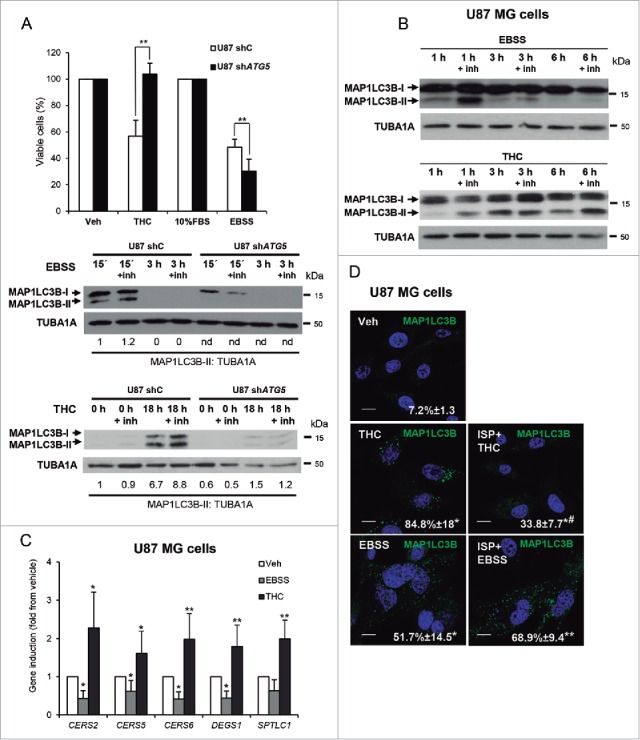
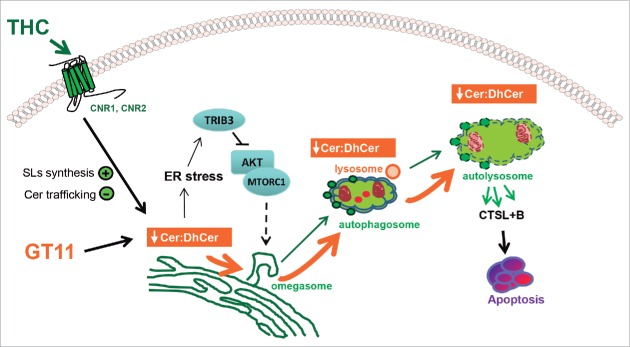
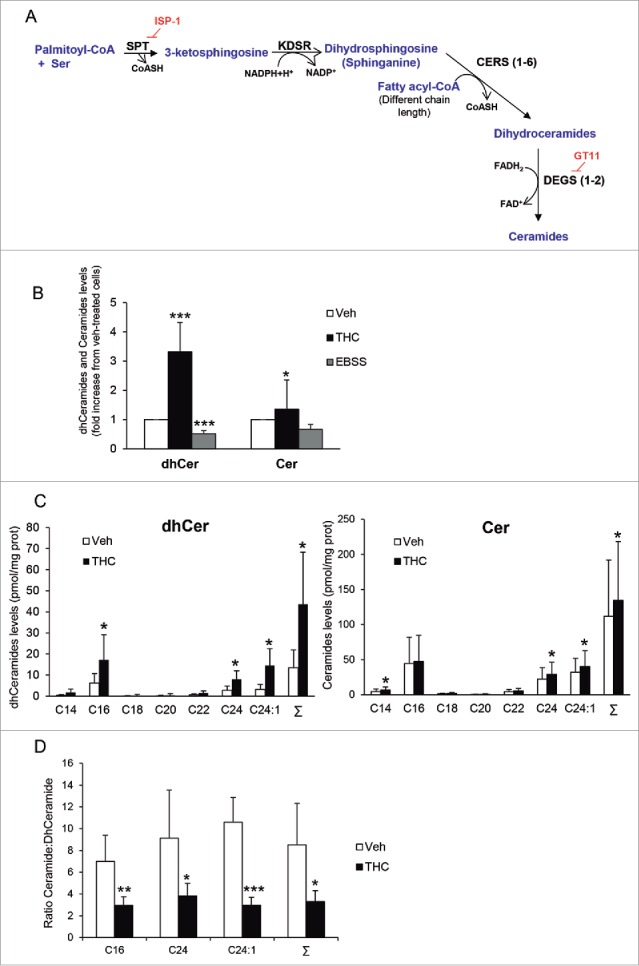
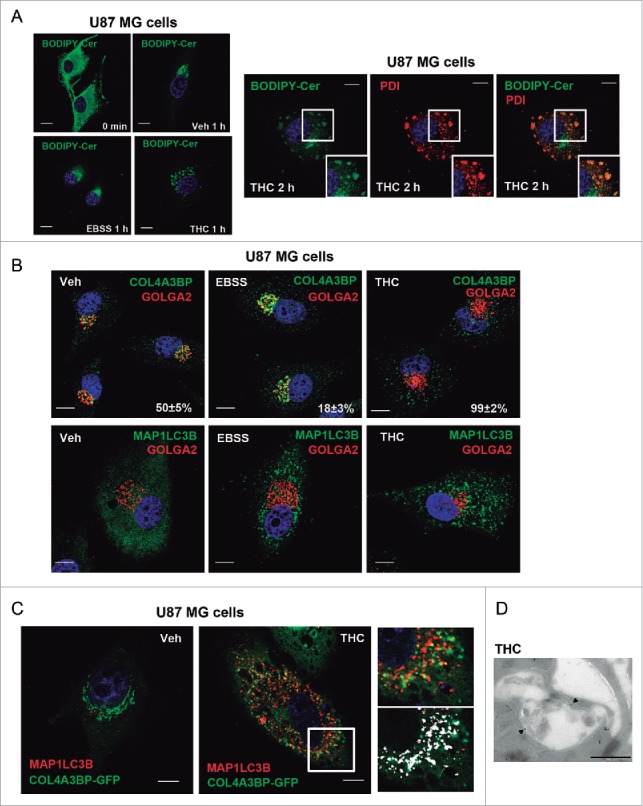
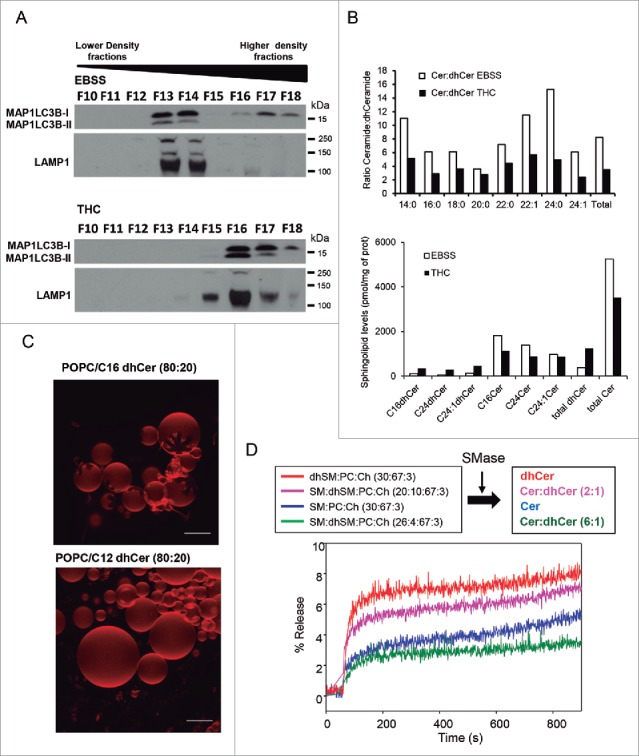
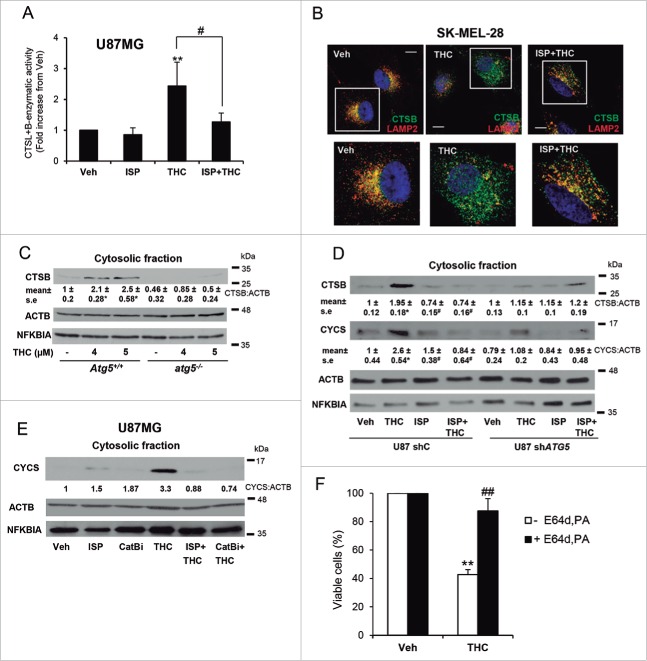
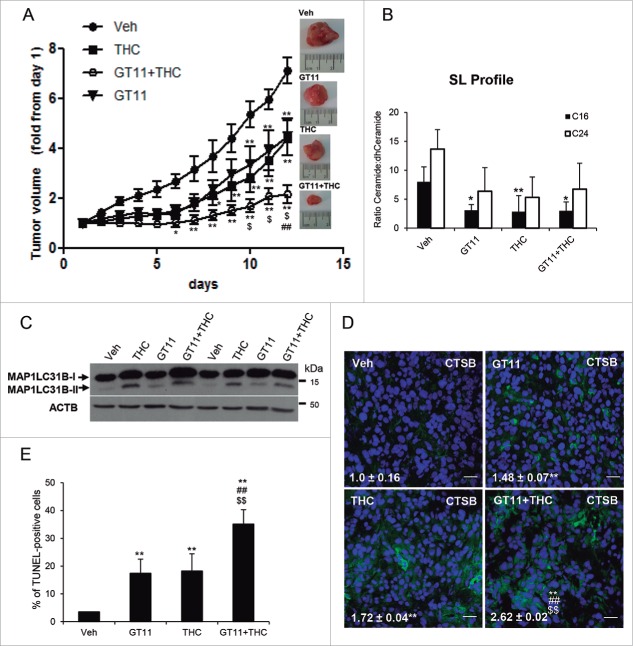
Autophagy is considered primarily a cell survival process, although it can also lead to cell death. However, the factors that dictate the shift between these 2 opposite outcomes remain largely unknown. In this work, we used Δ-tetrahydrocannabinol (THC, the main active component of marijuana, a compound that triggers autophagy-mediated cancer cell death) and nutrient deprivation (an autophagic stimulus that triggers cytoprotective autophagy) to investigate the precise molecular mechanisms responsible for the activation of cytotoxic autophagy in cancer cells. By using a wide array of experimental approaches we show that THC (but not nutrient deprivation) increases the dihydroceramide:ceramide ratio in the endoplasmic reticulum of glioma cells, and this alteration is directed to autophagosomes and autolysosomes to promote lysosomal membrane permeabilization, cathepsin release and the subsequent activation of apoptotic cell death. These findings pave the way to clarify the regulatory mechanisms that determine the selective activation of autophagy-mediated cancer cell death.
自噬主要被认为是一种细胞存活过程,尽管它也可能导致细胞死亡。然而,决定这两种相反结果之间转变的因素在很大程度上仍然未知。在这项研究中,我们使用了Δ-四氢大麻酚(THC,大麻的主要活性成分,一种触发自噬介导的癌细胞死亡的化合物)和营养剥夺(一种触发细胞保护性自噬的自噬刺激)来研究癌细胞中细胞毒性自噬激活的精确分子机制。通过使用一系列实验方法,我们表明THC(而非营养剥夺)会增加胶质瘤细胞内质网中二氢神经酰胺与神经酰胺的比例,并且这种改变会导向自噬体和自溶酶体,以促进溶酶体膜通透性增加、组织蛋白酶释放以及随后凋亡性细胞死亡的激活。这些发现为阐明决定自噬介导的癌细胞死亡选择性激活的调控机制铺平了道路。