Zou Jingfang, Hong Liangli, Luo Chaohuan, Li Zhi, Zhu Yuzhang, Huang Tianliang, Zhang Yongneng, Yuan Huier, Hu Yaqiu, Wen Tengfei, Zhuang Wanling, Cai Bozhi, Zhang Xin, Huang Jiexiong, Cheng Jidong
Departments of Internal Medicine, The First Affiliated Hospital of Shantou University Medical College, Shantou, China.
Departments of Pathology, The First Affiliated Hospital of Shantou University Medical College, Shantou, China.
Cancer Sci. 2016 Dec;107(12):1806-1817. doi: 10.1111/cas.13083. Epub 2016 Nov 25.
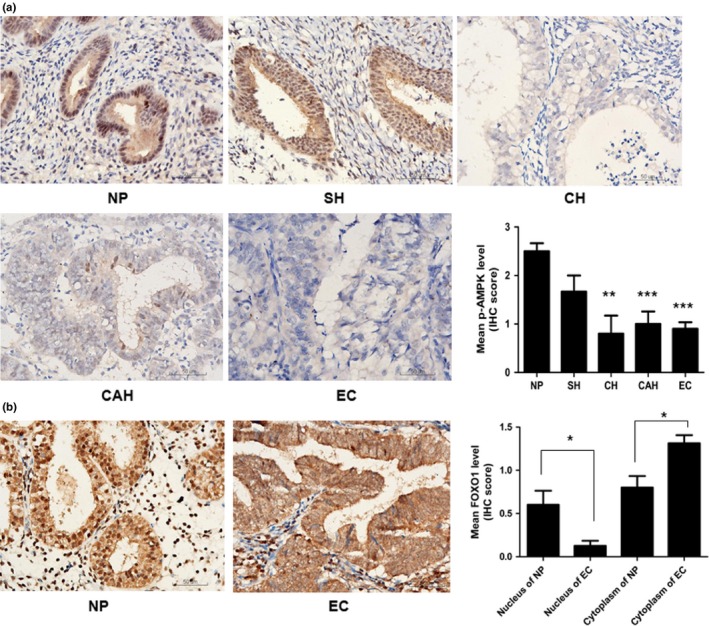
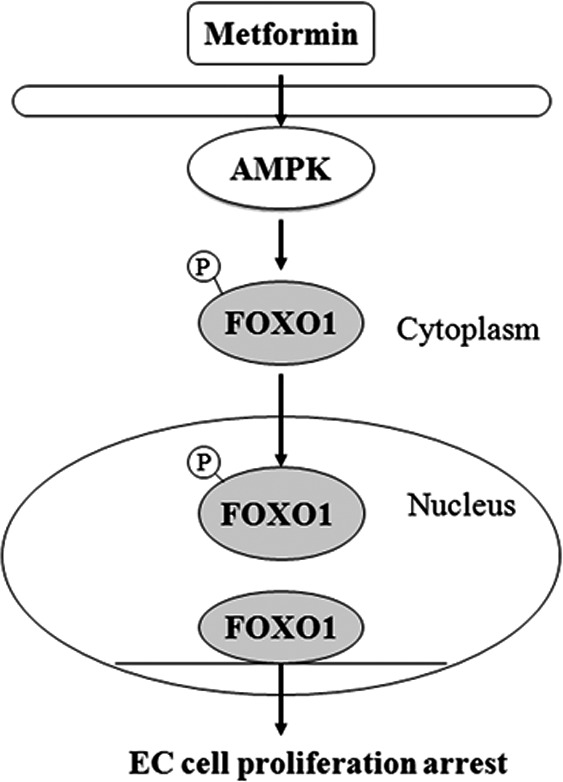
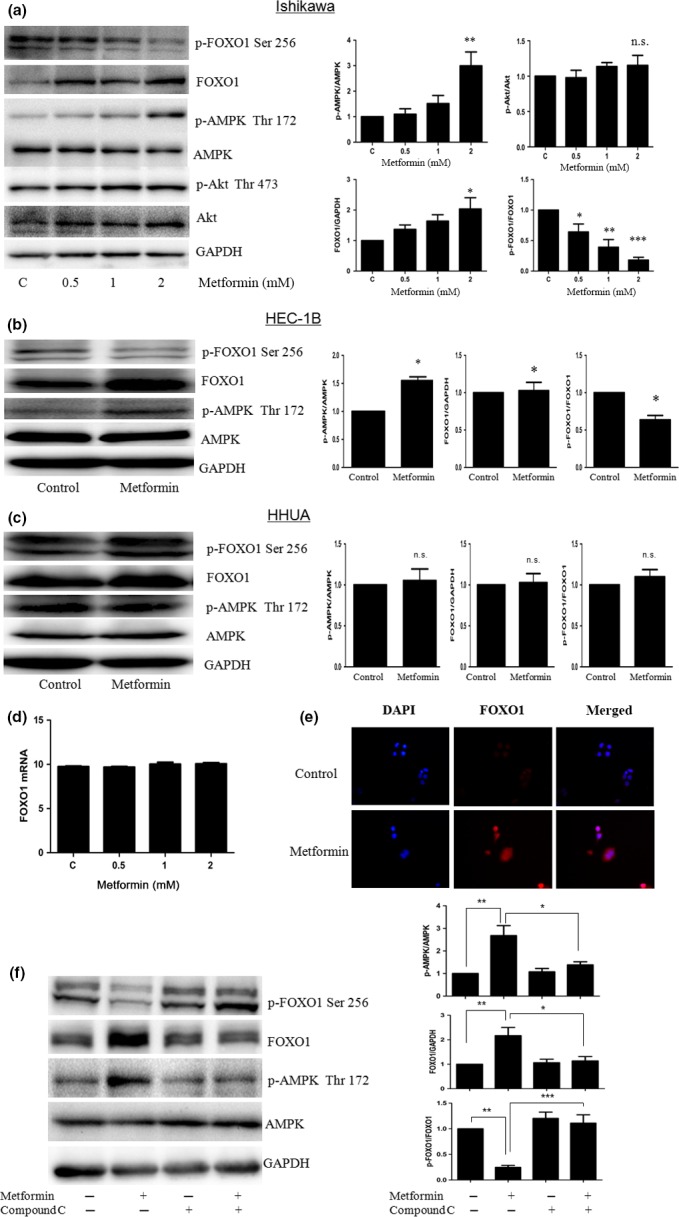
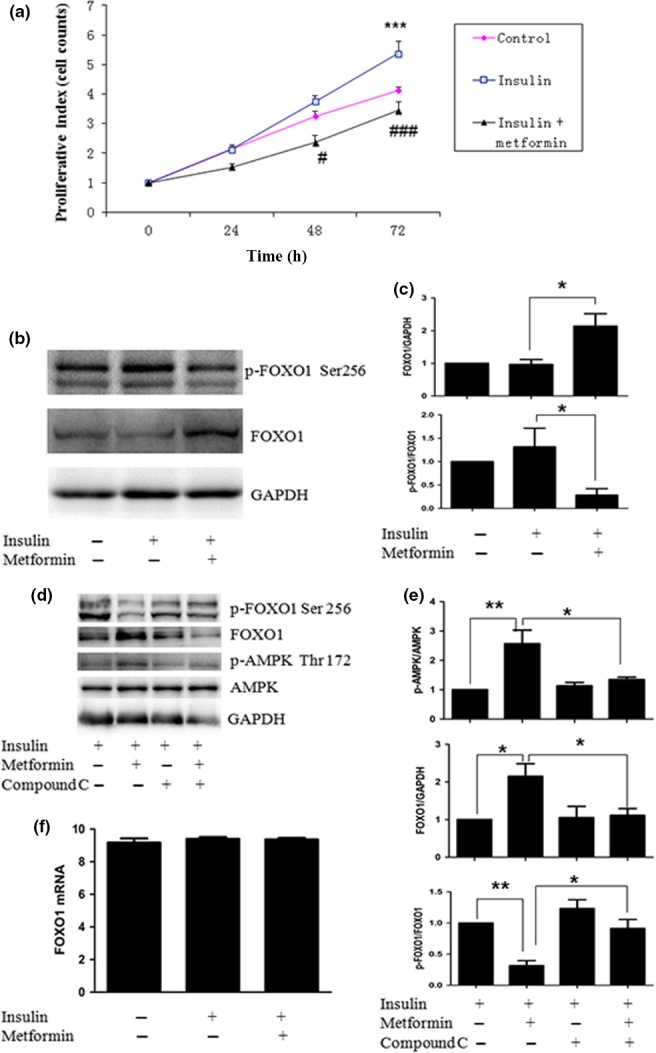
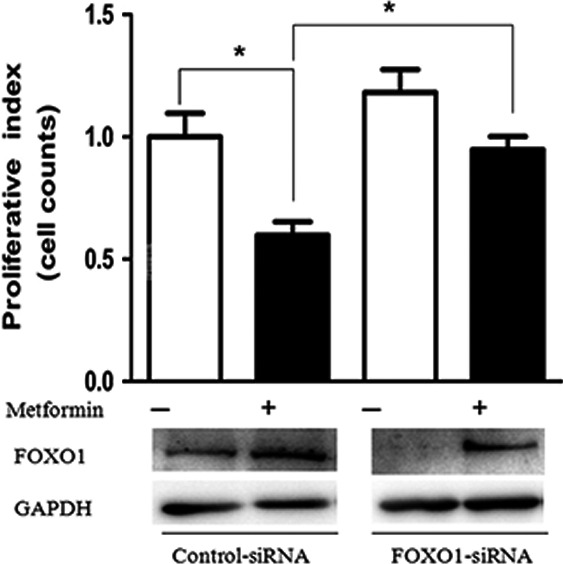
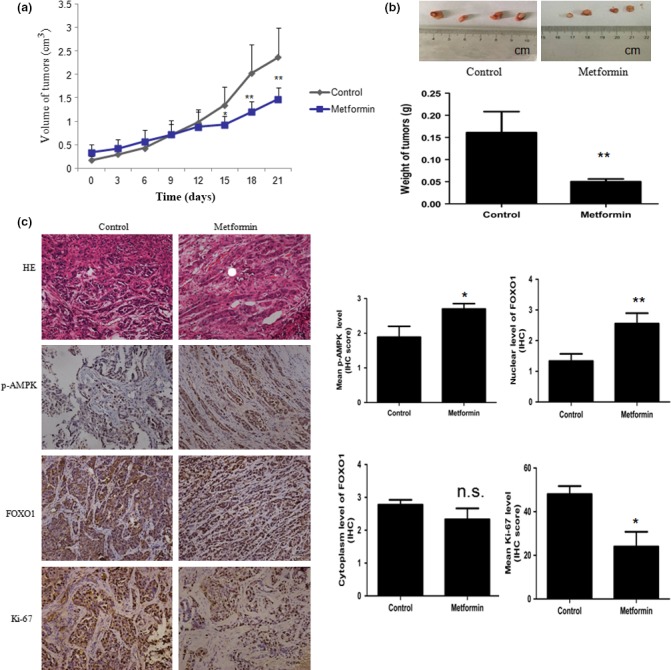
Metformin is an oral biguanide commonly used for treating type II diabetes and has recently been reported to possess antiproliferative properties that can be exploited for the prevention and treatment of a variety of cancers. The mechanisms underlying this effect have not been fully elucidated. Our study shows a marked loss of AMP-activated protein kinase (AMPK) phosphorylation and nuclear human Forkhead box O1 (FOXO1) protein in estrogen-dependent endometrial cancer (EC) tumors compared to normal control endometrium. Metformin treatment suppressed EC cell growth in a time-dependent manner in vitro; this effect was cancelled by cotreatment with an AMPK inhibitor, compound C. Metformin decreased FOXO1 phosphorylation and increased FOXO1 nuclear localization in Ishikawa and HEC-1B cells, with non-significant increase in FOXO1 mRNA expression. Moreover, compound C blocked the metformin-induced changes of FOXO1 and its phosphorylation protein, suggesting that metformin upregulated FOXO1 activity by AMPK activation. Similar results were obtained after treatment with insulin. In addition, transfection with siRNA for FOXO1 cancelled metformin-inhibited cell growth, indicating that FOXO1 mediated metformin to inhibit EC cell proliferation. A xenograft mouse model further revealed that metformin suppressed HEC-1B tumor growth, accompanied by downregulated ki-67 and upregulated AMPK phosphorylation and nuclear FOXO1 protein. Taken together, these data provide a novel mechanism of antineoplastic effect for metformin through the regulation of FOXO1, and suggest that the AMPK-FOXO1 pathway may be a therapeutic target to the development of new antineoplastic drugs.
二甲双胍是一种常用于治疗II型糖尿病的口服双胍类药物,最近有报道称其具有抗增殖特性,可用于预防和治疗多种癌症。这种作用的潜在机制尚未完全阐明。我们的研究表明,与正常对照子宫内膜相比,雌激素依赖性子宫内膜癌(EC)肿瘤中AMP激活的蛋白激酶(AMPK)磷酸化和核人叉头框O1(FOXO1)蛋白显著减少。二甲双胍治疗在体外以时间依赖性方式抑制EC细胞生长;用AMPK抑制剂化合物C共同处理可消除这种作用。二甲双胍降低了Ishikawa和HEC-1B细胞中FOXO1的磷酸化并增加了FOXO1的核定位,而FOXO1 mRNA表达无显著增加。此外,化合物C阻断了二甲双胍诱导的FOXO1及其磷酸化蛋白的变化,表明二甲双胍通过激活AMPK上调FOXO1活性。胰岛素处理后也得到了类似的结果。此外,用针对FOXO1的siRNA转染可消除二甲双胍抑制的细胞生长,表明FOXO1介导二甲双胍抑制EC细胞增殖。异种移植小鼠模型进一步显示,二甲双胍抑制HEC-1B肿瘤生长,同时ki-67下调,AMPK磷酸化和核FOXO1蛋白上调。综上所述,这些数据提供了二甲双胍通过调节FOXO1发挥抗肿瘤作用的新机制,并表明AMPK-FOXO1途径可能是开发新型抗肿瘤药物的治疗靶点。