Li Xiuju, Augustine Aruna, Chen Shuo, Fliegel Larry
Department of Biochemistry, University Alberta, Edmonton, AB T6G 2H7, Canada.
PLoS One. 2016 Sep 16;11(9):e0162902. doi: 10.1371/journal.pone.0162902. eCollection 2016.
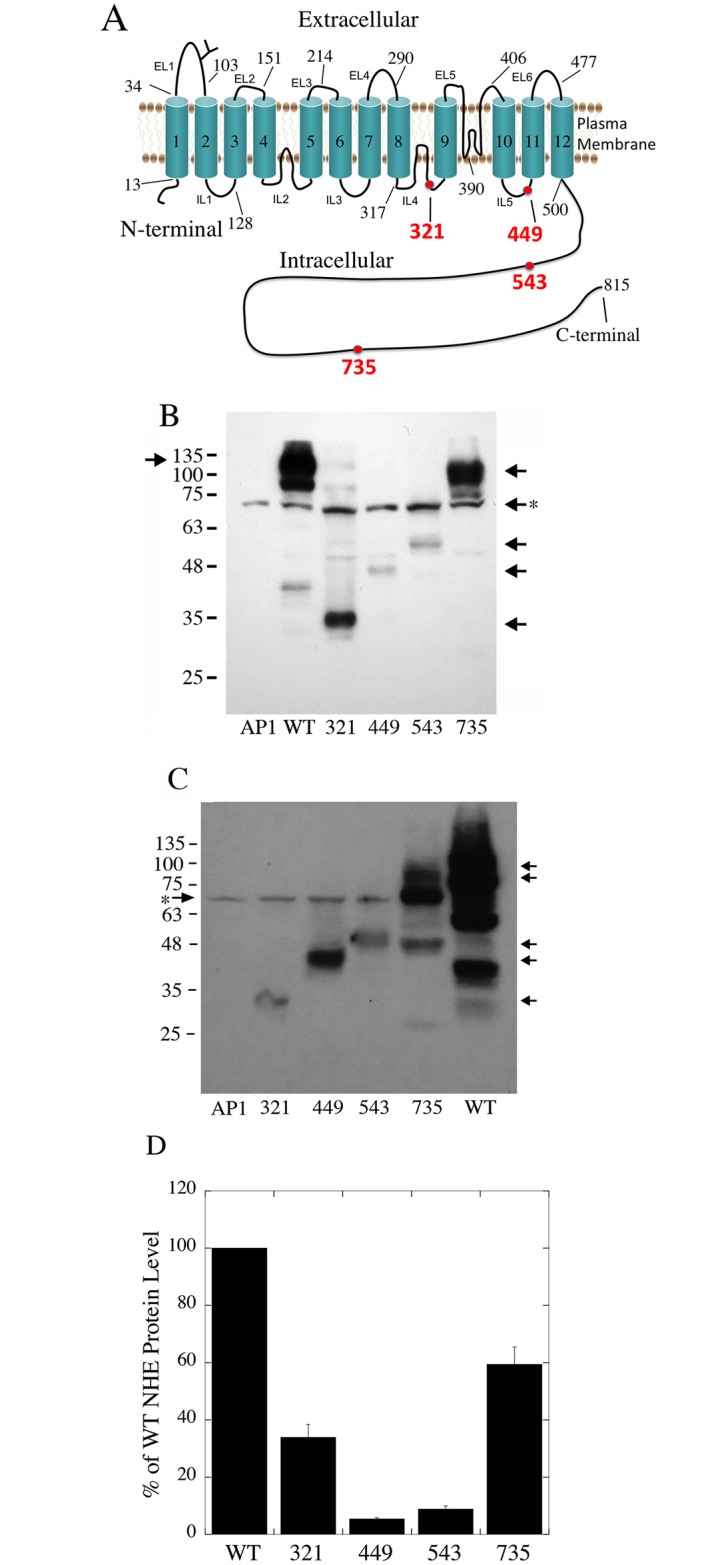
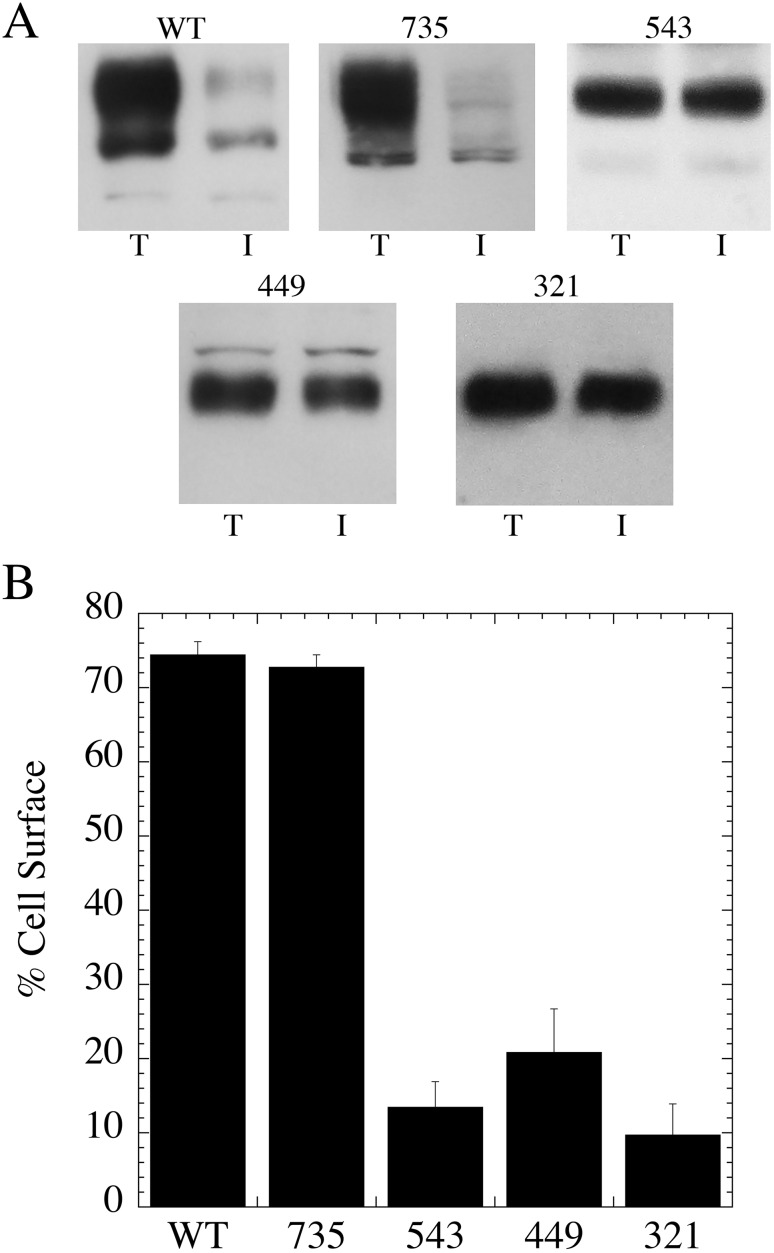
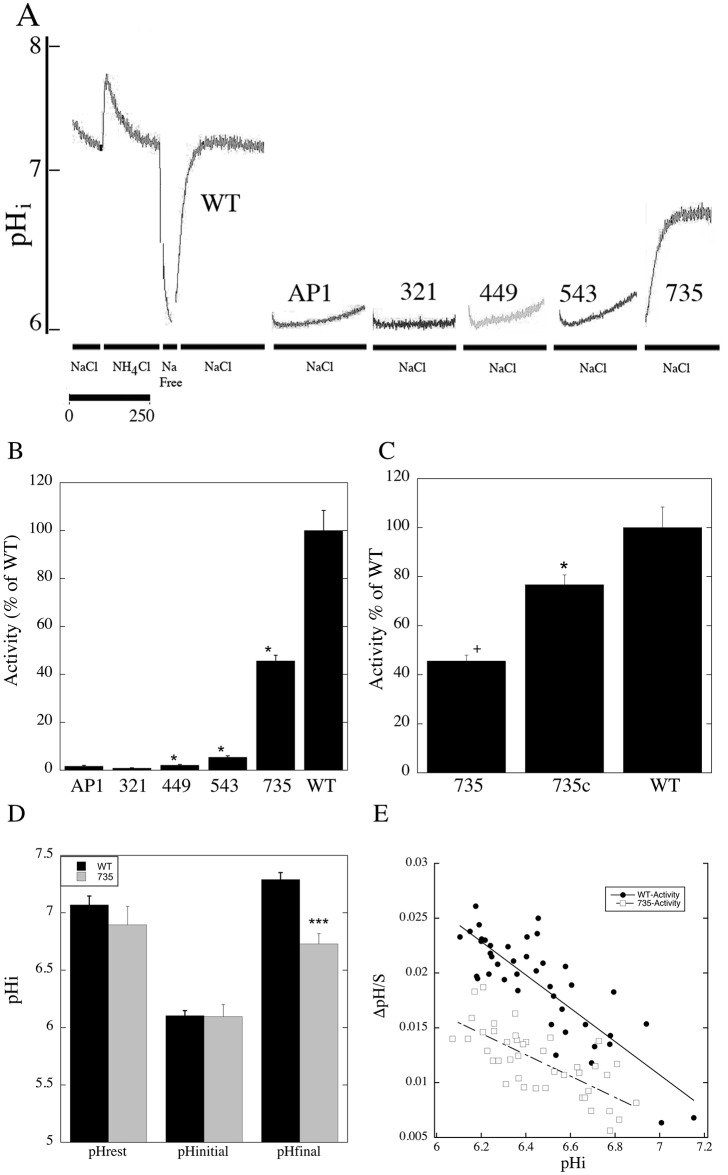
The NHE1 isoform of the mammalian Na+/H+ exchanger is a ubiquitous plasma membrane protein that regulates intracellular pH in mammalian cells by removing one intracellular proton in exchange for one extracellular sodium. Deletion of the NHE1 gene (SLC9A1) affects the growth and motor ability of mice and humans but mutations and polymorphisms of the gene are only beginning to be characterized. NHE1 has a cytosolic C-terminal regulatory tail of approximately 315 amino acids and a 500 amino acid membrane domain. We examined the functional effects of three human stop codon mutations at amino acids 321, 449 and 735 in comparison with a mutant that had a shortened tail region (543 stop codon). The short mutants, 321, 449 and 543 stop codon mutant proteins, lost NHE1 activity and expression, and did not target to the plasma membrane. Protein for these short mutants was more rapidly degraded than the wild type and 735 ending proteins. The 735 terminating mutant, with the membrane domain and much of the cytosolic tail, had reduced protein expression and activity. The results demonstrate that early stop codon polymorphisms have significant and deleterious effects on the activity of the SLC9A1 protein product. The 735-NHE1 mutant, without the last 80 amino acids, had more minor defects. Surprisingly, retention of a proximal 43 amino acids adjacent to the membrane domain did little to maintain NHE1 expression, targeting and activity.
哺乳动物钠氢交换体1型(NHE1)亚型是一种普遍存在的质膜蛋白,通过将一个细胞内质子与一个细胞外钠离子交换来调节哺乳动物细胞内的pH值。NHE1基因(SLC9A1)的缺失会影响小鼠和人类的生长及运动能力,但该基因的突变和多态性才刚刚开始被研究。NHE1有一个约315个氨基酸的胞质C端调节尾和一个500个氨基酸的膜结构域。我们研究了三个位于氨基酸321、449和735处的人类终止密码子突变与一个尾区缩短(543位终止密码子)的突变体相比的功能效应。短突变体,即321、449和543位终止密码子突变体蛋白,丧失了NHE1活性和表达,且未靶向到质膜。这些短突变体的蛋白比野生型和735位终止密码子的蛋白降解得更快。具有膜结构域和大部分胞质尾的735位终止突变体,其蛋白表达和活性降低。结果表明,早期终止密码子多态性对SLC9A1蛋白产物的活性有显著的有害影响。缺少最后80个氨基酸的735-NHE1突变体有较小的缺陷。令人惊讶的是,保留与膜结构域相邻的近端43个氨基酸对维持NHE1的表达、靶向定位和活性作用不大。