Jetzt Amanda E, Li Xiao-Ping, Tumer Nilgun E, Cohick Wendie S
Department of Animal Sciences, Rutgers, The State University of New Jersey, New Brunswick, NJ 08901-8520, United States.
Department of Plant Biology and Pathology, Rutgers, The State University of New Jersey, New Brunswick, NJ 08901-8520, United States.
Toxicol Appl Pharmacol. 2016 Nov 1;310:120-128. doi: 10.1016/j.taap.2016.09.004. Epub 2016 Sep 15.
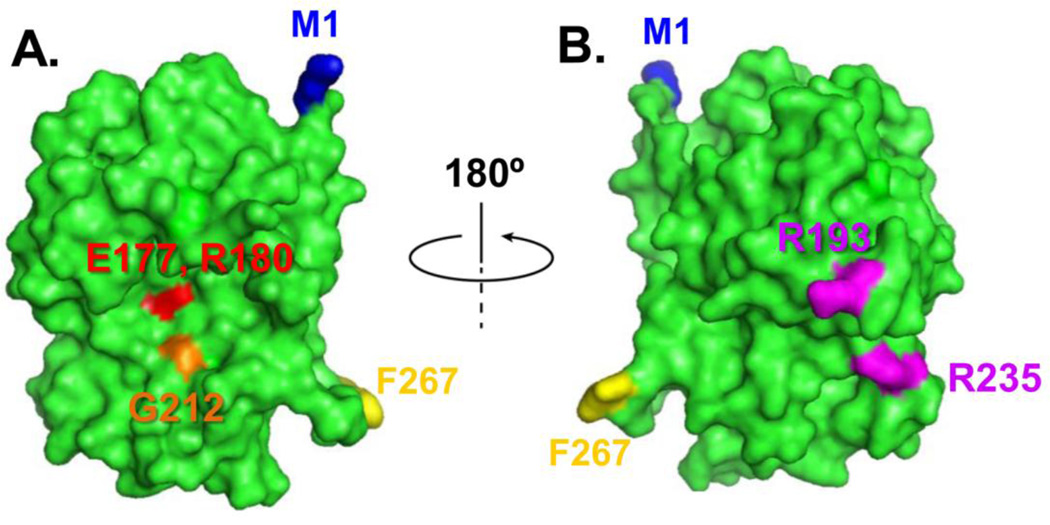
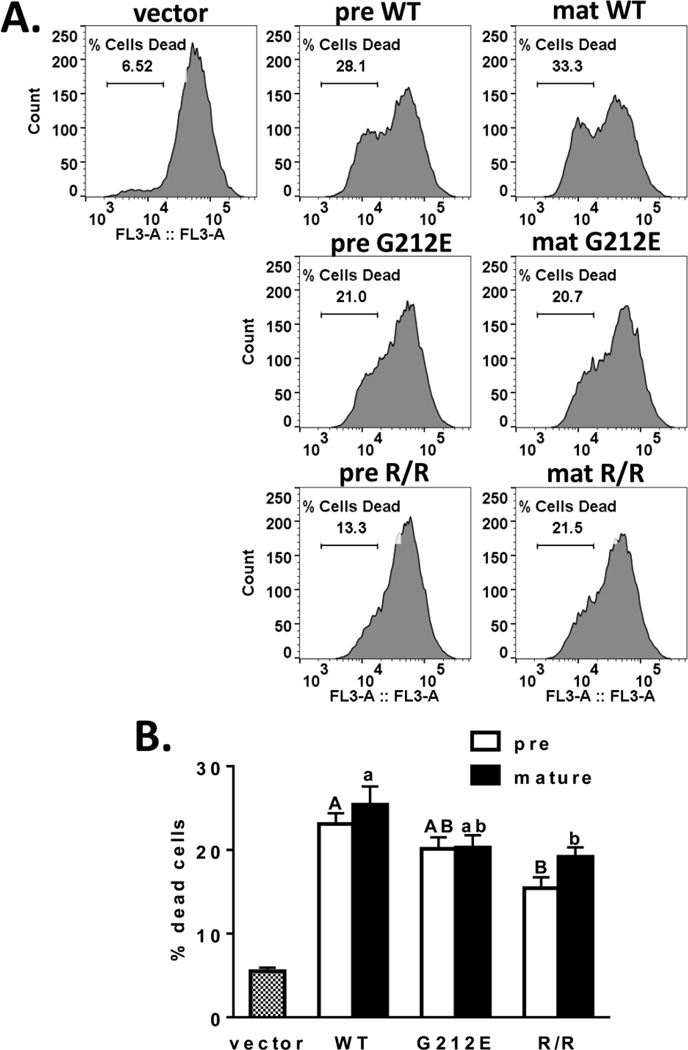
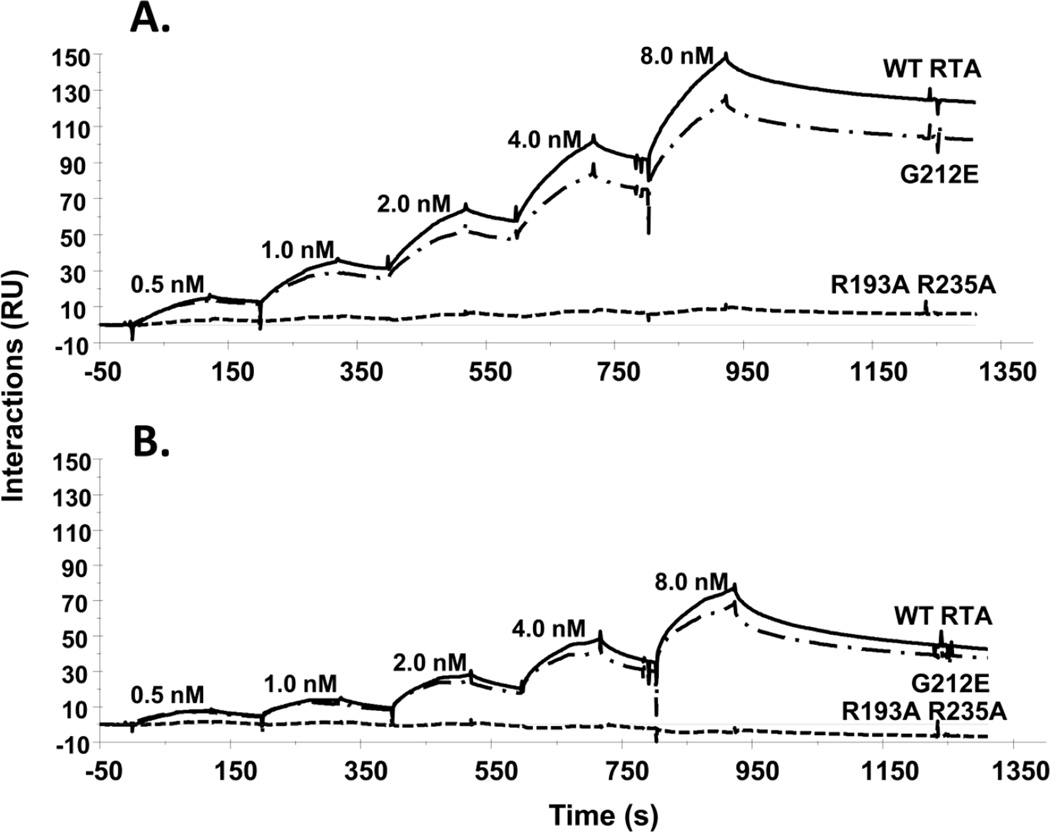
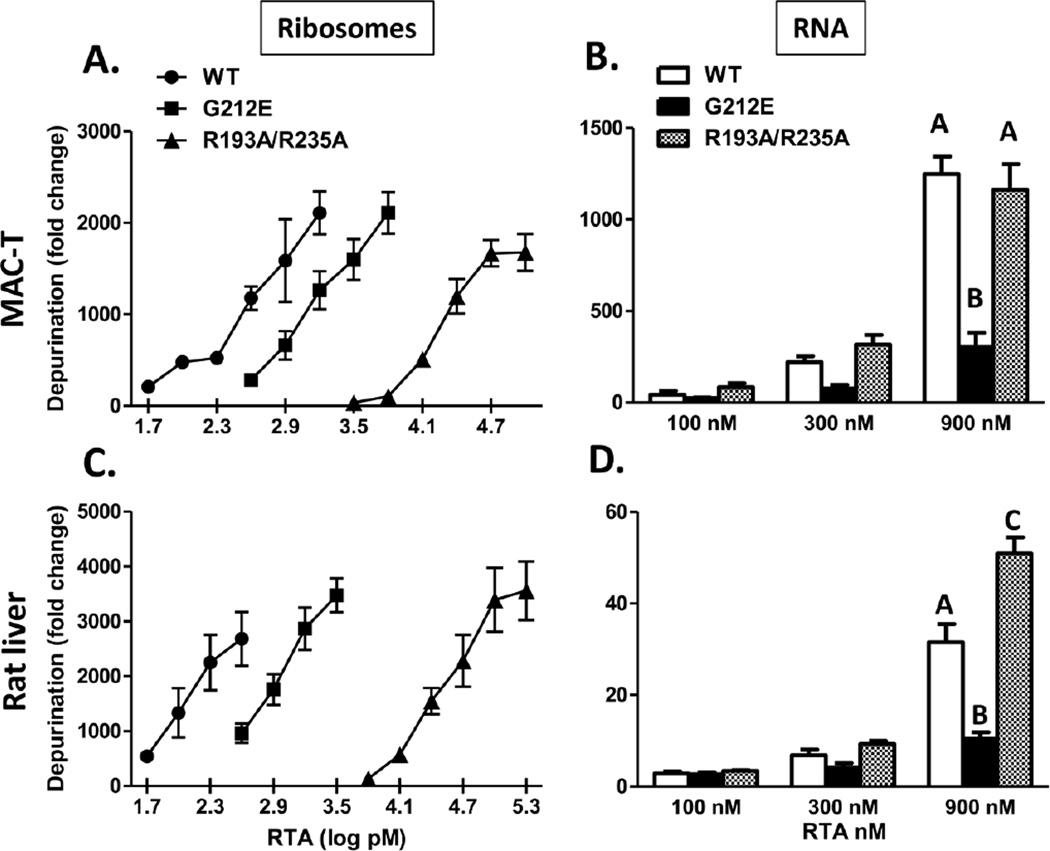
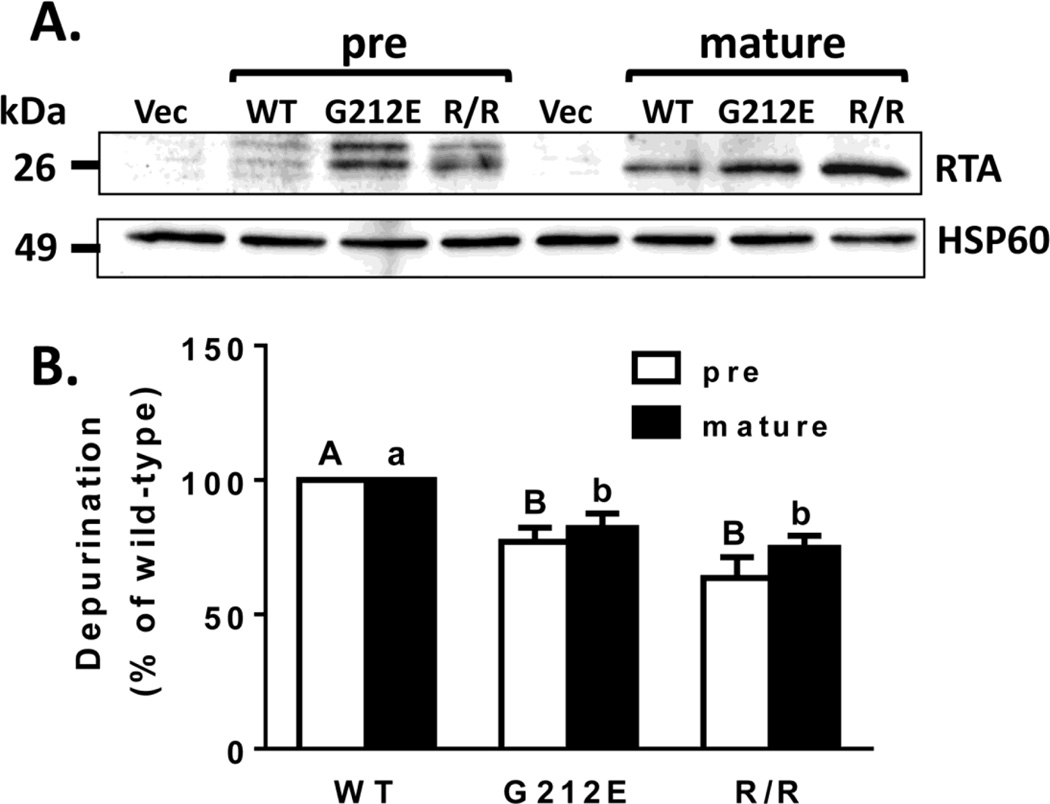
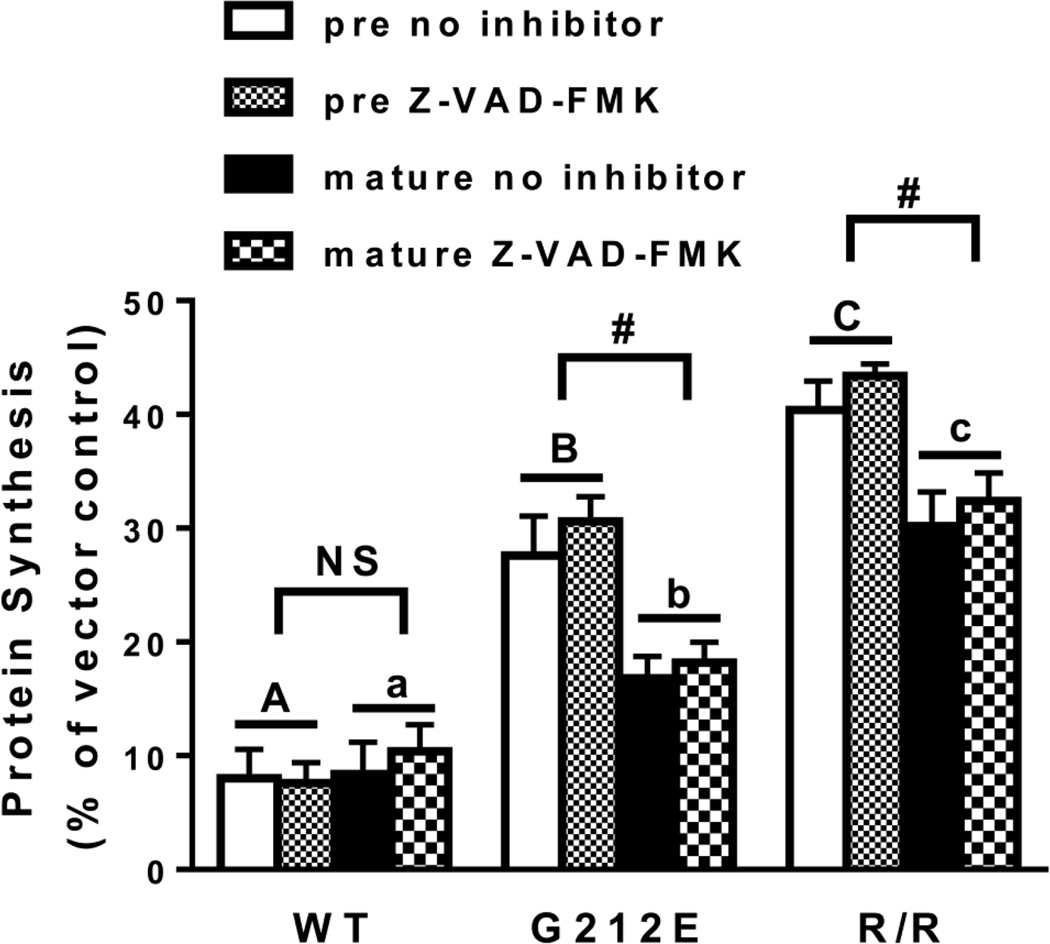
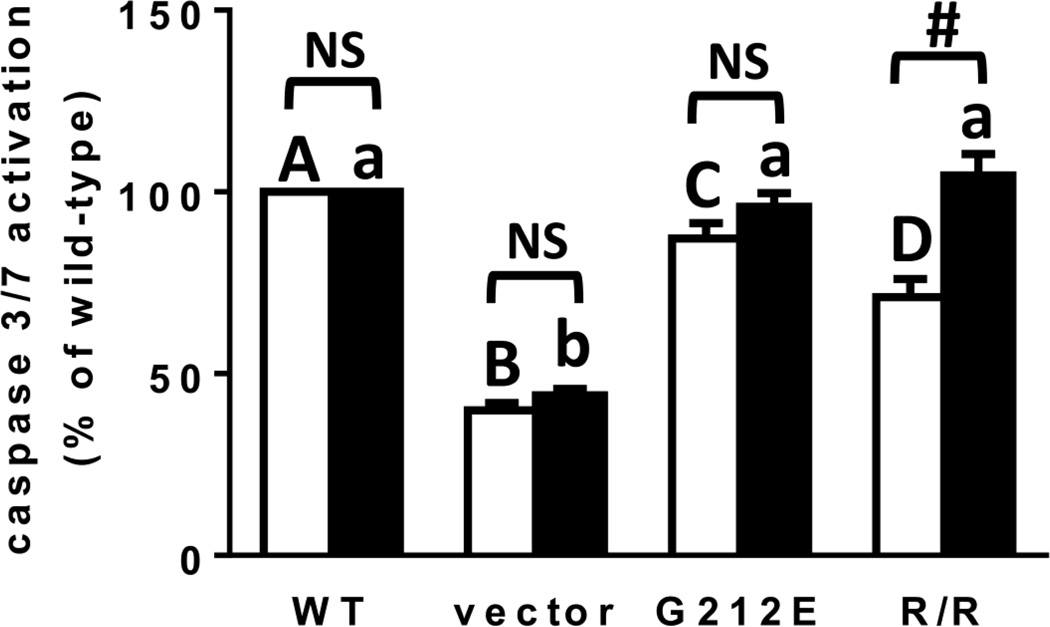
Ricin is a potent ribotoxin that is considered a bioterror threat due to its ease of isolation and possibility of aerosolization. In yeast, mutation of arginine residues away from the active site results in a ricin toxin A chain (RTA) variant that is unable to bind the ribosome and exhibits reduced cytotoxicity. The goal of the present work was to determine if these residues contribute to ribosome binding and cytotoxicity of RTA in mammalian cells. The RTA mutant R193A/R235A did not interact with mammalian ribosomes, while a G212E variant with a point mutation near its active site bound ribosomes similarly to wild-type (WT) RTA. R193A/R235A retained full catalytic activity on naked RNA but had reduced activity on mammalian ribosomes. To determine the effect of this mutant in intact cells, pre R193A/R235A containing a signal sequence directing it to the endoplasmic reticulum and mature R193A/R235A that directly targeted cytosolic ribosomes were each expressed. Depurination and protein synthesis inhibition were reduced by both pre- and mature R193A/R235A relative to WT. Protein synthesis inhibition was reduced to a greater extent by R193A/R235A than by G212E. Pre R193A/R235A caused a greater reduction in caspase activation and loss of mitochondrial membrane potential than G212E relative to WT RTA. These findings indicate that an RTA variant with reduced ribosome binding is less toxic than a variant with less catalytic activity but normal ribosome binding activity. The toxin-ribosome interaction represents a novel target for the development of therapeutics to prevent or treat ricin intoxication.
蓖麻毒素是一种强效核糖体毒素,因其易于分离且有可能形成气溶胶而被视为生物恐怖威胁。在酵母中,远离活性位点的精氨酸残基发生突变会产生一种蓖麻毒素A链(RTA)变体,该变体无法结合核糖体,且细胞毒性降低。本研究的目的是确定这些残基是否有助于RTA在哺乳动物细胞中的核糖体结合和细胞毒性。RTA突变体R193A/R235A不与哺乳动物核糖体相互作用,而在其活性位点附近有一个点突变的G212E变体与野生型(WT)RTA类似地结合核糖体。R193A/R235A对裸露RNA保留了完全的催化活性,但对哺乳动物核糖体的活性降低。为了确定该突变体在完整细胞中的作用,分别表达了含有将其导向内质网的信号序列的前体R193A/R235A和直接靶向胞质核糖体的成熟R193A/R235A。相对于WT,前体和成熟的R193A/R235A均降低了脱嘌呤和蛋白质合成抑制。R193A/R235A比G212E更大程度地降低了蛋白质合成抑制。相对于WT RTA,前体R193A/R235A比G212E导致更大程度的半胱天冬酶激活减少和线粒体膜电位丧失。这些发现表明,核糖体结合减少的RTA变体比催化活性较低但核糖体结合活性正常的变体毒性更小。毒素-核糖体相互作用代表了开发预防或治疗蓖麻毒素中毒疗法的新靶点。