Dyson J K, Wilkinson N, Jopson L, Mells G, Bathgate A, Heneghan M A, Neuberger J, Hirschfield G M, Ducker S J, Sandford R, Alexander G, Stocken D, Jones D E J
Institute of Cellular Medicine, Newcastle University, Newcastle-upon-Tyne, UK.
NIHR Newcastle Biomedical Research Centre, Newcastle University, Newcastle-upon-Tyne, UK.
Aliment Pharmacol Ther. 2016 Nov;44(10):1039-1050. doi: 10.1111/apt.13794. Epub 2016 Sep 19.
Age at presentation with primary biliary cholangitis (PBC) is associated with differential response to ursodeoxycholic acid (UDCA) therapy. Younger-presenting patients are less likely to respond to treatment and more likely to need transplant or die from the disease. PBC has a complex impact on quality of life (QoL), with systemic symptoms often having significant impact.
To explain the impact of age at presentation on perceived QoL and the inter-related symptoms which impact upon it.
Using the UK-PBC cohort, symptoms were assessed using the PBC-40 and other validated tools. Data were available on 2055 patients.
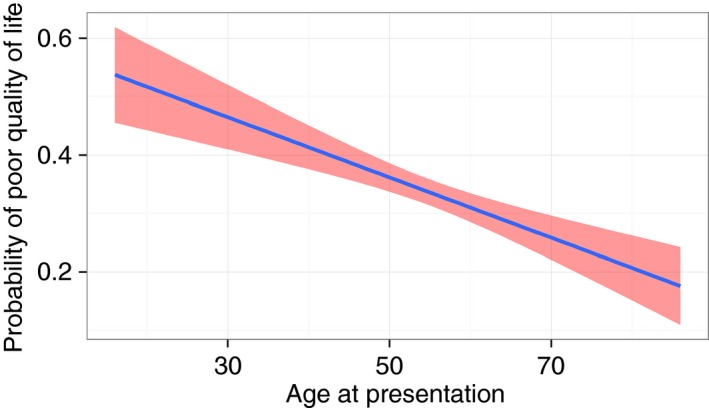
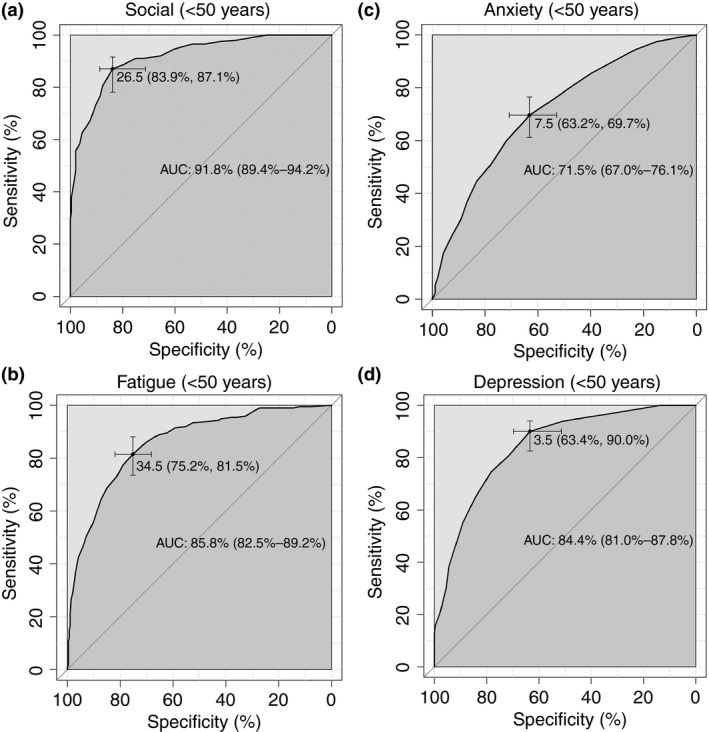
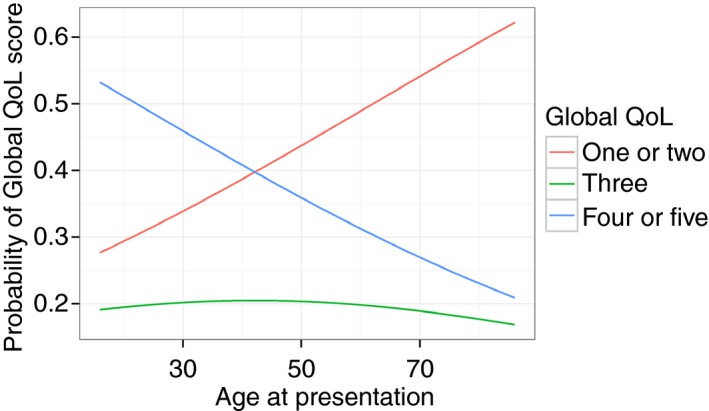
Of the 1990 patients reporting a global PBC-QoL score, 66% reported good/neutral scores and 34% reported poor scores. Each 10-year increase in age at presentation was associated with a 14% decrease in risk of poor perceived QoL (OR = 0.86, 95% CI: 0.75-0.98, P < 0.05). All symptom domains were similarly age-associated (P < 0.01). Social dysfunction was the symptom factor with the greatest impact on QoL. Median (interquartile range) PBC-40 social scores for patients with good perceived QoL were 18 (14-23) compared with 34 (29-39) for those with poor QoL.
The majority of patients with primary biliary cholangitis do not feel their QoL is impaired, although impairment is reported by a sizeable minority. Age at presentation is associated with impact on perceived QoL and the symptoms impairing it, with younger patients being more affected. Social dysfunction makes the greatest contribution to QoL impairment, and it should be targeted in trials aimed at improving life quality.
原发性胆汁性胆管炎(PBC)患者的就诊年龄与对熊去氧胆酸(UDCA)治疗的反应差异有关。就诊时年龄较小的患者对治疗的反应较差,更有可能需要进行移植或死于该疾病。PBC对生活质量(QoL)有复杂的影响,全身症状往往有显著影响。
解释就诊年龄对感知生活质量以及影响生活质量的相关症状的影响。
使用英国PBC队列,通过PBC-40和其他经过验证的工具评估症状。共有2055例患者的数据可用。
在1990例报告全球PBC-QoL评分的患者中,66%报告的是良好/中等评分,34%报告的是较差评分。就诊年龄每增加10岁,感知生活质量较差的风险降低14%(OR = 0.86,95%CI:0.75 - 0.98,P < 0.05)。所有症状领域与年龄的相关性相似(P < 0.01)。社会功能障碍是对生活质量影响最大的症状因素。感知生活质量良好的患者PBC-40社会评分中位数(四分位间距)为18(14 - 23),而生活质量较差的患者为34(29 - 39)。
大多数原发性胆汁性胆管炎患者并不觉得他们的生活质量受到损害,尽管有相当一部分少数患者报告有损害。就诊年龄与对感知生活质量及其损害症状的影响有关,年龄较小的患者受影响更大。社会功能障碍对生活质量损害的影响最大,在旨在改善生活质量的试验中应将其作为目标。