Ruiz-Ramírez Angélica, López-Acosta Ocarol, Barrios-Maya Miguel Angel, El-Hafidi Mohammed
Departamento de Biomedicina Cardiovascular, Instituto Nacional de Cardiología Ignacio Chávez, Juan Badiano No. 1, Colonia Sección XVI, Tlalpan, 14080 Ciudad de México, DF, Mexico.
Oxid Med Cell Longev. 2016;2016:9340654. doi: 10.1155/2016/9340654. Epub 2016 Aug 23.
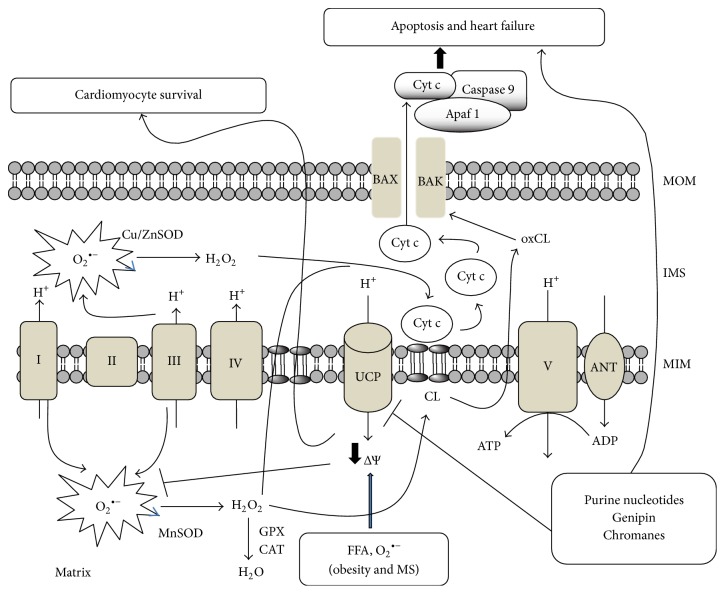
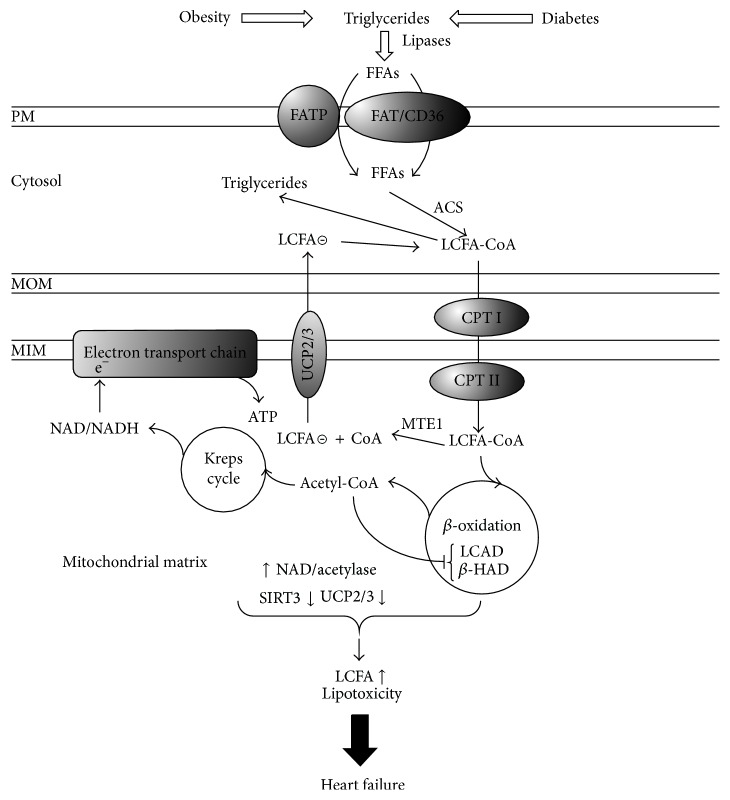
Metabolic diseases such as obesity, metabolic syndrome, and type II diabetes are often characterized by increased reactive oxygen species (ROS) generation in mitochondrial respiratory complexes, associated with fat accumulation in cardiomyocytes, skeletal muscle, and hepatocytes. Several rodents studies showed that lipid accumulation in cardiac myocytes produces lipotoxicity that causes apoptosis and leads to heart failure, a dynamic pathological process. Meanwhile, several tissues including cardiac tissue develop an adaptive mechanism against oxidative stress and lipotoxicity by overexpressing uncoupling proteins (UCPs), specific mitochondrial membrane proteins. In heart from rodent and human with obesity, UCP2 and UCP3 may protect cardiomyocytes from death and from a state progressing to heart failure by downregulating programmed cell death. UCP activation may affect cytochrome c and proapoptotic protein release from mitochondria by reducing ROS generation and apoptotic cell death. Therefore the aim of this review is to discuss recent findings regarding the role that UCPs play in cardiomyocyte survival by protecting against ROS generation and maintaining bioenergetic metabolism homeostasis to promote heart protection.
肥胖、代谢综合征和II型糖尿病等代谢性疾病通常的特征是线粒体呼吸复合物中活性氧(ROS)生成增加,这与心肌细胞、骨骼肌和肝细胞中的脂肪积累有关。多项啮齿动物研究表明,心肌细胞中的脂质积累会产生脂毒性,导致细胞凋亡并引发心力衰竭,这是一个动态的病理过程。同时,包括心脏组织在内的多个组织通过过度表达解偶联蛋白(UCPs)(特定的线粒体膜蛋白)来形成一种针对氧化应激和脂毒性的适应性机制。在肥胖的啮齿动物和人类的心脏中,UCP2和UCP3可能通过下调程序性细胞死亡来保护心肌细胞免于死亡和免于发展为心力衰竭的状态。UCP激活可能通过减少ROS生成和凋亡细胞死亡来影响细胞色素c和促凋亡蛋白从线粒体的释放。因此,本综述的目的是讨论关于UCPs通过防止ROS生成和维持生物能量代谢稳态来促进心脏保护从而在心肌细胞存活中所起作用的最新研究发现。