Pommier Yves, Sun Yilun, Huang Shar-Yin N, Nitiss John L
Developmental Therapeutics Branch and Laboratory of Molecular Pharmacology, Center for Cancer Research, National Cancer Institute, National Institutes of Health, Bethesda, Maryland 20892, USA.
College of Pharmacy, University of Illinois, Rockford, Illinois 61107, USA.
Nat Rev Mol Cell Biol. 2016 Nov;17(11):703-721. doi: 10.1038/nrm.2016.111. Epub 2016 Sep 21.
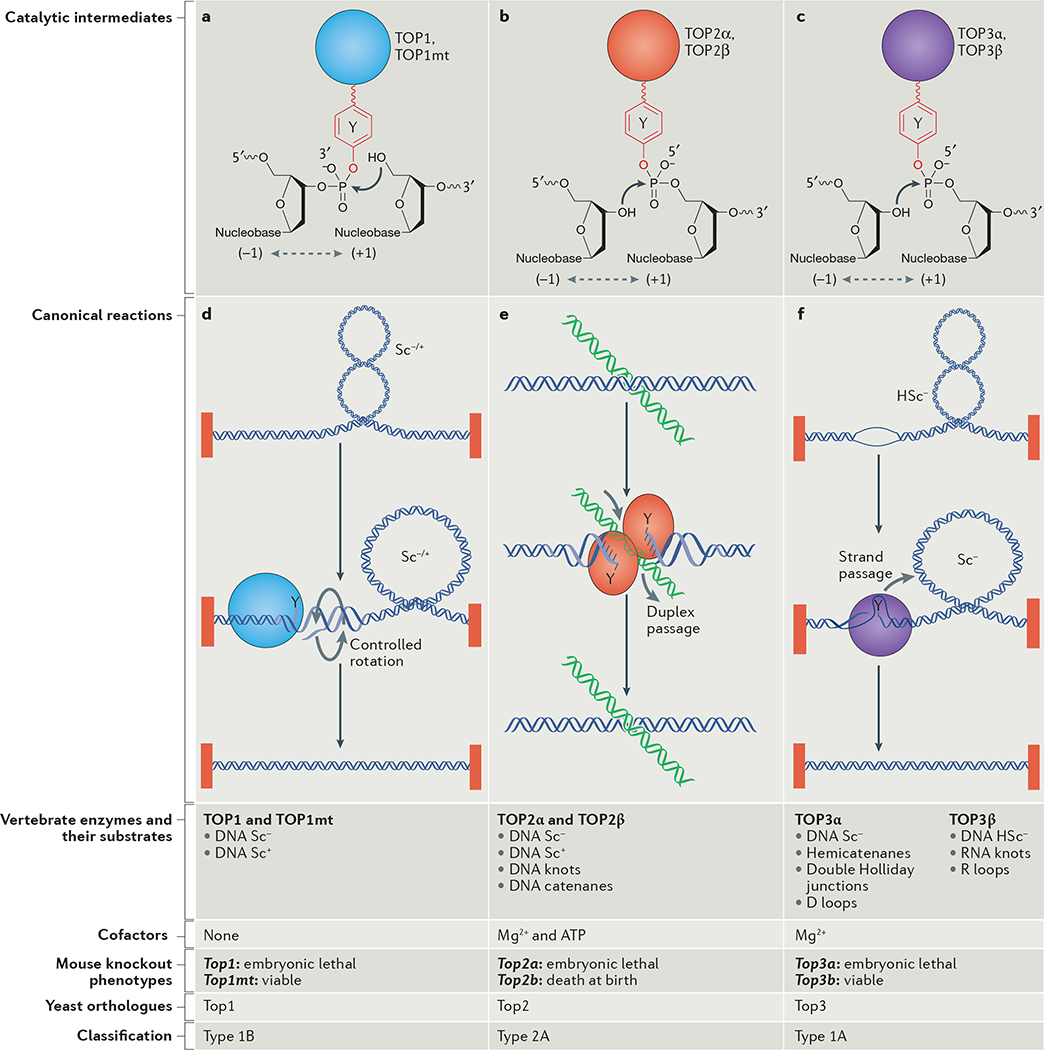
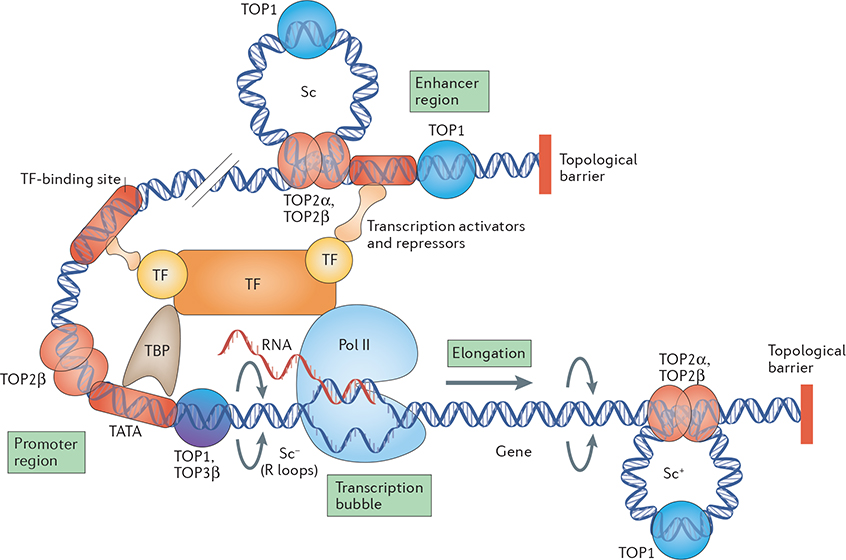
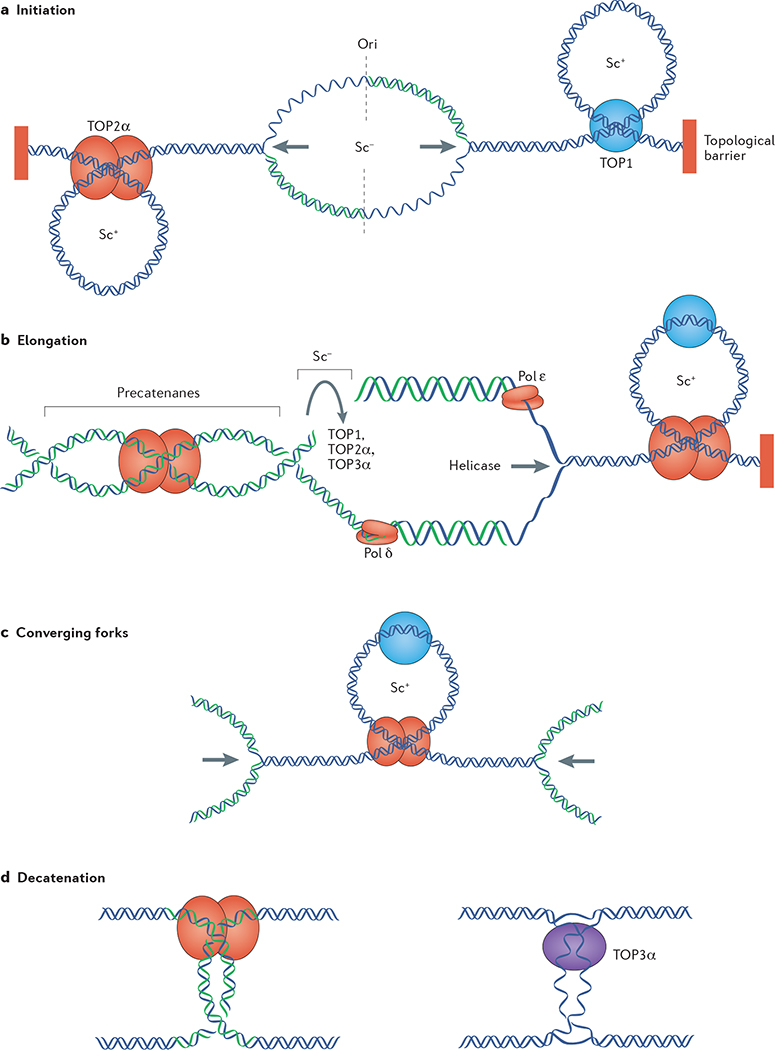
Topoisomerases introduce transient DNA breaks to relax supercoiled DNA, remove catenanes and enable chromosome segregation. Human cells encode six topoisomerases (TOP1, TOP1mt, TOP2α, TOP2β, TOP3α and TOP3β), which act on a broad range of DNA and RNA substrates at the nuclear and mitochondrial genomes. Their catalytic intermediates, the topoisomerase cleavage complexes (TOPcc), are therapeutic targets of various anticancer drugs. TOPcc can also form on damaged DNA during replication and transcription, and engage specific repair pathways, such as those mediated by tyrosyl-DNA phosphodiesterase 1 (TDP1) and TDP2 and by endonucleases (MRE11, XPF-ERCC1 and MUS81). Here, we review the roles of topoisomerases in mediating chromatin dynamics, transcription, replication, DNA damage repair and genomic stability, and discuss how deregulation of topoisomerases can cause neurodegenerative diseases, immune disorders and cancer.
拓扑异构酶引入瞬时DNA断裂以松弛超螺旋DNA、去除连环体并促进染色体分离。人类细胞编码六种拓扑异构酶(TOP1、TOP1mt、TOP2α、TOP2β、TOP3α和TOP3β),它们作用于核基因组和线粒体基因组中的多种DNA和RNA底物。它们的催化中间体,即拓扑异构酶切割复合物(TOPcc),是各种抗癌药物的治疗靶点。TOPcc也可在复制和转录过程中在受损DNA上形成,并参与特定的修复途径,如由酪氨酰-DNA磷酸二酯酶1(TDP1)和TDP2以及核酸内切酶(MRE11、XPF-ERCC1和MUS81)介导的修复途径。在这里,我们综述了拓扑异构酶在介导染色质动力学、转录、复制、DNA损伤修复和基因组稳定性中的作用,并讨论了拓扑异构酶失调如何导致神经退行性疾病、免疫紊乱和癌症。