Bioproduction Research Institute, National Institute of Advanced Industrial Science and Technology (AIST), Tsukuba 305-8566, Japan.
Global Health Institute, School of Life Sciences, École Polytechnique Fédérale de Lausanne (EPFL), Station 19, CH-1015 Lausanne, Switzerland.
Nat Commun. 2016 Sep 21;7:12781. doi: 10.1038/ncomms12781.
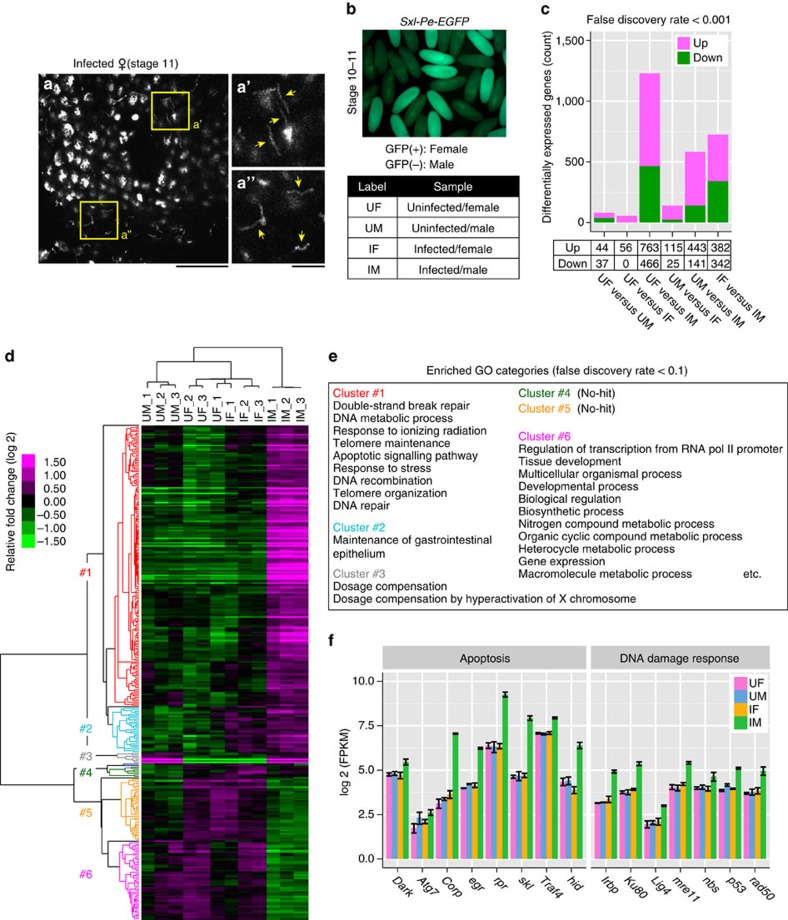
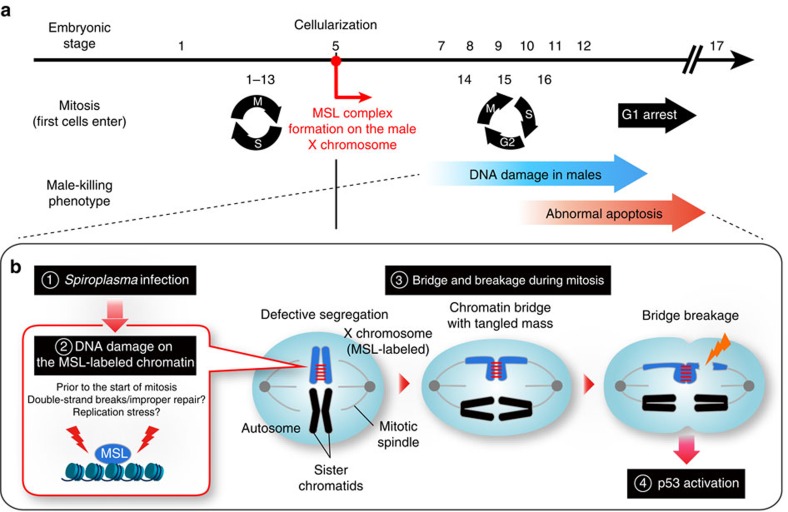
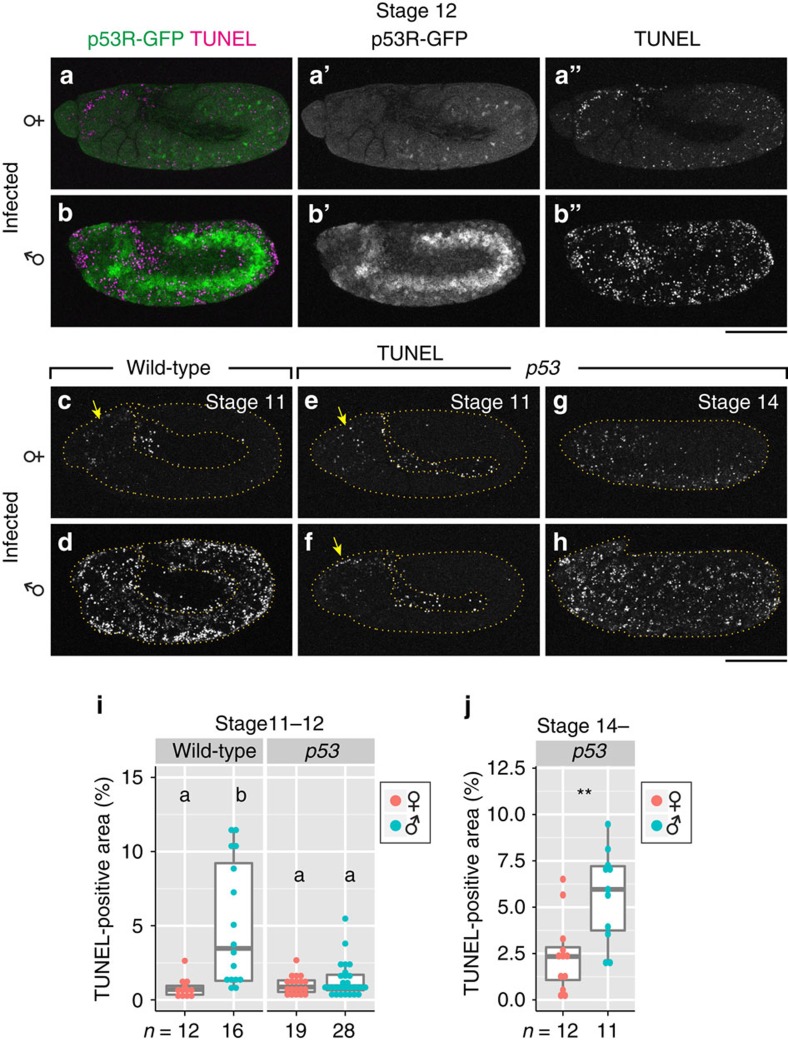
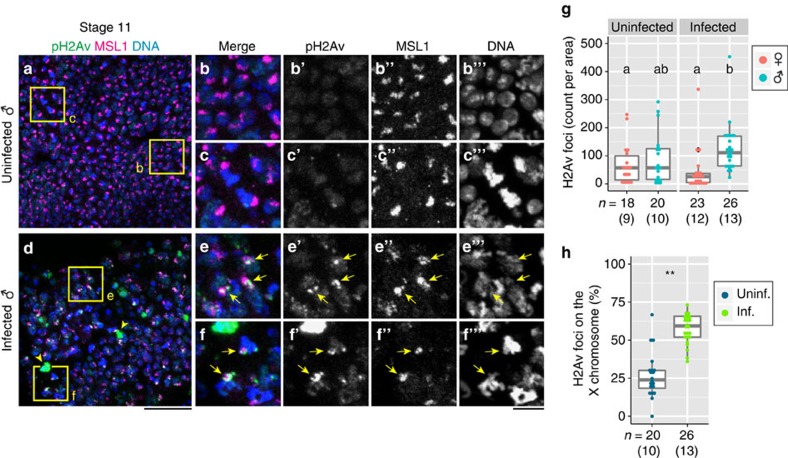
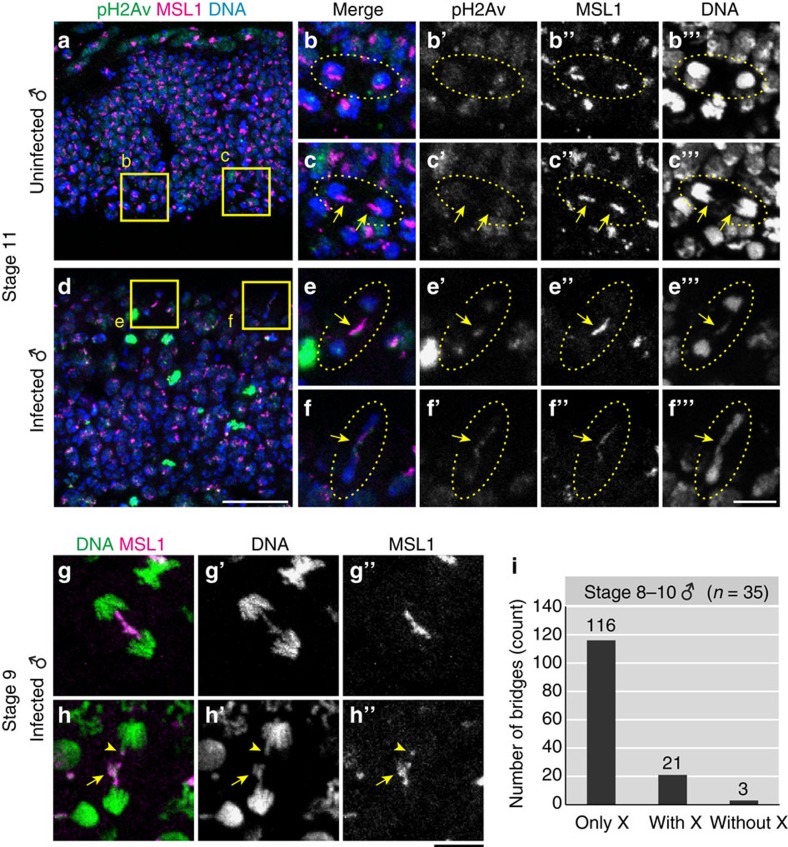
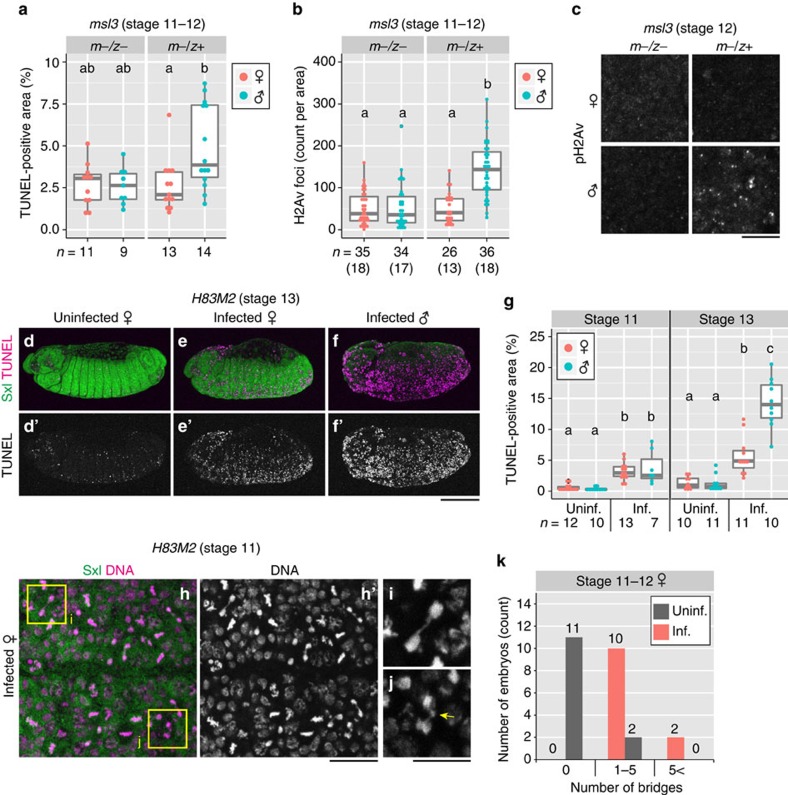
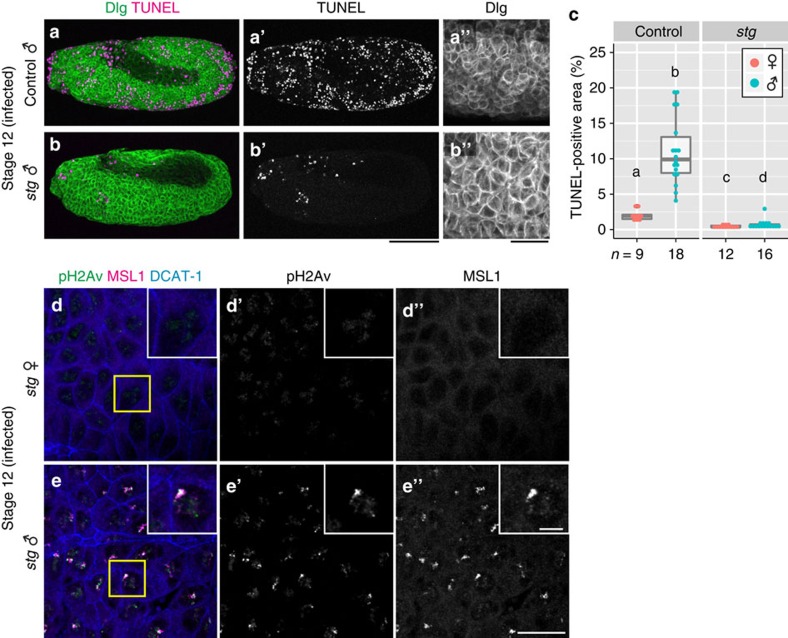
Some symbiotic bacteria are capable of interfering with host reproduction in selfish ways. How such bacteria can manipulate host's sex-related mechanisms is of fundamental interest encompassing cell, developmental and evolutionary biology. Here, we uncover the molecular and cellular mechanisms underlying Spiroplasma-induced embryonic male lethality in Drosophila melanogaster. Transcriptomic analysis reveals that many genes related to DNA damage and apoptosis are up-regulated specifically in infected male embryos. Detailed genetic and cytological analyses demonstrate that male-killing Spiroplasma causes DNA damage on the male X chromosome interacting with the male-specific lethal (MSL) complex. The damaged male X chromosome exhibits a chromatin bridge during mitosis, and bridge breakage triggers sex-specific abnormal apoptosis via p53-dependent pathways. Notably, the MSL complex is not only necessary but also sufficient for this cytotoxic process. These results highlight symbiont's sophisticated strategy to target host's sex chromosome and recruit host's molecular cascades toward massive apoptosis in a sex-specific manner.
一些共生细菌能够以自私的方式干扰宿主的繁殖。这些细菌是如何操纵宿主的与性别相关的机制的,这是一个涉及细胞、发育和进化生物学的基本问题。在这里,我们揭示了螺旋体诱导果蝇胚胎雄性致死的分子和细胞机制。转录组分析表明,许多与 DNA 损伤和细胞凋亡相关的基因在感染的雄性胚胎中特异性地上调。详细的遗传和细胞学分析表明,雄性致死螺旋体会对雄性 X 染色体造成 DNA 损伤,与雄性特异性致死 (MSL) 复合物相互作用。受损的雄性 X 染色体在有丝分裂过程中表现出染色质桥,桥的断裂通过 p53 依赖的途径触发性别特异性的异常细胞凋亡。值得注意的是,MSL 复合物不仅是必要的,而且足以引发这种细胞毒性过程。这些结果突出了共生体针对宿主性染色体的复杂策略,并以性别特异性的方式招募宿主的分子级联反应,导致大量细胞凋亡。