Fielding S, Ogbuagu A, Sivasubramaniam S, MacLennan G, Ramsay C R
Institute of Applied Health Sciences, University of Aberdeen, Polwarth Building, Foresterhill, Aberdeen, AB25 2ZD, UK.
Health Services Research Unit, Institute of Applied Health Sciences, University of Aberdeen, Aberdeen, UK.
Qual Life Res. 2016 Dec;25(12):2977-2983. doi: 10.1007/s11136-016-1411-6. Epub 2016 Sep 20.
Missing data are a major problem in the analysis of data from randomised trials affecting power and potentially producing biased treatment effects. Specifically focussing on quality of life outcomes, we aimed to report the amount of missing data, whether imputation was used and what methods and was the missing mechanism discussed from four leading medical journals and compare the picture to our previous review nearly a decade ago.
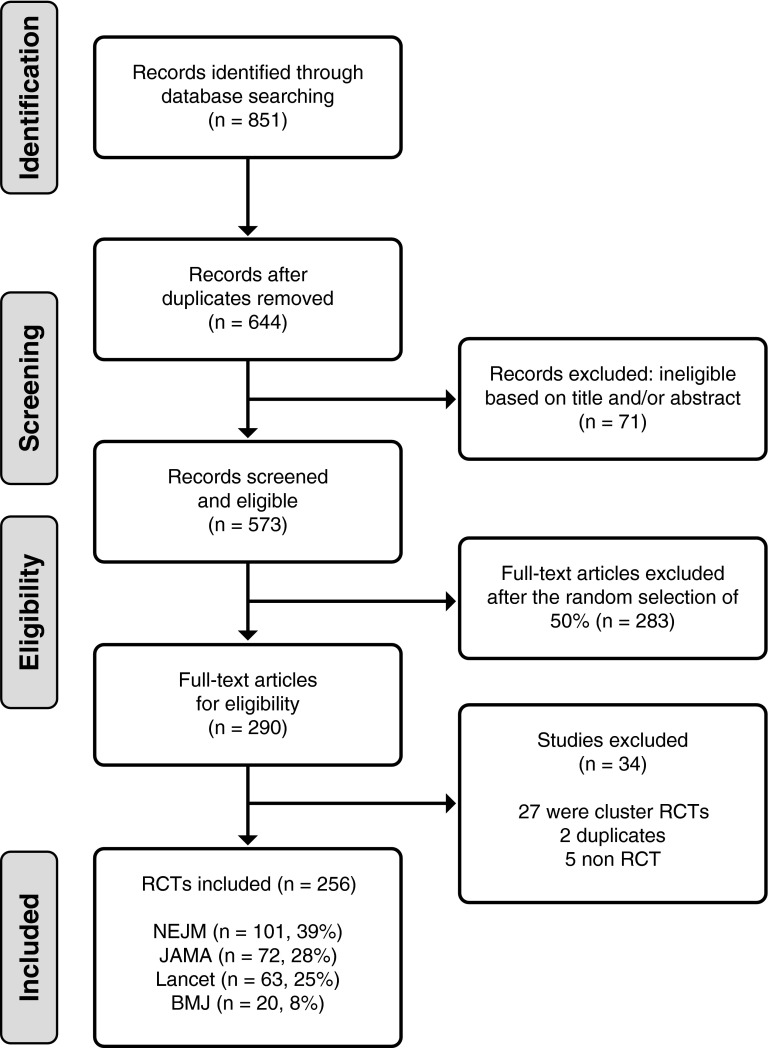
A random selection (50 %) of all RCTS published during 2013-2014 in BMJ, JAMA, Lancet and NEJM was obtained. RCTs reported in research letters, cluster RCTs, non-randomised designs, review articles and meta-analysis were excluded.
We included 87 RCTs in the review of which 35 % the amount of missing primary QoL data was unclear, 31 (36 %) used imputation. Only 23 % discussed the missing data mechanism. Nearly half used complete case analysis. Reporting was more unclear for secondary QoL outcomes. Compared to the previous review, multiple imputation was used more prominently but mainly in sensitivity analysis.
Inadequate reporting and handling of missing QoL data in RCTs are still an issue. There is a large gap between statistical methods research relating to missing data and the use of the methods in applications. A sensitivity analysis should be undertaken to explore the sensitivity of the main results to different missing data assumptions. Medical journals can help to improve the situation by requiring higher standards of reporting and analytical methods to deal with missing data, and by issuing guidance to authors on expected standard.
在随机试验数据分析中,缺失数据是一个主要问题,它会影响检验效能,并可能产生有偏差的治疗效果。我们专门聚焦于生活质量结局,旨在报告来自四种主要医学期刊的缺失数据量、是否使用了插补法、使用了何种方法以及是否讨论了缺失机制,并将情况与近十年前我们的上一次综述进行比较。
随机选取2013 - 2014年发表在《英国医学杂志》(BMJ)、《美国医学会杂志》(JAMA)、《柳叶刀》(Lancet)和《新英格兰医学杂志》(NEJM)上所有随机对照试验(RCT)的50%。排除研究简报中报告的随机对照试验、整群随机对照试验、非随机设计、综述文章和荟萃分析。
我们纳入了87项随机对照试验进行综述,其中35%的主要生活质量数据缺失量不明确,31项(36%)使用了插补法。仅23%讨论了缺失数据机制。近一半使用了完全病例分析。次要生活质量结局的报告更不清晰。与上次综述相比,多重插补法使用得更为突出,但主要用于敏感性分析。
随机对照试验中生活质量数据缺失的报告和处理仍然存在问题。在缺失数据的统计方法研究与这些方法在实际应用中的使用之间存在很大差距。应进行敏感性分析,以探讨主要结果对不同缺失数据假设的敏感性。医学期刊可以通过要求更高的报告和分析方法标准来处理缺失数据,并向作者发布关于预期标准的指南,从而帮助改善这种情况。