Wingo Taylor, Nesil Tanseli, Chang Sulie L, Li Ming D
Department of Psychiatry and Neurobehavioral Sciences, University of Virginia, Charlottesville, Virginia.
Institute of NeuroImmune Pharmacology, Seton Hall University, South Orange, New Jersey.
Alcohol Clin Exp Res. 2016 Oct;40(10):2102-2113. doi: 10.1111/acer.13206. Epub 2016 Sep 21.
Novelty-seeking behavior is related to the reward system in the brain and can predict the potential for addiction. Alcohol use is prevalent in HIV-1-infected patients and adversely affects antiretroviral medication. The difference in vulnerability to alcohol addiction between HIV-1-infected and noninfected populations has not been fully investigated. This study was designed to determine whether HIV-1 proteins alter the effects of ethanol (EtOH) on novelty-seeking behavior using the HIV-1 transgenic (HIV-1Tg) rat as the study model and to examine the molecular mechanisms responsible for this behavior.
Both HIV-1Tg and F344 control rats were tested for baseline novelty-seeking behavior, then received either EtOH (1 g/kg) at a concentration of 20% v/v or saline treatment for 13 days, and then were retested for novelty seeking. Quantitative real-time polymerase chain reaction was conducted to examine the differences in expression of 65 genes implicated in novelty seeking and alcohol addiction between strains and treatment groups.
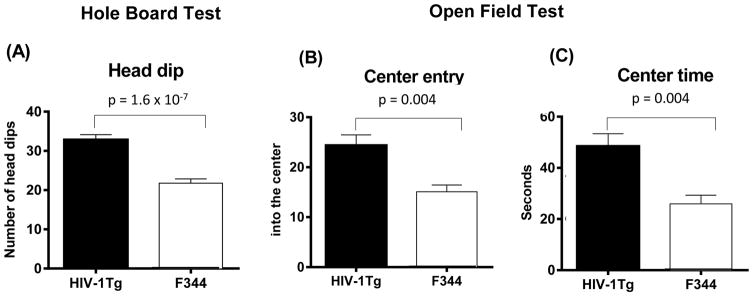
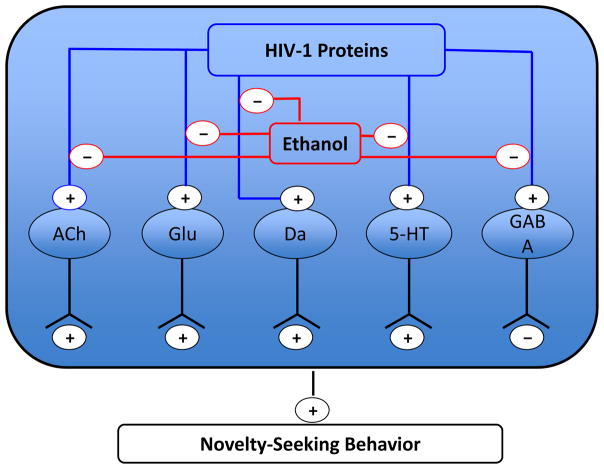
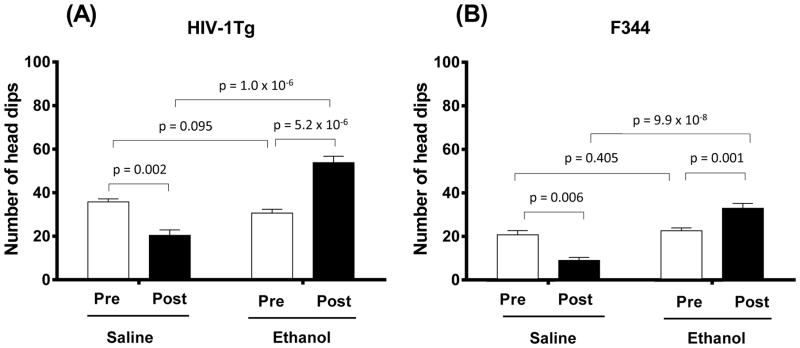
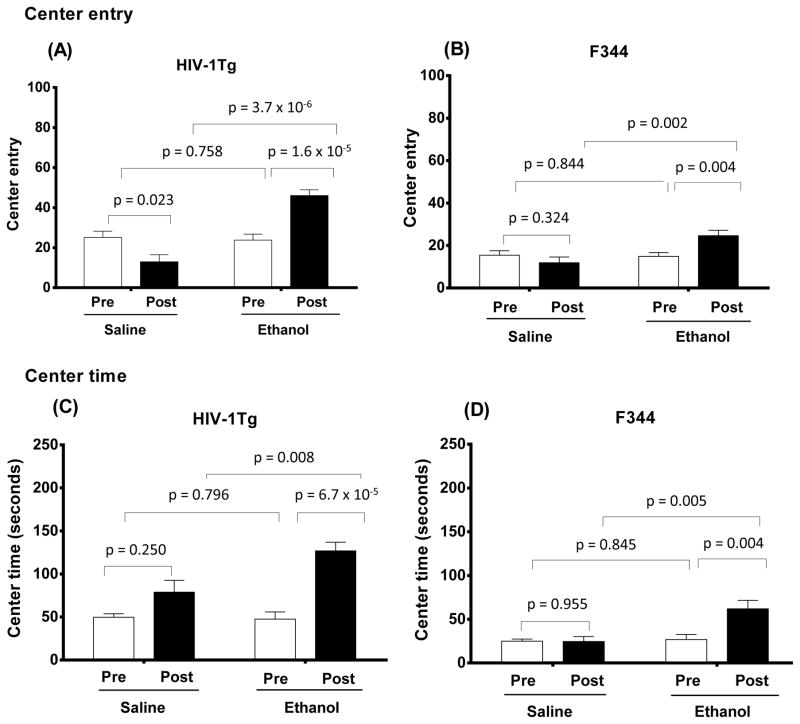
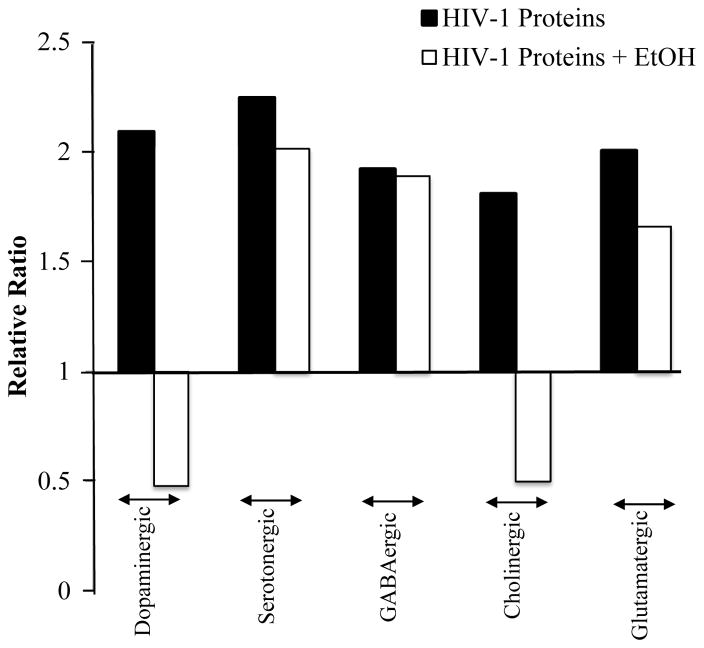
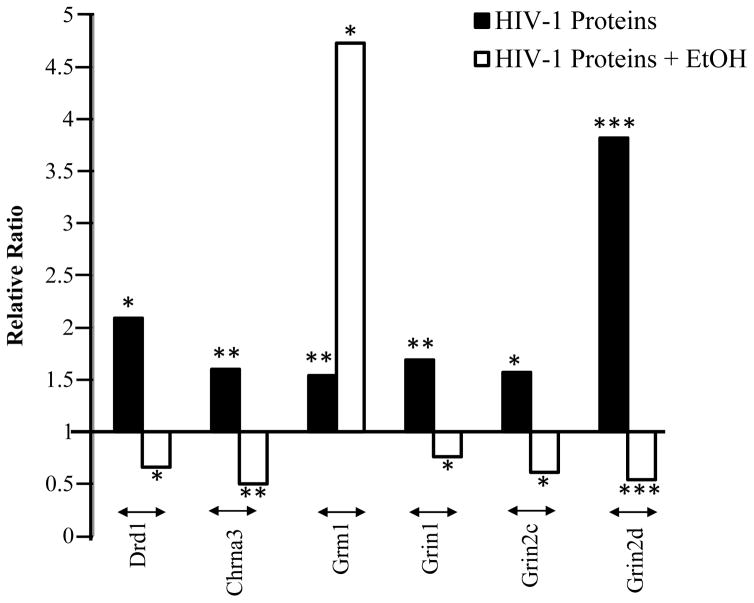
The HIV-1 proteins significantly enhanced baseline novelty-seeking behaviors in both the hole-board and open-field tests. Chronic EtOH treatment significantly increased baseline novelty-seeking behavior in both strains, but the effects of EtOH appeared to be more robust and prominent in HIV-1Tg rats. Strain-specific patterns of altered gene expression were observed for dopaminergic, cholinergic, and glutamatergic signaling in the nucleus accumbens, suggesting the effects of HIV-1 proteins on the brain's reward system. Chronic EtOH treatment was shown to greatly modulate the effects of HIV-1 proteins in these neurotransmitter systems.
Taken together, our findings indicate that HIV-1 proteins could modify novelty-seeking behavior at the gene expression level, and EtOH treatment may enhance this behavior in both strains but to a greater extent in HIV-1Tg rats.
寻求新奇行为与大脑中的奖赏系统相关,并且能够预测成瘾的可能性。酒精使用在HIV-1感染患者中很普遍,并且对抗逆转录病毒药物有不良影响。HIV-1感染人群和未感染人群在酒精成瘾易感性方面的差异尚未得到充分研究。本研究旨在以HIV-1转基因(HIV-1Tg)大鼠作为研究模型,确定HIV-1蛋白是否会改变乙醇(EtOH)对寻求新奇行为的影响,并研究导致这种行为的分子机制。
对HIV-1Tg大鼠和F344对照大鼠进行基线寻求新奇行为测试,然后接受浓度为20% v/v的EtOH(1 g/kg)或生理盐水处理13天,之后再次进行寻求新奇行为测试。采用定量实时聚合酶链反应来检测品系和处理组之间与寻求新奇行为和酒精成瘾相关的65个基因的表达差异。
在洞板试验和旷场试验中,HIV-1蛋白均显著增强了基线寻求新奇行为。慢性EtOH处理显著增加了两个品系的基线寻求新奇行为,但EtOH的作用在HIV-1Tg大鼠中似乎更强且更显著。伏隔核中多巴胺能、胆碱能和谷氨酸能信号传导的基因表达变化呈现出品系特异性模式,这表明HIV-1蛋白对大脑奖赏系统有影响。慢性EtOH处理被证明能极大地调节这些神经递质系统中HIV-1蛋白的作用。
综上所述,我们的研究结果表明,HIV-1蛋白可在基因表达水平上改变寻求新奇行为,EtOH处理可能会增强两个品系的这种行为,但在HIV-1Tg大鼠中增强程度更大。