Baker E J, Ayton V, Smith M A, Parsons J M, Maisey M N, Ladusans E J, Anderson R H, Tynan M, Yates A K, Deverall P B
Department of Paediatric Cardiology, Guy's Hospital, London.
Br Heart J. 1989 Aug;62(2):97-101. doi: 10.1136/hrt.62.2.97.
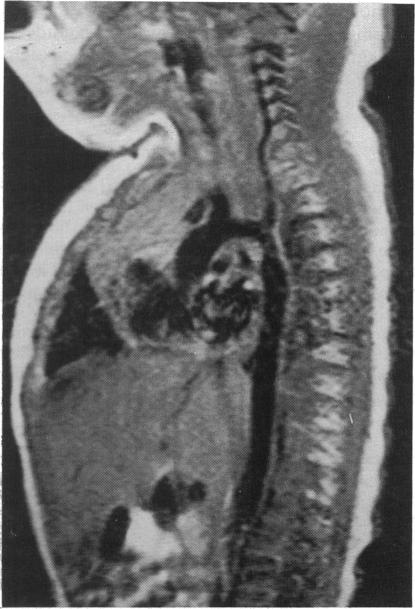
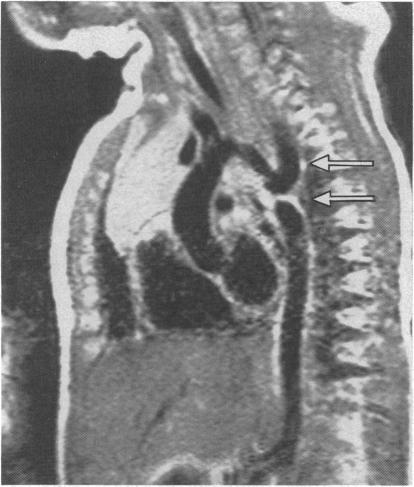
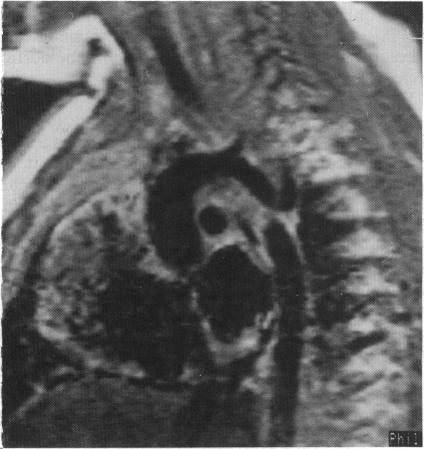
Nineteen infants with suspected coarctation of the aorta were studied with electrocardiographically gated magnetic resonance imaging on a 1.5 T whole body imaging system. In all cases imaging was successful and produced diagnostic images of high resolution. Coarctation was shown in 12 cases. The position and shape of the coarctation were well displayed by the magnetic resonance images. In addition, they clearly showed the relation of the coarctation to arteries arising from the aortic arch and to the length and diameter of the aortic isthmus and the distal aortic arch. The anatomy was confirmed at operation in all 12 patients, except for two with a small ductus arteriosus (arterial duct), which was not seen in the magnetic resonance images. In the seven remaining patients, coarctation was excluded. Magnetic resonance imaging produced high quality images that showed the anatomy better than other non-invasive methods. It provided all the anatomical information required for surgical correction.
对19例疑似主动脉缩窄的婴儿,在1.5T全身成像系统上采用心电图门控磁共振成像进行研究。所有病例成像均成功,并生成了高分辨率的诊断图像。12例显示有主动脉缩窄。磁共振图像很好地显示了缩窄的位置和形态。此外,它们还清晰地显示了缩窄与主动脉弓发出的动脉、主动脉峡部及主动脉弓远端的长度和直径之间的关系。除2例有小动脉导管(动脉导管)在磁共振图像中未显示外,所有12例患者的解剖结构均在手术中得到证实。其余7例患者排除了主动脉缩窄。磁共振成像生成的高质量图像比其他非侵入性方法能更好地显示解剖结构。它提供了手术矫正所需的所有解剖信息。