Skorobogata Olga, Meng Jassy, Gauthier Kimberley, Rocheleau Christian E
Division of Endocrinology and Metabolism, Departments of Medicine, and Anatomy and Cell Biology, McGill University, and the Program in Experimental Therapeutics and Metabolism, Centre for Translational Biology, Research Institute of the McGill University Health Centre, Montreal, Quebec, Canada, H4A 3J1.
Division of Endocrinology and Metabolism, Departments of Medicine, and Anatomy and Cell Biology, McGill University, and the Program in Experimental Therapeutics and Metabolism, Centre for Translational Biology, Research Institute of the McGill University Health Centre, Montreal, Quebec, Canada, H4A 3J1
Mol Biol Cell. 2016 Sep 21;27(23):3771-9. doi: 10.1091/mbc.E15-11-0757.
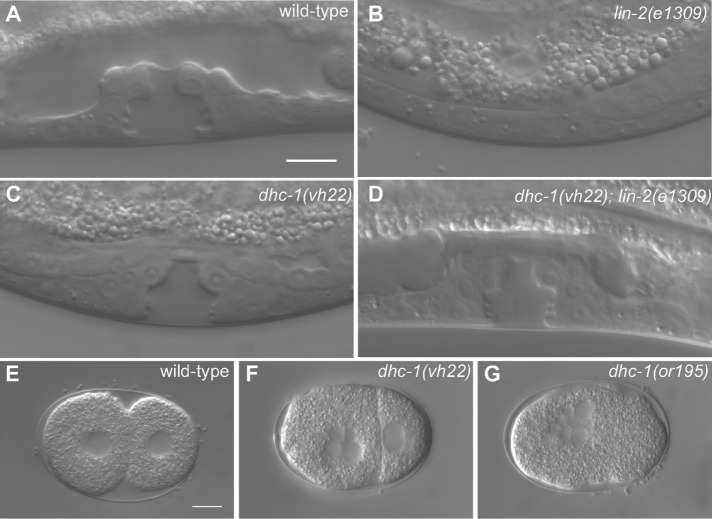
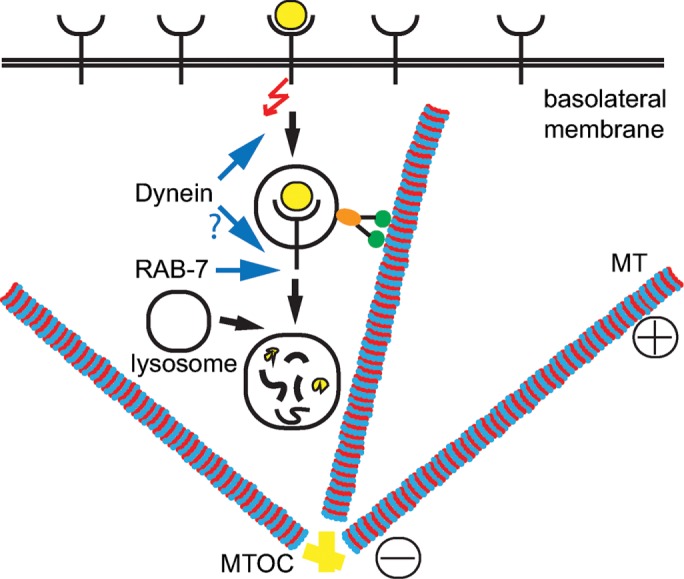
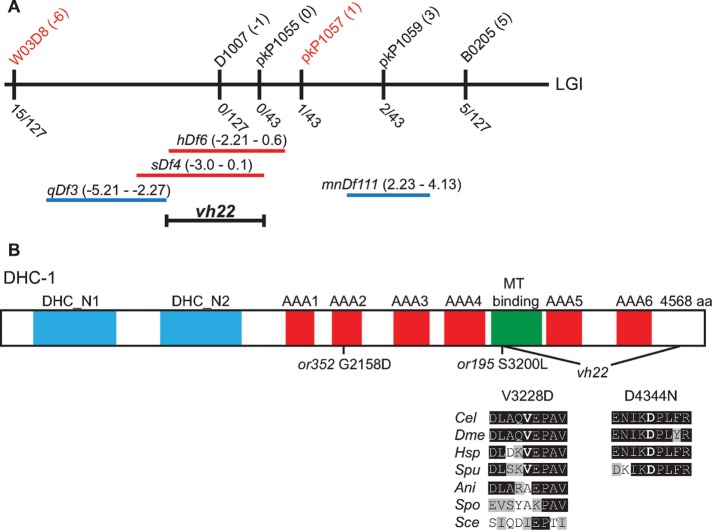
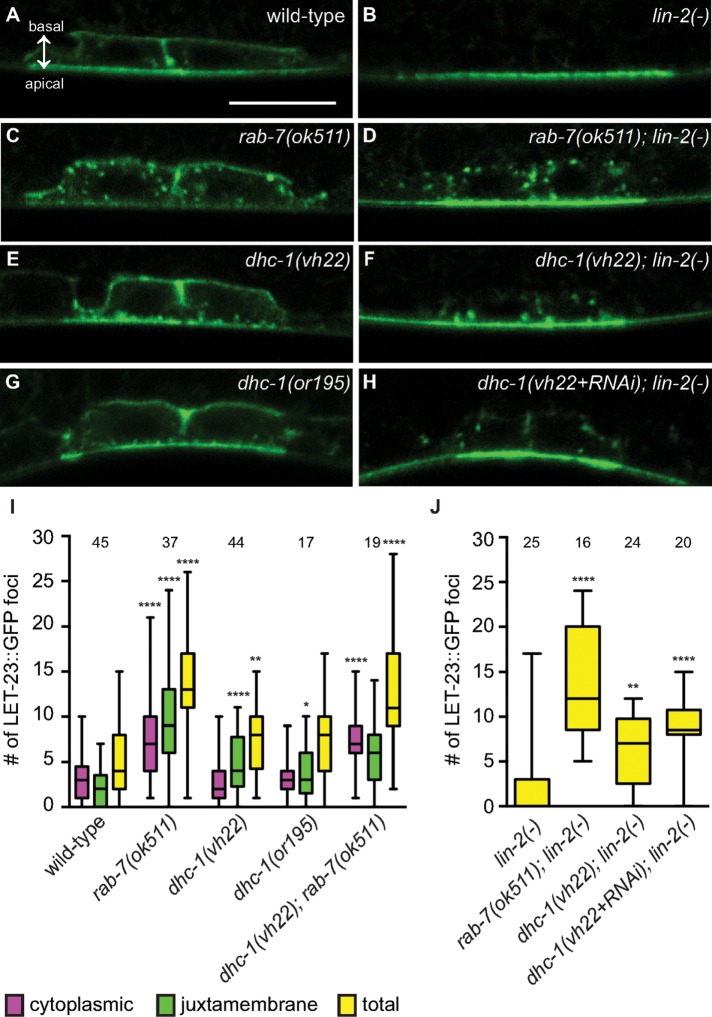
Epidermal Growth Factor Receptor (EGFR) signaling is essential for animal development and increased signaling underlies many human cancers. Identifying the genes and cellular processes that regulate EGFR signaling in vivo will help elucidate how this pathway can become inappropriately activated. Caenorhabditis elegans vulva development provides an in vivo model to genetically dissect EGFR signaling. Here we identified a mutation in dhc-1, the heavy chain of the cytoplasmic dynein minus-end directed microtubule motor, in a genetic screen for regulators of EGFR signaling. Despite the many cellular functions of dynein, DHC-1 is a strong negative regulator of EGFR signaling during vulva induction. DHC-1 is required in the signal-receiving cell, genetically functions upstream or in parallel to LET-23 EGFR. LET-23 EGFR accumulates in cytoplasmic foci in dhc-1 mutants consistent with mammalian cell studies whereby dynein has been shown to regulate late endosome trafficking of EGFR with the Rab7 GTPase. However, we found different distributions of LET-23 EGFR foci in rab-7 versus dhc-1 mutants, suggesting that dynein functions at an earlier step of LET-23 EGFR trafficking to the lysosome than RAB-7. Our results demonstrate an in vivo role for dynein in limiting LET-23 EGFR signaling via endosomal trafficking.
表皮生长因子受体(EGFR)信号传导对于动物发育至关重要,而信号增加是许多人类癌症的基础。确定体内调节EGFR信号传导的基因和细胞过程将有助于阐明该途径如何被不适当激活。秀丽隐杆线虫的外阴发育提供了一个在体内对EGFR信号传导进行遗传剖析的模型。在这里,我们在一个针对EGFR信号传导调节因子的遗传筛选中,鉴定出了动力蛋白重链dhc-1中的一个突变,动力蛋白重链是一种向微管负端移动的胞质动力蛋白。尽管动力蛋白具有多种细胞功能,但DHC-1在诱导外阴时是EGFR信号传导的一个强大负调节因子。在信号接收细胞中需要DHC-1,它在遗传上在LET-23 EGFR的上游或与之平行发挥作用。在dhc-1突变体中,LET-23 EGFR聚集在细胞质病灶中,这与哺乳动物细胞研究一致,在该研究中已表明动力蛋白与Rab7 GTP酶一起调节EGFR的晚期内体运输。然而,我们发现在rab-7突变体与dhc-1突变体中LET-23 EGFR病灶的分布不同,这表明动力蛋白在LET-23 EGFR向溶酶体运输的过程中比RAB-7发挥作用的步骤更早。我们的结果证明了动力蛋白在通过内体运输限制LET-23 EGFR信号传导中的体内作用。