Kavoosi Fraidoon, Dastjerdi Mehdi Nikbakht, Valiani Ali, Esfandiari Ebrahim, Sanaei Masumeh, Hakemi Mazdak Ganjalikhani
Department of Anatomical Sciences, Medical School, Jahrom University of Medical Sciences, Jahrom, Iran.
Department of Anatomical Sciences and Molecular Biology, Medical School, Isfahan University of Medical Sciences, Isfahan, Iran.
Adv Biomed Res. 2016 Aug 30;5:133. doi: 10.4103/2277-9175.187395. eCollection 2016.
Hepatocellular carcinoma (HCC) is one of the most common malignant tumors. This cancer may be due to a multistep process with an accumulation of epigenetic alterations in tumor suppressor genes (TSGs), leading to hypermethylation of the genes. Hypermethylation of TSGs is associated with silencing and inactivation of them. It is well-known that DNA hypomethylation is the initial epigenetic abnormality recognized in human tumors. Estrogen receptor alpha (ERα) is one of the TSGs which modulates gene transcription and its hypermethylation is because of overactivity of DNA methyltransferases. Fortunately, epigenetic changes especially hypermethylation can be reversed by pharmacological compounds such as genistein (GE) and 17-beta estradiol (E2) which involve in preventing the development of certain cancers by maintaining a protective DNA methylation. The aim of the present study was to analyze the effects of GE on ERα and DNMT1 genes expression and also apoptotic and antiproliferative effects of GE and E2 on HCC.
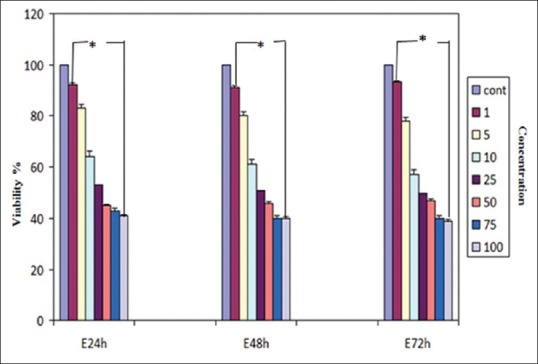
Cells were treated with various concentrations of GE and E2 and the 3-(4,5-dimethyl-2-thiazolyl)-2,5-diphenyl-2H-tetrazolium bromide assay was used. Furthermore, cells were treated with single dose of GE and E2 (25 μM) and flow cytometry assay was performed. The expression level of the genes was determined by quantitative real-time reverse transcription polymerase chain reaction.
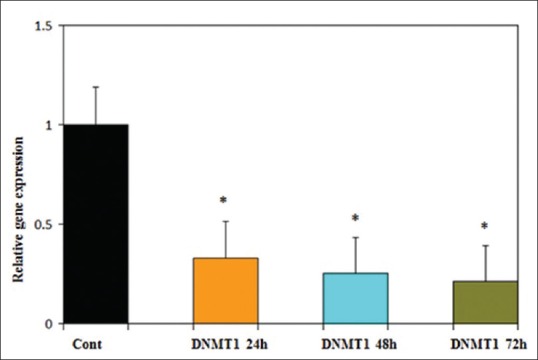
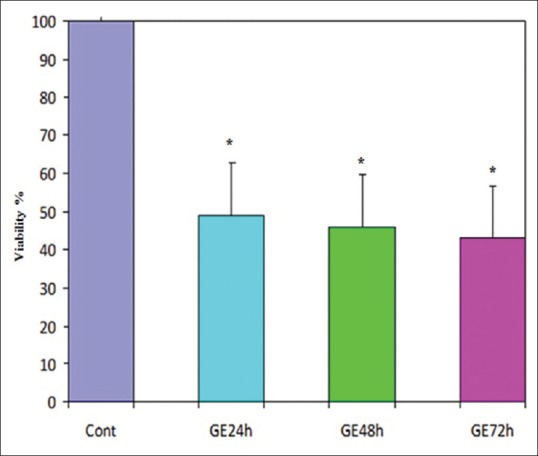
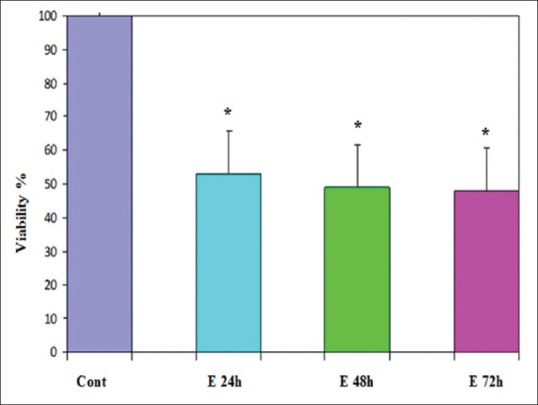
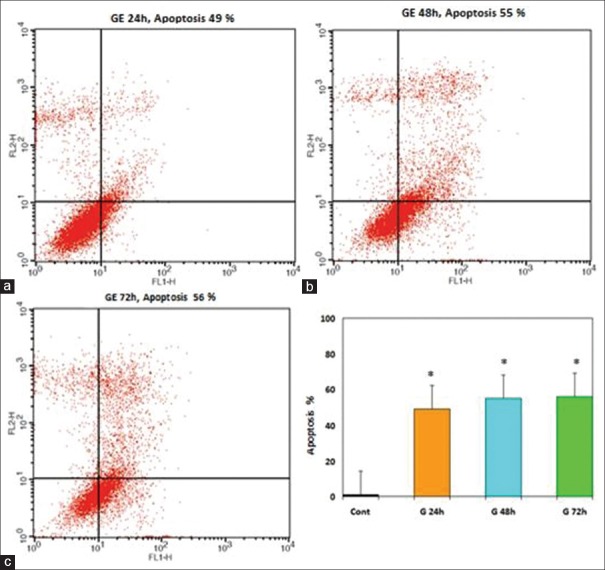
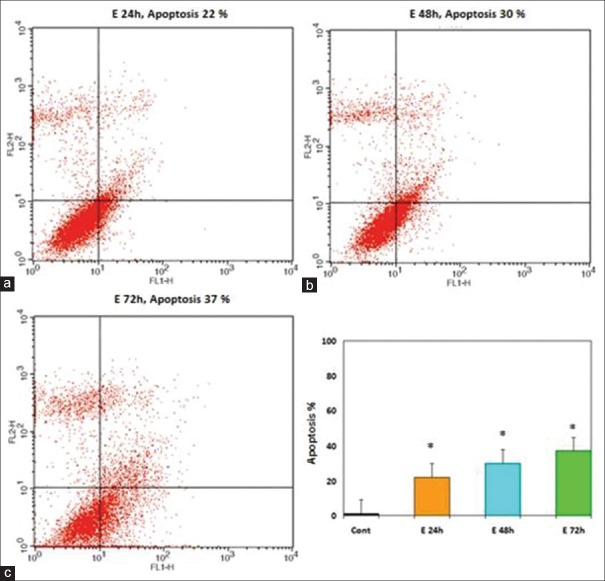
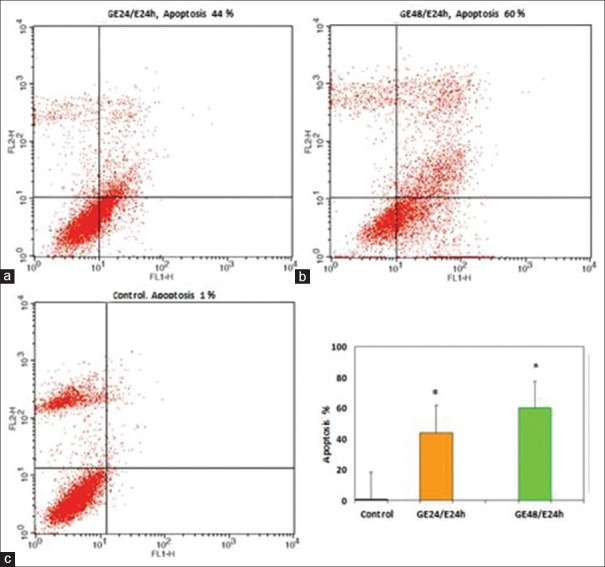
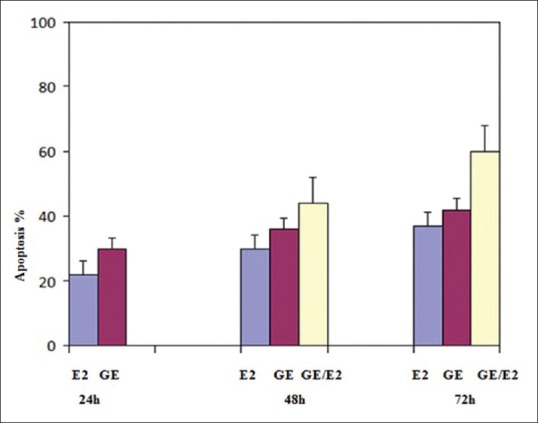
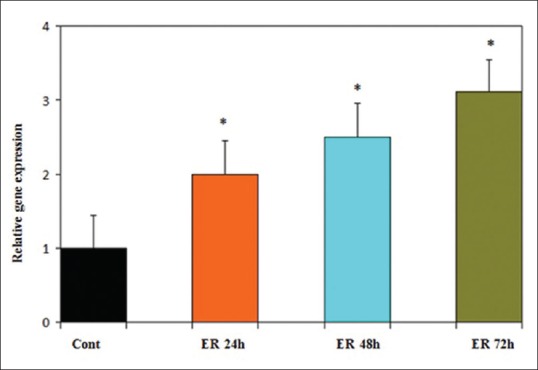
GE increased ERα and decreased DNMT1 genes expression, GE and E2 inhibited cell viability and induced apoptosis significantly.
GE can epigenetically increase ERα expression by inhibition of DNMT1 expression which in turn increases apoptotic effect of E2. Furthermore, a combination of GE and E2 can induce apoptosis more significantly.
肝细胞癌(HCC)是最常见的恶性肿瘤之一。这种癌症可能是一个多步骤过程,肿瘤抑制基因(TSGs)中表观遗传改变不断积累,导致这些基因发生高甲基化。TSGs的高甲基化与它们的沉默和失活相关。众所周知,DNA低甲基化是人类肿瘤中最早被认识到的表观遗传异常。雌激素受体α(ERα)是一种调节基因转录的TSG,其高甲基化是由于DNA甲基转移酶活性过高。幸运的是,表观遗传变化尤其是高甲基化可以被染料木黄酮(GE)和17-β雌二醇(E2)等药物化合物逆转,这些化合物通过维持保护性DNA甲基化参与预防某些癌症的发生。本研究的目的是分析GE对ERα和DNMT1基因表达的影响,以及GE和E2对HCC的凋亡和抗增殖作用。
用不同浓度的GE和E2处理细胞,并使用3-(4,5-二甲基-2-噻唑基)-2,5-二苯基-2H-四氮唑溴盐法。此外,用单剂量的GE和E2(25μM)处理细胞并进行流式细胞术检测。通过定量实时逆转录聚合酶链反应测定基因的表达水平。
GE增加ERα表达并降低DNMT1基因表达,GE和E2显著抑制细胞活力并诱导凋亡。
GE可通过抑制DNMT1表达在表观遗传上增加ERα表达,进而增强E2的凋亡作用。此外,GE和E2联合使用可更显著地诱导凋亡。