Kong Fanyang, Zhu Jianwei, Kong Xiangyu, Sun Tao, Deng Xuan, Du Yiqi, Li Zhaoshen
Department of Gastroenterology, Changhai Hospital, Second Military Medical University, Shanghai, China.
Shanghai Medical College of Fudan University, Shanghai, China.
PLoS One. 2016 Sep 22;11(9):e0163056. doi: 10.1371/journal.pone.0163056. eCollection 2016.
Rapid on-site evaluation (ROSE) during endoscopic ultrasonography-guided fine needle aspiration (EUS-FNA) of pancreatic masses has been reported to be associated with improved adequacy and diagnostic yield. However, recent observational data on the impact of ROSE have reported conflicting results. A meta-analysis and systematic review was therefore conducted to evaluate the contribution of ROSE during EUS-FNA of pancreatic masses.
A systematic search was conducted in MEDLINE/Pubmed and EMBASE databases for studies comparing the efficacy of ROSE between patients in two cohorts. Outcomes considered included diagnostic adequate rate, diagnostic yield, number of needle passes, pooled sensitivity and specificity. Findings from a random-effects model were expressed as pooled risk difference (RD) with 95% confidence intervals (CIs).
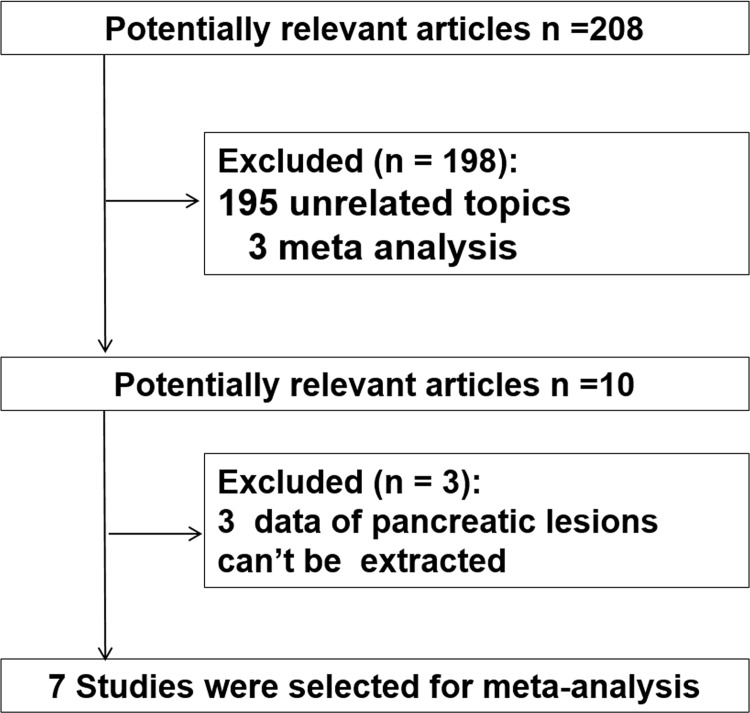
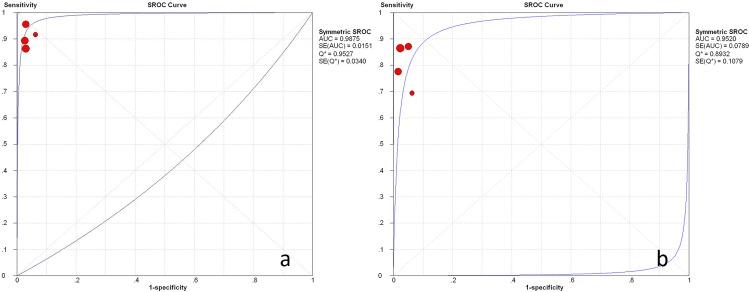
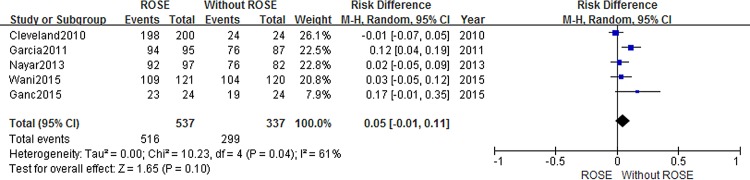
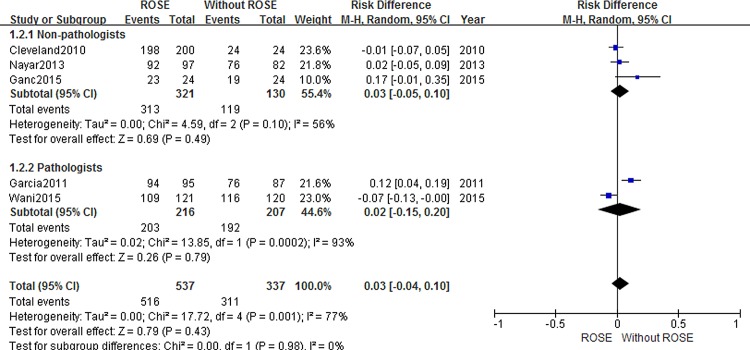
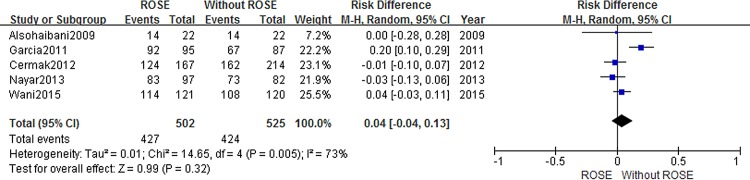
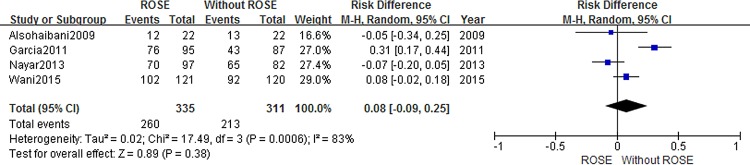
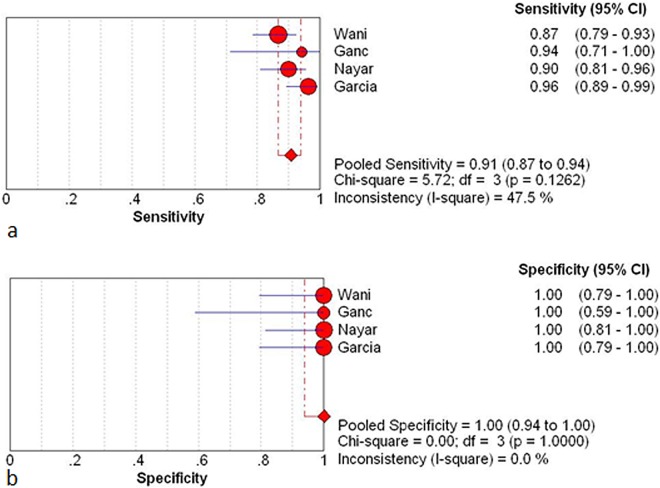
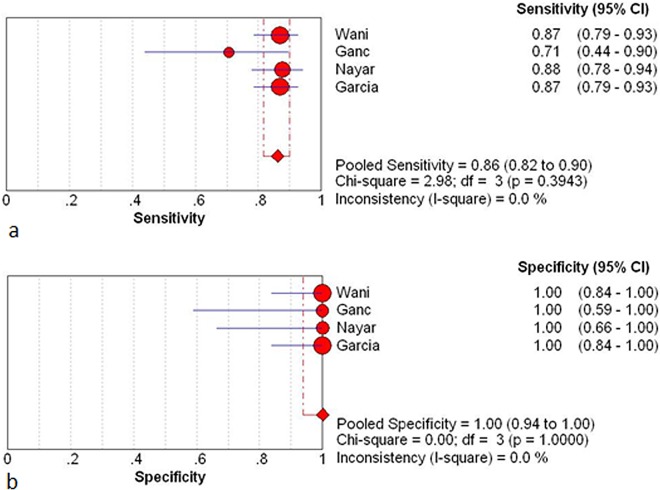
A total of 7 studies (1299 patients) was finally included and further analyzed in the current meta-analysis. EUS-FNA with ROSE could not improve diagnostic adequacy (RD = 0.05, 95% CI: -0.01-0.11) and diagnostic yield (RD = 0.04 95%CI: -0.05, 0.13). The number of needle passes showed no statistically significant difference with and without ROSE (RD = -0.68 95%CI: -2.35, 0.98). The pooled sensitivity and specificity of ROSE group were 0.91 (95%CI: 0.87, 0.94) and 1 (95%CI: 0.94, 1.00). The pooled sensitivity and specificity of non-ROSE group were 0.85 (95%CI: 0.80, 0.89) and 1 (95%CI: 0.95, 1.00). ROSE group and non-ROSE group showed comparable sensitivity and specificity.
Compared to historical reports of its clinical efficacy in patients with pancreatic lesions, ROSE may be not associated with an improvement of diagnostic yield, adequate rate, pooled sensitivity and specificity.
据报道,在超声内镜引导下细针穿刺抽吸术(EUS-FNA)检查胰腺肿块时进行快速现场评估(ROSE)可提高取材的充分性及诊断率。然而,近期关于ROSE影响的观察性数据结果却相互矛盾。因此,开展了一项荟萃分析和系统评价,以评估ROSE在胰腺肿块EUS-FNA中的作用。
在MEDLINE/Pubmed和EMBASE数据库中进行系统检索,查找比较两个队列患者ROSE疗效的研究。纳入的结局指标包括诊断充分率、诊断率、穿刺针数、合并敏感度和特异度。随机效应模型的结果以合并风险差(RD)及95%置信区间(CI)表示。
本荟萃分析最终纳入并进一步分析了7项研究(1299例患者)。采用ROSE的EUS-FNA并不能提高诊断充分性(RD = 0.05,95%CI:-0.01 - 0.11)和诊断率(RD = 0.04,95%CI:-0.05,0.13)。穿刺针数在采用ROSE和未采用ROSE时无统计学显著差异(RD = -0.68,95%CI:-2.35,0.98)。ROSE组的合并敏感度和特异度分别为0.91(95%CI:0.87,0.94)和1(95%CI:0.94,1.00)。未采用ROSE组的合并敏感度和特异度分别为0.85(95%CI:0.80,0.89)和1(95%CI:0.95,1.00)。ROSE组和未采用ROSE组的敏感度和特异度相当。
与既往关于其对胰腺病变患者临床疗效的报道相比,ROSE可能与诊断率、充分率、合并敏感度和特异度的提高无关。